Three Things To Read This Week
1. Cities Turning To Safety Ambassador Teams, From Campus To Transit To Downtown.
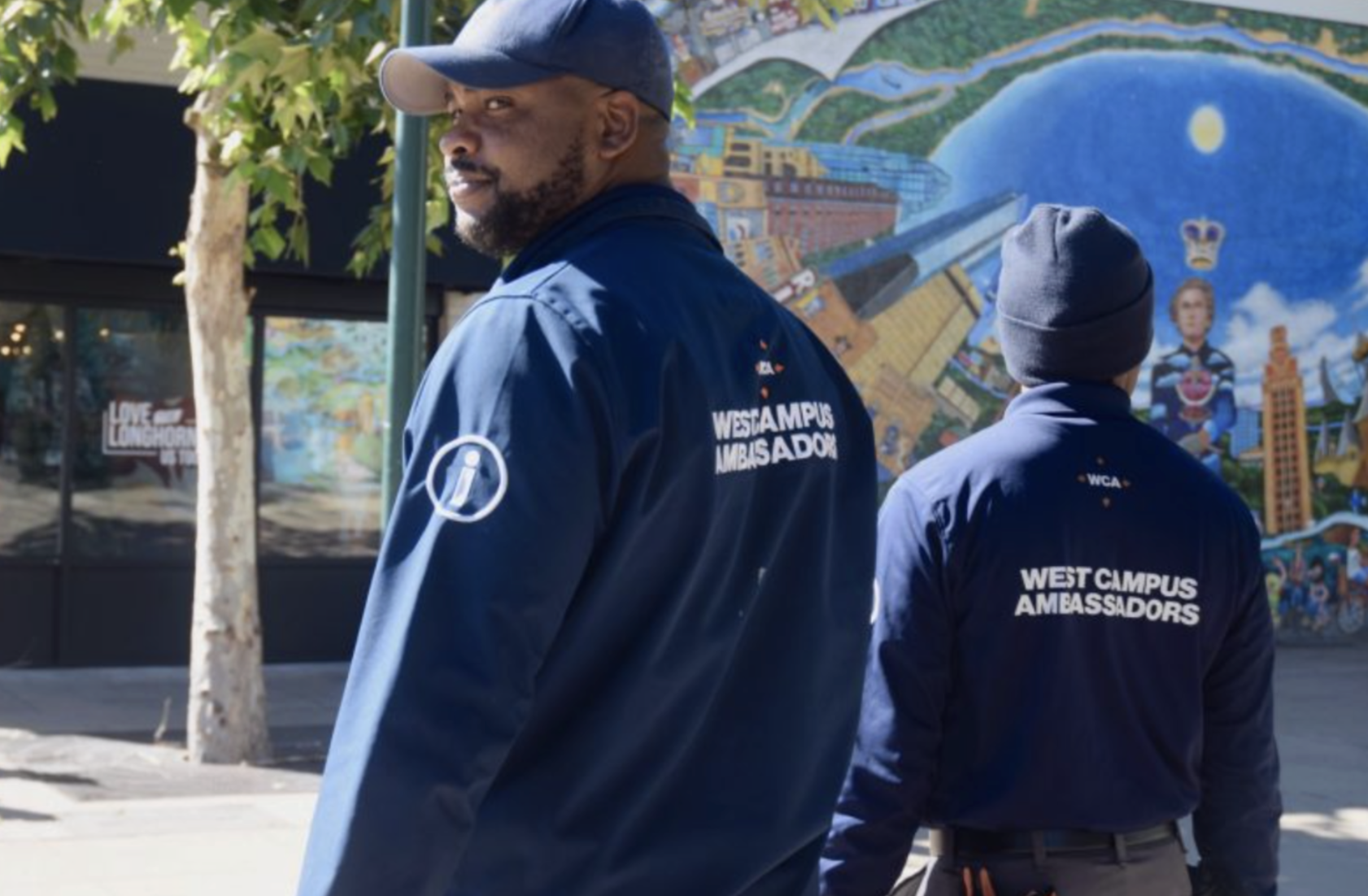
At University of Texas, Austin, Safety Ambassador Team “Keeps West Campus Clean, Safe And Connected.” For Reporting Texas, Samantha Rubin reports on the visible “blue-shirted ambassadors” team, a new safety program funded by U-Texas, that focuses on keeping the West Campus neighborhood safe and clean for students and residents, preserving stretched police resources for serious crimes. The team, available 24 hours a day Thursday through Sunday, and 20 hours a day the rest of the week, is divided into two units: “safety and cleaning,” and “some ambassadors [have] military backgrounds … [but all] are required to go through extensive training.”
The safety ambassadors “walk residents to their destinations in the late evening, monitor the area for unwanted activity… conduct homeless outreach” and work with law enforcement when a situation requires escalation. The clean team works about 10 hours a day, seven days a week to “collect trash, remove graffiti and handle basic maintenance in the area.” Donaye Perkins and Kevin Morris Sr., ambassadors on the team, explained to the newspaper that “the tenor of the work changes over the course of the day… ‘nights tilt more toward safety…escorts and keeping an eye on busy areas… [then] during the day it’s hospitality” and cleaning, “we’re always talking and vibrant, it’s about visibility.”
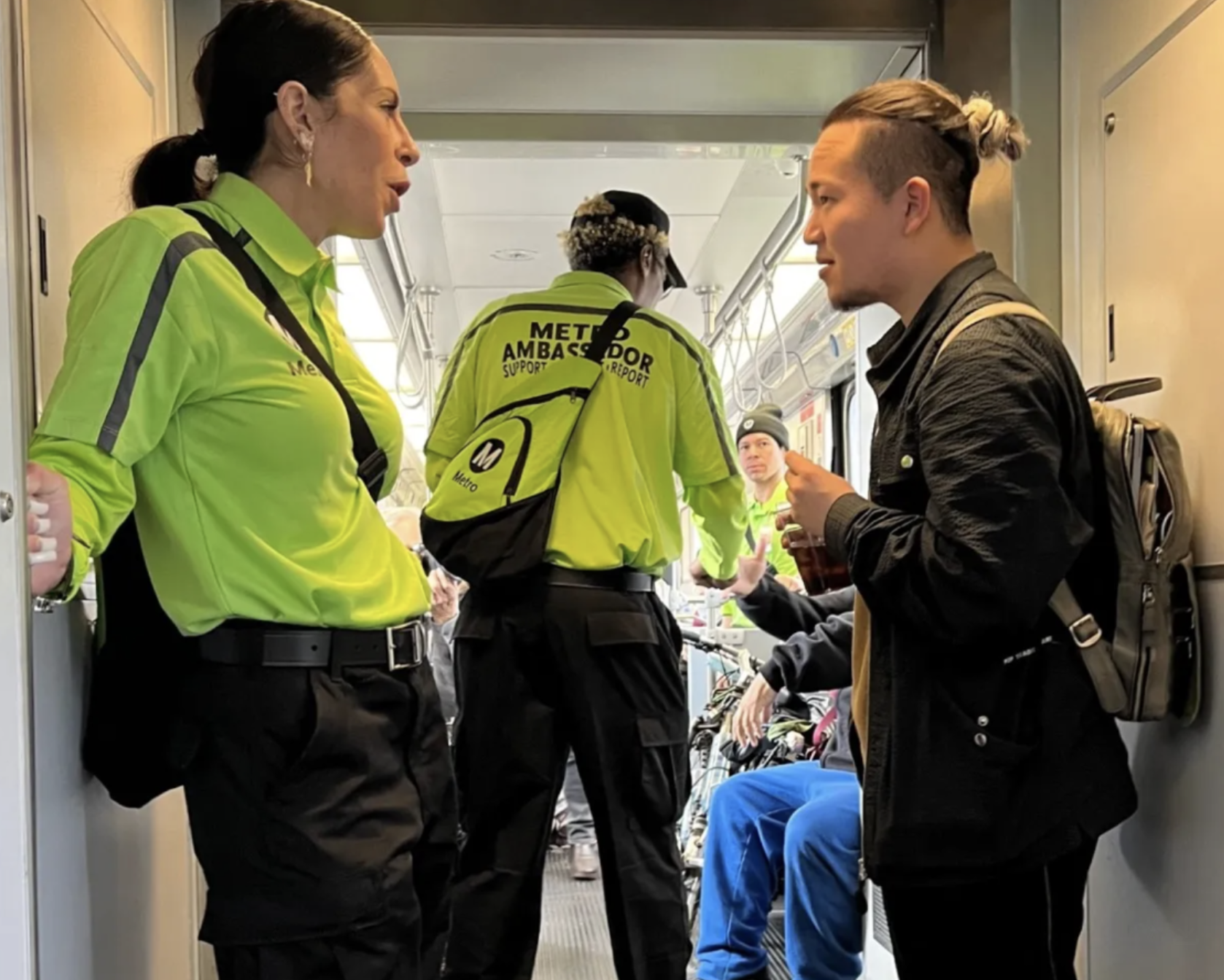
UCLA Study: Los Angeles Transit Ambassador Program Advances “Safety” And Is “Making A Positive Contribution To The System.” For StreetsBlog LA, Joe Linton reports on UCLA’s Institute of Transportation Studies new study examining the city’s Metro Transit Ambassador program. The full 80-page report, and accompanying policy brief are worth your time, but researchers found that the ambassadors “advance a community safety approach towards meeting riders’ needs… make a positive contribution to the system… [and] support riders and operator safety and connecting vulnerable riders to resources.” Here are some of the topline findings from the report and policy brief:
Active Safety, And Life-Saving Role: Through crisis response, de-escalation, homelessness outreach, and overdose prevention — the team “assists with the first level of homelessness response, with crisis de-escalation, and by administering Narcan to prevent overdoses,” and have “saved hundreds of lives on the system through Narcan use, CPR, and first aid.”
Highly-Visible Eyes On Riders: Researchers noted that the team provides “more eyes on the system and offer a highly visible presence to riders.” Researchers also noted that riders reported that “safety perceptions increased over the period ambassadors were deployed…”
Policy Recommendations: LA Metro’s decision to make the program permanent reflects “evidence that the pilot program was able to achieve many of its initial goals,” and recommends higher pay, better benefits, stronger career pathways, and improved data collection and evaluation to further enhance the effectiveness of the team.
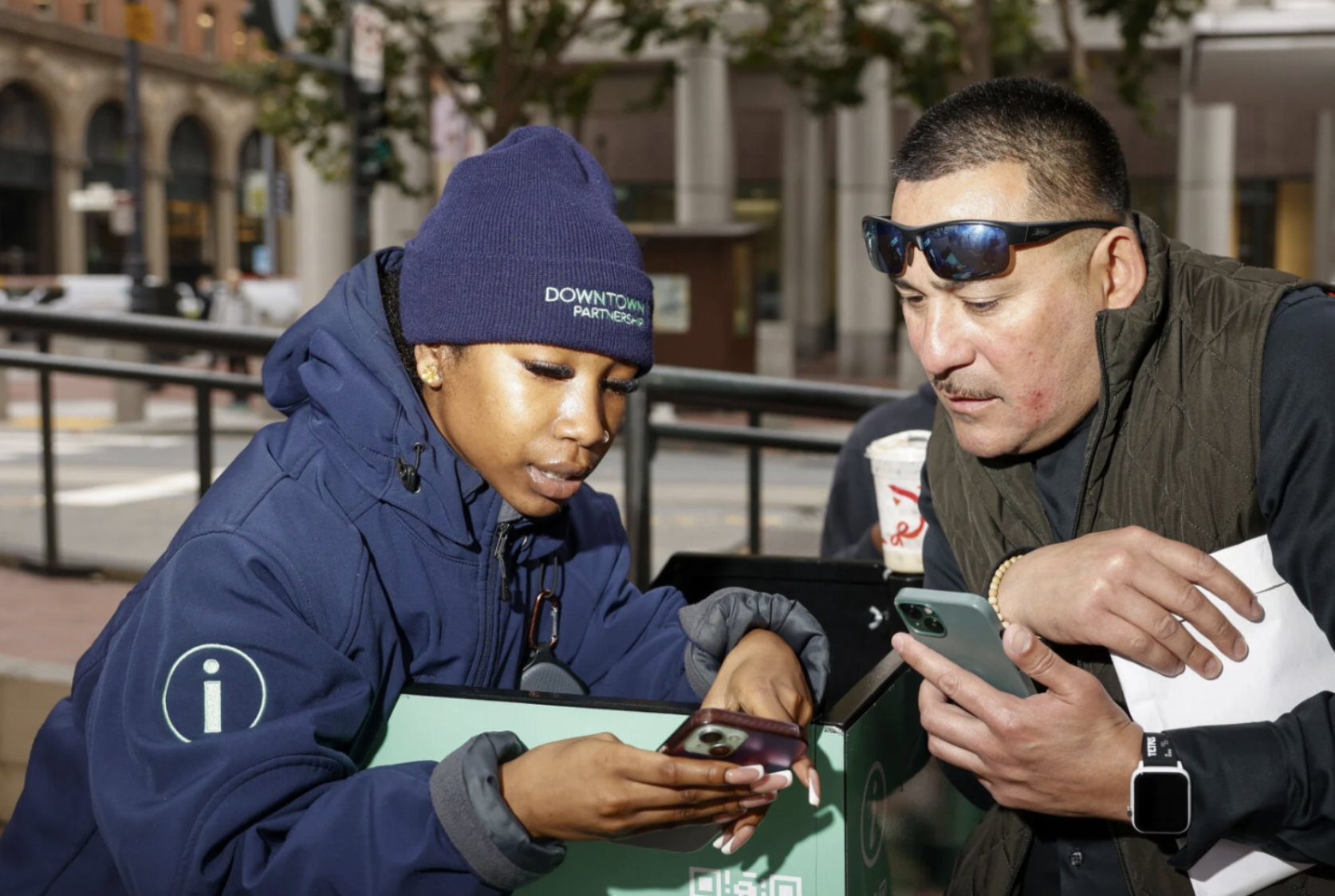
In San Francisco, “Downtown Ambassadors Cut 911 Calls In Half.” Writing for The San Francisco Standard, Jillian D’Onfro reports that a recent three-month expansion of the ambassador program at BART’s Embarcadero and Montgomery stations was associated with a 53% drop in safety-related 911 calls, while calls tied to violent incidents — including fights, assaults, and robberies — fell by 67%. The pilot, she writes, is “helping downtown San Francisco get its groove back.” The ambassador team provides multiple safety functions, including: being highly visible eyes on the downtown area, aiding residents and riders around the system, “performing wellness checks” on the homeless population as well as connecting them to “available resources or calling in other agencies to help,” and “providing supplemental cleaning around [the stations].”
2. Momentum For Hospital-Based Violence Intervention Programs Across The Country.
In Cincinnati, Ohio, Hospital-Based Violence Intervention Program Aims To Reduce Gun Violence, “Providing Comprehensive Care For Both Victims And Their Families.” For WLWT5, Nicole Aponte reports on the city’s “Hope and Shield” hospital-based violence intervention program, which operates out of the trauma centers at Children’s Hospital and UC Medical Center with physicians and violence intervention professionals working “hand in hand” to “decrease the risk of injury and re-entry” into the hospital.
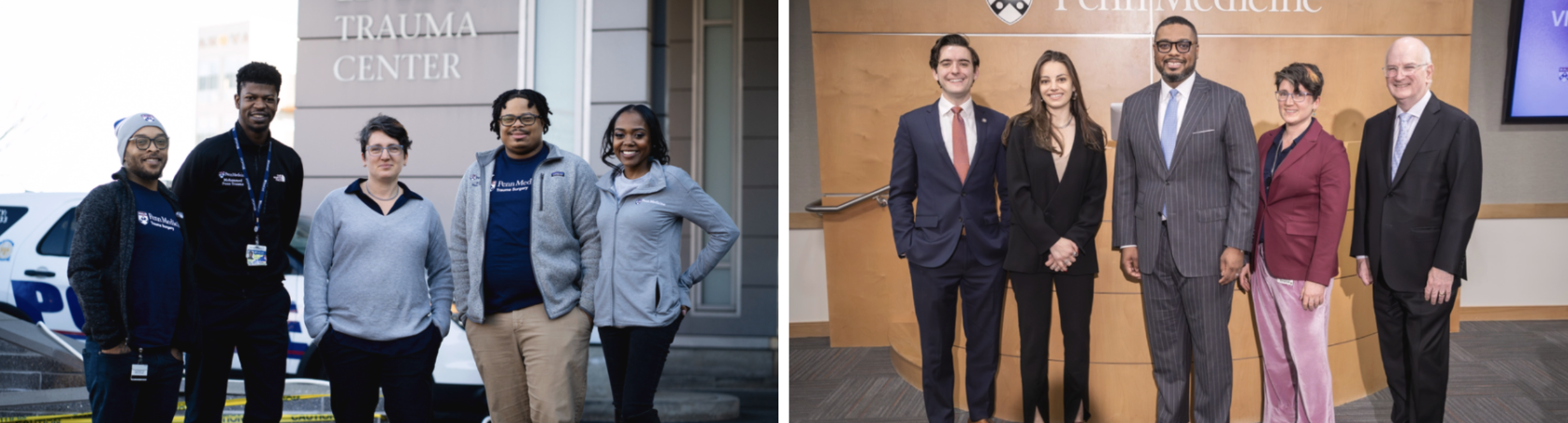
When a patient arrives at the hospital, healthcare professionals provide medical and trauma services while the person is hospitalized, and help victims obtain ongoing trauma counseling. They are also connected with “a gun violence intervention specialist team whose lives have also been touched by gun violence.” Patients then receive ongoing treatment for any “preexisting mental health issues… issues with food insecurity” to help stabilize them so they don’t fall back into a cycle of violence. The program has been in operation for about a year and nearly 140 gun violence victims have enrolled in the program.In Pennsylvania, State Invests $3 Million For Expansion Of Hospital-Based Violence Intervention Programs. Lt. Governor Austin Davis announced last month that the state would be making the investment in multiple hospital-based programs in operation across the state that provide care to “violently injured patients at the critical moment when they are hospitalized and provide them with support after they’ve been discharged… to help prevent cycles of gun violence by reducing the likelihood of reinjury and retaliation.” The hospital-based programs are part of a sweeping effort to reduce gun violence in the state, that has contributed to “a 35 percent reduction in homicides” in the state, and “a 15 percent decrease in homicides” in Philadelphia just last year, Lt. Gov. Davis explained.
Elinore Kaufman, a trauma surgeon at Penn Medicine and director for the Penn Trauma Violence Recovery Program, explained the importance of programs like these in the state:
“When I care for a patient injured by gunshots, my goal, along with my clinical team, is to repair physical damage: to use all the resources and skills that we have at Penn Trauma to transform life threatening injuries into something that can heal… But for so many of our patients, discharge home is not a success if their home isn’t safe because the shooter knows where they live. If they can’t keep the lights on because the electric bill is too high. If their injury puts them out of work and now they are behind on rent and at risk of eviction. If they have nightmares and flashbacks and don’t feel safe leaving the house. If they can’t get to their follow-up appointments because they have no transportation… [Now with programs like these] it’s an opportunity to help them heal, to help make their life a little bit better, to help prevent the next injury, and to help make our community a little bit stronger.”
3. San Francisco’s “Swiss Army Knife Team Of Teams” Enhance Public Safety, Provide Mental Health Care, Clean Up City Streets.
For Mission Local, Xueer Lu reports on the innovative multi-team approach San Francisco has deployed in the Mission District—a five team “Swiss Army knife team of teams” that “has been working together for nearly a year now”—to help improve public safety, provide homelessness outreach, mental health care, clean up city streets, and reduce the burden on local police. Here’s a look at the teams and their various functions:
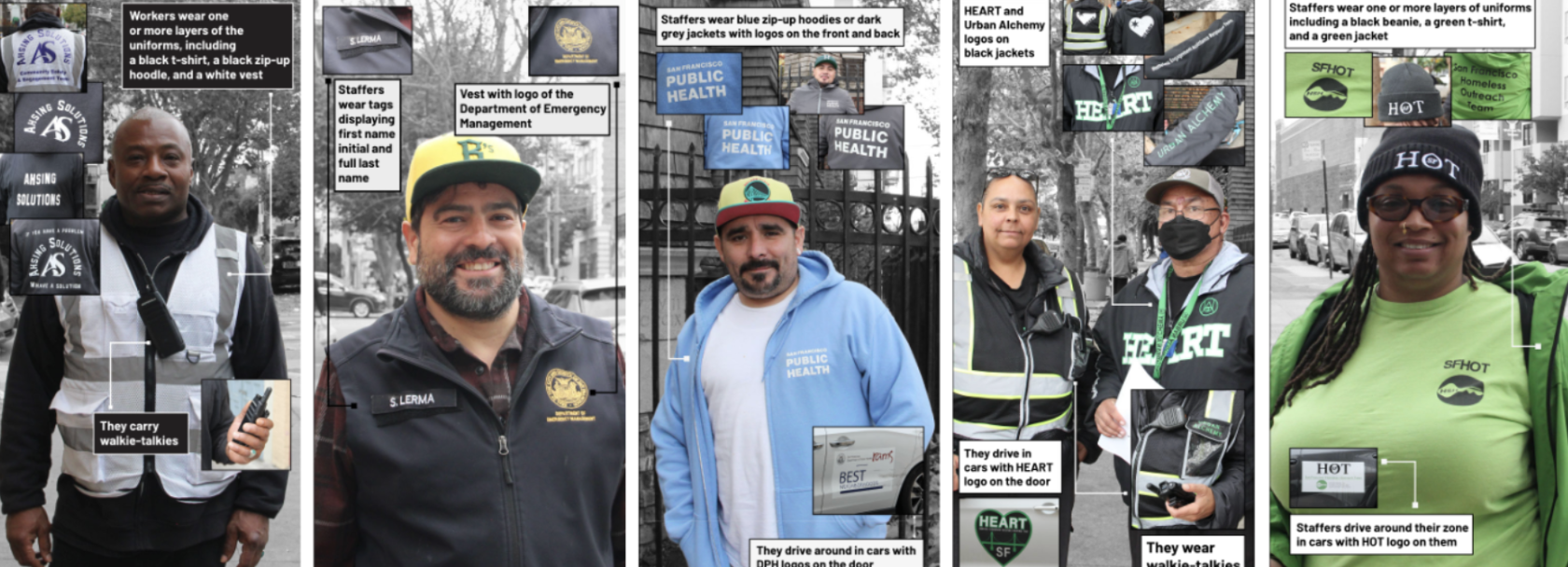
Emergency Management Team: The “umbrella organization that all the city’s work on street conditions and homelessness fits under.” The team “runs daily coordination meetings for the [various street] teams, directs outreach and enforcement efforts, acts as the central point… ensuring teams work in sync rather than in silos, and responds to 311 calls related to homelessness.”
Public Health Team: This team “consists of trained clinicians, medical providers, nurses, and nurse practitioners” who “treat infections and give urgent wound care… [and] connects people to mental health and substance use disorder services.” The team also provides ongoing follow-up for people with mental health conditions or substance use disorders “to make sure they are taking their meds and stabilize their conditions.”
Homeless Response Team: This team, also known as HEART, “is dispatched to disturbances, wellness checks, noise complaints, trespassing” that are “received by the city’s 311 communications centers concerning people who may need shelter, substance abuse recovery, or mental health services.” The team is composed of trained professionals certified in “CPR, first aid, and Narcan [application]” and help connect the homeless population to city services.
Supportive Housing Team: This unit “employs outreach workers who assess unhoused people currently living outside, and then work to connect them to shelter, housing and other city services.” The team also helps people transitioning into housing, “arranging transportation for them to get there, and helping them [with storage of] their belongings.”
Ambassador Team: This team of trained professionals “acts as a force multiplier for the city’s existing efforts”, focuses on “cleaning the streets, ensuring safe passage for kids” walking to and from school, responding to overdoses, “intervening and deescalating street conflicts… [and] acting as eyes and ears on the street.” The team hires people who were formerly incarcerated or homeless which, the team explains, “makes it particularly effective at building trust with people currently on the streets” and providing them connection to treatment.
We’d love to hear from you! If your jurisdiction is working on an innovative program to advance public safety, please email us at matt@safercitiesresearch.com.