Three Things To Read This Week
1. Momentum For Hospital-Based Violence Intervention Programs Across The Country.
In Louisville, Kentucky, “New Report Shows Decrease In Shootings, Homicides,” Mayor Credits Hospital-Based Violence Intervention Program As Key. For WHAS11, Margaret Vancampen reports on Louisville Mayor Craig Greenberg’s announcement that “shootings and homicides are down in the Metro by between 25% to 30%” and that “Pivot to Peace,” the city’s community and hospital-based violence intervention program that the mayor said has “led to a noticeable decrease in violence in areas where the program is active.”
The program, highlighted for its success in a new report published by the city’s Office of Violent Crime Prevention, “provides victims of stabbings and shootings with case workers and other community resources to both identify and address factors that put them at risk for violence.” The city’s full report from its Office of Violent Crime Prevention is worth reading, but here are the key findings:Hospital-Based Intervention Reaches Survivors At The Most Critical Moment: Between 2024 and 2025, Pivot to Peace’s HVIP enrolled 85% of the “628 patients [who] presented at University of Louisville Hospital with a gunshot wound or stabbing injury.” Violence specialists and medical staff “provide immediate emotional support” and a “timely intervention [that] is key to breaking cycles of violence and offering hope during a period of intense vulnerability.”
Comprehensive Support: The program delivers “mental health counseling… substance abuse treatment… legal assistance… and help with securing stable housing and employment” — a set of services “designed to tackle the various factors contributing to violence and instability in an individual’s life.”
Long-Term Care That Builds Stability: The program’s impact is sustained through its “commitment to following up with long-term care,” with specialists offering “guidance, encouragement, and consistent access to resources.” This ongoing support helps individuals “navigate complex challenges, build resilience, and avoid falling back into violent behaviors” — ultimately enabling patients to “find stability and start to rebuild their lives.”
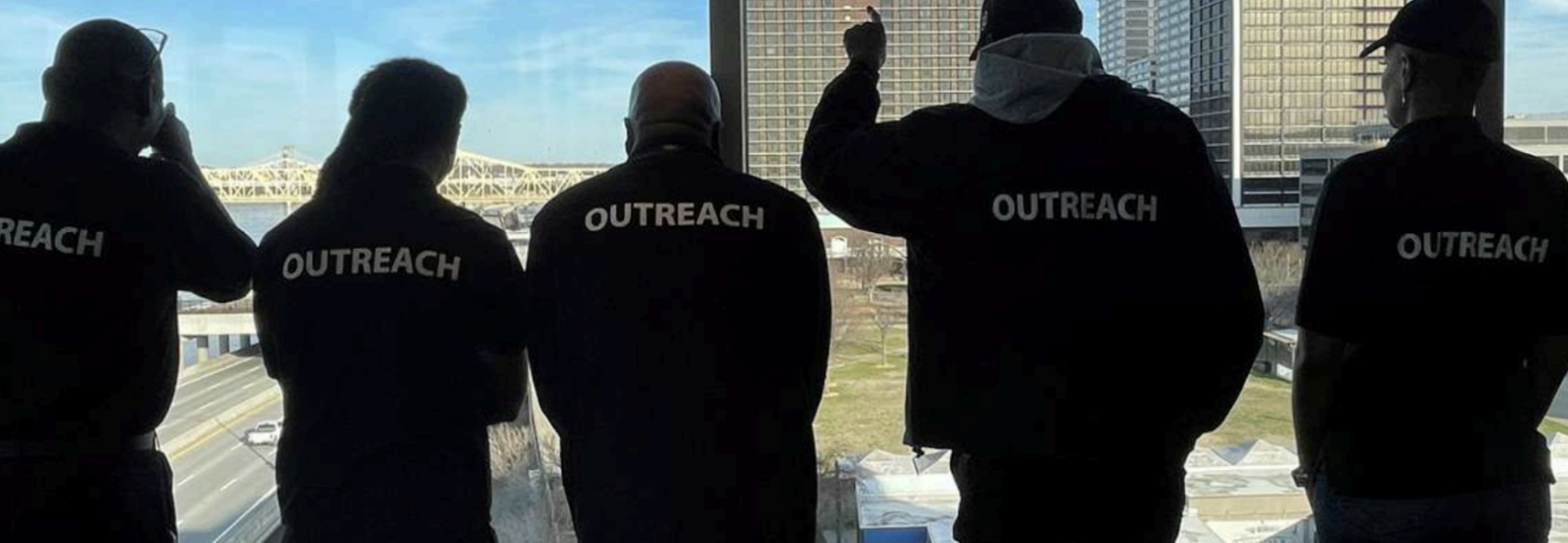
For WLKY News, Madison Elliot spoke with Janae Wright, a mother who works as a trauma specialist with the Office of Violence Prevention’s hospital-based violence intervention program, who explained to the news station that when a gunshot victim comes into the hospital, immediately “staff assesses [the] patient and tries to get to the root cause of the issue, so they don't find themselves back at the hospital for the same reason… [and] try to prevent re-injury.” Wright understands the profound impact of gun violence personally and the life-changing importance of a program like Pivot To Peace, she detailed in the city’s report:
“[Janae’s] life changed in an instant one February night in 2021…. After a long shift at work, [she] was ambushed outside her home and shot six times during an attempted robbery, all while pregnant… she fought to survive not just for herself, but for her unborn son. Miraculously, both lived. The road to recovery was grueling—surgeries, physical limitations, and the emotional weight of near-death. But Janae endured… Janae [is] perfectly suited to support others [because]... she knows what it means to survive trauma… Her journey allows her to connect deeply with survivors… [and] offers proof that healing is possible…. ‘I encourage anyone who has survived or been impacted by gun violence to seek help… Know that you are not alone and that you too can come out of this on top.’”
In Charleston, “The Medical University Of South Carolina Receives Grant To Support Its Violence Intervention Program. For WCSC, Maitane Orue reports on the new funding for the MUSC hospital-based violence intervention program, called Turning The Tides, that will fund the hospital’s “early intervention” effort, “one of the programs that has expanded in the last year.” The program “helps survivors with bedside support, referrals, wraparound services and long-term follow-up for individuals and families still at risk… [and] aims to keep participants safe and prevent them from experiencing violence again.” Christa Green, program director for the HVIP, explained to the news station that the early intervention program “screens [patients who arrive with gunshot wounds] for risk of firearm violence, and then [refers] patients [into the program’s services] who screen positive… if we know what puts someone at risk of experiencing violence, let’s not wait until they’ve been injured to intervene.”
Mobile, Alabama Hospital-Based Program “Helps Break The Cycle Of Violent Crime While Helping Victims Heal.” For Fox10, Daeshen Smith reports on Mobile’s new hospital-based violence intervention program, called HALO—”a collaboration between the city, University Hospital and the Mobile County Health Department.” As physicians are providing the medical care the patient needs, the program also deploys a “violence intervention specialist … [to work with] gunshot victims right there in the hospital… to learn more about the situation [and] prevent things from escalating… [to] make sure they don’t become either another victim or a perpetrator of this type of violence.” As the patient recovers, the intervention specialists “identify any other needs the victims have including financial needs and help with transportation to and from follow up appointments…"
2. Cities Turning To Youth-Focused Crisis Stabilization Centers To Give Young People “Something Fundamentally Different” Than Emergency Rooms, Jails.
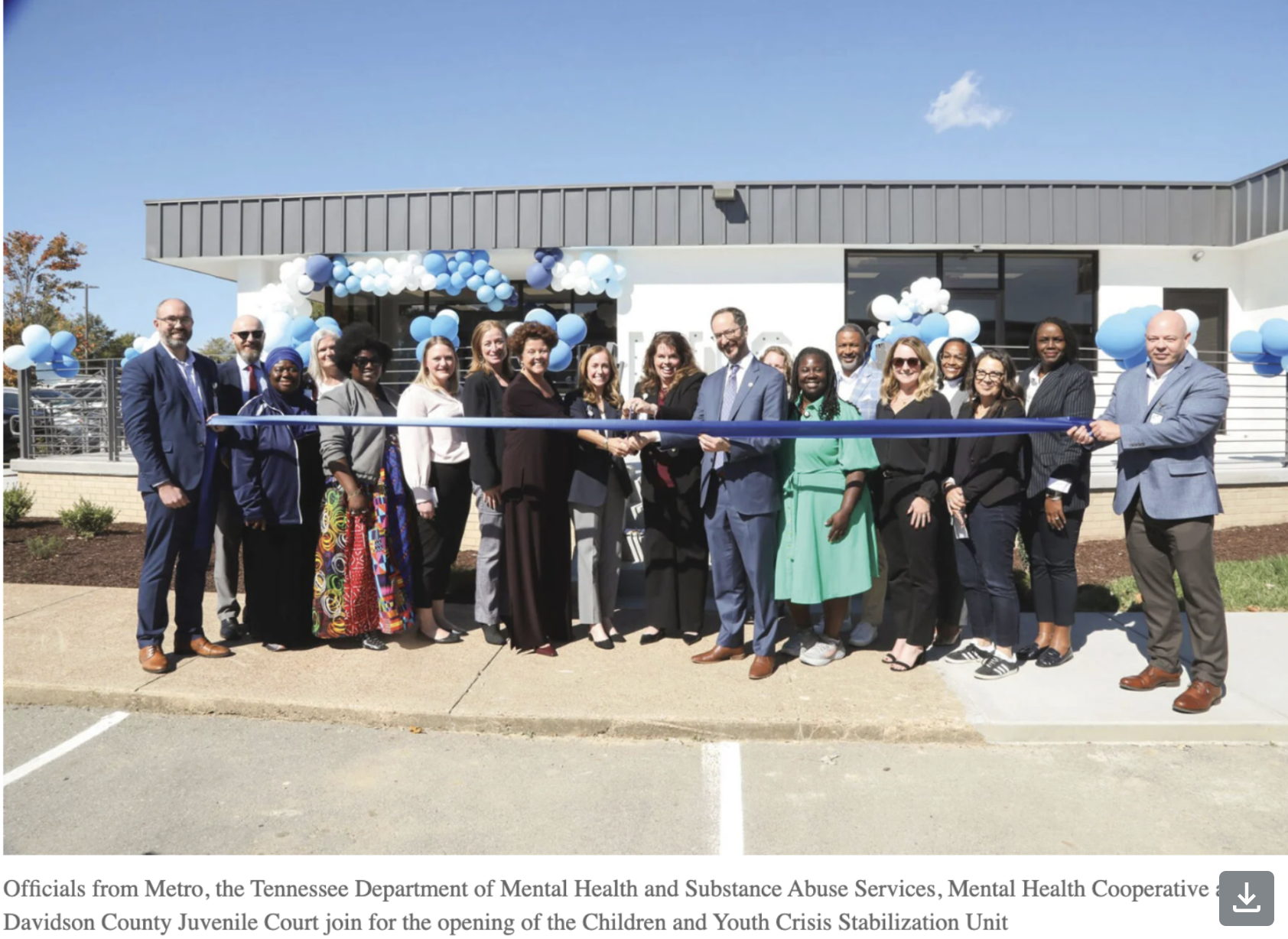
In Nashville, Tennessee “Mental Health Crisis Unit Opens for Youth.” For Nashville Scene, Hannah Herner reports on the city’s new Children and Youth Crisis Stabilization Unit, which “serves kids ages 4 to 17, with an expected average stay of three to five days. It offers 17 beds and staff specially trained to treat children and families.” The new center fills “a gap in services” for children “experiencing a mental health crisis” that previously saw “the child [sent] home…[sitting] at hospitals or the Davidson County Juvenile Detention Center awaiting the next move.”
Ruth vanBergen, senior vice president of emergency psychiatric services at the center, explained to the newspaper that the city has long “struggled with [youth mental health care], we don’t have a lot of options for kids in crisis [until now]... this gives us an in-between service that we can help them work through the current crisis situation, and get them connected to what they need to be successful after that crisis is over and upon discharge” back home.
In Chicago, “Crisis Stabilization Center” Opens “For Kids Who Need Help.” For WBBM Newsradio, Mike Krauser reports on Cook County’s new Ada S. McKinley Youth Crisis Stabilization Center, a first of its kind facility on Chicago’s South Side, that will provide “a place of refuge for youth in crisis, a safe, supportive place to go when folks feel like the walls are closing in.” The center, staffed with “trained clinicians and mental health professionals,” provides “mental health counseling services… early learning, foster care, academic and career counseling… test prep, tutor and mentor support… [as well as job] training and employment opportunities.” Toni Preckwinkle, Cook County Board President, explained to the radio station that this center is a vital piece of a modern public safety infrastructure: “For far too long, our young people in crisis, particularly on the south and west sides, have been forced into a narrow and unacceptable system of choices: hospitalization or involvement in our criminal justice system. This new Crisis Stabilization unit offers something fundamentally different.”
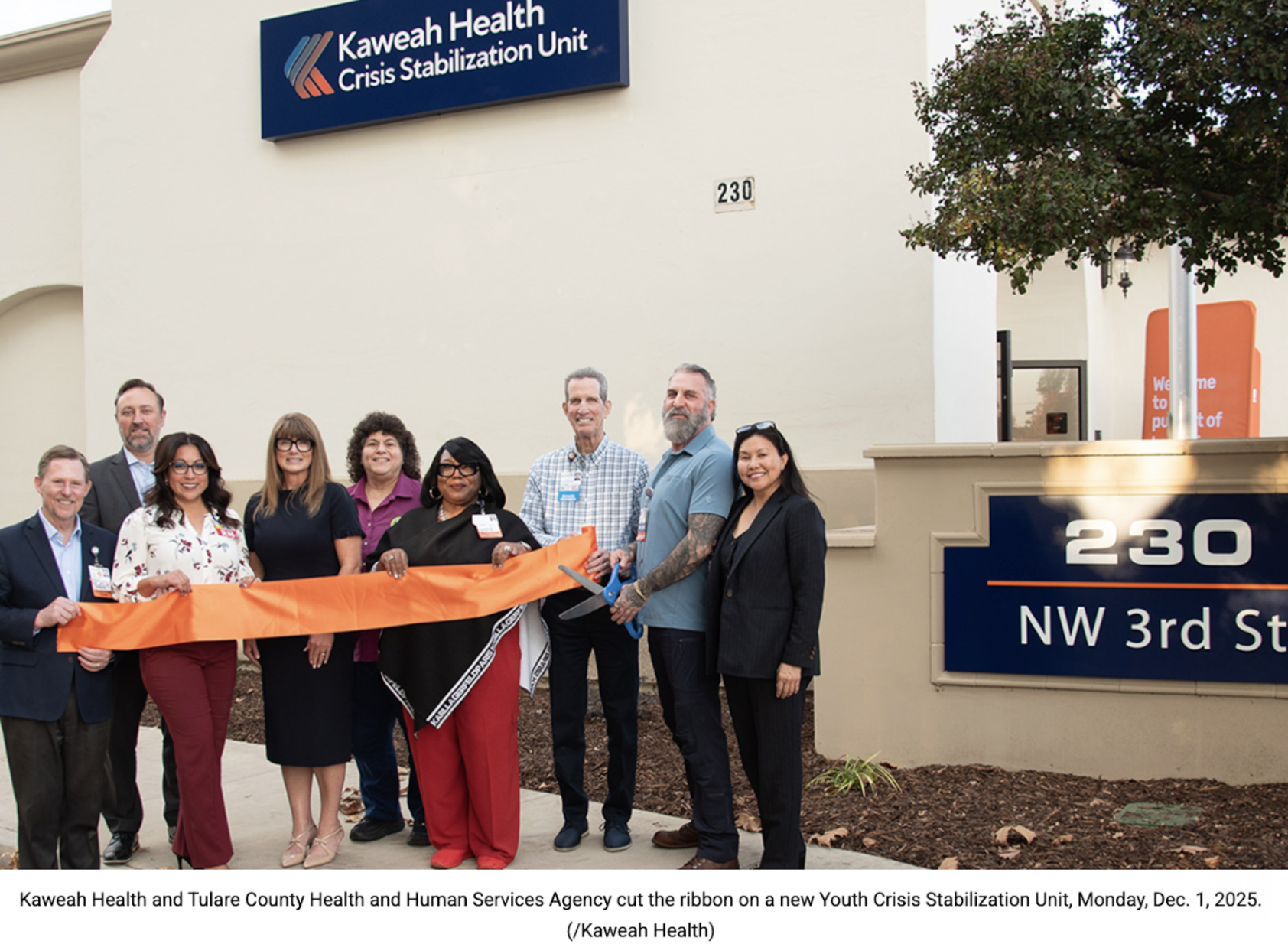
In Visalia, California, “Youth Suffering From Mental Health Crises Can Get Focused Care 24 Hours A Day.” For GV Wire, Edward Smith reports on Tulare County’s new Youth Crisis Stabilization Unit, a partnership between local hospital Kaweah Health and the county’s Health and Human Services department, where “children and youth [those 21 years old and younger] can receive acute psychiatric care … crisis evaluation, intervention, stabilization … away from an emergency department setting” or jail, “allowing youth to remain connected to their community and de-escalate situations before they become unmanageable emergencies.” Marc Mertz, chief strategy officer for Kaweah hospitals, explained to the news site that “Mental health is a major issue in Tulare County and children are among the most impacted portions of our population… Far too many of them go untreated. This new facility will ensure that our children can get the mental health support they need where they need it.”
3. Homeless Outreach Teams Reducing Homelessness, Providing Medical Care.
In Gresham, Oregon, Outreach Team “Cuts Homelessness 74%.” For Fox12 News, Lia Kamana reports on the success that the City of Gresham is having with their Homeless Services Team, which local officials credit with driving a sustained decrease in the city’s homeless population, while the larger county, Multnomah, has seen homelessness increase. The four person team “assists clients in overcoming barriers including criminal backgrounds and past evictions, while helping them find jobs and housing that will set them up for success.” The team then does case management and checks in with clients once they have secured housing to help make sure they remain housed. Ivanna Nellum, a formerly homeless mother sleeping in her car despite working full-time, told the station that once the outreach team stepped in, her life changed — and she’s now in stable housing:
“Despite working six to seven days a week as a caregiver for autistic children, Nellum was struggling to make ends meet and sleeping in her car with her family…. The team connected with Nellum … [and] initially put her up in a hotel … less than a month later, she moved into a new apartment with rent assistance for up to six months… ‘I’m just real grateful. You can definitely put your trust in them, they will never steer you wrong. Looking at all of this, it’s beautiful, it’s all I could have asked for.’"
In Eagle County, Colorado, “Homeless Services Team Works To Fill Housing Gaps.” For Vail Daily, Zoe Goldstein reports on the county’s homeless services team, in operation since 2022 and a first of its kind in the county, which helps the area’s “homeless population find permanent housing.” To do this, the team’s caseworkers “engage with unsheltered individuals and families, helping them complete housing applications and connecting them with other resources for their mental and physical health.” The team also provides access to the county’s Day Center where residents at risk of homelessness can access “case management, clothing, lockers, mail services, toiletries, and vouchers for showers and laundry… [as well as] financial assistance and supportive services to help individuals and families avoid housing loss.”
In Pennsylvania, University Medical School Students “Lead Penn Medicine’s Homeless Outreach Project.” For Penn Today, Daphne Sashin reports that Penn medical students leading the Homeless Outreach Project are providing direct, on-the-street care to the local homeless population. The effort is already showing promise:
Street-Level Medicine: Students and physicians assess hypertension, chronic wounds, and diabetes; provide medications for “common conditions” and connect people directly to clinics.
Improved Outcomes: Emergency-department visits for patients fell “by 45 percent” in the program’s first year — results clinicians attribute to meeting patients where they are and sustaining contact over months.
Bridging Street Care To Long-Term Support: The team augments Penn’s existing safety-net system by connecting people met on the street to the University City Hospitality Coalition’s free weekly medical clinic — creating continuity of care across outreach walks, clinic visits, and follow-up. Volunteers train peers in “street medicine [and] wound care,” expanding the city’s capacity to serve unsheltered patients.