Three Things To Read This Week
1. Report: “Community Violence Intervention Investments Have Helped Reverse Chicago’s Shooting, Homicide Trends.”
For PBS in Chicago, Matt Masterson reports on the latest findings from Northwestern University researchers who examined the impact of Community Violence Intervention programs in the city and discovered that “increased investments in a violence intervention program that targets Chicago communities and hotspots with the highest rates of gun violence have led to continued declines in the number of shootings and homicides.” The researchers also found that the “community areas with the greatest CVI investment … saw the largest reversals in shooting trends following pandemic-era spikes in gun violence.”
The full report, published by the Illinois’ Government Alliance For Safe Communities division of the Department of Health, is worth your time, but here are some of the topline findings:
Investment Scaled Reach And Service Delivery: “Levels of participation and service provision increased with public investment…” as grantees “served over 27,000 CVI participants… providing over 60,000 services.” The model is reaching its intended population “in communities…with the highest levels of gun violence” and is delivering “a range of holistic services [from] basic needs [to] employment and mental health supports.”
Programs Are Reaching Highest-Violence Communities: “Public investment is going to the communities with the highest need,” with funding “funneled… into communities with the highest levels of violence.” The data shows alignment between dollars and demand — areas with “the highest average quarterly investment… also served the largest number of participants,” indicating funds are “supporting the growth of CVI in areas with the greatest need.”
Highest Investment Areas Saw The Largest Violence Reductions with the most sustained investment “experienced the largest reversals in shooting trends,” with those receiving “more than $500,000 per quarter” seeing the strongest gains. Critically, “only those communities receiving the largest quarterly investments… experienced a 2024 shooting rate lower than their pre-pandemic baseline… in 2019.”
Related: California Governor Gavin Newsom announced this month that the state was also deepening its investment in CVI-related programs, awarding $107 million, distributed to 42 cities, counties, and groups across the state, that “support proven, community-driven strategies to reduce shootings, homicides, and retaliatory violence… including trauma-informed intervention, credible messenger street outreach, wraparound services for families at risk, and intensive case management for youth and adults most impacted by violence.” New York Governor Hochul also announced investments of nearly $21 million into CVI and hospital-based CVI programs “that work to reduce gun violence and save lives across New York.” One such investment is going to the successful “SNUG Street Outreach” programs—known as “SNUG Zones” in the many neighborhoods they serve—which, according to data from the state’s Department of Criminal Justice Services, “last year collectively showed a significant, double-digit decrease in shooting victims, individuals killed by gun violence and shooting incidents with injury when compared to 2024.”
2. Sobering Centers Providing Comprehensive Treatment, “Instead Of Turning To Emergency Rooms Or Law Enforcement.”
Spokane County, Washington Expanding Sobering Center To “Reduce … Strain On Local Emergency Rooms, And Criminal Justice System.” For KREM, Emmalee Appel reports on the county Board of Commissioners approval of a $3 million expansion for the county’s Crisis Relief and Sobering Center, a facility that the board said has become a “critical investment for [the] region… providing timely, recovery-focused care for those who need it most.” The facility, which has provided treatment to more than 7,000 patients since its opening in 2021—some of whom would have previously been taken to a jail or ER—is staffed by medical professionals who provide patients with “mental health counseling and substance use disorder treatment services, medication assisted treatment options, and individualized support and recovery plan development.” When needed, staff also connect patients to vital county and state services like “housing enrollment, veteran programs… health insurance navigation, [and] primary care connection and case management.”
The expansion will allow for more patients to be served in the facility and expand services available which “results in a greater chance of recovery… [continues to] reduce the strain on local emergency rooms, and… involvement in the criminal justice system… [and] saves taxpayers' and individuals' money,” the county explained.

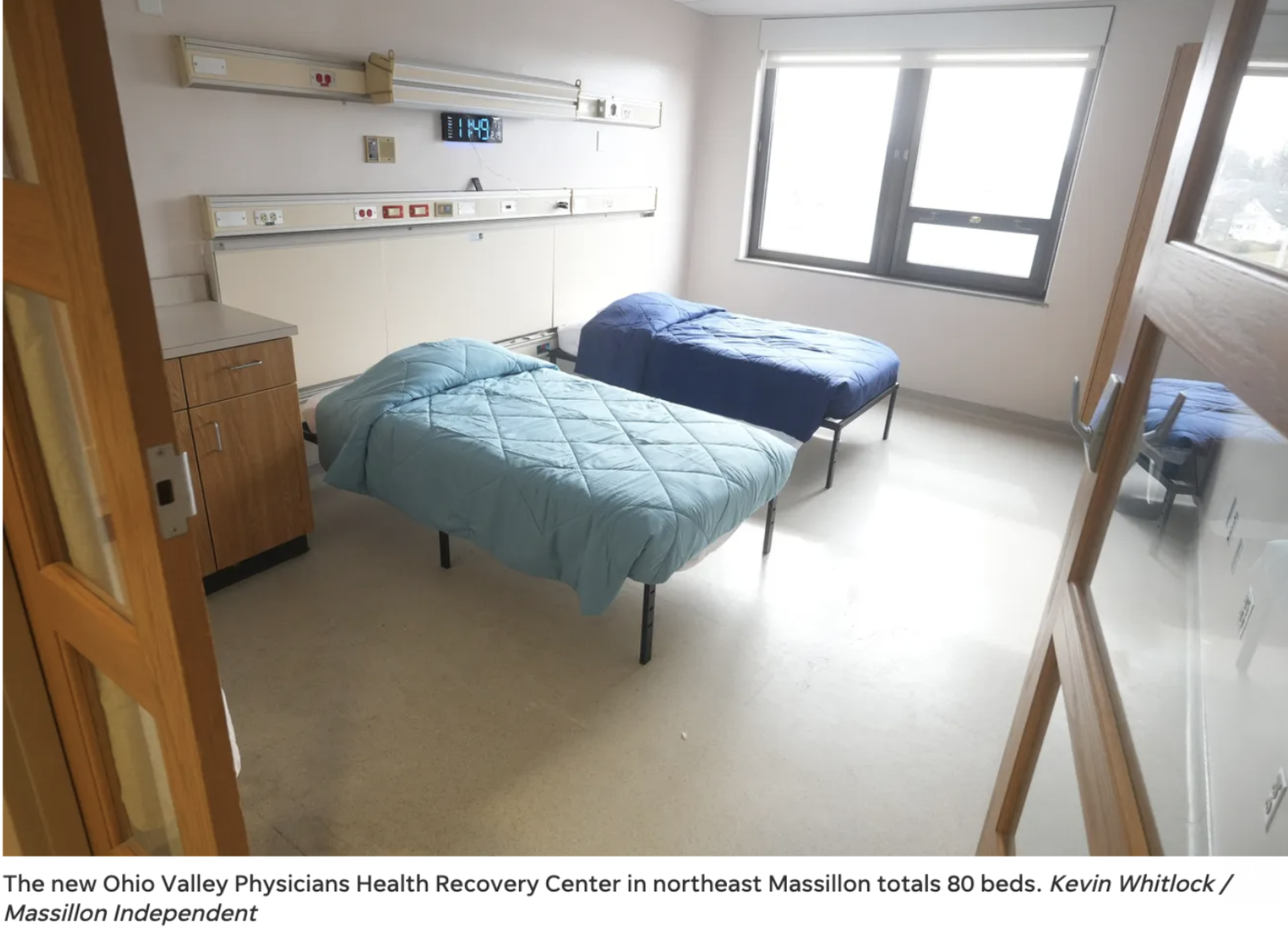
In Massillon, Ohio, Health Center Expands With New 80-Bed Sobering And Recovery Center. For The Massillon Independent, Steven Grazier reports on the city’s existing medical center expanding with a “new drug and alcohol recovery facility with 80 beds” that will provide “inpatient detox and care, medication for substance disorders… mental health treatment. . . and post-care planning and referrals” to patients with substance use disorder. The medical center invested around $1 million to renovate a former “intensive-care unit” at the facility, transforming it into the expansive “two-floor, rehab center… [that will provide] 24-hour, substance abuse treatment.” The new sobering facility is staffed by “licensed physicians, nurse practitioners, physician assistants, nurses, licensed chemical dependency counselors, as well as peer support behavioral health technicians and support services.” Because of the center’s location within an existing medical center, the new facility will set itself apart from existing services in the city because they are the first to be able to accept “high-risk recovery patients … who take long-term antibiotics, and those having severe wounds or cardiac issues… [which is] a newer, more modern approach.”
In South Sioux City, Nebraska “First-Of-Its Kind” Sobering Center Opening To Provide Comprehensive Treatment, “Instead Of Turning To Emergency Rooms Or Law Enforcement.” For KTIV News, Taylor Deckert reports on the new $5.5 million “first-of-its-kind detox center [opening] in Northeast Nebraska… [with] 12 mental health beds, and 12 detox beds”, so that“instead of turning to emergency rooms or law enforcement, individuals and families will have a local option designed specifically for stabilization, dignity, and recovery.” Patients will receive drug and mental health treatment at the center 24/7 from a staff of “registered nurses… therapists, caseworkers, peer support providers, and navigators.”
Jennifer Jackson, who oversees the facility, explained to ABC9 News that the facility provides a new option for people experiencing a mental health or substance use crisis—“this is a diversion for the hospital, and this is also a diversion for jail,” providing them with treatment and connection to services to help stabilize them after they leave the facility, which the state of Nebraska found would “save the state $1,400,000 in year one and 1,700,000 in year two.” She also detailed the typical kind of patient that is treated at the center: “Let’s say somebody is drinking too much and they just want to stop, but they just cannot. This [facility is] a safe place where they can come, and they can be monitored 24/7. They can stay a couple of days until we get them into treatment. Then we’ll help them get to treatment.”
3. Crisis Stabilization Centers Providing Timely Mental And Behavioral Health Care, While Reducing Strain On City Budgets And Police Resources.
In Wichita, Kansas, Crisis Stabilization Center Model With Mobile Crisis Team “Generated $2.8 Million In Net Savings In A Single Year” For The City, Costing “Far Less Than Hospital- Or Jail-Based Responses.” For The Topeka-Capital Journal, Joan Tammany, the executive director of Wichita’s crisis stabilization center, and Michelle Hook, a registered nurse and behavioral health director, provide an update on the city’s crisis stabilization center. The center is at the heart of the “Wichita's community mental health care model” which has “save[d] millions” for the city since its launch.
Tammany and Hook detail a recent University of Kansas Medical School analysis of the center which found that “in 2023 alone, [the facility] resolved 1,143 mental health crisis episodes through its crisis center and mobile crisis teams…without involving an emergency room, ambulance or jail booking… [which] generated $2.8 million in net savings in a single year” for the city, and that overall “diverted $4.7 million in costs that otherwise would have fallen on emergency departments, EMS, law enforcement and the county jail,” because crisis facility and responder programs “cost far less than hospital- or jail-based responses.” Here’s what these numbers really mean, Tammany and Hook write:
“Those savings translate into emergency rooms with more capacity to treat medical emergencies, police officers spending less time responding to behavioral health calls, and … most importantly, people experiencing an emergency are receiving care that actually helps them stabilize and recover … Transitions to follow-up treatment are smoother, coordination across providers is stronger, and outcomes improve for patients and their families. This is not about shifting costs from one system to another. It is about using the right interventions, at the right time, in the right setting — and allowing every part of the system to do what it does best…
Across the country, this model has reduced emergency room use, lowered hospitalization rates, strengthened the behavioral health workforce and improved public safety. Wichita’s experience is a clear example of what’s possible when this model is fully supported. With budgets tight at federal and local levels and systems stretched thin, the lesson here is straightforward: Investing in community-based crisis care is fiscally responsible and lifesaving.”
Momentum For Crisis Stabilization Centers Around The Country:
Montgomery County Opening “First-Of-Its-Kind [Crisis Stabilization] Facility In Pennsylvania,” That Will “Reduce Unnecessary Hospitalization And Incarceration.” For CBS News, Nikki DeMentri reports on the historic groundbreaking for the new county Emergency Behavioral Health Crisis Center, a 24/7 “first-of-its-kind facility in Pennsylvania,” opening at the end of this year. When the facility opens its doors, it will “deliver round-the clock, walk-in crisis care for residents of all ages… that will take referrals from the County’s Mobile Crisis Team, individuals transported by police, EMS, and other first responders, as well as walk-ins.” The new model, county leaders explained, will “reduce unnecessary hospitalization and incarceration, while providing residents with timely, appropriate treatment.”
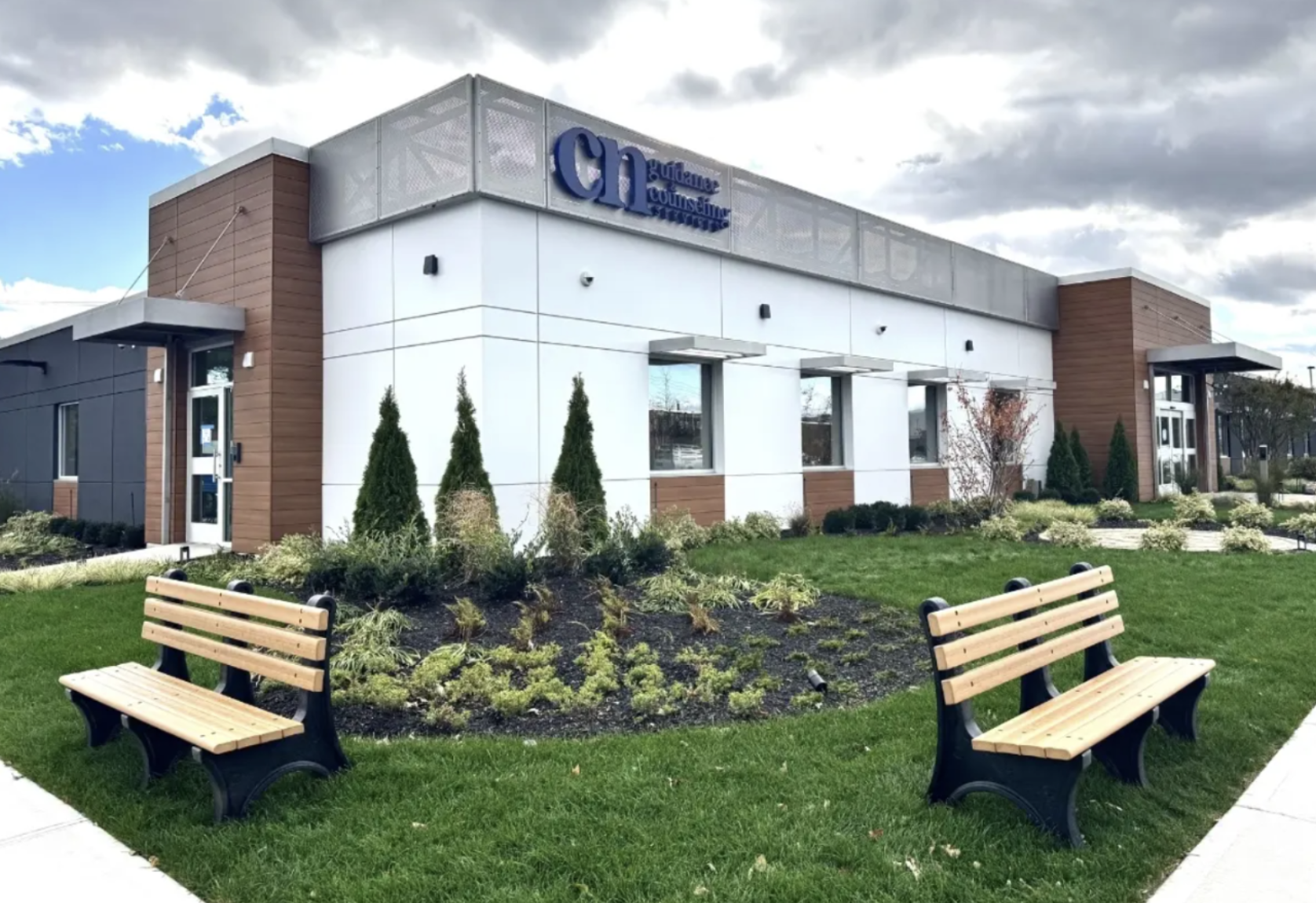
Long Island, New York Opens New 24/7 Crisis Center, “Expanding Access To Mental Health And Substance Use Care… Reducing Unnecessary Hospital Visits And Easing Strain On Emergency Services.” For The Long Island Herald, Olivia Simms reports on Long Island’s new crisis stabilization center that opened its doors at the end of last year that now offers people experiencing “a behavioral health crisis, options for immediate appropriate care,” a significant shift for the region where families and patients were forced to choose between “emergency rooms, law enforcement, or outpatient services” which do not provide appropriate mental nor behavioral health treatment.
The new 6,000-square-foot facility, staffed by “a multidisciplinary team that includes registered nurses, licensed behavioral health professionals, certified peer specialists with lived recovery experience, psychiatric nurse practitioners, substance use counselors, and behavioral health technicians,” provides children and families with “mental health screening and observation…counseling and recovery support… medication assisted treatment… [as well as] aftercare planning and coordination… regardless of ability to pay.”