1. Mobile Crisis Response Teams Mark Major Milestones Across The Country—Reducing Crime Reports, Responding To Tens Of Thousands Of Calls.
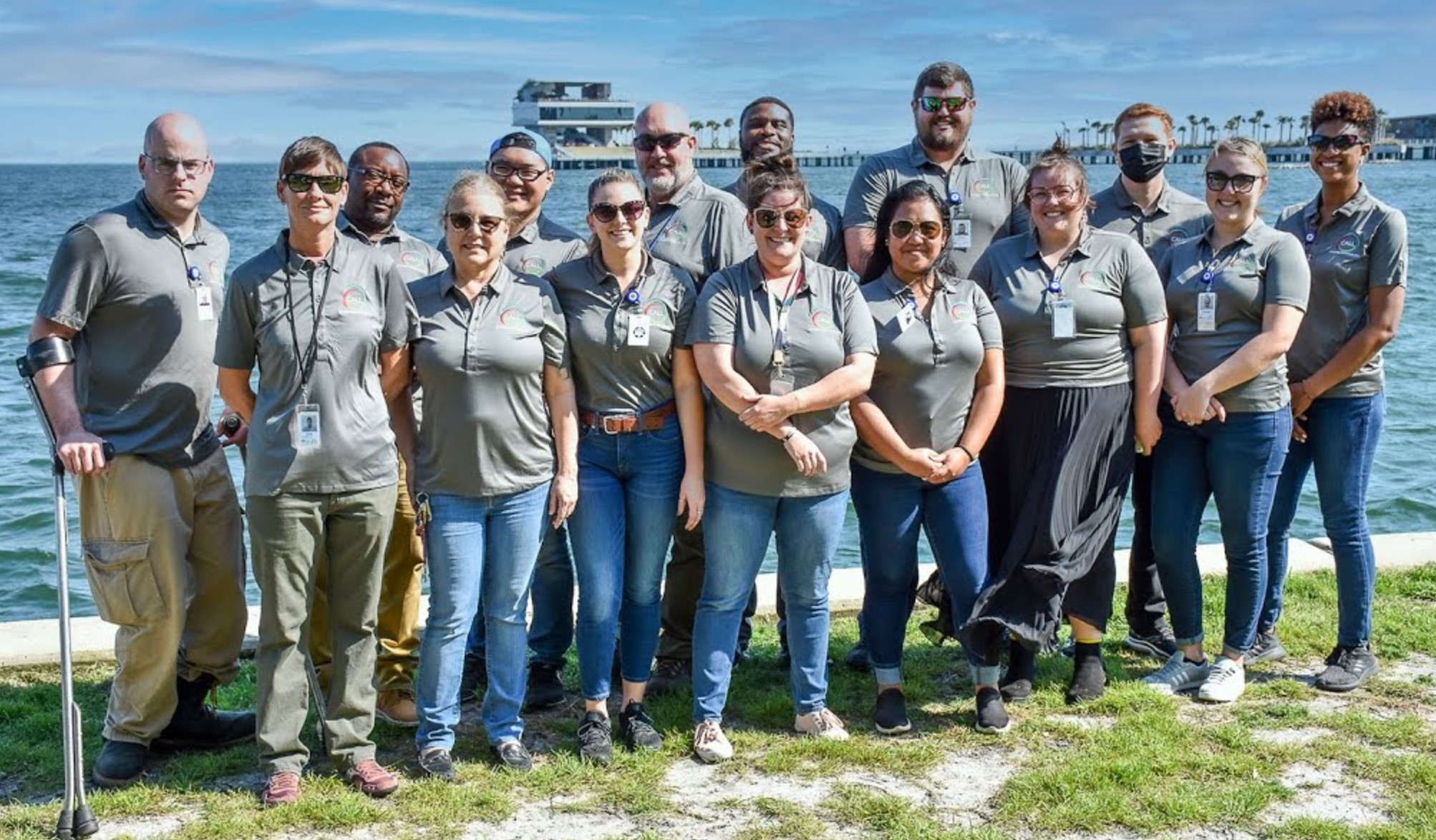
- In St. Petersburg, Florida, Mobile Crisis Response Team Has Responded To More Than 20,000 Calls. St. Petersburg’s lauded Community Assistance and Life Liaison, or CALL, team has now responded to more than 20,000 calls for service in the city since it first launched in 2021, the team reported at the city’s annual public safety meeting last month, marking a major milestone for the mobile crisis response team.
The CALL team—which deploys trained social service professionals to behavioral health and mental health calls for service that come into 911 emergency dispatch—is often celebrated as a top-tier national model for mobile crisis response, as Safer Cities has reported previously, and has only grown in importance to the city’s public safety infrastructure. As Catalyst’s Aaron Styza reports—the team has “restructured public safety [in the city], dividing and deploying resources more effectively so police can focus on criminal matters and CALL can focus on mental health and behavioral concerns.”
St. Petersburg Police Chief Anthony Holloway, a vocal supporter of the team, explained to Catalyst that with the success of CALL, it has “become clear that certain non-criminal calls, particularly those involving mental health crises, are often best supported by trained care professionals,” instead of law enforcement, and “reflects a shared commitment to using the right response for the right situation while ensuring the safety of both the individual and the community.”
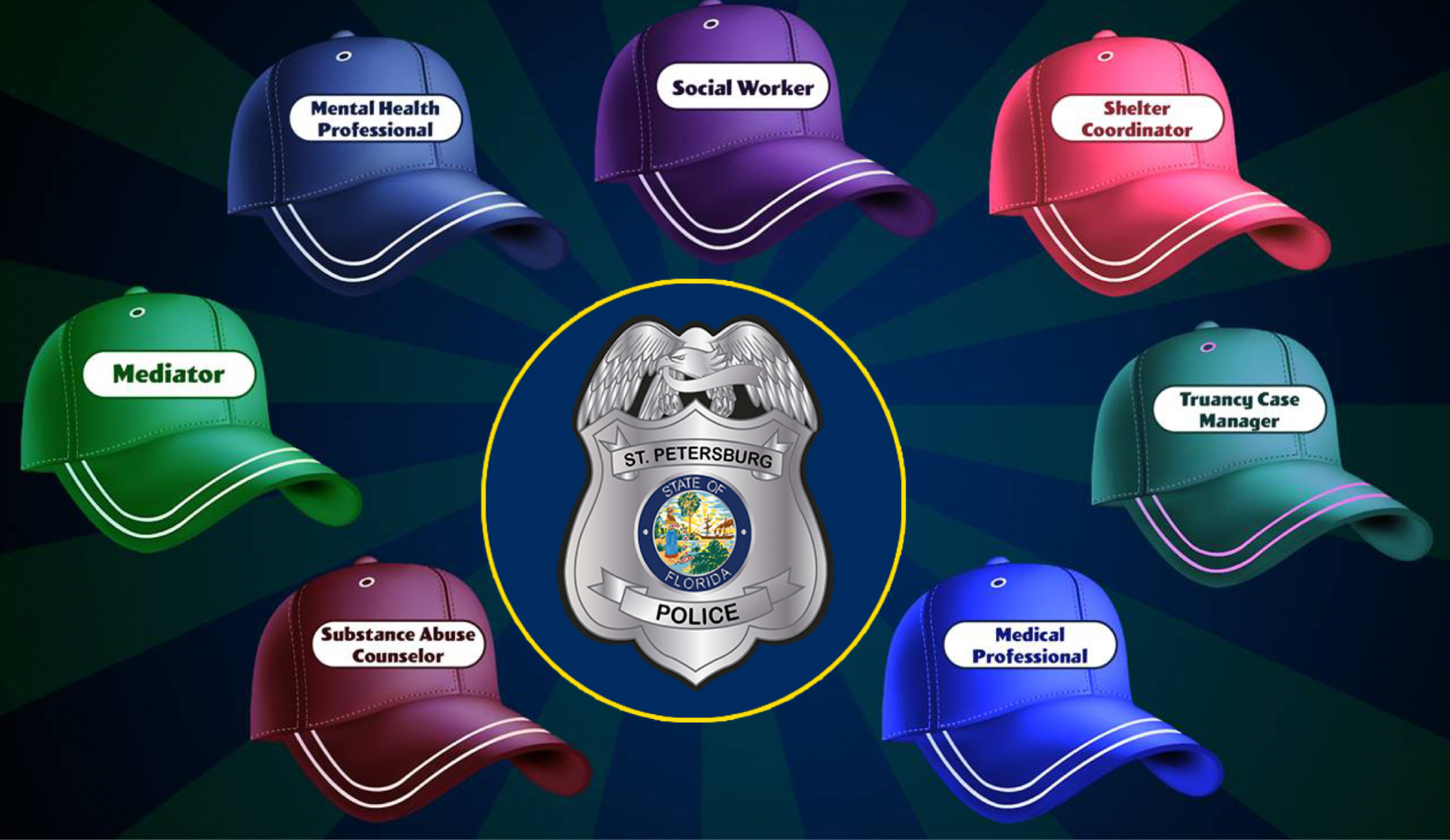
- How Does The CALL Program Work? Calls for service come into 911 or the non-emergency line and are first reviewed for “(1) event type, (2) nonviolent/noncriminal status… (3) caution notes/safety alerts… [and] (4) warrants for arrest,” before being routed to CALL teams that operate “8AM-2AM in the field daily.” The program also allows officers to request CALL “on-scene,” while CALL teams provide “follow up to ensure clients are linked with services and stable.”
- What Kind Of Calls Do They Respond To? The program provides a response team and wraparound services for “non-violent and non-criminal 911/non-emergency calls,” including “Mental [Health]” “Disorderly Juvenile/Truancy,” “Neighborhood Dispute,” “Substance Use” and “Homeless-related” calls.
- What Kind Of Training Does The Team Receive? CALL staff receive extensive training in “Scenario Based Training/Situational Awareness,” “Verbal De-Escalation,” “Mental Health First Aid,” “Trauma-Informed Care,” “Motivational Interviewing,” and “Safety Planning,” alongside CPR/First Aid and domestic violence training. The program also includes “Ride-Alongs with SPPD as refreshers and on-boarding new staff.”
The team’s impact was also measured in a recent study published in Psychological Services Journal by researchers from the University of South Florida which evaluated the CALL team to better understand its success and how other cities interested in launching a similar model could replicate it. The full study is worth reading, but here are some of the components researchers highlighted:
- Strong Buy-In Across Public Safety Agencies Helped Launch And Sustain The Program: Researchers found “support and initial buy-in” from leadership, police, and dispatchers was critical, noting the program gained momentum when “the police chief championed the CALL program” and “the police union” supported implementation. A 911 staff member explained that the program “filled a gap that has bothered us for many years,” allowing responders to help people when “we either had to send a police officer… or totally refused them service because there was just nothing we could do.”
- The Team Effectively Connects Residents To Long-Term Support: City leaders highlighted the program’s effective “holistic approach to crisis intervention,” emphasizing its ability to “connect clients to long-term resources, reduce repeat emergency service use, and divert noncrime crises.” CALL leaders also noted the program’s community presence, explaining “we’re constantly talking to community leaders, providers, small businesses, and church leaders… [which] gives us an opportunity to be proactive before something’s an issue.”
- “Stringent” Call Screening Helped Build Trust And Safe Implementation: Researchers found that “stringent vetting of calls” helped improve confidence in the program among partners, with police and dispatch staff highlighting “the strengths of the program… [as] the vetting procedures and strong communication between [911 emergency dispatch, police,] and CALL team members.”
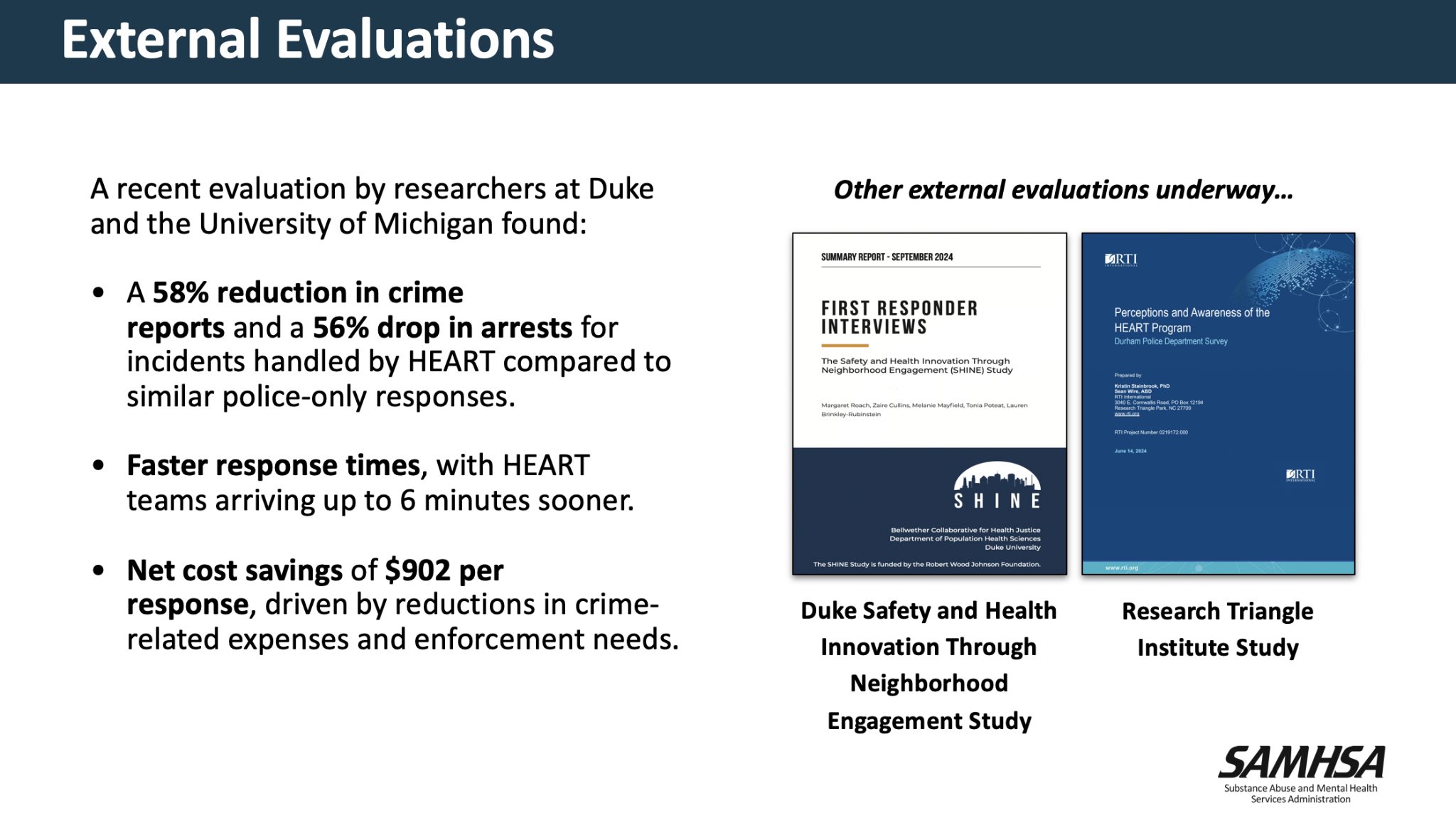
- In Durham, North Carolina, HEART Team Helped Produce A “58% Reduction In Crime Reports And A 56% Drop In Arrests.” For a presentation delivered through Substance Abuse and Mental Health Services Administration’s GAINS Center this month, leaders from the Durham Community Safety Department outlined growing evidence that unarmed crisis teams can safely handle many behavioral-health and quality-of-life calls while reducing arrests, saving police time, and even lowering crime. As the team reported in the presentation, “a recent evaluation by researchers at Duke University and the University of Michigan found… a 58% reduction in crime reports and a 56% drop in arrests for incidents handled by HEART compared to police-only responses.”
The HEART team, which launched in 2022 and now operates seven days a week, responds to mental health and behavioral health-related calls for service, often pairing a trained clinician with another expert to aid people in the throes of a crisis. The team highlighted in the presentation how the city’s HEART program (Holistic Empathetic Assistance Response Team) has become a centerpiece of Durham’s “newest branch of public safety,” responding to more than 40,000 calls since launching in 2022, as Safer Cities recently reported.
During the presentation, the team reported back several other promising findings, including:
- HEART Saves Thousands Of Police Hours While Earning Officer Support: Officials say HEART now saves police “Over 8,000 hours per year,” and that “94% of officers view HEART as helpful” in responding to mental-health-related 911 calls.
- HEART Teams Report High Safety Levels: Durham reported HEART teams request emergent police backup “less than ½ of 1% of the time,” while responders say they feel safe on “over 99%” of calls.
- HEART Teams Also Reduce Burden On ERs: Durham officials reported that HEART is now “5x more likely to transport individuals to non-hospital care,” helping connect people to crisis and recovery services outside emergency rooms.
2. Report: “How States Can Solve Mental Health Workforce Shortages.” As cities and counties continue expanding mobile crisis response teams, stabilization centers, diversion programs, and other behavioral-health infrastructure, many leaders are confronting the same challenge: finding enough trained professionals to meet rising demand. For Governing Magazine, Stacey Baxter reports that states are increasingly responding with workforce solutions designed to recruit, train, and retain more behavioral-health providers—particularly in rural and high-need communities facing the most severe shortages.
The piece highlights several approaches states are already using to expand the number of trained professionals available to support crisis response, including:
- States Using Workforce Mapping To Target Gaps In Care: Florida created a behavioral-health workforce center that “conducts comprehensive data analyses to identify needs and priorities throughout the state,” while California now operates tools “modeling the supply and demand of the state’s behavioral health workforce” in real-time.
- Loan Repayment Programs Help Recruit Clinicians To High-Need Areas: North Carolina launched a “$20 million initiative” offering mental-health professionals “up to $50,000 in educational loan repayments” in exchange for serving high-need communities, including rural areas facing major provider shortages.
- States Build New Career Pipelines: Texas created a “Mental Health Professional Pipeline Program” to help junior college students pursue “degrees and licensures in the mental health field,” while Nevada launched a workforce initiative focused on improving the “recruitment, training, and retention of behavioral health professionals.”
Spotlight On Other Innovative Strategies That States Are Deploying To Expand The Behavioral Health Workforce:
- In Nebraska, State Investments Produced A “49% Increase In Licensed Behavioral Health Providers.” A recent report from Nebraska’s Behavioral Health Education Center found that the state experienced a “49% increase in licensed behavioral health providers from 2010 to 2024,” including a “24% increase in rural counties,” helping create “an estimated 1.2 million additional behavioral health appointments. Nebraska officials said the state’s 49% increase reflects “sustained investment in workforce development,” including investments in “career awareness and preparation, training… professional support, research and evaluation, and outreach,” alongside statewide partnerships designed to “recruit, train, and retain behavioral health professionals.”
- Illinois Built Crisis Workforce Pipeline Through Paid Training And Peer Support Programs. In a recent study published by researchers from the University of North Carolina at Chapel Hill and Wayne State University examining Illinois’ mobile crisis workforce, researchers detail how the state launched the CRSS Success Program, which funds “10 colleges, universities, and technical schools” to train peer responders tuition-free while also providing “internship stipends” and support for “housing, transportation, food, childcare.” The study also highlighted “Program 590,” which finances 64 organizations to expand mobile crisis teams statewide using clinician-and-peer response “dyads” modeled after Substance Abuse and Mental Health Services Administration guidance.
- Oklahoma Passes Legislation To Expand Local Behavioral Health Workforce. Lawmakers in Oklahoma announced a new bill signed by Governor Kevin Stitt aimed at strengthening the state’s behavioral-health workforce by allowing certified behavioral health case managers and peer recovery support specialists to maintain certification while working at the city and county level. Supporters said the reform will help expand “local access to care” while strengthening support services. Rep. Nicole Miller, who championed the legislation, explained that “these are the people meeting others where they are and helping them navigate some of the hardest moments in their lives… they should be able to focus on that work without unnecessary barriers standing in the way of serving those who rely on their support most.”
3. Study: Community Violence Intervention Investments In Chicago Showed Significant Public Safety Gains. A new analysis report from researchers at Northwestern University for the Government Alliance for Safe Communities, found that large-scale investments in Community Violence Intervention programs are helping drive significant reductions in gun violence across Chicago neighborhoods with the highest historic levels of shootings. The report examined the impact of more than $165 million invested into street outreach and violence prevention organizations across Cook County and found that the communities receiving the largest sustained investments experienced the “largest public safety gains,” with some neighborhoods falling below pre-pandemic shooting levels.
- Largest CVI Investments Produced The Biggest Drops In Shootings. Researchers found that communities receiving “the greatest CVI investment” experienced the “largest reversals in shooting trends following pandemic-era spikes in gun violence,” and that only the highest-investment communities saw “a 2024 shooting rate lower than their pre-pandemic baseline shooting rate in 2019.”
- CVI Programs Expanded Rapidly Across Chicago’s Neighborhoods. The report found that “levels of participation and service provision increased with public investment,” with more than “80 community-based organizations” receiving support to expand in Cook County neighborhoods most impacted by gun violence.
- Street Outreach Teams Connected Thousands To Jobs, Mental Health Care, And Basic Needs. Researchers found that participants received “a range of holistic CVI services,” including “employment and mental health supports,” alongside help meeting “individuals’ basic needs,” with more than 36,000 people served statewide.
More Momentum For CVI Across The Country:
- Tulsa Launches CVI Program In High-Risk Corridor. For FOX23 Tulsa, Paige Orr reports on the launch of “Secure Tulsa,” a new violence intervention initiative focused on north Tulsa where “16% of firearm assaults and 11% of homicides” occur, despite representing just 3.6% of the city’s population. The initiative uses “credible messengers” and violence interrupters to de-escalate conflicts and connect high-risk individuals to “mental health services, stable housing and job opportunities.”
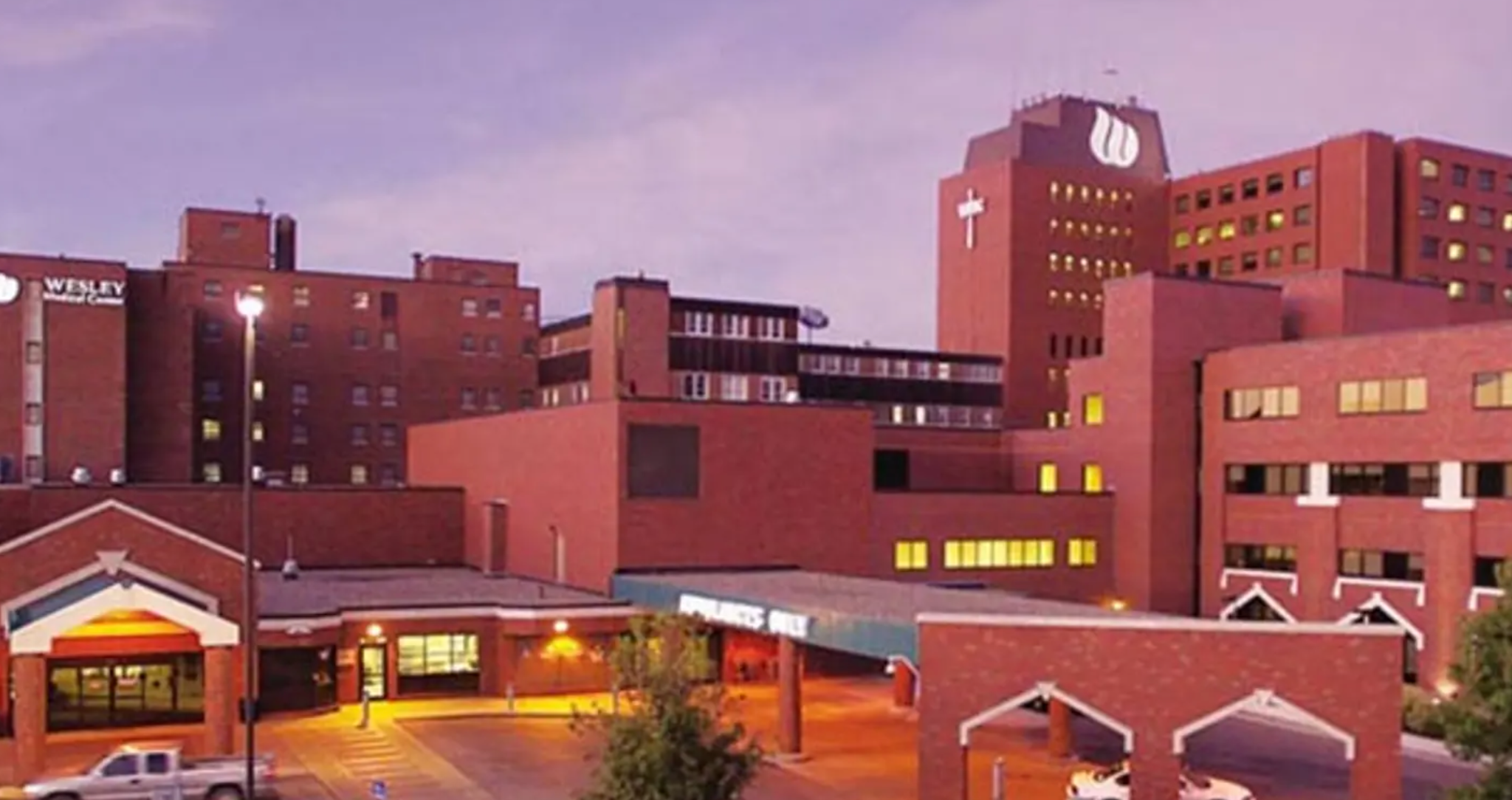
- Wichita Launches Violence Interruption Program Into Hospital Emergency Rooms. For KSNW Wichita, Sarah Moore reports that Wesley Medical Center and Cure Violence ICT launched a new hospital-based violence intervention partnership that connects victims of violence and their families to support services while they are still in the ER. Leaders said the program helps trauma teams “focus on the patient” while Cure Violence staff provide “mental health resources, jobs,” and trauma-informed support designed to “address violence as a preventable public health crisis.”