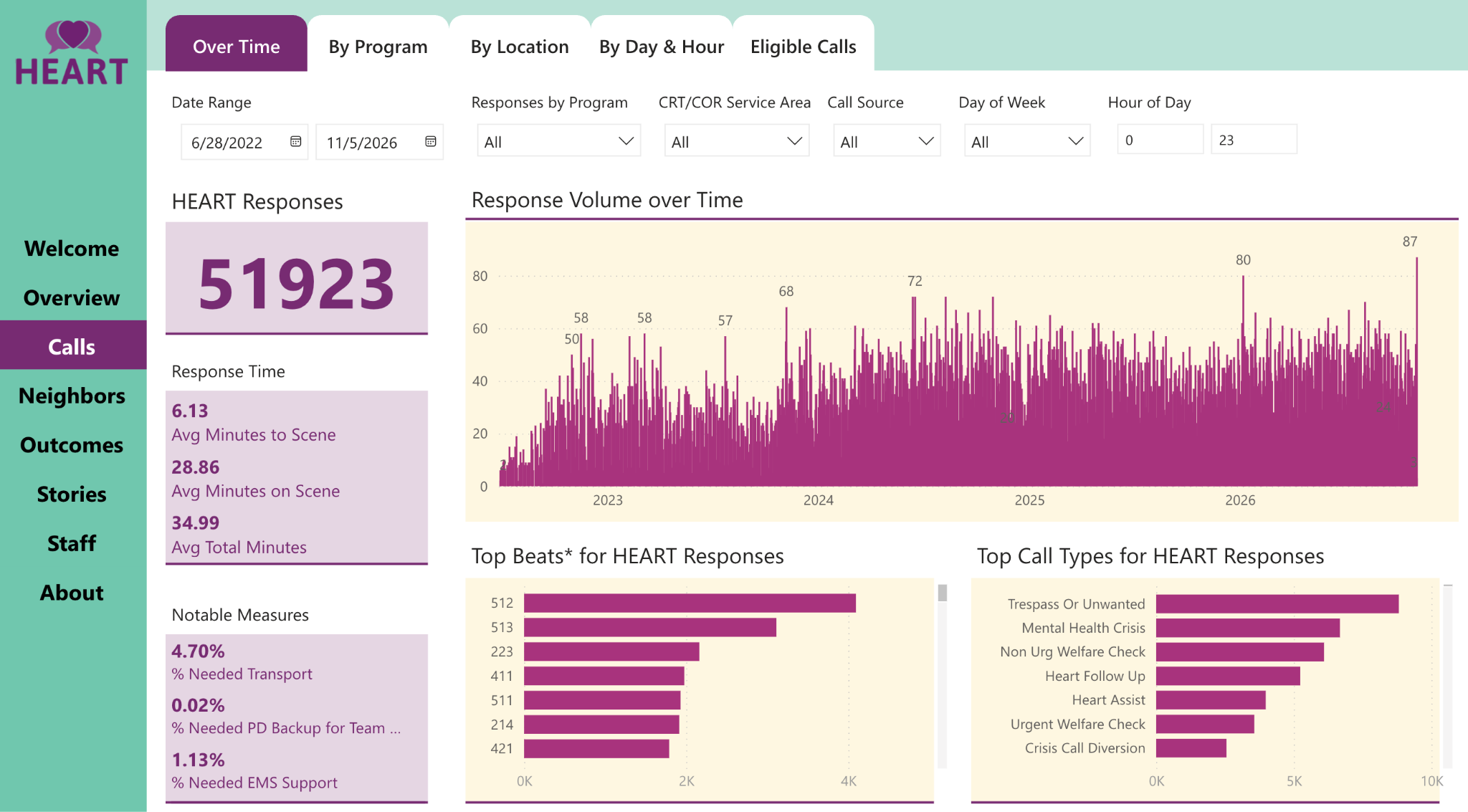
1. Durham’s HEART Mobile Crisis Response Team Marks Major Milestone—Responds To Over 50K Calls For Service. Durham, North Carolina’s much-lauded Holistic Empathetic Assistance Response Teams, or HEART, a mobile crisis response program, have responded to 51,923 calls for service since launching in June 2022, according to the City of Durham’s latest data. Operated by Durham’s Community Safety Department (read Safer Cities’ interview with the Durham CSD here), HEART deploys unarmed crisis responders, pairs clinicians with specially trained police officers on higher-risk calls, and embeds mental health professionals in the 911 call center.
Now, a peer-reviewed study published in the Journal of Criminal Justice compares HEART responses with similar calls handled by traditional police patrols. Using a quasi-experimental design and 911 incident data from 2023 through June 2025, researchers found promising evidence that Durham’s model can reduce unnecessary law enforcement involvement while providing more appropriate responses for people experiencing crises. “Our study provides compelling evidence that unarmed responders, like HEART’s CRT [community response team], can function as a patrol substitute.” The full study is worth your time, but here are some of the toplines:
- Mobile Crisis Responders Linked To Fewer Arrests, Offense Reports, And Citations. Mobile crisis “response was associated with a lower probability of offense reports, arrests, and citations compared with police responses to similar [mobile crisis team]-eligible calls.” Across eligible incidents, “the adjusted predicted probability of arrest was substantially lower when [mobile crisis team] was dispatched (0.38%) than when patrol was dispatched (1.55%).” Researchers found that “most of these calls could be resolved safely without enforcement authority.”
- Specialized Clinician Teams That Pair With Police On Highest-Risk Calls Also Reduce Offense Reports. HEART has full-civilian response teams as well as co-response teams (COR), which include clinicians and law enforcement officers, and which fulfill “a unique role in HEART because of the team’s ability to respond to higher risk calls, including calls with suspected weapons.” Researchers found that the “[coresponse team] was also associated with a lower probability of offense reporting overall and for disturbance calls,” with an “adjusted difference [of] −2.9 percentage points.” The coresponse team “showed limited differences in response time compared to patrol, indicating that COR was, on average, as operationally responsive as patrol.”
- Clinicians Embedded In 911 Centers Linked To Fewer Crisis Transports To Emergency Centers. Researchers examined HEART’s “crisis call diversion (CCD)” program, “in which a clinician embedded in the 911 Center provides clinical support by phone.” They found that “transport was less common in CCD-involved calls than in patrol-only calls … in the adjusted model (17.4% compared to 25.4%). The adjusted difference of 8.0 percentage points was statistically significant.” The findings were “consistent with a diversion-oriented program that can engage patrol-comparable crisis calls more quickly and may reduce the need for transport.”
Cities Expanding Their Mobile Crisis Response Teams, Around The Country:
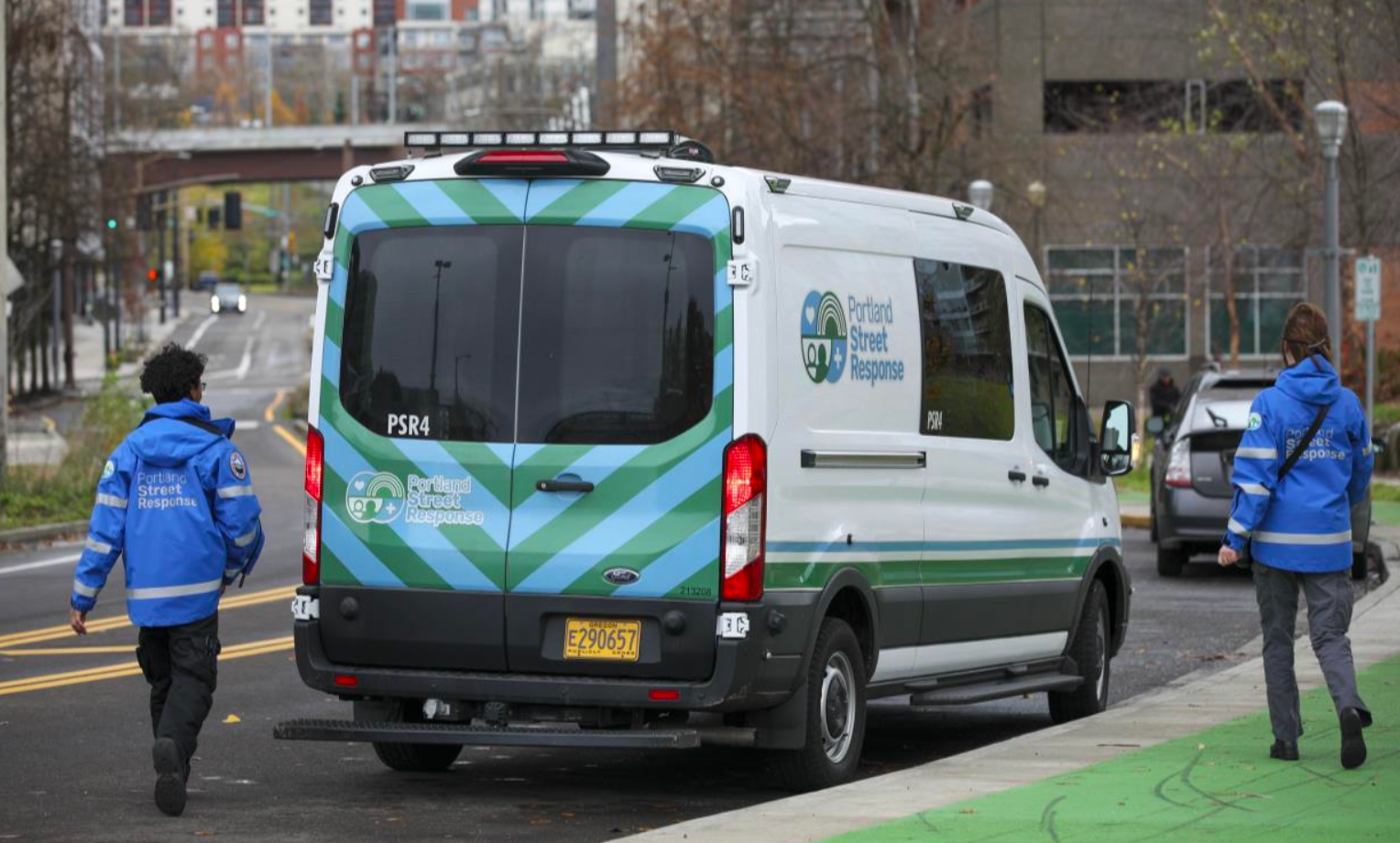
- In Portland, Oregon, Street Response Tops 15,500 Calls As City Eyes Major Expansion To Handle 14,000 Police Welfare Checks Annually. For KATU, Barry Mangold reports that Portland Street Response crews “responded to over 15,500 calls” in the first nine months of 2026, “exceeding the yearly total for 2025.” An advisory committee “recommended the city create a distinct city bureau for PSR and other violence prevention programs, expand to 24/7 operations” and “codify PSR as a ‘non-enforcement model.’” City Councilor Sameer Kanal said, “It has lived as an extended pilot for far too long,” arguing that expansion would help “divert police officers to more pressing and violent emergencies.”
The committee also recommended that PSR crews now “assist with Welfare Check calls,” which Portland Police Association President Aaron Schmautz called “perhaps the most widely varied calls we go to.” According to the committee’s presentation, Portland police respond to 23,000 welfare checks annually, and “an estimated 14,000 (61%) of these calls can be transferred to Portland Street Response.” Schmautz, a supporter of the Street Response Team, has explained that the Police Department deeply values the team, as he previously told Oregon Public Broadcasting, “we were always hopeful that, as PSR was rolled out, we would be partners … collaboration is the most necessary piece of it.”
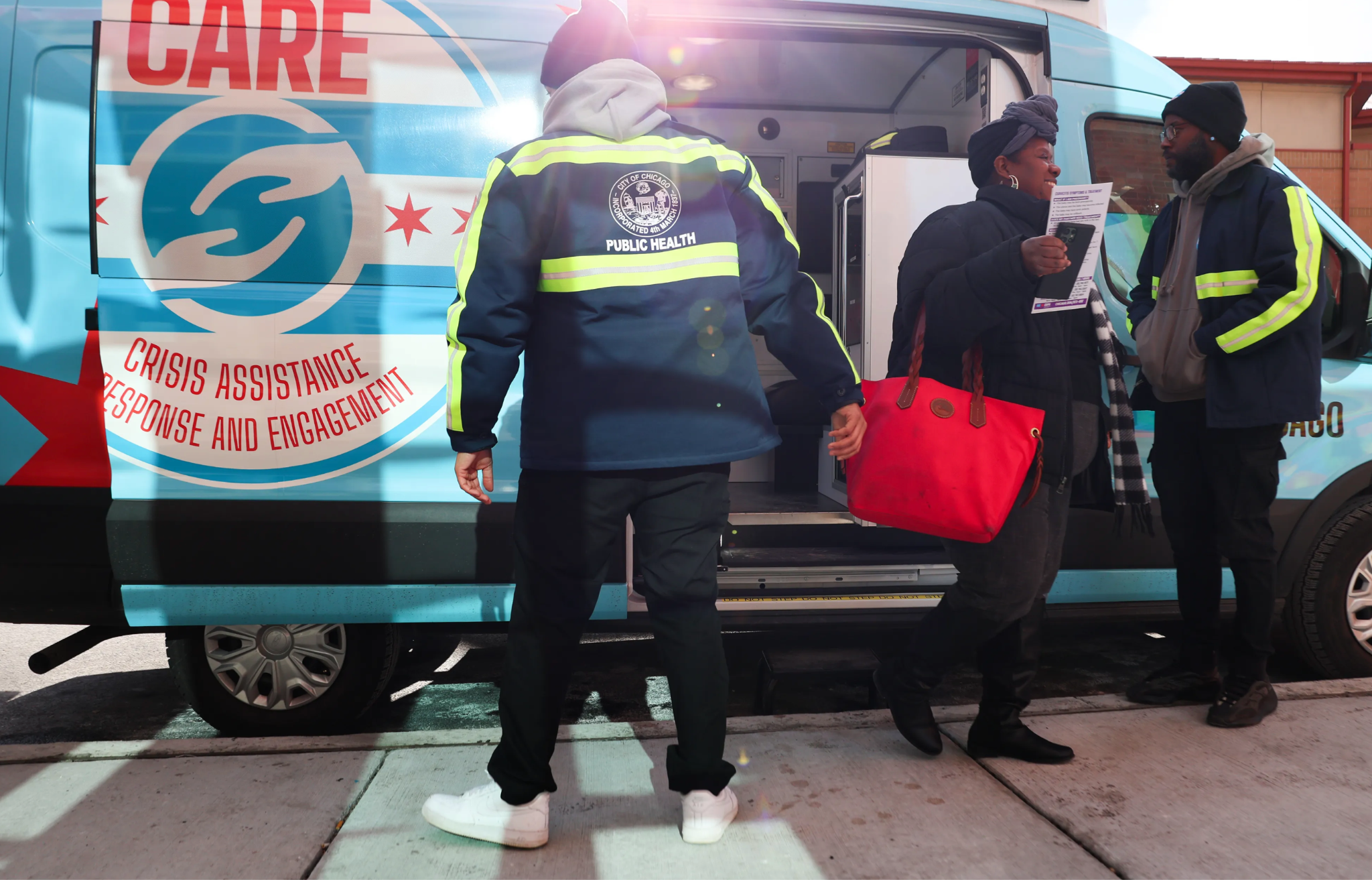
- In Chicago, Illinois, Mobile Crisis Response Teams More Than Double Their Operating Hours. For CBS Chicago, Sabrina Franza reports that after expanding its CARE program citywide in May, Chicago is “adding a second shift for non-police crews dispatched to respond to mental health emergencies,” extending coverage to “8 a.m. to 10 p.m. Monday through Friday,” up from “10 a.m. to 4:30 p.m.” The program “sends a licensed mental health clinician and an emergency medical technician – not police officers or firefighters – to respond to calls of mental health emergencies.” Mayor Brandon Johnson said, “We are expanding the definition of first responders,” adding that “police officers, they’ll put the request in as well, and they’re relieved when our CARE team shows up.”
Officials said “the next step they’re working towards is adding more CARE vans and more employees,” with hopes to eventually offer CARE teams “24/7.” Now-retired Chicago Police Superintendent Larry Snelling, a vocal supporter of the mobile crisis response team, previously said that “protecting public safety will always be a collaborative effort,” adding that clinicians responding to appropriate 911 calls “enable all of us to continue building safer communities together.”
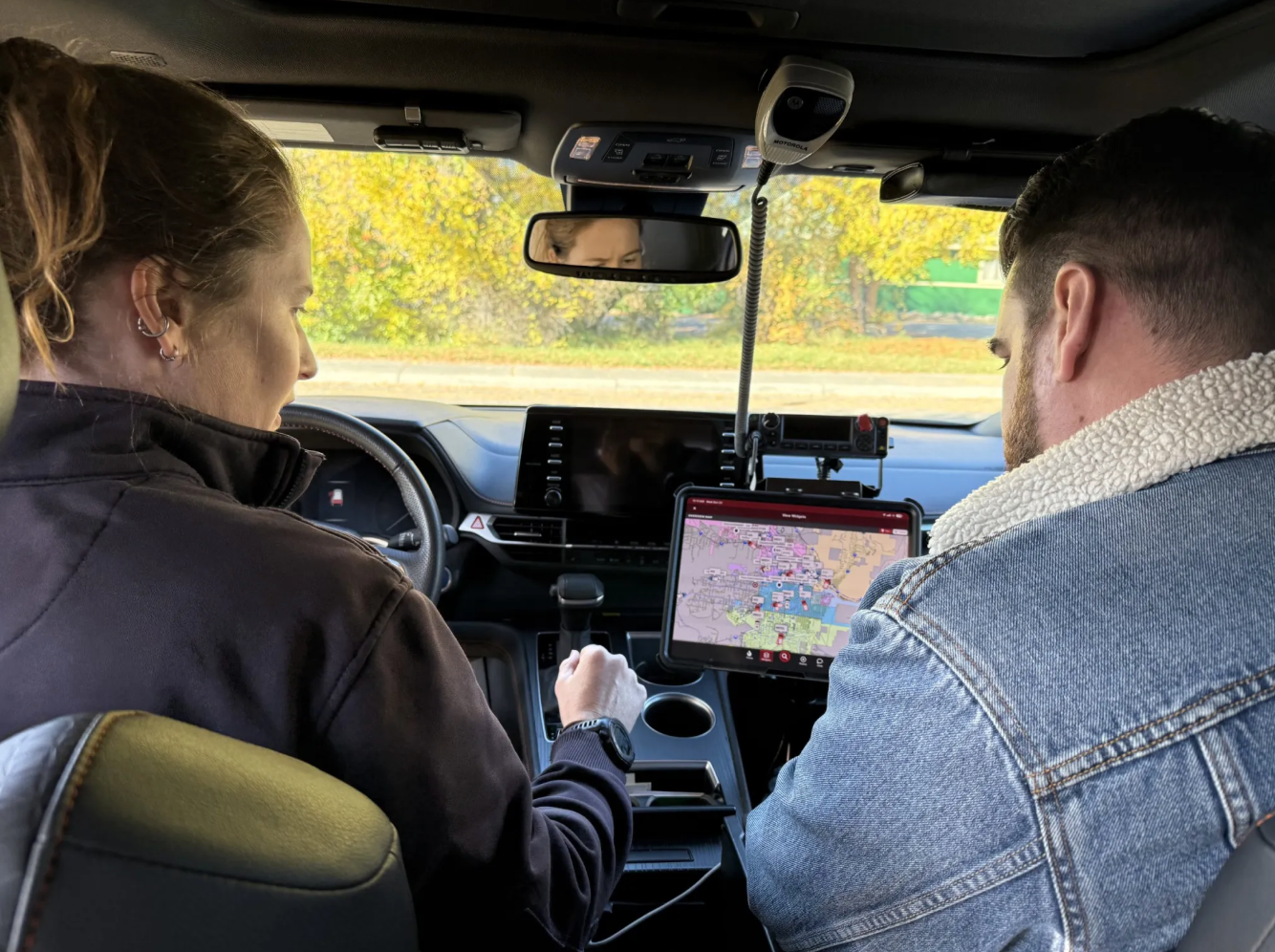
- In Missoula, Montana, Mobile Crisis Team Handles Two-Thirds Of Calls Without Police, City Seeks 24/7 Expansion. For Montana Free Press, Katie Fairbanks reports that Missoula’s mobile support team is “responding to more calls without police officers or firefighters, up to 67% in 2025 from 53% the previous year and about 10% in the early days of the program.” Assistant Fire Chief John Petroff said, “That means that the dispatch system is working better … We’re getting people on calls without having to call for other people and doing it safely.” With annual calls up “about 140% from 2021 to 2025, from 1,300 to 3,130,” a new four-year federal grant “will allow [the mobile support team] to explore expansion.” Behavioral health clinical manager Mark Wayne said the team has “the time, training, dedication and experience … to spend with somebody to really make them feel heard … without having to go to the hospital, without that person ending up in jail.”
2. Safer Cities Interview With Downtown Santa Monica’s Homeless Outreach Team. Homeless outreach teams help cities connect people experiencing homelessness with housing, mental health treatment, substance use services and other resources, building relationships with individuals who may be reluctant to seek assistance. In Santa Monica, California, Downtown Santa Monica’s Outreach Team works seven days a week, proactively engaging people experiencing homelessness and behavioral health challenges throughout the downtown area. The team works closely with other first responder agencies, emergency medical personnel, healthcare providers and social service organizations to help people access appropriate care, often navigating complex service systems on their behalf.
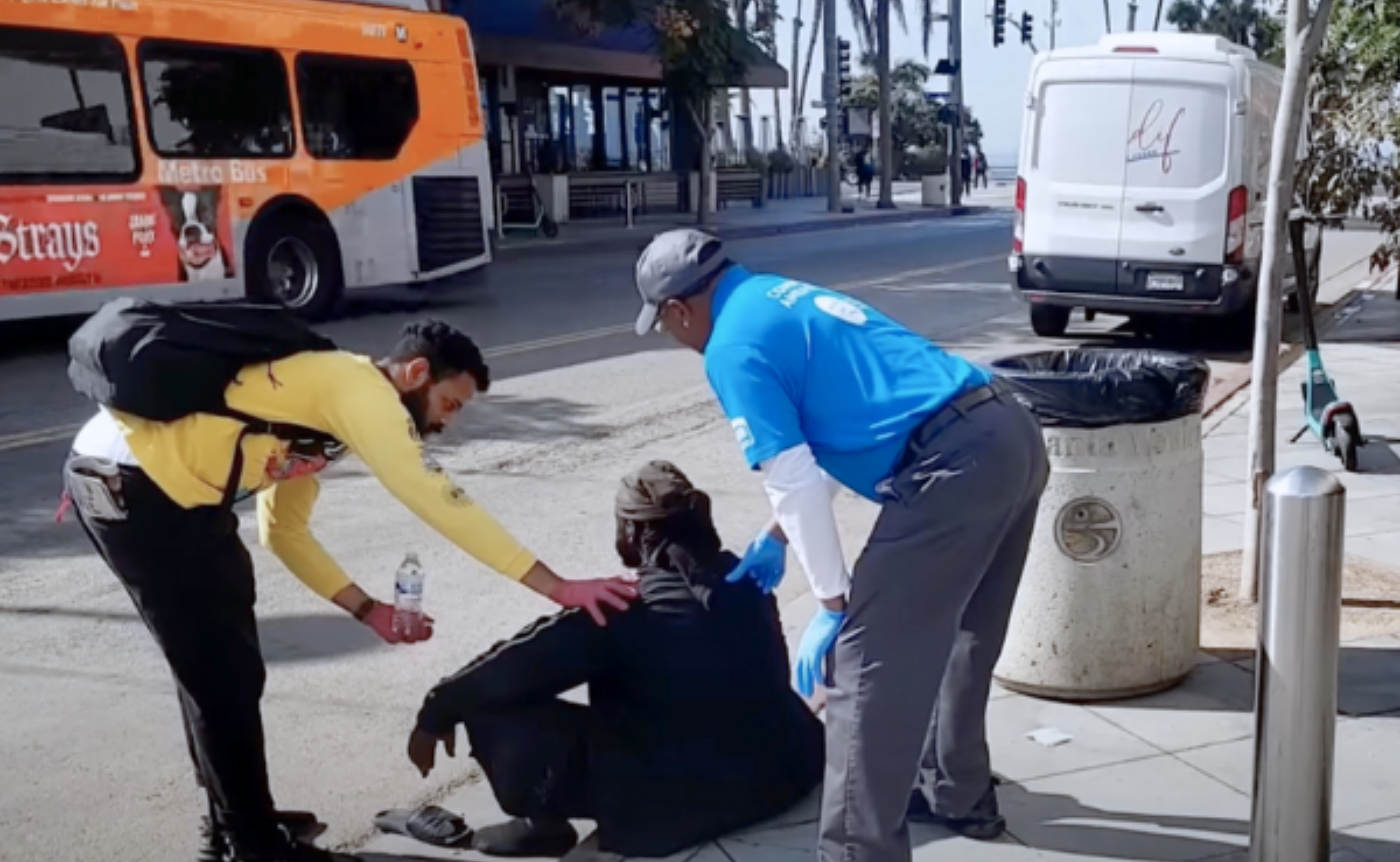
Safer Cities recently spoke with Debbie Lee, Chief Executive Officer of Downtown Santa Monica, Inc (DTSM)., about how the team builds trust, coordinates with public safety agencies, and connects vulnerable individuals to services.
- On Training Outreach Teams To Build Trust During Behavioral Health Crises: “[Our] Outreach Team takes a compassionate, person-centered approach when engaging individuals experiencing homelessness, including those facing mental health or substance use challenges. Staff receive training in motivational interviewing, which helps them build trust, communicate effectively, and encourage individuals who may feel discouraged about accessing services to remain open to support and consider available options… To support these interactions… staff also receive training in effective street-level communication, including how to navigate challenging encounters, maintain professional boundaries, and avoid taking difficult interactions personally. Additionally, the team completes annual Narcan training to prepare for potential opioid-related emergencies.”
- On Working With Service Providers To Coordinate Care: “[We] work closely with a network of public safety and service providers to connect individuals with the support that best meets their needs. Staff facilitates warm handoffs by sharing relevant information with the responding provider, helping establish contact with the individual, and remaining engaged throughout the process to support continuity of care. Depending on the individual’s circumstances, this may include the Santa Monica Police Department, emergency medical personnel, mental health specialists, or healthcare providers … Beyond direct engagement, DTSM’s Outreach Team uses Los Angeles County’s Homeless Management Information System (HMIS), known as Clarity, to support coordination and continuity of care. This shared system allows staff to document interactions, track referrals, and coordinate services with other providers across LA County, helping ensure individuals receive more consistent, connected support.”
- On Building Relationships That Lead To Lasting Change: “Our team takes the initiative to engage individuals, build trust, and identify opportunities to connect them with support. This consistent, hands-on approach has proven especially valuable in reaching individuals who may initially be hesitant or reluctant to accept assistance. Over time, regular interactions with familiar outreach staff help establish trust and create opportunities for individuals to become more receptive to services. Our seven-day-a-week presence downtown has also translated into meaningful, measurable results. Between July and September, DTSM’s Outreach Team engaged with individuals experiencing homelessness 6,130 times, made 958 referrals to social services and successfully connected five individuals to housing.”
3. Cities Moving To Establish, And Expand, Community Safety Departments.
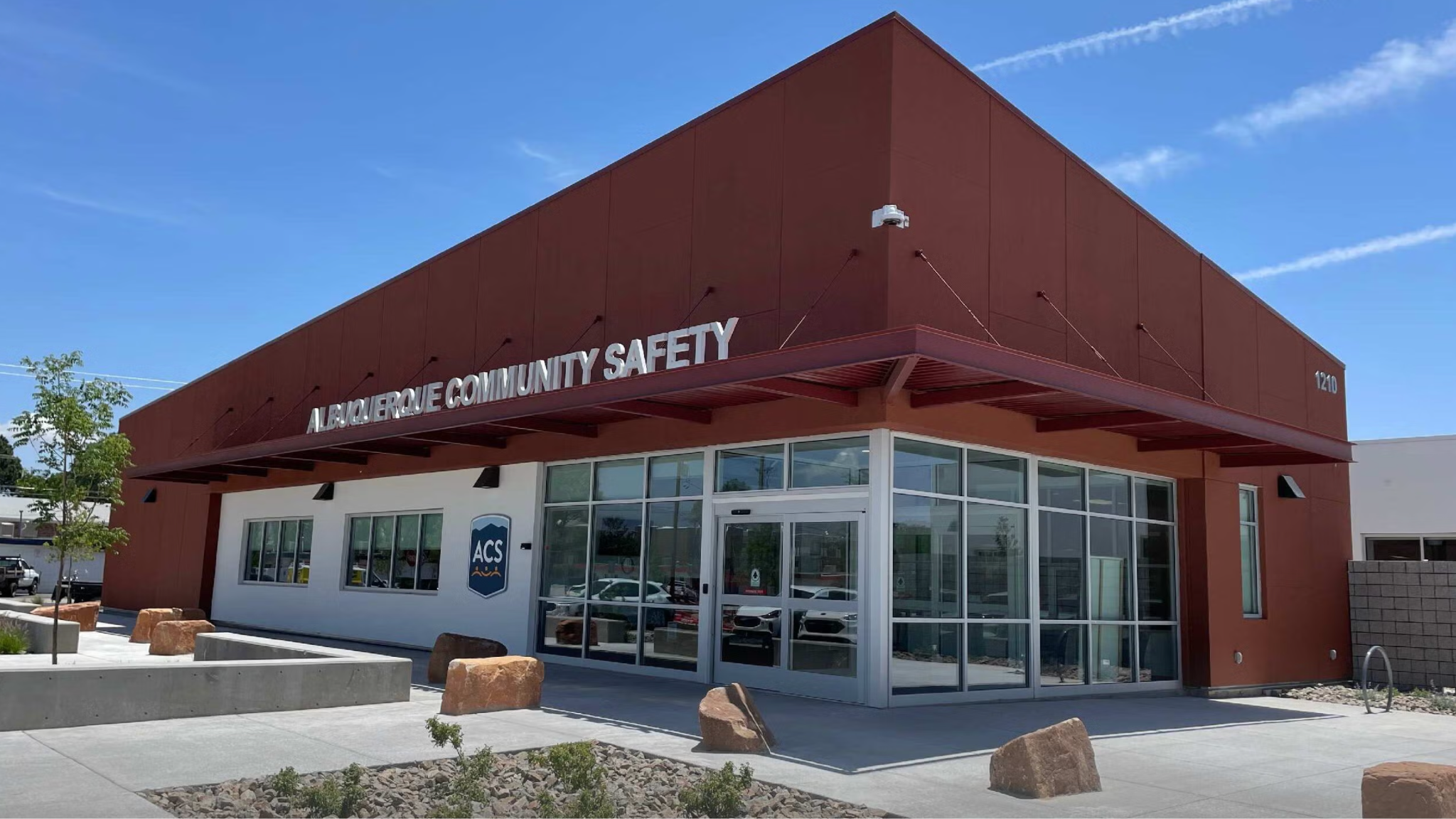
- In Albuquerque, New Mexico, Voters Elevate Community Safety Department To Equal Standing With Police And Fire, Guarantee Dedicated Funding. Voters approved a charter amendment in Albuquerque last week officially designating the Community Safety Department’s leader as the “ACS Chief,” requiring the same appointment and confirmation process as the city’s police and fire chiefs. The measure formally recognizes Albuquerque Community Safety as a coequal emergency response agency and guarantees it 8% of the city’s existing public safety gross receipts tax revenues. City Councilor Nichole Rogers said, “ACS has responded to some of our city’s most complex and challenging calls, freeing up police and fire services.”
- In Baltimore, Maryland, City Council Approves New Neighborhood Safety Department To Handle 22,000 Nonviolent 911 Calls Annually. For CBS News, Adam Thompson and Mike Hellgren report that the Baltimore City Council approved creating a Department of Neighborhood Safety, giving civilian crisis responders equal standing alongside police and fire. City officials estimate the new agency could handle approximately 22,000 nonviolent 911 calls annually, including mental health emergencies, welfare checks and homelessness-related incidents, while incorporating the city’s existing violence-prevention programs. Council President Zeke Cohen said, “People experiencing crises, and our officers, deserve better.” Mayor Brandon Scott said the department “will establish a formal alternative response service” that better matches residents to appropriate help.
- In Chicago, Illinois, Mayor Proposes Permanent Community Safety Department, $7 Million Expansion Of Violence Intervention. In his 2027 budget proposal, Mayor Brandon Johnson called for “the permanent establishment of the Department of Community Wellness and Safety.” The new department would “coordinate violence prevention, victim services and citywide community safety investments,” alongside “$7 million in increased funding for Community Violence Intervention (CVI) street outreach,” supporting the hiring of “390 new street outreach workers” and funding for “50 Youth Peacekeepers.” The city said the proposed investments build on “the lowest number of homicides in more than half a century” recorded over each of the past two years.