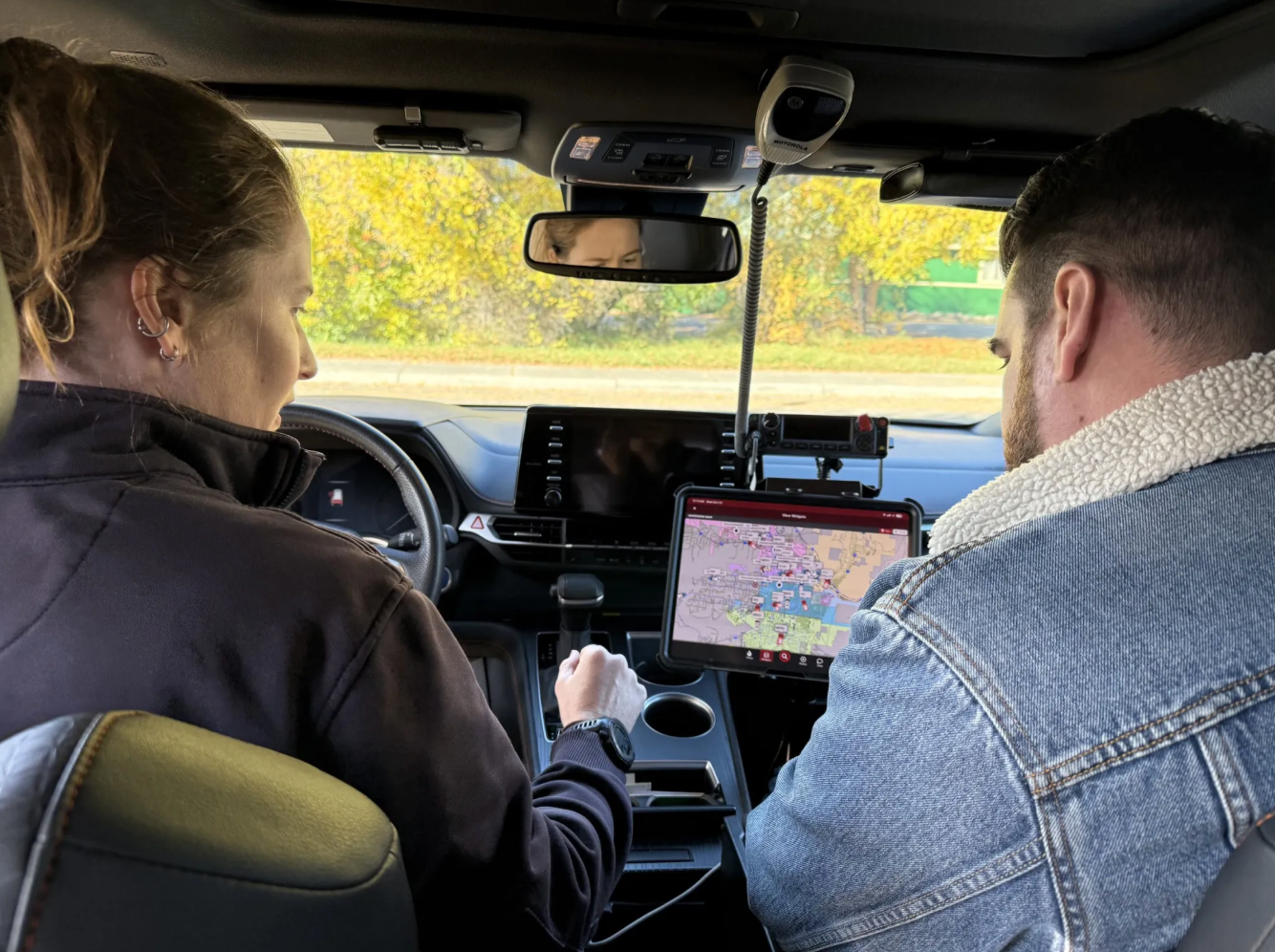
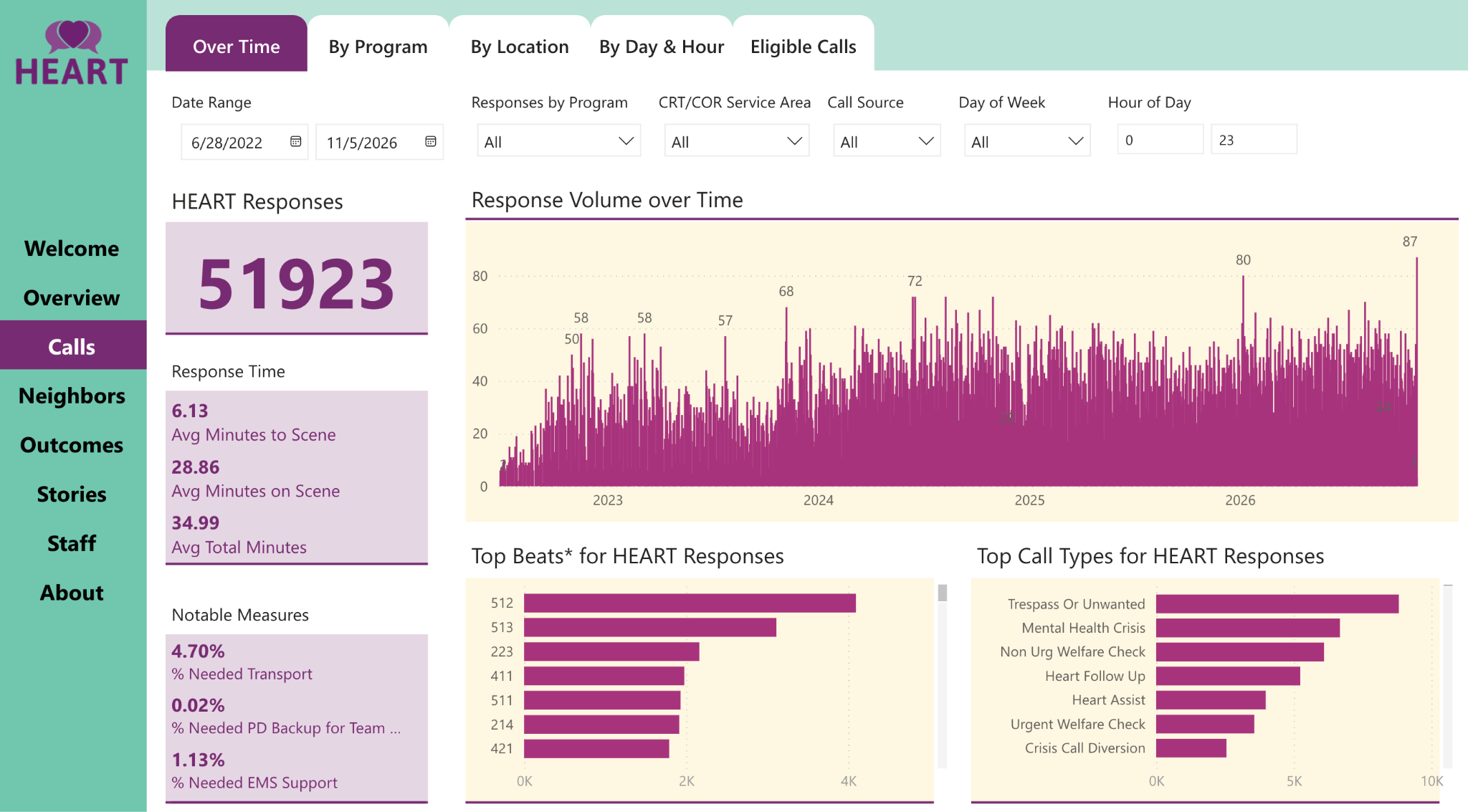
Durham, North Carolina’s much-lauded Holistic Empathetic Assistance Response Teams, or HEART, a mobile crisis response program, have responded to 51,923 calls for service since launching in June 2022, according to the City of Durham’s latest data. Operated by Durham’s Community Safety Department (read Safer Cities’ interview with the Durham CSD here), HEART deploys unarmed crisis responders, pairs clinicians with specially trained police officers on higher-risk calls, and embeds mental health professionals in the 911 call center.
Now, a peer-reviewed study published in the Journal of Criminal Justice compares HEART responses with similar calls handled by traditional police patrols. Using a quasi-experimental design and 911 incident data from 2023 through June 2025, researchers found promising evidence that Durham’s model can reduce unnecessary law enforcement involvement while providing more appropriate responses for people experiencing crises. “Our study provides compelling evidence that unarmed responders, like HEART’s CRT [community response team], can function as a patrol substitute.” The full study is worth your time, but here are some of the toplines:
- Mobile Crisis Responders Linked To Fewer Arrests, Offense Reports, And Citations. Mobile crisis “response was associated with a lower probability of offense reports, arrests, and citations compared with police responses to similar [mobile crisis team]-eligible calls.” Across eligible incidents, “the adjusted predicted probability of arrest was substantially lower when [mobile crisis team] was dispatched (0.38%) than when patrol was dispatched (1.55%).” Researchers found that “most of these calls could be resolved safely without enforcement authority.”
- Specialized Clinician Teams That Pair With Police On Highest-Risk Calls Also Reduce Offense Reports. HEART has full-civilian response teams as well as co-response teams (COR), which include clinicians and law enforcement officers, and which fulfill “a unique role in HEART because of the team’s ability to respond to higher risk calls, including calls with suspected weapons.” Researchers found that the “[coresponse team] was also associated with a lower probability of offense reporting overall and for disturbance calls,” with an “adjusted difference [of] −2.9 percentage points.” The coresponse team “showed limited differences in response time compared to patrol, indicating that COR was, on average, as operationally responsive as patrol.”
- Clinicians Embedded In 911 Centers Linked To Fewer Crisis Transports To Emergency Centers. Researchers examined HEART’s “crisis call diversion (CCD)” program, “in which a clinician embedded in the 911 Center provides clinical support by phone.” They found that “transport was less common in CCD-involved calls than in patrol-only calls … in the adjusted model (17.4% compared to 25.4%). The adjusted difference of 8.0 percentage points was statistically significant.” The findings were “consistent with a diversion-oriented program that can engage patrol-comparable crisis calls more quickly and may reduce the need for transport.”
Cities Expanding Their Mobile Crisis Response Teams, Around The Country:
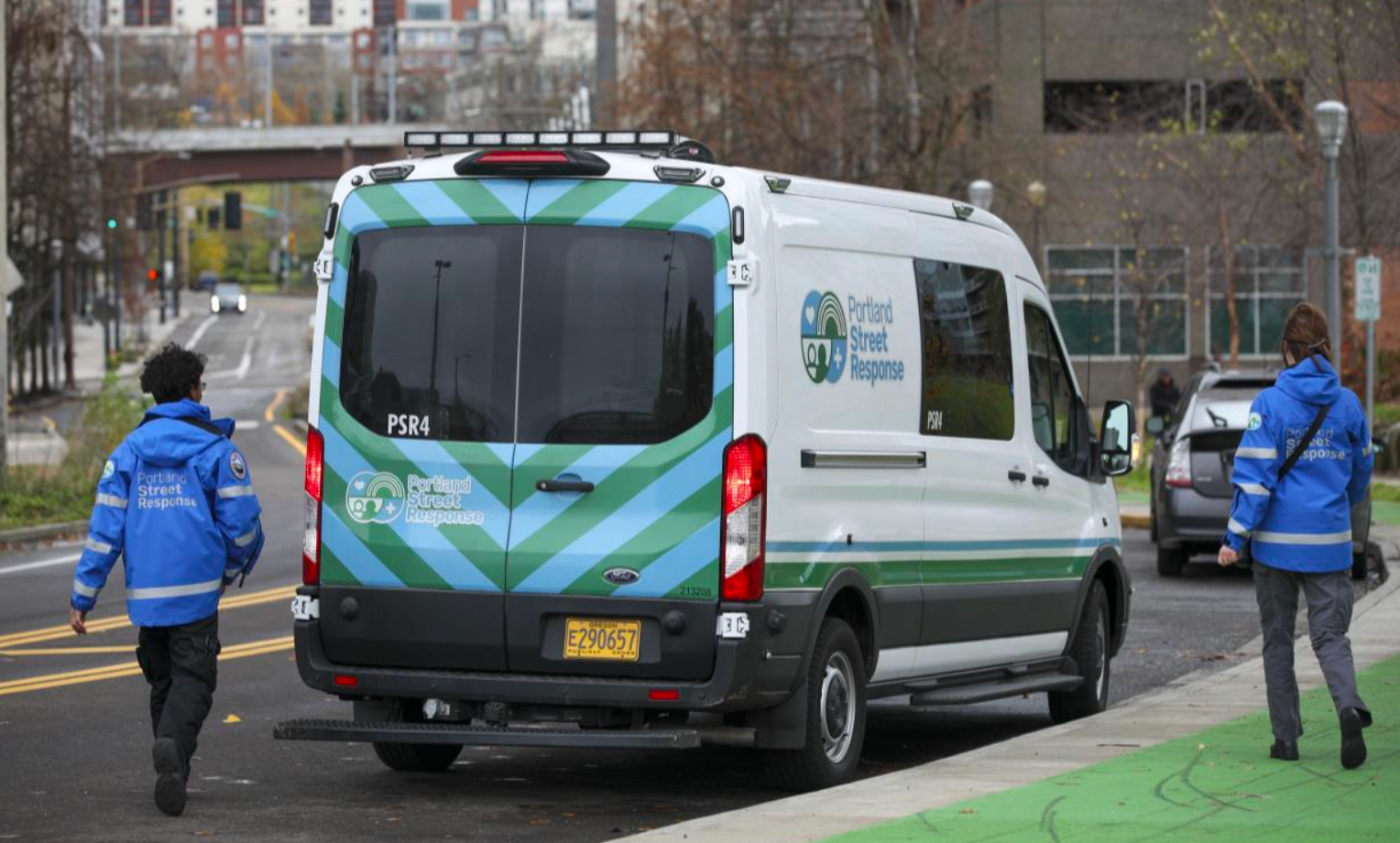
- In Portland, Oregon, Street Response Tops 15,500 Calls As City Eyes Major Expansion To Handle 14,000 Police Welfare Checks Annually. For KATU, Barry Mangold reports that Portland Street Response crews “responded to over 15,500 calls” in the first nine months of 2026, “exceeding the yearly total for 2025.” An advisory committee “recommended the city create a distinct city bureau for PSR and other violence prevention programs, expand to 24/7 operations” and “codify PSR as a ‘non-enforcement model.’” City Councilor Sameer Kanal said, “It has lived as an extended pilot for far too long,” arguing that expansion would help “divert police officers to more pressing and violent emergencies.”
The committee also recommended that PSR crews now “assist with Welfare Check calls,” which Portland Police Association President Aaron Schmautz called “perhaps the most widely varied calls we go to.” According to the committee’s presentation, Portland police respond to 23,000 welfare checks annually, and “an estimated 14,000 (61%) of these calls can be transferred to Portland Street Response.” Schmautz, a supporter of the Street Response Team, has explained that the Police Department deeply values the team, as he previously told Oregon Public Broadcasting, “we were always hopeful that, as PSR was rolled out, we would be partners … collaboration is the most necessary piece of it.”
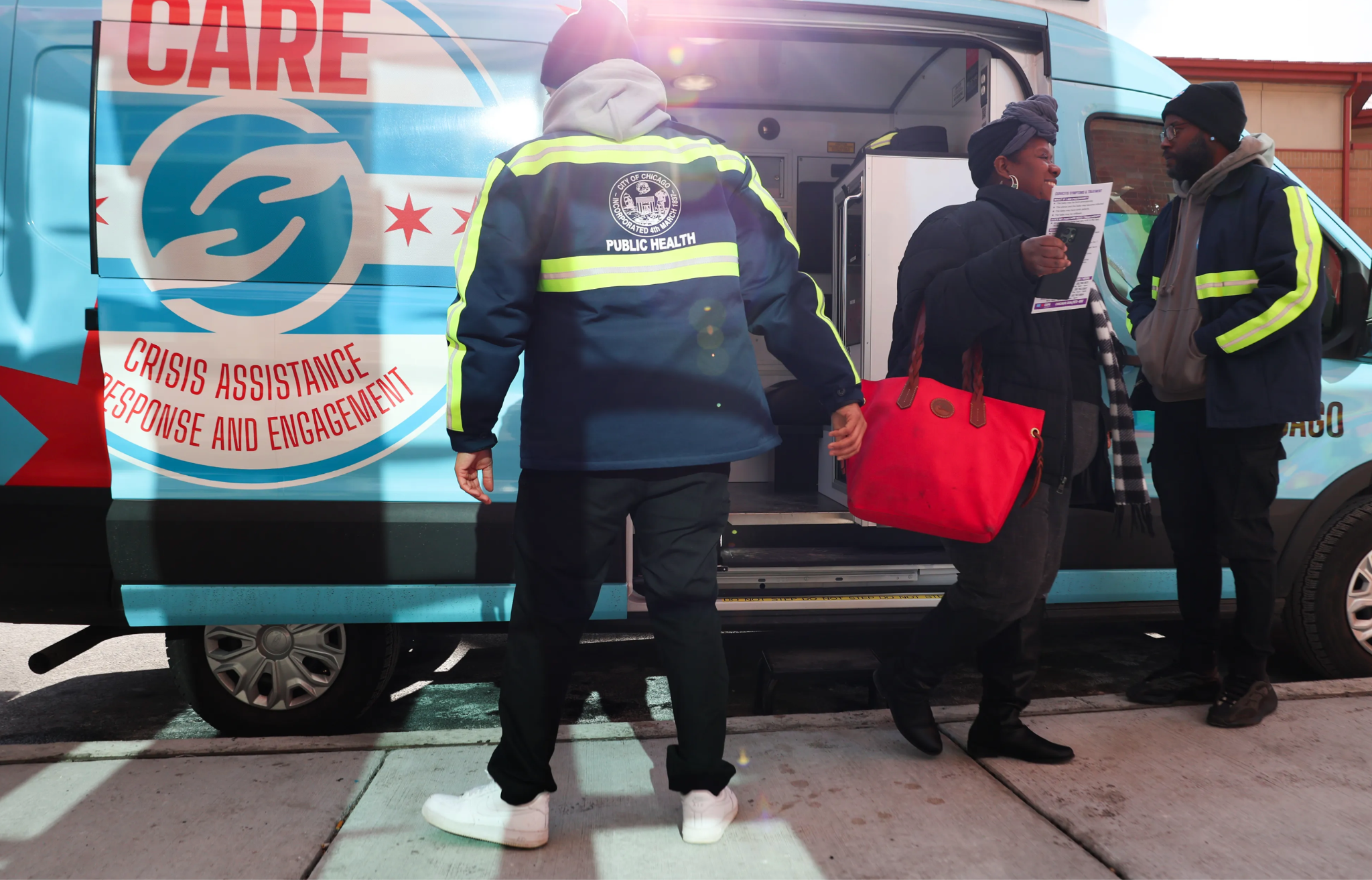
- In Chicago, Illinois, Mobile Crisis Response Teams More Than Double Their Operating Hours. For CBS Chicago, Sabrina Franza reports that after expanding its CARE program citywide in May, Chicago is “adding a second shift for non-police crews dispatched to respond to mental health emergencies,” extending coverage to “8 a.m. to 10 p.m. Monday through Friday,” up from “10 a.m. to 4:30 p.m.” The program “sends a licensed mental health clinician and an emergency medical technician – not police officers or firefighters – to respond to calls of mental health emergencies.” Mayor Brandon Johnson said, “We are expanding the definition of first responders,” adding that “police officers, they’ll put the request in as well, and they’re relieved when our CARE team shows up.”
Officials said “the next step they’re working towards is adding more CARE vans and more employees,” with hopes to eventually offer CARE teams “24/7.” Now-retired Chicago Police Superintendent Larry Snelling, a vocal supporter of the mobile crisis response team, previously said that “protecting public safety will always be a collaborative effort,” adding that clinicians responding to appropriate 911 calls “enable all of us to continue building safer communities together.”
- In Missoula, Montana, Mobile Crisis Team Handles Two-Thirds Of Calls Without Police, City Seeks 24/7 Expansion. For Montana Free Press, Katie Fairbanks reports that Missoula’s mobile support team is “responding to more calls without police officers or firefighters, up to 67% in 2025 from 53% the previous year and about 10% in the early days of the program.” Assistant Fire Chief John Petroff said, “That means that the dispatch system is working better … We’re getting people on calls without having to call for other people and doing it safely.” With annual calls up “about 140% from 2021 to 2025, from 1,300 to 3,130,” a new four-year federal grant “will allow [the mobile support team] to explore expansion.” Behavioral health clinical manager Mark Wayne said the team has “the time, training, dedication and experience … to spend with somebody to really make them feel heard … without having to go to the hospital, without that person ending up in jail.”