For The New Republic, Tahir Duckett examines how cities across the country are creating dedicated community safety departments to coordinate violence prevention, crisis response and other services that intervene before law enforcement becomes necessary. From Albuquerque and Seattle to Baltimore and Durham, these agencies are bringing once-scattered programs together into essential public safety infrastructure, with dedicated personnel and greater expectations for coordination, accountability and rapid response. Duckett writes that the approach could fundamentally change how cities build safer neighborhoods: “The reward for this focus could be that, for the first time, local governments could have infrastructure specifically designed to build safety through prevention and early intervention—not just law enforcement and incarceration.” Here’s more from Duckett on how cities and counties can successfully build community safety departments:
- Giving Community Safety Its Own Department, Equal To Law Enforcement, Fire, And EMS. “Community safety interventions are best understood and organized separately from law enforcement—not in opposition to law enforcement but because… relying on enforcement and coercion can undermine the core ethos of community safety. The very point of these agencies is to develop city infrastructure that can intervene before law enforcement becomes necessary.” Cities are recognizing that community safety needs “its own home in the municipal ecosystem—and its own well-trained personnel.”
- Making Crisis Response As Reliable And Rapid As Law Enforcement Response. “These new community safety agencies are often leveraging services that already exist,” addressing “long-standing problems in municipal governance related to siloing and reliable investment in and delivery of services.” Previously, “a trained clinician … may take hours, or days, to arrive.” Now, instead of considering these programs “charitable and ‘nice to have,’” cities are “beginning to build them into the city’s safety infrastructure as critical assets that must be deployed as reliably, and sometimes as rapidly, as law enforcement.”
- Research Shows Fewer Arrests, Reduced Violence And Better Outcomes. “Evaluations of crisis response programs in several cities indicate they reduce arrests, crime reports, and response times while increasing connections to immediate and follow-up services. One multisite study found the likelihood of arrest was 42.5 percent lower in the year following contact with a mobile crisis team.” Meanwhile, “a recent study of Richmond, California’s Peacemaker Fellowship found sustained reductions in firearm violence over the course of 14 years.”

Momentum For Community Safety Departments Around The Country:
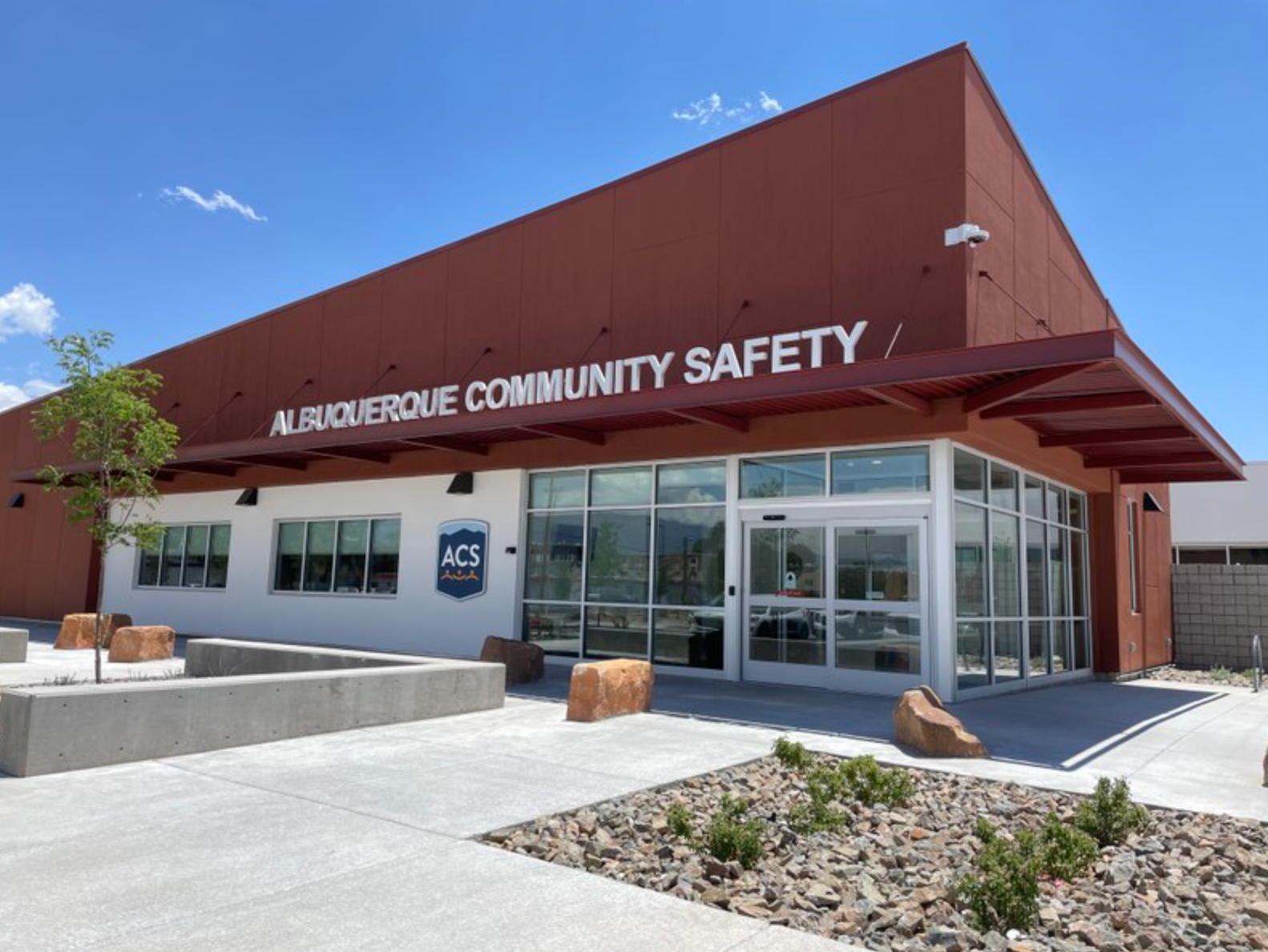
- Albuquerque Expands Community Safety Department’s School-Based Violence Intervention Program To 11 Schools. The City of Albuquerque announced that its Community Safety Department, or ACS, is expanding its school-based violence intervention program to seven additional schools, bringing the total to 11. Intervention specialists provide “on-campus support for students who are navigating violence, trauma, and disconnection from school,” connecting them to “housing, food security and job placement.” Since launching in 2022, the program has seen “GPA increases, higher graduation rates, [and] reduced suspensions.” Mayor Tim Keller said the city is “interrupting cycles of violence, while setting our kids up for future success.”
Launched in 2021 as the nation’s first Community Safety Department, ACS serves as Albuquerque’s third branch of public safety, responding to 911 and 311 calls involving behavioral health, substance use, homelessness and other needs. Since its launch, ACS has responded to more than 156,000 calls for service; in 2025 alone, its responders handled more than 42,000 calls and freed up more than 31,000 hours for police and firefighters. Recently retired Police Chief Harold Medina said ACS “bridges a gap, and provides residents with the response they deserve.” Read Safer Cities’ recent interview with ACS here.
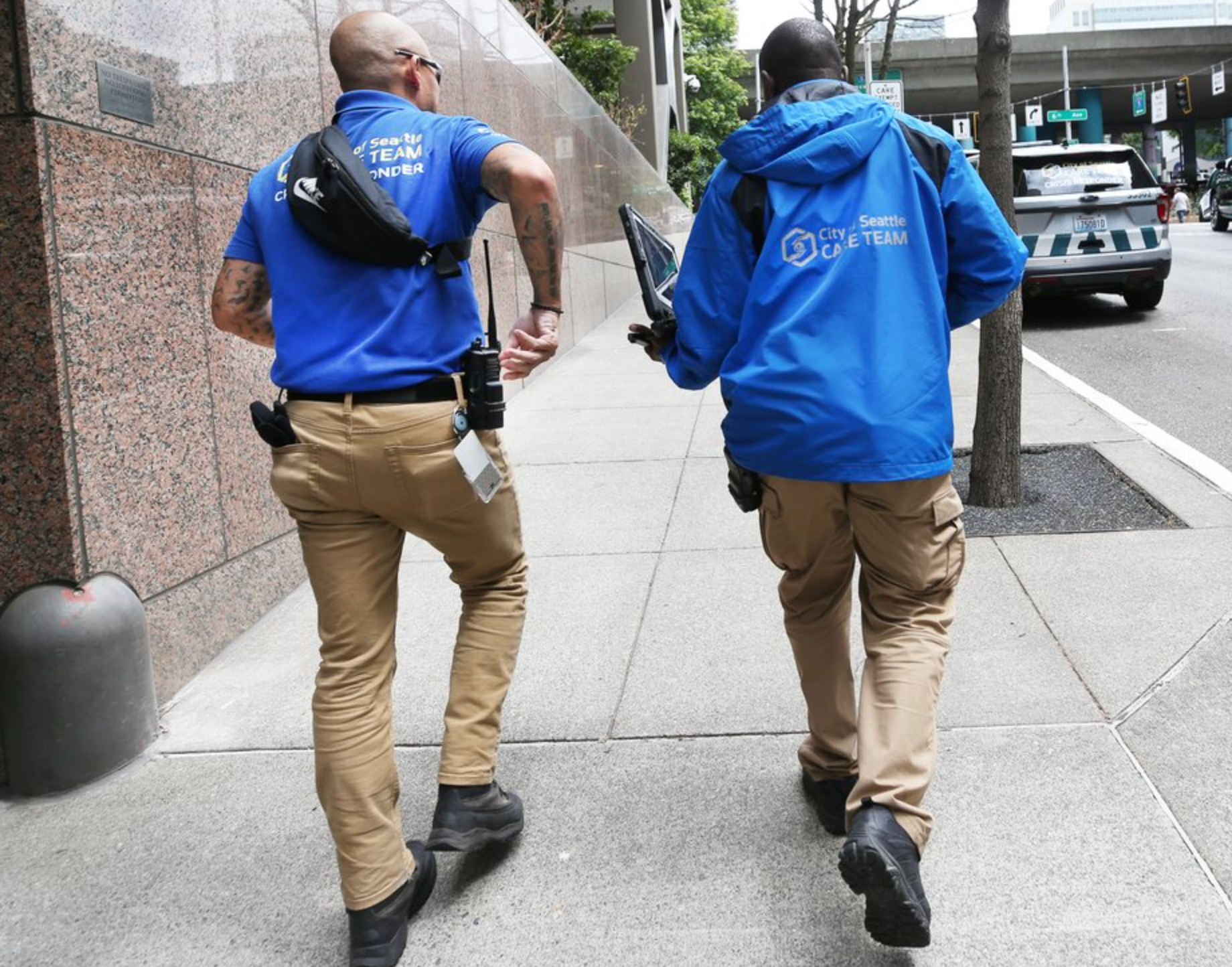
- Seattle Moves To Make Community Safety Department Its Gun Violence Prevention Hub, Bringing Nine Community Organizations Under CARE Umbrella. For Capitol Hill Seattle, Justin Carder reports that Mayor Katie Wilson’s new gun violence reduction plan would make the Community Assisted Response and Engagement Department the city’s “central command center for gun violence reduction,” transferring more than $5 million in contracts with nine community violence intervention organizations into CARE. The programs include “hospital-based support for gunshot victims and their families,” along with “outreach, conflict mediation, hotspot stabilization, and incident recovery.” CARE Chief Amy Barden explained to KUOW that “until now… Seattle’s public safety investments have been scattered around different city and county departments… [so] the main significance is just to have [the community safety] department act as coordinating entity… I’m very happy today that we’ve gotten to this point, because it slows us down to not be working together.”
Launched in 2023 as Seattle’s third branch of public safety alongside police and fire, CARE operates the city’s 911 Communications Center and deploys unarmed behavioral health responders to crises, welfare checks and other calls. Its crisis response team has grown from six to 40 responders, now operating citywide, with an average response time of 13 minutes. By early August 2026, responders had handled 6,279 calls, and are already poised to eclipse the 7,136 handled in all of 2025. Seattle Police Chief Andre Sayles praised the city’s new gun violence plan: “I think the best thing about this is it’s not a police-led initiative… It’s a collaborative initiative, but we’re going to be the backstop to work with all our internal and external partners.”
- Baltimore’s Community Safety Office Uses Data To Help Cut Homicides, As City Moves To Expand It Into Third Branch Of Public Safety. For StateTech, Mickey McCarter reports on how the Baltimore Mayor’s Office of Neighborhood Safety and Engagement, or MONSE, has built a public safety data operation to identify people most at risk of violence, target prevention programs and find gaps in services, as the city recorded just 133 homicides in 2025, down 31% and the fewest in nearly 50 years. After finding that more than 60% of shootings and homicides involved violent groups, MONSE developed systems to track interventions, connect agencies and assess whether residents were receiving services. MONSE Director Stefanie Mavronis explained: “When we can break the cycles of violence, when we can be more targeted in our approaches, get in front of the right people instead of just overpolicing entire communities, we can make an impact.”
Established in 2020, MONSE coordinates Baltimore’s Group Violence Reduction Strategy, ten Safe Streets violence intervention sites, hospital-based violence intervention and victim services. As of September 29, 2026, Safe Streets workers had mediated more than 1,036 potentially violent conflicts and connected more than 425 residents to supportive services, with six neighborhood sites reaching more than a year without a homicide. Baltimore is now proposing to establish a permanent Department of Neighborhood Safety as its third branch of public safety alongside police and fire, expanding MONSE and adding specialized civilian responders for nonviolent 911 calls.