1. Report: Albuquerque Earns Top-10 Violence Prevention Readiness Score In National Index, With Report Highlighting Community Safety Department’s Role In Enhancing Public Safety. In the latest annual Violence Prevention Index report—“the first and only national annual assessment of municipal violence intervention and prevention investments and policies”—the City of Albuquerque ranked in the top 10 for the first time among 100 U.S. cities. The report ranked Albuquerque so high due to city leadership’s work building “the policy framework, institutional capacity, and cross-sector infrastructure that make effective, sustainable violence reduction possible,” and as the report highlights, a significant part of that infrastructure is housed within Albuquerque Community Safety, the city’s third branch of public safety, which pairs crisis response with prevention, trauma-informed care and community-based violence intervention.
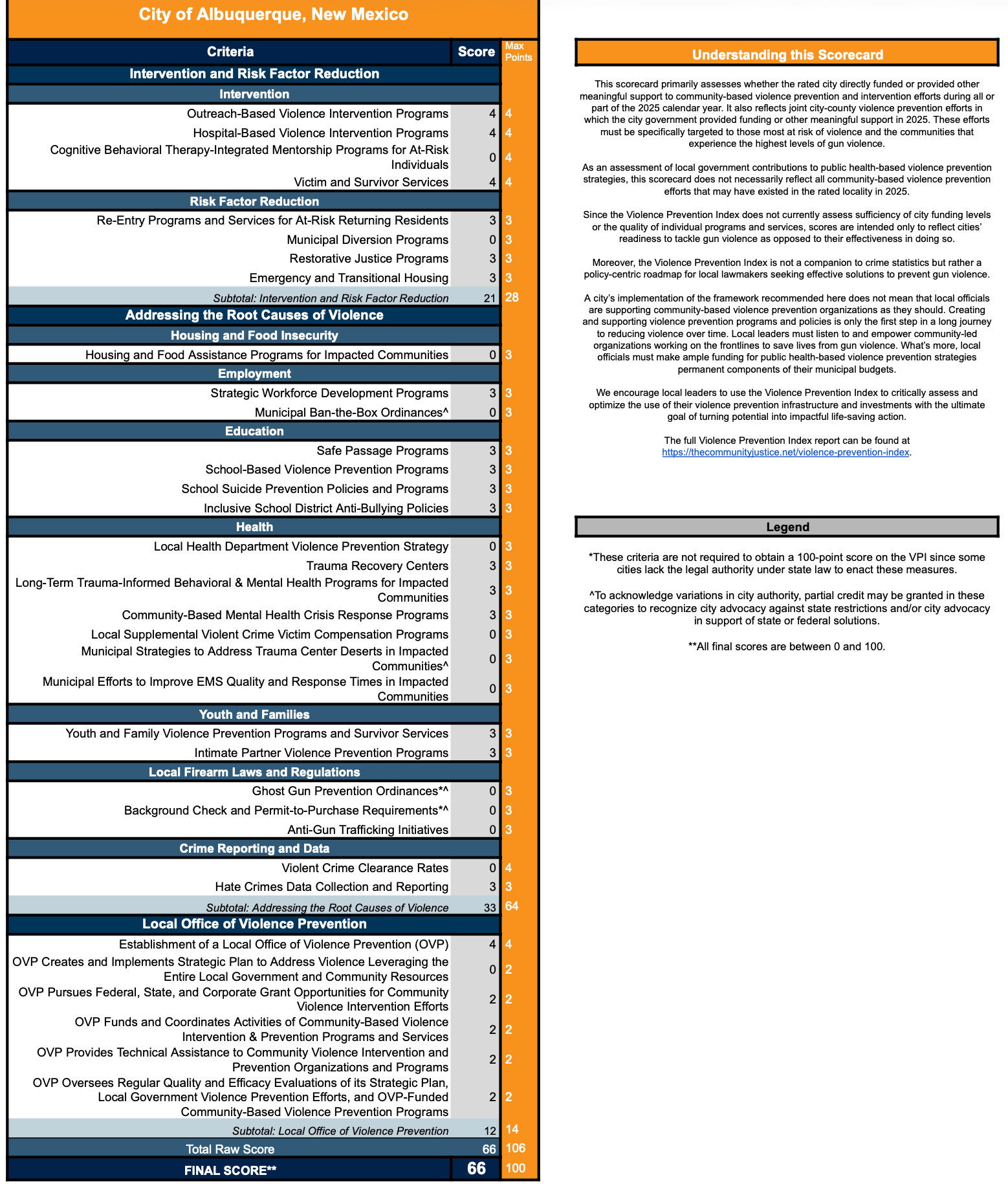
Produced by Community Justice, the fourth annual VPI assessed 100 U.S. cities with the highest levels of gun violence against “35 recommendations that form the framework of a comprehensive public health response to violence” in the various cities. Albuquerque scored 66 out of 100 (compared with a national average of 36), placing it ninth overall and among four cities to reach the top 10 for the first time. The report found the 11 cities with top-ten scores all invested in outreach-based and hospital-based violence intervention, teams Albuquerque houses inside of ACS. The report describes the kind of modern public safety infrastructure that ACS provides as “vital to reducing all forms of violence — including gun violence,” with local agencies charged with strategies that “leverage the entirety of local government and community resources.” The full report is worth reading, but here are some toplines from its findings about Albuquerque and its successful Community Safety Department:
- Building Trusted Relationships With People At Highest Risk. ACS says its Violence Intervention Division’s “peer support workers and intervention specialists engage individuals at highest risk of involvement in gun violence,” providing “ongoing mentorship, conflict mediation, and connections to housing, employment, behavioral health, and other services.” The report found that these workers “build relationships and trust … negotiate cease-fires, mediate disputes, and connect individuals to comprehensive support networks.”
- Helping Survivors Recover After Violence. ACS opened New Mexico’s first Trauma Recovery Center—a place for survivors of violence, and their families, to connect to mental health, relocation, and job resources that they need to achieve stability after life-altering violence—“to provide coordinated, trauma-informed support to people impacted by violence.” The report noted that TRCs like Albuquerque’s effectively provide “no-cost comprehensive wraparound care … trauma-informed mental health care and individualized case management,” including help with “housing, food, clothing, financial, and legal assistance.”
- Sending The Right Response to Behavioral Health Crises. ACS responders take calls involving “behavioral health, substance use, and other non-criminal and non-medical issues.” The report found that people experiencing mental health crises are too often “not met with the appropriate responders, increasing risks of violence,” and calls for “a real-time behavioral and mental health crisis response system … [that] relies on mental health professionals.”
Here’s the VPI scorecard for Albuquerque:
Cities, Counties Launching Community Safety Departments Around The Country:
- Harris County Announces Proposal For $4.5M Community Safety Department. For the Houston Chronicle, John Lomax and Matt deGrood report on Commissioner Rodney Ellis’s effort to “expand and centralize a trio of [behavioral and mental health] programs into a new [community safety] department” that would serve “as an umbrella for the county’s crisis-response, violence-intervention and domestic violence-support programs.” Harris County Sheriff Ed Gonzalez explained to the newspaper that there has been “a growing interest in alternative response models” like the county’s lauded Holistic Assistance Response Team, or HART—a mobile crisis response team that Sheriff Gonzalez has watched grow “from a small pilot initiative into a robust countywide service.”
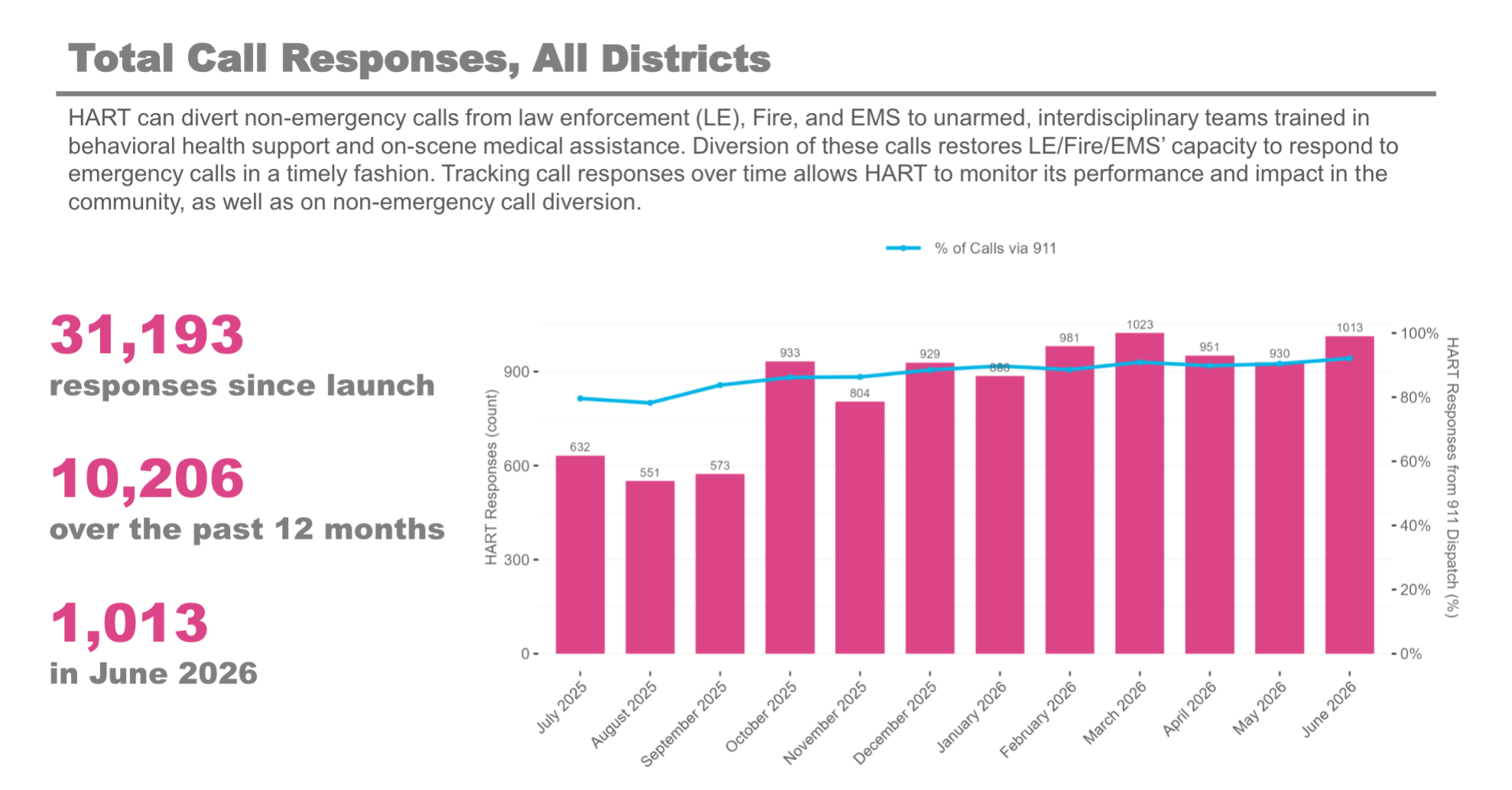
The HART unit recently hit a major milestone over the summer, surpassing 30,000 responses to calls for service since its launch. As The Chronicle reported, HART dispatches “unarmed first responders to nonviolent police reports” and has been touted as an “effective deescalation tool that also frees law enforcement to pursue violent offenders.” Under the proposal from Commissioner Ellis, HART and the county’s community violence interruption team, RISE, would grow their headcounts by roughly 75–80% by 2028. Sam Houston State University’s Jay Coons called the approach the “best of both worlds… you can have a trained mental health technician that does the heavy lifting on a call, unless the situation calls for an arrest or use of force.”
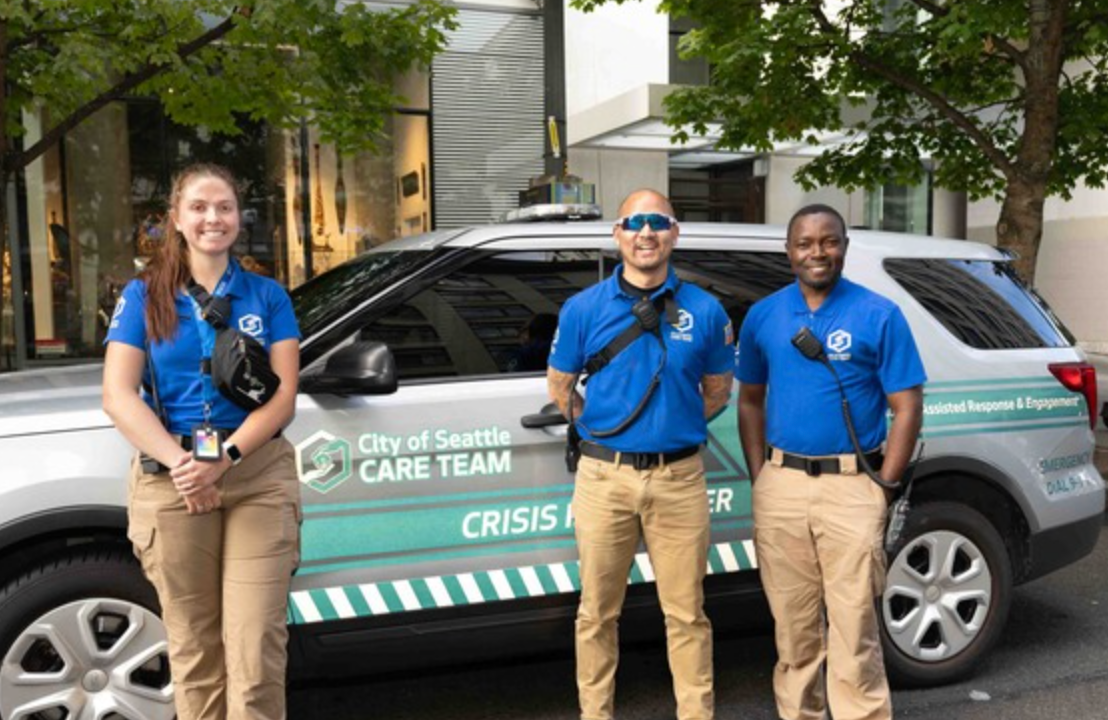
- Seattle Moves Gun Violence Prevention Teams Into CARE Department. For KUOW, Amy Radil reports on Seattle Mayor Katie Wilson’s proposal to move the community violence intervention teams with nine organizations into Seattle’s CARE Department, which already houses 911 dispatchers and crisis responders, “to oversee community groups focused on violence prevention” into a single community safety-style department. CARE Chief Amy Barden said consolidating the work will create “a department [to] act as coordinating entity,” making information about who is serving specific individuals “more readily accessible when 911 calls come in” and supporting “one central dashboard” tracking shootings, referrals and case management.
Interim Police Chief Andre Sayles, a supporter of the mayor’s plan, explained that “the plan is about breaking down silos… ‘I think the best thing about this is it’s not a police-led initiative… it’s a collaborative initiative, but we’re going to be the backstop to work with all our internal and external partners.”
- Baltimore Moves To Establish “Third Branch Of Public Safety And Emergency Services.” Baltimore Mayor Brandon Scott and Council President Zeke Cohen announced new legislation that creates a new Department of Neighborhood Safety to operate alongside police and fire/EMS as a “third branch of public safety and emergency services,” and establishes “a formal, coordinated alternative response system” for some mental and behavioral health emergency calls. Mayor Scott called the new community safety department “the future of public safety in Baltimore,” explaining that it will “create a new, comprehensive alternative response system to ensure that when residents call 911, they receive a response that meets their needs.” The department’s responders will be “trained professionals, coequal with emergency responders within the Police and Fire Departments,” with calls treated “as emergency responses, not simply referrals.”
2. Safer Cities Interview With Two Civilian Traffic Enforcement Teams. Civilian traffic responders are non-police personnel who take on lower-risk roadway duties that do not require the authority of a sworn officer, including directing traffic, investigating routine crashes, assisting stranded motorists, addressing abandoned vehicles and handling other roadway issues. As Safer Cities recently reported, researchers at the NYU School of Law highlighted civilian traffic response as one way cities can avoid “wasting police resources on low-efficacy activities,” shifting appropriate traffic responsibilities to civilian responders while allowing officers to focus on dangerous driving, violent crime and higher-priority calls for service.
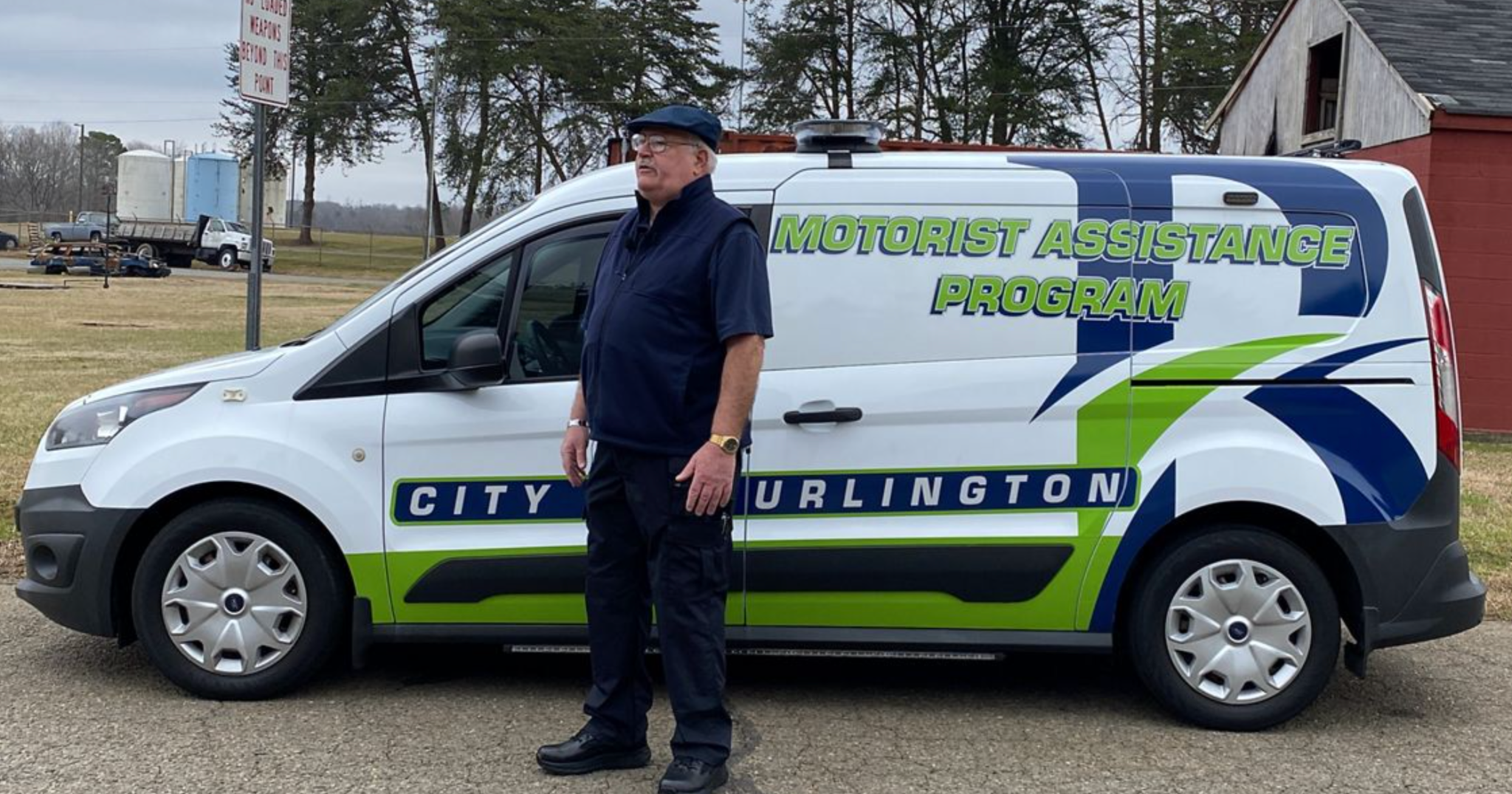
Cities can structure those teams in different ways. Philadelphia houses its Public Safety Enforcement Officers within the Department of Streets, where civilians handle traffic control, special events, abandoned vehicles, illegal parking and other lower-level traffic duties. When the program launched, WHYY reported that the officers were “part of 125 civilians who will take over jobs that had been exclusively done by police officers,” handling “everything from directing traffic to writing tickets and ordering abandoned vehicles removed from city streets.” Burlington, North Carolina, takes another approach, housing its Civilian Crash Investigators within the Police Department itself, similar organizationally to some early civilian mobile crisis response teams that were embedded within police departments, where they investigate routine non-injury crashes, direct traffic and assist motorists while sworn officers remain available for calls requiring police authority.
Safer Cities recently spoke with Philadelphia Streets First Deputy Commissioner Richard Montanez and with Burlington, North Carolina Police Lieutenant David Turner about their two programs:
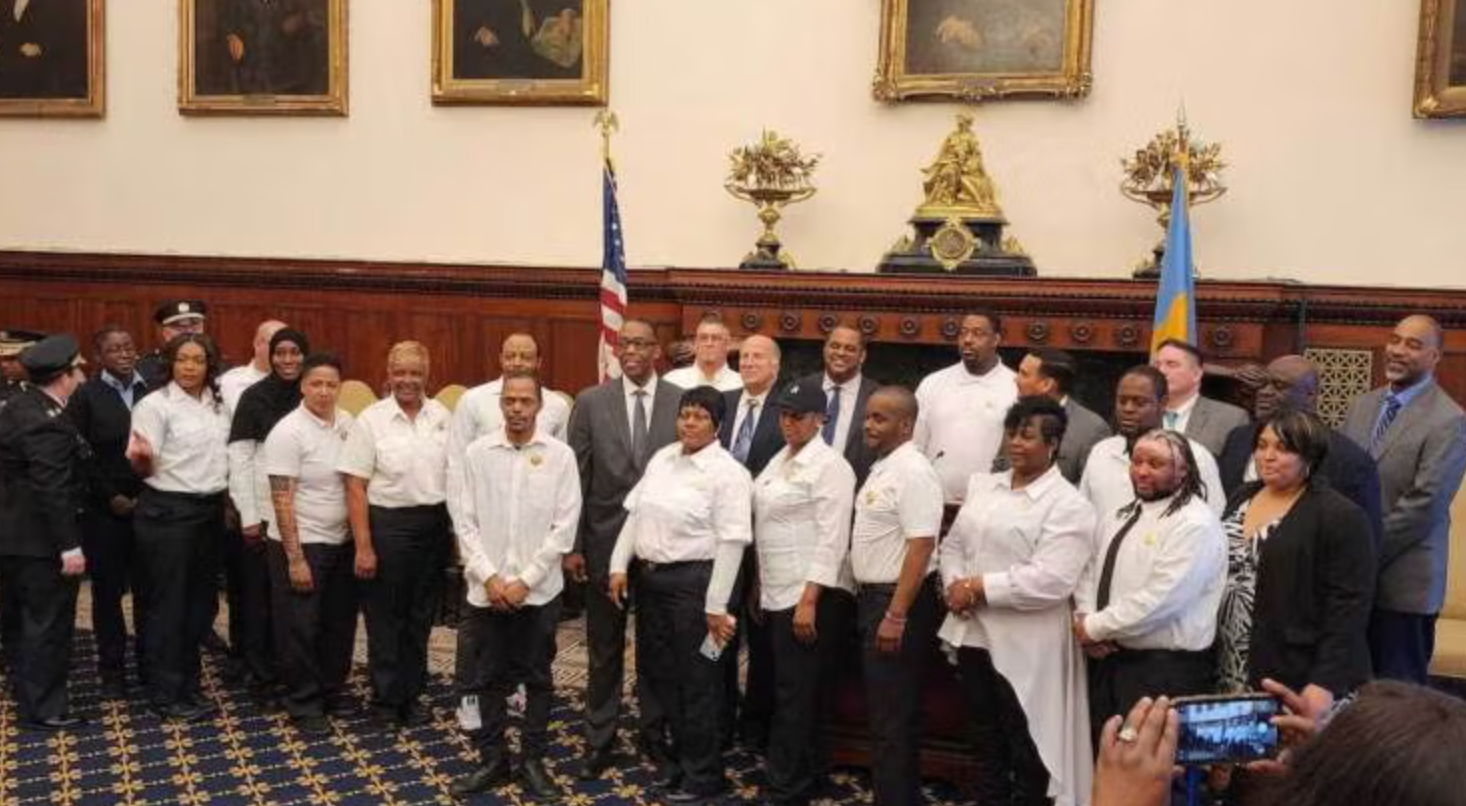
Philadelphia Department Of Streets:
- On Supplementing Police With Civilian Traffic Enforcement: “Philadelphia utilizes Public Safety Enforcement Officers to supplement our Police force… the PSEO’s help with traffic control, crowd control in special events, abandoned cars, illegal parking and other minor issues.”
- On Keeping Traffic Moving Until Congestion Clears: “If our PSEOs notice a traffic backup, they will keep the intersection clear and remain on post until the congestion subsides.”
- On A Growing Partnership With Philadelphia Police: “The relationship has grown, and requests for PSEO have increased. We do work closely with PPD as the PSEOs are a supplement to PPD…”
Burlington Civilian Crash Investigators:
- On Freeing Officers For Higher-Priority Calls: “In 2025, Burlington’s CCI staff investigated 910 crashes, representing approximately 37% of all crashes reported to the department… handling more than one-third of the department’s crashes through civilian personnel clearly represents a significant increase in sworn officer availability and operational capacity.”
- On Providing Faster Service At Routine Crashes: “CCI members regularly dispatch themselves to the call and immediately respond to that location, which decreases the department’s overall response time… Post-implementation of the CCI program has decreased wait time substantially below a half-hour, and there were no reported complaints from community members having to wait extended amounts of time when CCI members are on shift.”
- On Becoming Part Of The City’s Daily Operations: “The CCI / sworn officer relationship within our agency remains fully harmonious… If they see an officer responding to a crash the CCI can investigate, they will call that officer on the radio and volunteer to respond in their place to keep them available.”
3. Cities Expanding Transit Ambassador Teams To Enhance Public Safety.
- Maryland Transit Administration Launches Transit Ambassador Team To Strengthen Rider Safety. For WBAL, Greg Ng reports the MTA launched a new transit ambassador team, called the Customer Assistance and Rider Experience unit, that “will provide a highly visible presence [] to engage with riders on the Metro Subway and Light Rail systems.” The ambassador team “will assist with trip planning and navigation, provide service information, explain fare and payment options and answer questions” and “proactively resolve [public safety] issues while also promoting respectful behavior.” Maryland Transit Administrator Holly Arnold explained that the team will “provide a comprehensive safety approach across the transit system.”
- Chicago Transit Authority Launches Transit Ambassador Team Trained In Crisis Intervention And Community Violence Prevention. For the Chicago Tribune, Talia Soglin reports “new teams of crisis intervention and community violence prevention workers will soon roam portions of the agency’s Red, Blue and Green rail lines,” with CTA investing $9.6 million in the one-year pilot. The “safe ride specialists” will be “trained in de-escalation, crisis intervention, mental health, and in first aid like CPR and Narcan administration.” CTA Chief Security Officer Joe Bird said violence prevention workers will “engage proactively” with young people and “serve as a positive presence, building a rapport and trust on the system.” Nora Leerhsen, acting president of CTA, explained that the teams add to the agency’s “multilayered security strategy… we’ve layered on another layer here today. And it’s not just one type of resource, it’s several.”
- Tucson Launches Transit Ambassador Team As Part Of Broader Push “To Improve Public Transit Safety.” For 13 News, Payton May reports on Tucson’s launch of its transit ambassador pilot “with plans to scale the program citywide if effective,” alongside a transit safety plan allocating more than $2 million to “bus stop cleaning crews and contracted security guards” and other public safety enhancements. Assistant City Manager Liz Morales said the new ambassadors will “offer help and resources when officers are not present… the goal of the transit ambassadors is to be a presence, and a welcoming resource to anyone.”