- In St. Petersburg, Florida, Mobile Crisis Response Team Has Responded To More Than 20,000 Calls. St. Petersburg’s lauded Community Assistance and Life Liaison, or CALL, team has now responded to more than 20,000 calls for service in the city since it first launched in 2021, the team reported at the city’s annual public safety meeting last month, marking a major milestone for the mobile crisis response team.
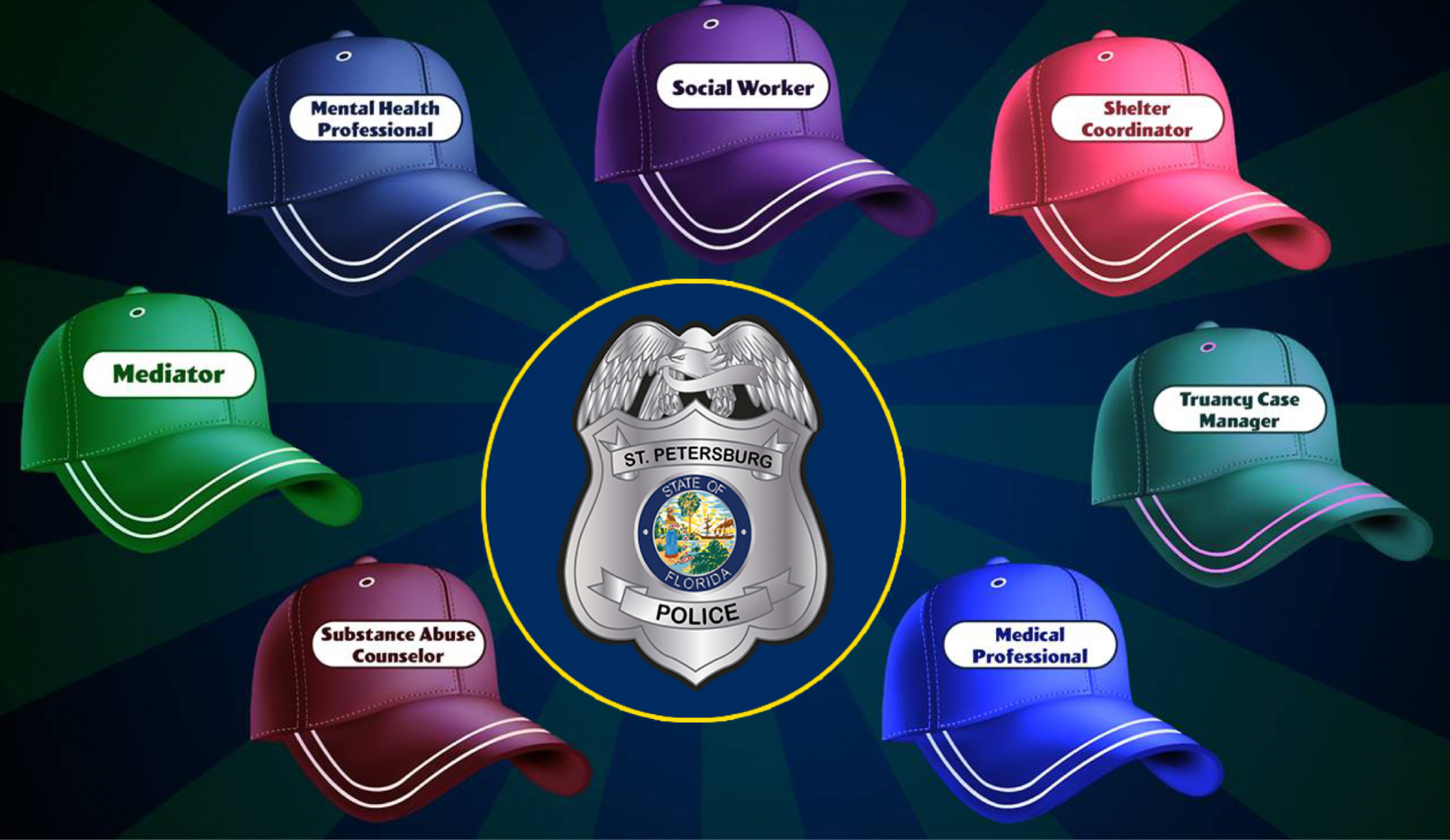
The CALL team—which deploys trained social service professionals to behavioral health and mental health calls for service that come into 911 emergency dispatch—is often celebrated as a top-tier national model for mobile crisis response, as Safer Cities has reported previously, and has only grown in importance to the city’s public safety infrastructure. As Catalyst’s Aaron Styza reports—the team has “restructured public safety [in the city], dividing and deploying resources more effectively so police can focus on criminal matters and CALL can focus on mental health and behavioral concerns.”
St. Petersburg Police Chief Anthony Holloway, a vocal supporter of the team, explained to Catalyst that with the success of CALL, it has “become clear that certain non-criminal calls, particularly those involving mental health crises, are often best supported by trained care professionals,” instead of law enforcement, and “reflects a shared commitment to using the right response for the right situation while ensuring the safety of both the individual and the community.”
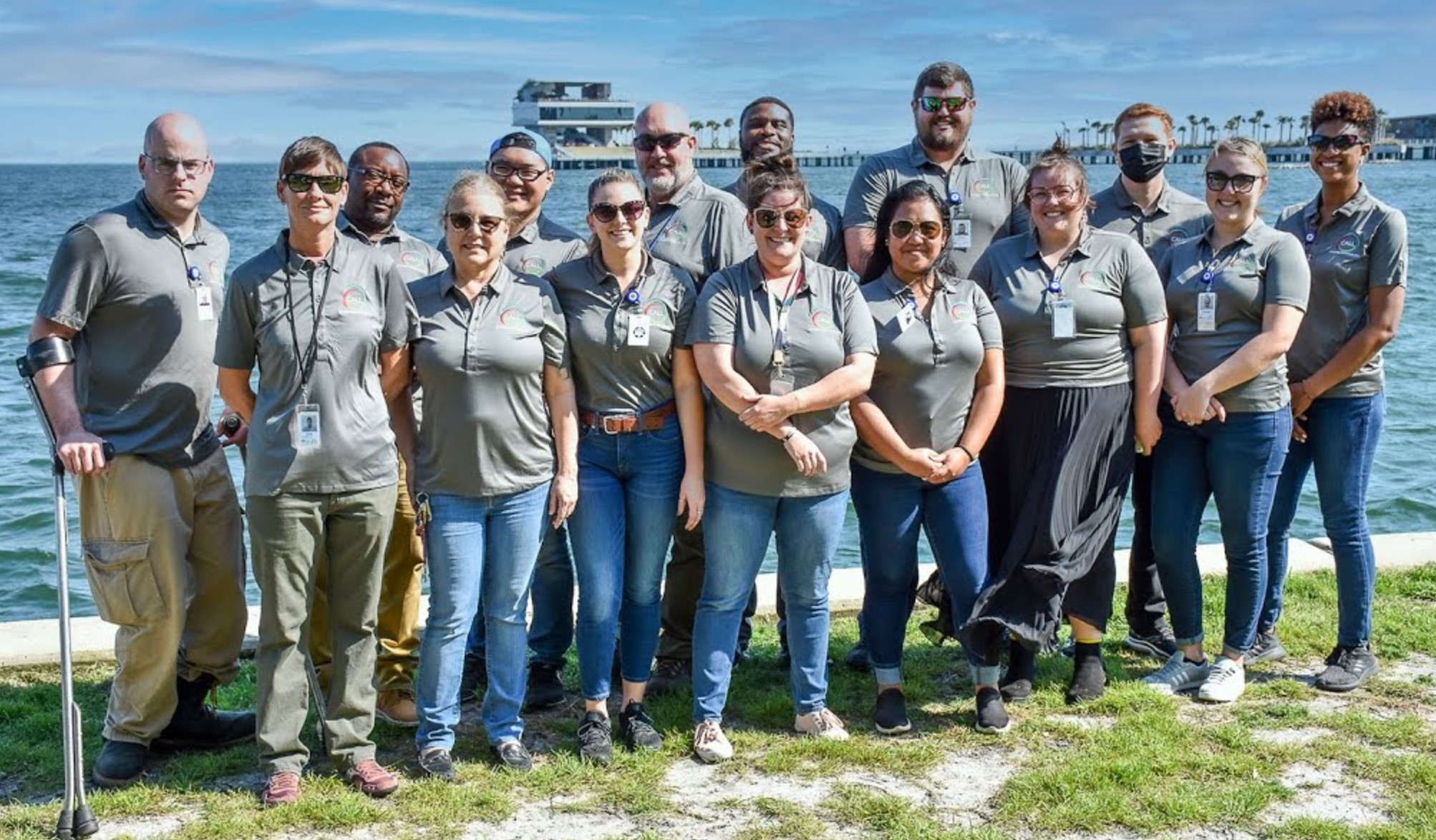
- How Does The CALL Program Work? Calls for service come into 911 or the non-emergency line and are first reviewed for “(1) event type, (2) nonviolent/noncriminal status… (3) caution notes/safety alerts… [and] (4) warrants for arrest,” before being routed to CALL teams that operate “8AM-2AM in the field daily.” The program also allows officers to request CALL “on-scene,” while CALL teams provide “follow up to ensure clients are linked with services and stable.”
- What Kind Of Calls Do They Respond To? The program provides a response team and wraparound services for “non-violent and non-criminal 911/non-emergency calls,” including “Mental [Health]” “Disorderly Juvenile/Truancy,” “Neighborhood Dispute,” “Substance Use” and “Homeless-related” calls.
- What Kind Of Training Does The Team Receive? CALL staff receive extensive training in “Scenario Based Training/Situational Awareness,” “Verbal De-Escalation,” “Mental Health First Aid,” “Trauma-Informed Care,” “Motivational Interviewing,” and “Safety Planning,” alongside CPR/First Aid and domestic violence training. The program also includes “Ride-Alongs with SPPD as refreshers and on-boarding new staff.”
The team’s impact was also measured in a recent study published in Psychological Services Journal by researchers from the University of South Florida which evaluated the CALL team to better understand its success and how other cities interested in launching a similar model could replicate it. The full study is worth reading, but here are some of the components researchers highlighted:
- Strong Buy-In Across Public Safety Agencies Helped Launch And Sustain The Program: Researchers found “support and initial buy-in” from leadership, police, and dispatchers was critical, noting the program gained momentum when “the police chief championed the CALL program” and “the police union” supported implementation. A 911 staff member explained that the program “filled a gap that has bothered us for many years,” allowing responders to help people when “we either had to send a police officer… or totally refused them service because there was just nothing we could do.”
- The Team Effectively Connects Residents To Long-Term Support: City leaders highlighted the program’s effective “holistic approach to crisis intervention,” emphasizing its ability to “connect clients to long-term resources, reduce repeat emergency service use, and divert noncrime crises.” CALL leaders also noted the program’s community presence, explaining “we’re constantly talking to community leaders, providers, small businesses, and church leaders… [which] gives us an opportunity to be proactive before something’s an issue.”
- “Stringent” Call Screening Helped Build Trust And Safe Implementation: Researchers found that “stringent vetting of calls” helped improve confidence in the program among partners, with police and dispatch staff highlighting “the strengths of the program… [as] the vetting procedures and strong communication between [911 emergency dispatch, police,] and CALL team members.”
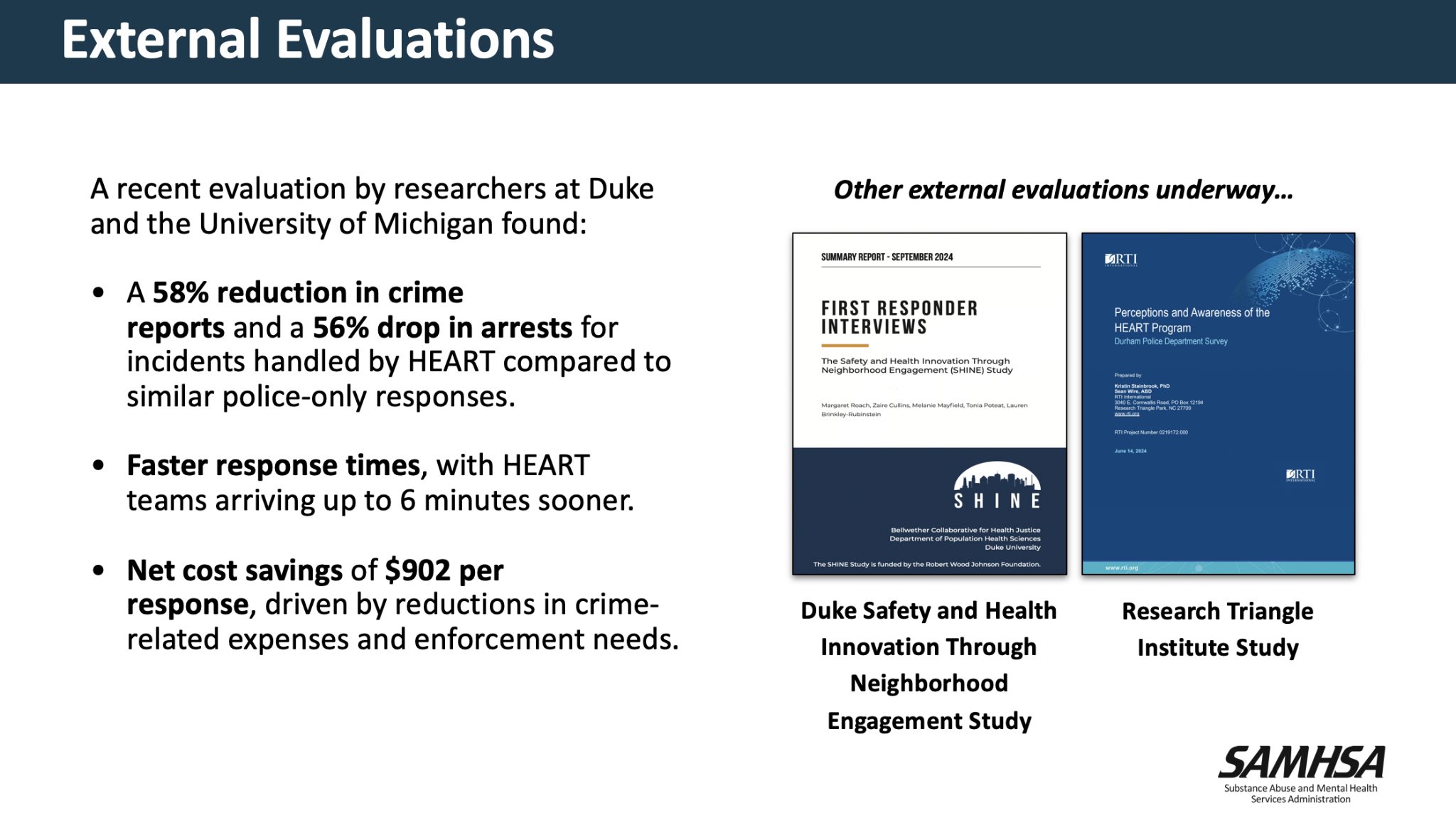
- In Durham, North Carolina, HEART Team Helped Produce A “58% Reduction In Crime Reports And A 56% Drop In Arrests.” For a presentation delivered through Substance Abuse and Mental Health Services Administration’s GAINS Center this month, leaders from the Durham Community Safety Department outlined growing evidence that unarmed crisis teams can safely handle many behavioral-health and quality-of-life calls while reducing arrests, saving police time, and even lowering crime. As the team reported in the presentation, “a recent evaluation by researchers at Duke University and the University of Michigan found… a 58% reduction in crime reports and a 56% drop in arrests for incidents handled by HEART compared to police-only responses.”
The HEART team, which launched in 2022 and now operates seven days a week, responds to mental health and behavioral health-related calls for service, often pairing a trained clinician with another expert to aid people in the throes of a crisis. The team highlighted in the presentation how the city’s HEART program (Holistic Empathetic Assistance Response Team) has become a centerpiece of Durham’s “newest branch of public safety,” responding to more than 40,000 calls since launching in 2022, as Safer Cities recently reported.
During the presentation, the team reported back several other promising findings, including:
- HEART Saves Thousands Of Police Hours While Earning Officer Support: Officials say HEART now saves police “Over 8,000 hours per year,” and that “94% of officers view HEART as helpful” in responding to mental-health-related 911 calls.
- HEART Teams Report High Safety Levels: Durham reported HEART teams request emergent police backup “less than ½ of 1% of the time,” while responders say they feel safe on “over 99%” of calls.
- HEART Teams Also Reduce Burden On ERs: Durham officials reported that HEART is now “5x more likely to transport individuals to non-hospital care,” helping connect people to crisis and recovery services outside emergency rooms.