A new study by University of Delaware researchers, published in the Journal of Crime and Justice, finds that embedding mental health clinicians directly in 911 dispatch centers can reduce police deployments and provide an alternative to police response for callers experiencing mental health-related crises. Researchers examined 59 months of 911 calls in New Castle County, Delaware, comparing actual police deployments with forecasts based on historical data. Clinicians resolved 64% of the calls they reviewed without police response, while deployments averaged 8.58 fewer per month than forecasted. Researchers conclude that “clinicians embedded in 911 centers may make a difference in diffusing mental health-related situations and reallocating law enforcement response resources.” The full study is worth your time, but here are some toplines:
- Mental Health Clinicians Divert 64% Of Reviewed Crisis Calls From Police Response. “[C]linicians were available to address 369 out of 2,302 eligible calls based on the time of the call (i.e., during program hours) and current staffing levels. These mental health professionals were able to successfully divert [] calls from any subsequent police response, representing a 64% diversion rate.” The remaining calls “were returned to [dispatchers] for response.”
- Statistically Significant Reduction In Police Deployments. “Differences between the observed and forecasted monthly number of police deployments widen as [] programming expanded.” While officers responded to eligible calls “approximately 127 times per month before and 122 times per month after [mental health clinician] introduction,” researchers found “a small but statistically significant difference of 8.58 fewer police deployments per month” compared with forecasted responses.
- Clinician-Based 911 Diversion Frees Up Police Resources, Could Have Even Greater Impact With Expansion. “[Clinicians] would reallocate over 109 hours of police time because no further action was needed beyond the clinician’s discussion. The program could become more impactful by expanding hours of service (e.g., 24/7 coverage) or increasing the number of full-time clinicians taking calls.” Researchers suggest the approach “may work in tandem with existing community-based crisis response infrastructures like mobile crisis teams and support hotlines.”
Momentum For Integrating Mental Health Expertise Into 911, Sending The Right Responders And Freeing Up Police Resources, Across The Country:
- In California, Los Angeles Announces Unified 911 Call Center To Strengthen Mental Health Crisis Dispatch. In an October 23 announcement, Mayor Karen Bass’s office outlined plans for “a unified call center to streamline the diversion and dispatch of civilian crisis response teams,” replacing “the two separate civilian call centers currently serving these programs.” The directive also calls for “accelerating the recruitment, hiring, and retention of 911 dispatchers” and “modernizing emergency communications technology” to help dispatchers “answer and process calls more quickly and efficiently.” Since 2023, the city reports that “more than 125,000 calls have been diverted from 911 to mental health and crisis response teams.” Councilmember John Lee, chair of the city’s Public Safety Committee and champion of integrating mental health experts into the 911 emergency call center, explained that “by investing in staffing, technology, and better coordination, we can ensure our Valley residents get the help they need while allowing our police officers and firefighters to focus on the emergencies that need them most.”
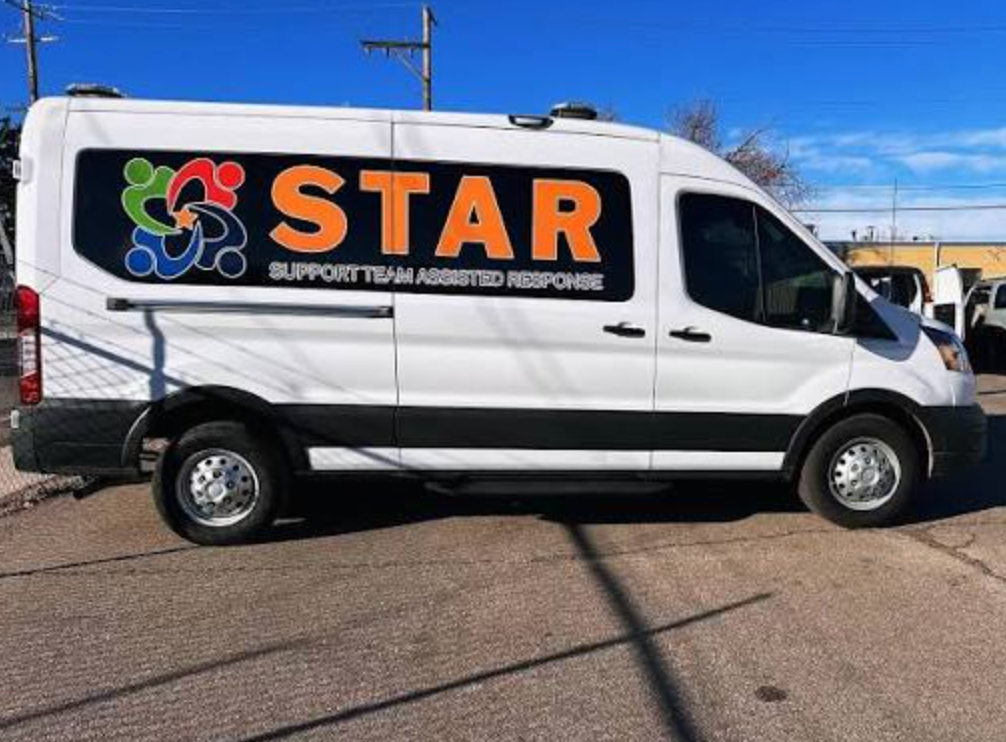
- In Colorado, Denver To Route Mental Health Crisis Calls To Behavioral Health Experts, Not Just Police, To “Ensure The Right Resources Are Deployed.” For Denverite, Kyle Harris reports that Denver is “revamping how the city handles mental health and drug use emergencies,” with calls about mental health crises soon “transferred to a team of new behavioral health experts who will ensure the right resources are deployed.” For some mental health-related calls, it might mean clinicians respond; for other kinds of calls related to homelessness “it might be housing case workers or the Support Team Assisted Response (STAR) Program’s outreach workers for situations that do not require an armed response” and for “more dangerous encounters, that could include police officers and mental health co-responders.”
The city also recently “began employing the STAR co-responders directly, rather than through a nonprofit partner,” and could eventually “integrate the 311 and 911 lines more tightly, allowing the city to route calls even more quickly.” Mayor Mike Johnston explained: “So you can call any place. We’ll decide who the right person at the right time and the right place is. And it’s more and more often from our outreach side.”
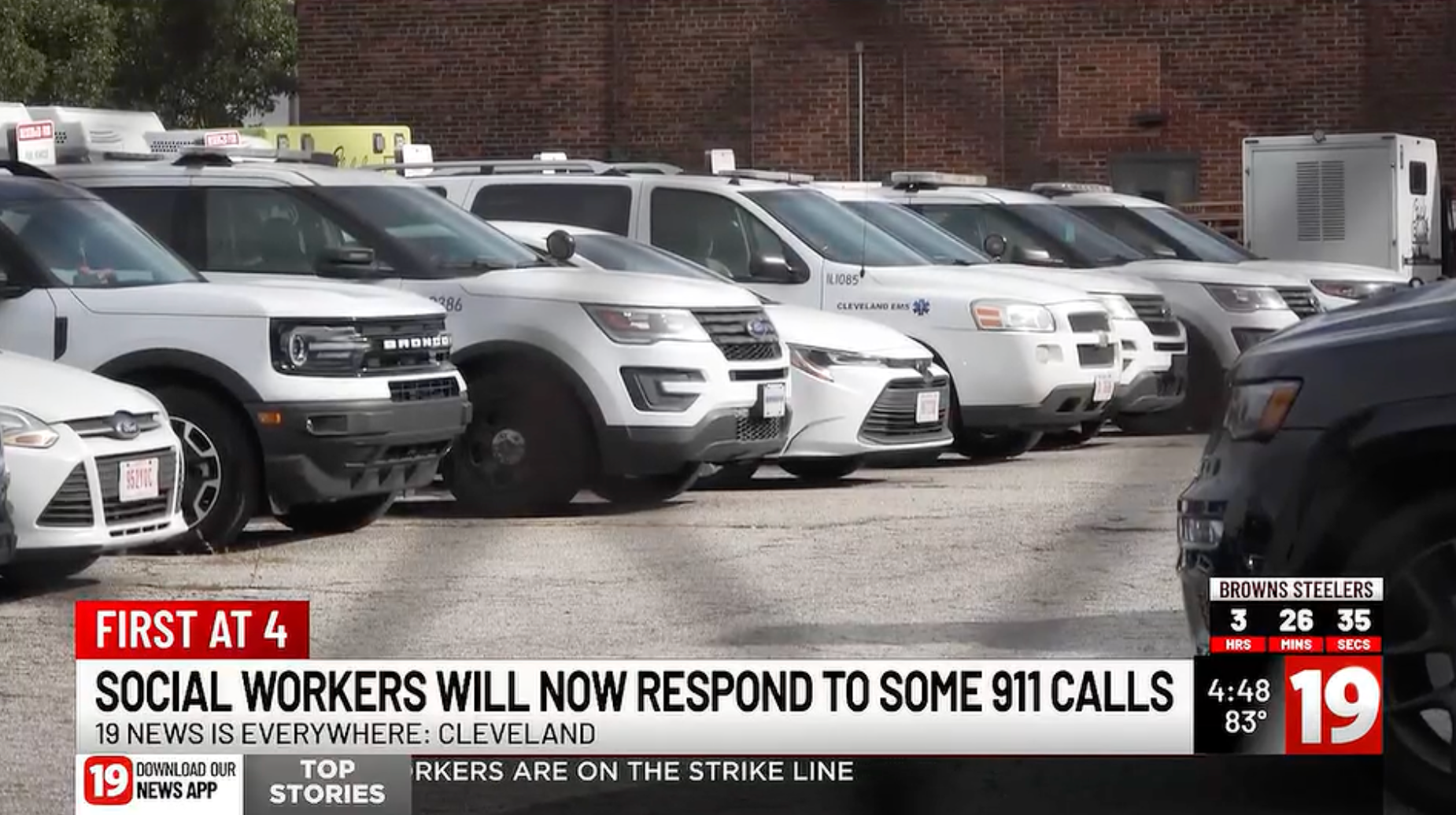
- In Ohio, Cleveland To Send Social Workers Instead Of Police To Some Mental Health 911 Calls. For Cleveland 19, Vic Gideon reports that “non-violent mental health 911 calls will get handled differently starting in the middle of 2027,” with a new Community Crisis Response team that is “trained to de-escalate situations, to provide trauma informed support to people who are having crises.” The city expects to hire 15 social workers initially, who “should be able to resolve some issues over the phone,” helping “free up police to handle other situations, leaving mental health issues to health professionals.”
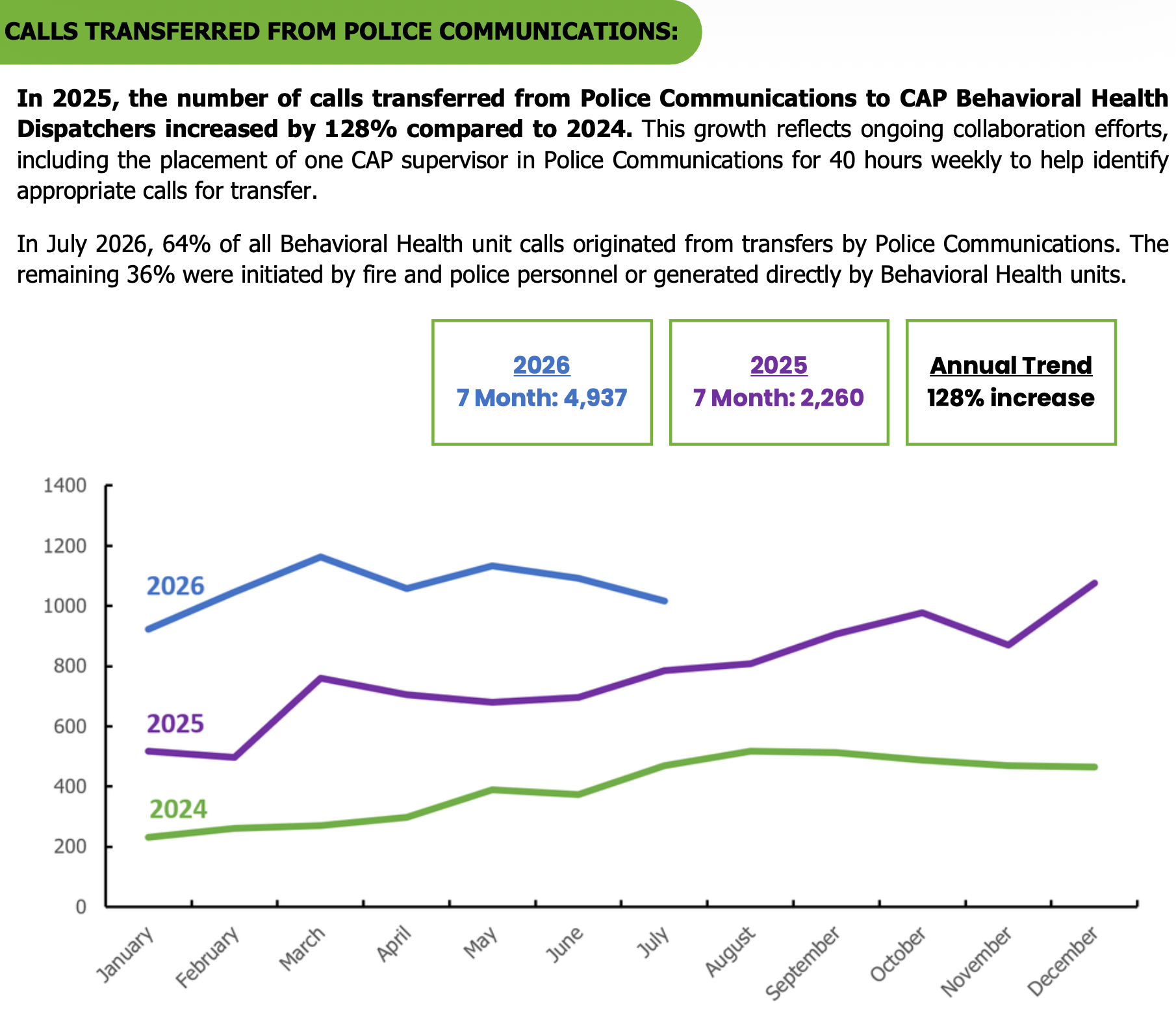
- In Arizona, Phoenix More Than Doubles Police Dispatch Transfers To Mental Health Teams, Which Respond Without Police Or Fire 80% Of The Time. During a recent Phoenix City Council policy session, city officials outlined changes to the 911 screening process so dispatchers now ask callers, “Do you need police, fire or behavioral health?” — a change similar to other cities, like Austin, Texas, which offers a “mental health” option for 911 callers, with the goal of sending the right responders to the right calls, reducing unnecessary police deployments while connecting people to specialized mental health services. Additionally, according to the latest city data obtained by Safer Cities, Phoenix’s Community Assistance Program now operates “nine Behavioral Health Units providing 24/7 citywide coverage, supported by round-the-clock Behavioral Health Dispatch services… [with units] specifically designed to respond independently to calls, serving as an alternative to traditional police or fire response.” In July, the units responded to 1,016 calls, with 80% handled independently, while “64% of all Behavioral Health unit calls originated from transfers by Police Communications.” Those transfers more than doubled, from 2,260 during the first seven months of 2025 to 4,937 during the same period in 2026.