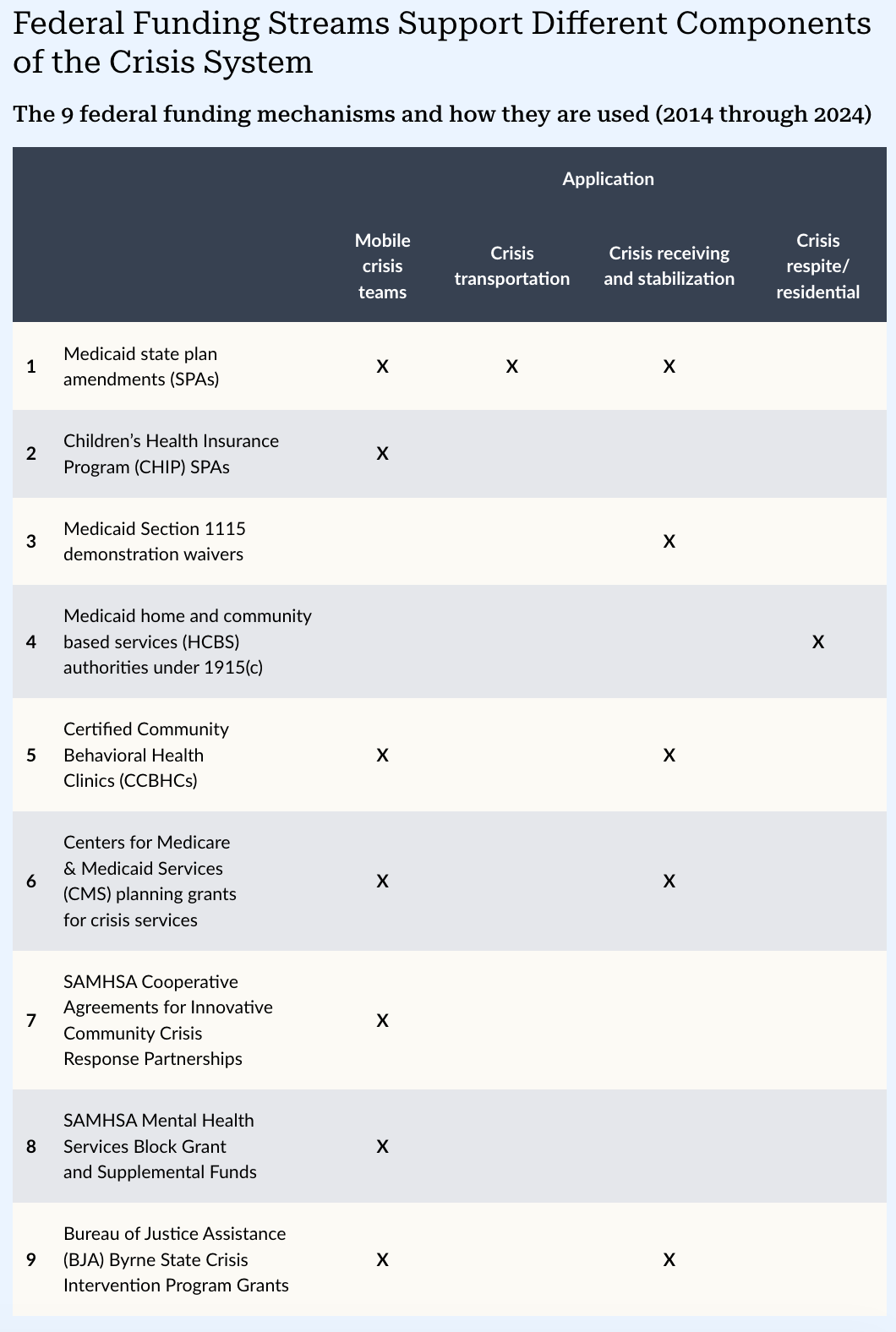
1. Study: New York City’s Cure Violence CVI Programs Linked To 14% Fewer Shootings, “Represents A Scalable And Cost-Effective Strategy.” A new study published in the Journal of Urban Health from researchers with the New York City Council’s Data Science Division finds that the city’s Cure Violence community violence intervention programs were associated with a significant 14% reduction in shootings. The researchers analyzed NYPD shooting data from 2006 to 2023, using a natural experiment created by the staggered rollout of programs across 28 police precincts, compared with 48 precincts without programs, through difference-in-differences and event-study models. The researchers conclude that Cure Violence “represents a scalable and cost-effective strategy that merits continued investment and replication in comparable jurisdictions nationwide.”
- Credible Messengers Mediate Conflicts, Connect High-Risk Residents To Services. Programs employ “outreach workers” and “violence interrupters,” many with “prior gang or justice-system involvement, allowing them to function as ‘credible messengers.’” Workers “attempt to mediate and de-escalate disputes before they escalate into shootings” and “connect participants with services such as employment support, substance-use treatment, and housing assistance.” “To maintain trust with participants, Cure staff operate independently of law enforcement.”
- Shootings Fall 17% At Launch, With Significant Reductions Three Years Later. “In the year of Cure implementation, the treated precincts experienced a significant 17% … reduction in the gap in shootings between Cure and control precincts.” The researchers also found a “significant 15% … reduction in shootings 1 year post the implementation of Cure” and a “significant 16% … reduction in shootings 2 years post the implementation of Cure.” “Even … 3 or more years post-treatment, there is a 14% … reduction in shootings.”
- An Estimated 1,296 Shootings Avoided, $6.50 In Benefits For Every $1 Spent. “Our estimate implies that, on average, NYC would have seen 108 or 7.6% more shootings per year between 2012 and 2023 in the absence of Cure.” Over those years, “this adds up to 1296 shootings avoided, which translates to $2.9 billion in social welfare gained.” With “the total cost of [the city’s crisis management system] from fiscal year (FY) 2013 to 2023 … about $450 million… the benefit-cost ratio was approximately 6.5:1, implying substantial social gains.”
Cities With CVI Programs Seeing Promising Results, Across The Country:
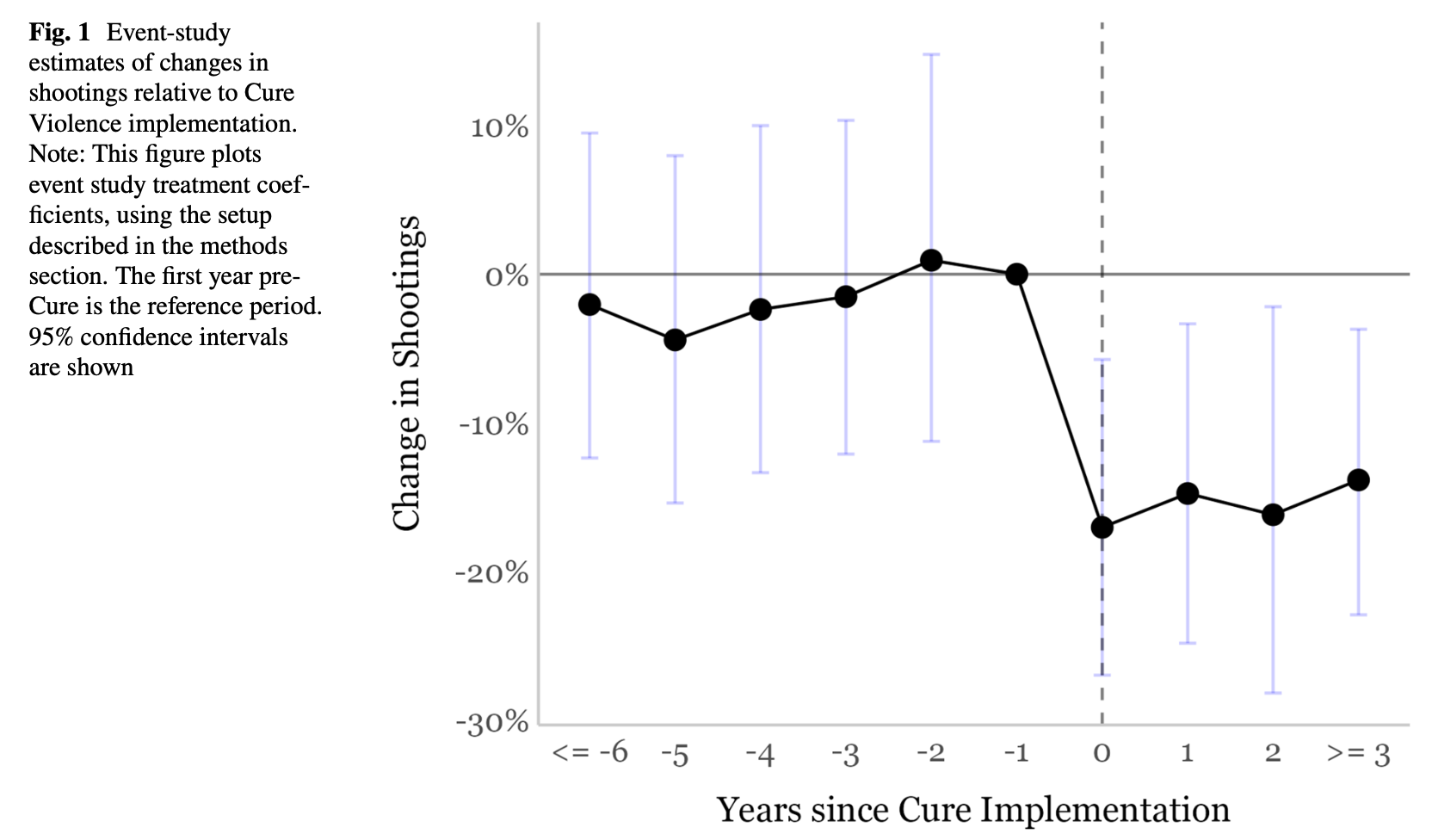
- In Detroit, Community Violence Intervention Zones See Homicides Fall 33% And Shootings 38%, Outpacing Rest Of City. The University of Michigan’s Poverty Solutions issued a recent report that found in the second year of Detroit’s ShotStoppers community violence intervention program, “the CVI zones outpaced the rest of the city with an overall decrease in their homicide victimizations of 33% and non-fatal shooting victimizations of 38% since the prior year, compared to the rest of the city’s reductions of 12% and 26%, respectively.” The city “provides ongoing and performance-based grants to community-based organizations focused on reducing gun violence,” with teams earning “quarterly performance-based bonuses when their zones experience decreasing homicide and non-fatal shooting victimizations at a higher rate than the citywide average.”
Teams use “individual interventions with individuals and groups at high risk of involvement with gun violence” and “broader community engagement with resource provision.” The evaluation found “the program’s flexible structure encouraged neighborhood-level experimentation while offering essential support from the City,” and while “a direct causal relationship between the interventions and the reduction in homicides and non-fatal shootings cannot be established, the trend is promising.”
- In Birmingham, Alabama, Homicides Fall 74% As City Credits Community Violence Intervention Workers As Key Component Of Strategy. The Bakersfield News Observer reports that Birmingham’s community violence intervention workers are among those credited by Mayor Randall Woodfin for why the city “is on pace to close 2026 with its fewest homicides in roughly 75 years.” Police “counted 34 homicides through Oct. 1, down from 61 at the same point in 2025 and 129 at the same point in 2024.” The city “has put about $5.4 million in American Rescue Plan money into violence intervention programs,” including a “hospital-based partnership … that places specialists at the bedsides of people wounded by gunfire,” a “street outreach team run with the Urban League of Alabama,” and a “Group Violence Reduction Strategy.” The City Council also “extended the hospital-linked program through June 2027 with $1.15 million and put $3 million for community violence intervention — a $1.5 million increase — into the city’s fiscal 2027 budget.”
- In Baltimore, Safe Streets Violence Interrupters Help Neighborhood Reach 379 Days Without A Homicide, Mediate Over 120 Conflicts. The AFRO reports that the Safe Streets CVI team in the Belvedere neighborhood has helped the region go “379 days and counting with no homicides in the site’s boundaries.” Since the last homicide on Sept. 13, 2025, the team “has conducted over 120 successful mediations, preventing potentially violent conflicts from escalating into a shooting or homicide and referred 78 community members at-risk of being involved in violence with wraparound supports.” Across all 10 Safe Streets sites, violence interrupters “have successfully mediated over 1,008 potentially violent conflicts and made 405 referrals in 2026.” Mayor Brandon Scott, a champion of the CVI effort, called the milestone “a testament to what is possible when we put people closest to the pain in our communities at the heart of our solutions to public safety.” A 2026 Johns Hopkins study also found Safe Streets was associated with estimated reductions of 42% in youth homicides and 21% in youth nonfatal shootings among people ages 15–24.
2. Safer Cities Interview With Newark’s Trauma Recovery Center. Trauma Recovery Centers help survivors of violent crime and their families recover from traumatic events, connecting them to mental health treatment, housing, financial assistance, legal resources, and other services that help them regain stability.
In New Jersey, the Newark Community Street Team’s Trauma Recovery Center provides free mental health treatment, advocacy, and victim services to survivors of violent crime ages 10 and older throughout Essex and Hudson counties, including survivors of shootings, sexual assault, domestic violence, and human trafficking. The center is designed to reach survivors who might not otherwise seek help from traditional law enforcement or medical institutions.
Newark’s broader approach to public safety was evaluated by UCLA in a study that examined how the Newark Community Street Team (NCST) combines violence prevention, case management, and victim advocacy. Researchers found that NCST helped change police reporting practices that had prevented crime survivors from accessing victim services and compensation. Mayor Ras Baraka described the broader public safety vision: “We want to keep people out of jail while we create opportunities where they can grow.” A newer 2025 UCLA evaluation specifically highlighted the Trauma Recovery Center’s role, concluding that “untreated trauma is intertwined with violence” and that violence prevention “cannot be separate from the work of the TRC.”

Safer Cities recently spoke with Angelica Maury, LSW-SIFI, CCTP, Program Director of the Newark Community Street Team Trauma Recovery Center, about how the program helps survivors heal, builds trust, and brings services directly into communities:
- On Helping Survivors Recover By Addressing Needs Beyond Mental Health Treatment: “One of the things that makes our Trauma Recovery Center unique is that we recognize healing doesn’t happen in a vacuum. Trauma doesn’t just affect someone’s mental health—it often impacts every part of their life … That’s why our model integrates clinical treatment with intensive case management and victim advocacy. Our clinicians and case managers work side by side to help clients access safe housing, apply for Crime Victims Compensation, connect to legal and immigration resources, obtain employment, secure public benefits, enroll children in school, and navigate systems that can often feel overwhelming after a traumatic event… At the Trauma Recovery Center, healing means addressing both the emotional impact of trauma and the practical challenges that often stand in the way of recovery.”
- On Building Trust And Community Partnerships To Remove Barriers To Care: “We also know that no one organization can meet every need on its own, which is why we’ve built strong partnerships throughout the community. We work closely with organizations such as the Essex County Family Justice Center, the American Friends Service Committee to support immigration-related needs, affordable housing providers, legal service organizations, food assistance programs, and many other community partners … Many have experienced systems that have failed them or left them feeling unheard, so building trust is at the center of everything we do. We meet people where they are—both literally and emotionally. Our services are provided at no cost, regardless of insurance or immigration status, and we strive to make care as accessible as possible.”
- On Bringing Trauma Recovery Services Directly To Survivors Who Might Never Seek Help: “Rather than waiting for people to come to us, we intentionally go where they are. As part of the Newark Community Street Team, we’re embedded in the communities we serve. Our staff participate in neighborhood events, resource fairs, school and community presentations, healing events, and initiatives like Heal the Block, where we engage residents in conversations about trauma, mental health, and available resources in a setting that feels welcoming and accessible… Our collaboration with outreach workers and credible messengers within NCST is especially valuable because they often have established relationships with survivors immediately following a violent incident and can help bridge the gap between crisis and care… Outreach doesn’t stop after the referral. We make every effort to reduce barriers to engagement by offering flexible scheduling, telehealth and in-person services, ongoing follow-up, and helping clients overcome practical obstacles like transportation or childcare.”
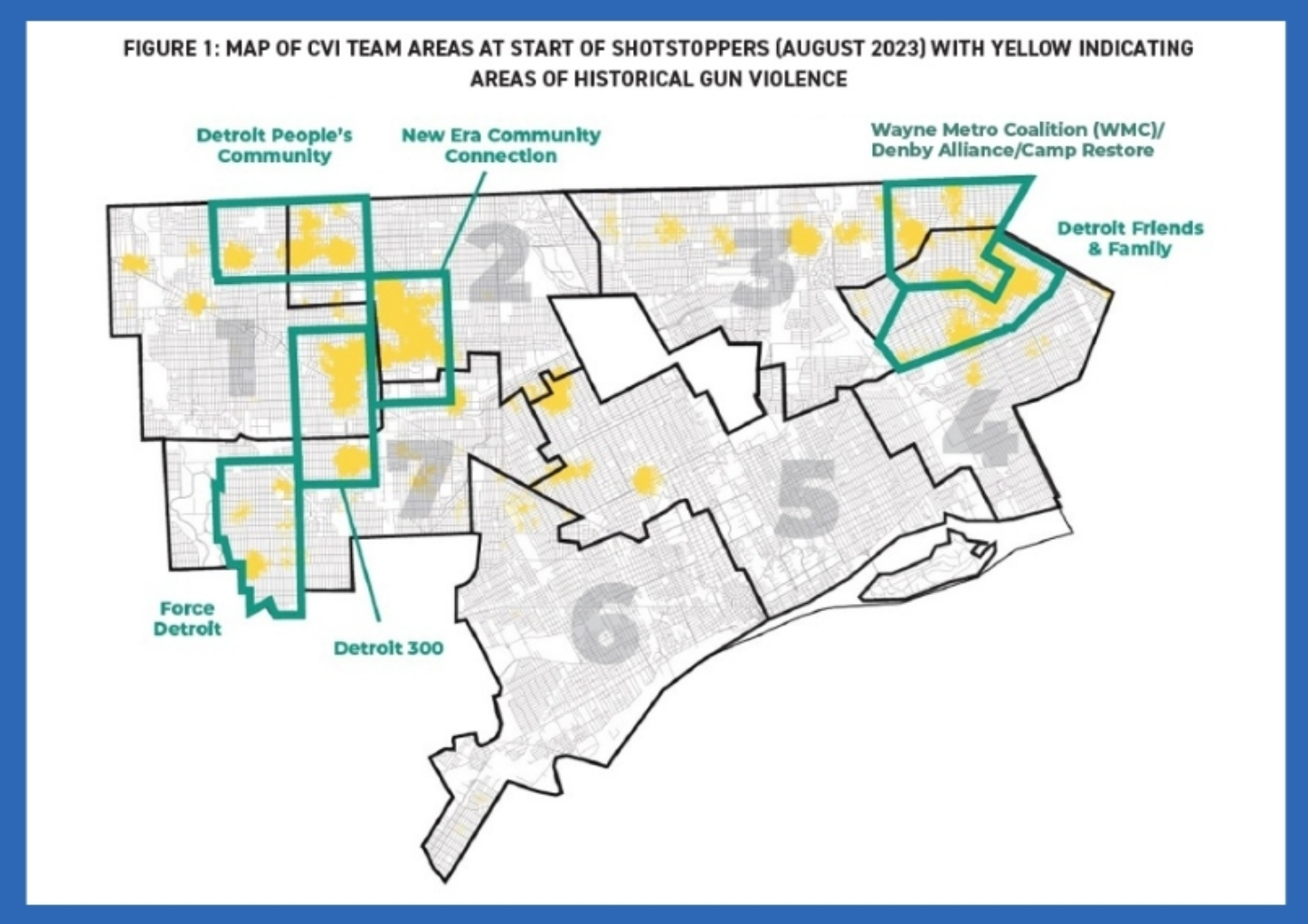
3. Report: How States Can Use Federal Funding For Mobile Crisis Response Teams, Stabilization Centers. The Pew Charitable Trusts released a new report that details the opportunities states have to use federal dollars to expand mobile crisis response teams, specialized crisis transportation, and facilities that provide alternatives to emergency departments and jails. Drawing on a national study by researchers at Columbia University, the New York State Psychiatric Institute, and Wayne State University, the Pew analysis examines how states and the District of Columbia used nine federal funding mechanisms to expand behavioral health crisis services from 2014 through 2024. The findings identify opportunities for lawmakers to expand services while making them financially sustainable. “Strategically using specific federal funding streams across the continuum can fill gaps, allow for innovation, and increase the likelihood that programs will be sustained,” the authors conclude.
- In Alabama And California, Mobile Crisis Teams Become A Statewide Medicaid Benefit. “State plan amendments (SPAs) are a dominant mechanism for crisis services expansion. Since 2014, 38 states have made 115 Medicaid SPAs to support crisis response programs.” Alabama and California “made mobile crisis teams a statewide Medicaid benefit… five of the nine identified funding streams stem from Medicaid. Because states vary widely in how they leverage these funds for crisis services, they could be leaving money on the table.” The authors explain that “maximizing Medicaid billing and reimbursement for crisis services could unlock critical resources for building behavioral health crisis systems.”
- In Kentucky, Nevada, And Oklahoma, Medicaid Funds Crisis Transportation That Can Free Up Police And Ambulances. These states “added crisis transportation billing codes.” The authors explain that “crisis transportation can be costly when provided by ambulance and traumatizing when law enforcement is the only option for bringing someone to a hospital or stabilization unit… allowing reimbursement for specialized behavioral health transport can free up time and key resources from other critical public safety and health agencies.” In Georgia, a Medicaid amendment also “introduced crisis stabilization coverage, offering a residential alternative to psychiatric hospitalization or detoxification.”
- In Massachusetts, 24/7 Mobile Crisis Response Gains Long-Term Medicaid Coverage. “Section 1115 demonstration waivers allow states to bypass specific federal Medicaid rules in order to test innovations.” But “the waiver period is temporary, so it is critical that states transition covered services into a state plan amendment to ensure long-term sustainability.” Massachusetts’ waiver “covered 24/7 mobile crisis services, formalized as Mobile Crisis Intervention in the Medicaid State Plan in 2023, ensuring continued coverage of services.” The authors emphasize that “the long-term success of crisis systems depends on braided funding that combines federal, state, and local dollars rather than relying on a single funding source.”