In 2020, Denver launched one of the most closely watched mobile crisis response programs in the country—the Support Team Assisted Response program, or STAR. The model was straightforward: For certain low-risk calls involving mental health crises, substance use, homelessness, and other behavioral health needs, Denver would dispatch a mobile crisis team, consisting of a behavioral health clinician and a paramedic or EMT, instead of relying on law enforcement.
Now, six years later, STAR has become a national model for mobile crisis response programs, and the team has responded to more than 23,000 calls for service. Cities across the country have looked to Denver as they build their own crisis response teams, while researchers have repeatedly found evidence that the model improves outcomes for people in crisis, reduces future involvement with the criminal justice system, and helps ensure that police officers, firefighters, and EMS personnel can focus on emergencies that require their expertise.
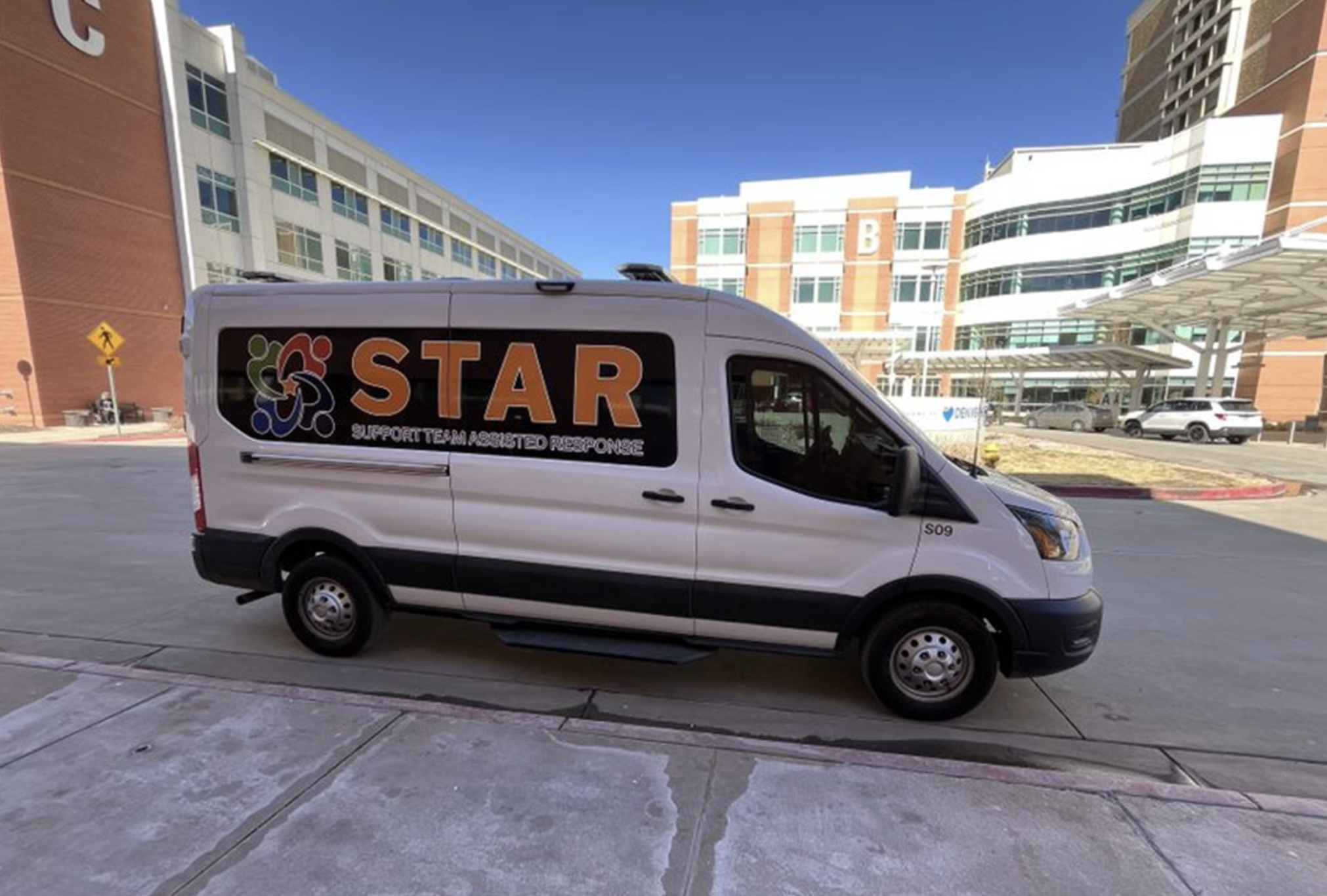
But what does it actually take to operate a program like STAR day after day? What have program leaders learned after responding to thousands of calls? And what should other cities know as they work to build similar teams?
Safer Cities recently spoke with Paul Christiansen, an associate director with WellPower, the nonprofit behavioral health organization that provides the clinicians who staff Denver’s STAR teams, and Tandis Hashemi, clinical operations manager for STAR, about how the program works, what success looks like in the field, and the lessons they’ve learned along the way. Here are three takeaways from our conversation:
1. Building A Fourth Branch Of Public Safety So That Every Problem Gets The Right Response.
- Christiansen On Why Denver Created A Fourth Response Option With STAR: “People call 911 for a wide variety of reasons. Until the Support Team Assisted Response (STAR) program was launched, Denver had three basic responses: police, fire, or EMS. Behavioral health-related calls didn’t fit neatly into any of those categories… STAR was created to offer a fourth option more appropriate to low-acuity calls with a behavioral health element. Instead of sending a team focused on responses to criminal activity, we can respond with a team consisting of a WellPower mental health clinician and a Denver Health paramedic or EMT.
An example might be someone experiencing a panic attack, emotional distress, substance-related impairment, disorientation in a public place or a lower level [homelessness-related call] … STAR allows us to respond with clinical expertise first, assess the situation, de-escalate, address immediate needs and connect the individual to ongoing support. The goal is not simply to resolve the immediate incident, but to address the reason the call happened in the first place.
It also frees up police to respond to calls that have a criminal element. If needed, STAR can always request police back-up, and many STAR calls occur when police arrive on the scene and determine the issue is better suited for STAR, making the referral themselves.”
2. How STAR Measures Success: Stabilizing Immediate Crises And Connecting People To Services In The Days That Follow.
- Christiansen On Addressing The Underlying Causes: “One of the strongest indicators of STAR’s success is that the vast majority of encounters are handled on site and resolved through engagement, stabilization and connection to services, rather than transport to jail or the hospital. Success means helping someone feel safe, reducing the immediate crisis and connecting them to the level of care or support that best meets their needs… a behavioral health provider, crisis center, shelter service, substance use treatment program, medical care, or other community resource.
The goal is not simply to resolve the immediate incident, but to address the reason the call happened in the first place.
Between 2020 and 2024, only about 3% of STAR clinical encounters resulted in a mandatory psychiatric hold… Half of people receive a referral for ongoing services during a STAR interaction; of those who do not receive a referral, 29% already have a provider.
From a public safety perspective, a good outcome is someone getting the right help at the right time, without unnecessarily entering the justice system, emergency department, or other high-cost interventions. This also produces cost savings to taxpayers and frees up other first responders for emergencies that require their expertise.”
3. Improving Outcomes For 911 Callers.
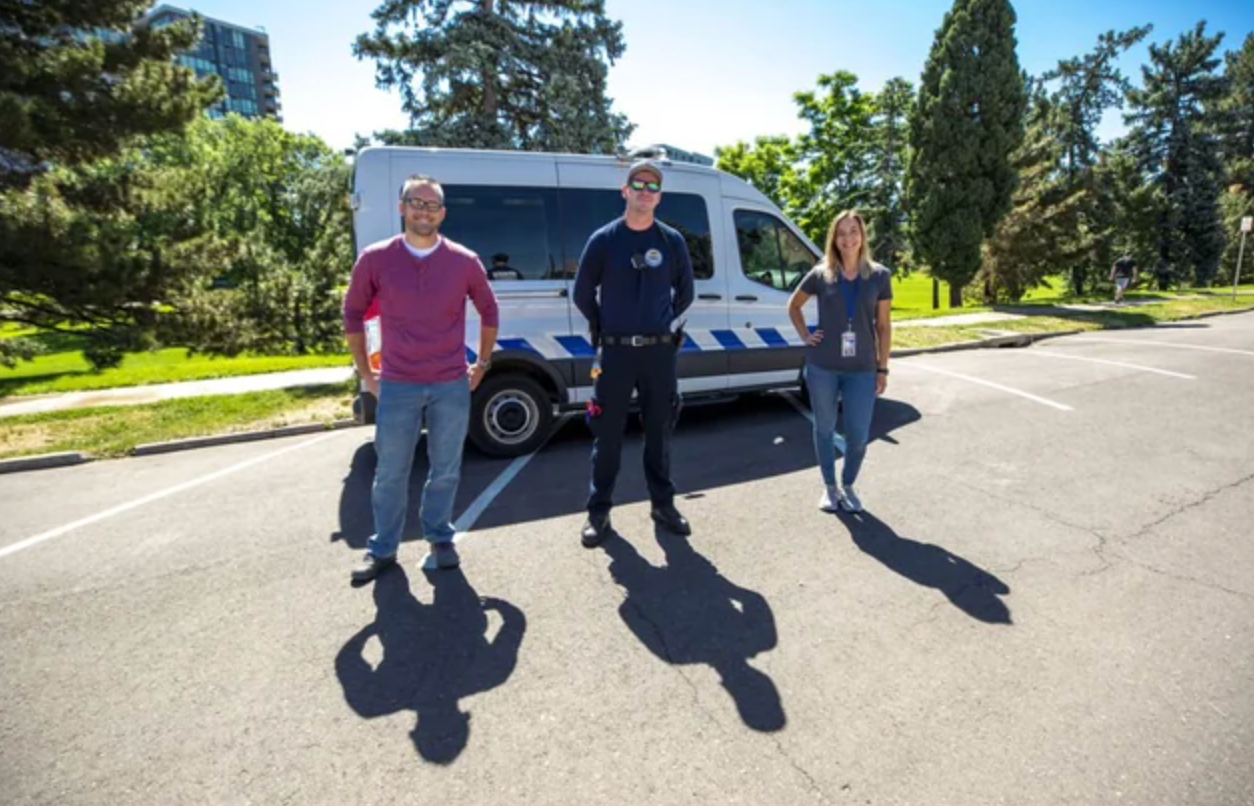
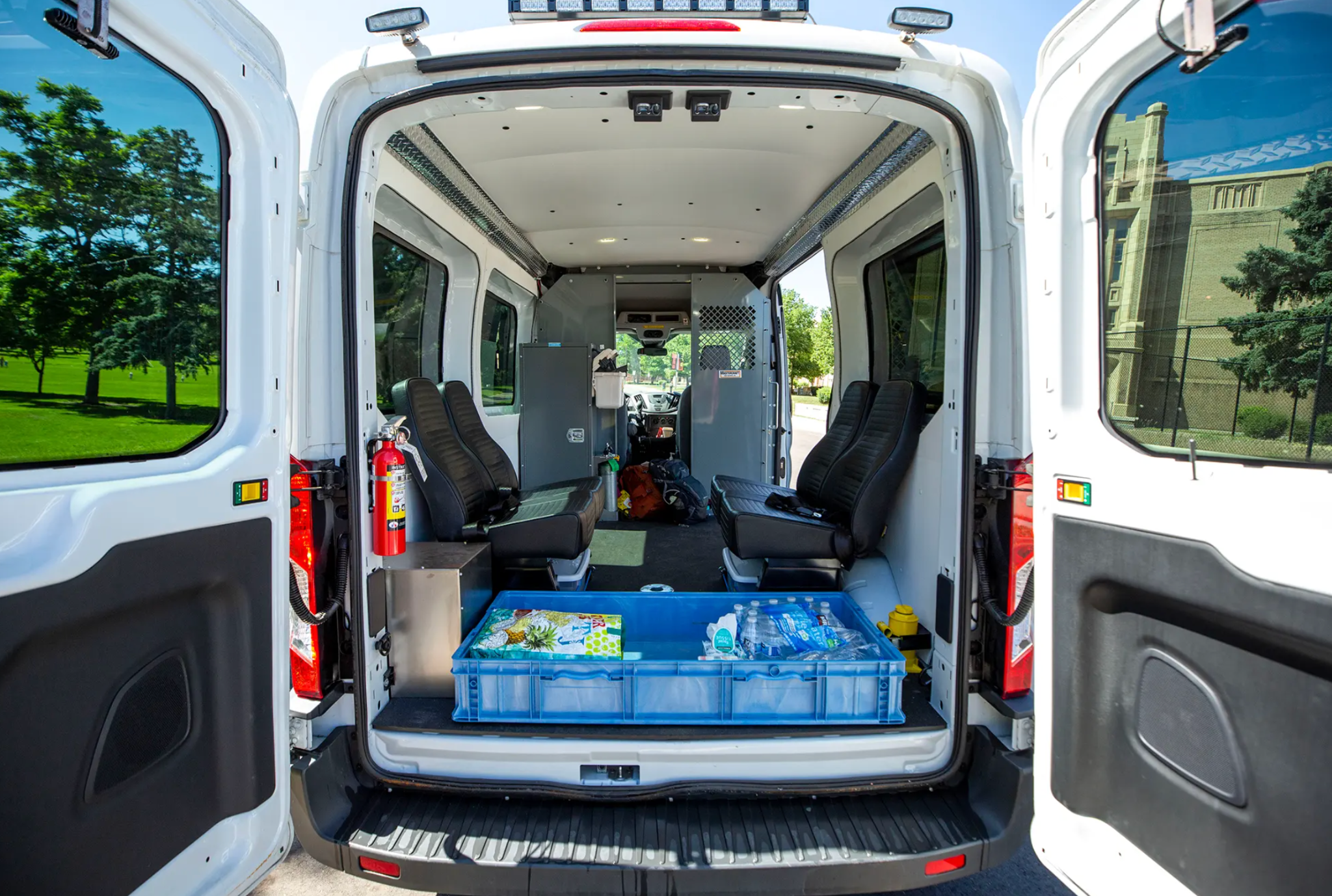
- Christiansen On Why STAR Teams Build Trust Quickly: “The STAR van is staffed by a WellPower behavioral health clinician and a Denver Health paramedic or EMT. They arrive on the scene, carefully assessing the behavioral health and medical needs simultaneously. The response is grounded in trauma-informed care, harm reduction, de-escalation and engagement rather than enforcement or compliance. Teams arrive in plain clothes, without weapons or restraints, which often changes the tone of the interaction immediately.
Our clinicians are trained to assess behavioral health crises, build rapport quickly and help individuals regain a sense of safety and control… They understand the community resource landscape and can connect people to services that continue long after the immediate crisis has ended.
We’ve seen time and time again that many people in crisis respond positively when they encounter someone whose primary role is to listen, assess and help rather than to enforce. That approach builds trust, improves engagement and often leads to better outcomes for the individual.”
- Hashemi On How STAR Defines Success: “We like to define success of a call based on the nature of the situation. Generally, if we are able to show up, build rapport and gain trust… provide de-escalation and support in the moment, and work to identify unmet needs and connect them with appropriate resources, we consider that a good outcome.
Our staff receive extensive training on crisis intervention and management, de-escalation, least restrictive intervention approach, safety planning, and trauma responsiveness. We approach every situation from a place of curiosity and understanding… and work to build rapport and trust to better support our community.”
Spotlight On What Researchers, Law Enforcement, And 911 Dispatchers Are Saying About Denver STAR.
Denver’s program has become one of the most closely studied mobile crisis response programs in the country. Multiple independent evaluations have found that the model not only helps connect people in crisis with care, but also delivers measurable public safety benefits. Here is what researchers have found:
- STAR Reduces Crime And Lowers Costs: In 2022, researchers from Stanford University published one of the first rigorous evaluations of a mobile crisis response program in Science Advances. Researchers found that STAR “reduced reports of targeted, less serious crimes” by 34 percent, preventing an estimated 1,400 criminal offenses. They also found significant cost savings—“the direct costs of having police as the first responders to individuals in mental health and substance abuse crises are over four times as large as those associated with a community response model.”
- STAR Reduces Future Police Contacts And Arrests: A 2026 report from the Urban Institute expanded the evidence base, examining more than four years of program operations and more than 23,000 STAR responses through 2024. Researchers found that people who received a STAR response were less likely to experience future police contacts and arrests than similar individuals who received a traditional police response, finding “statistically significant reductions in subsequent criminal justice involvement during the year following a first-time STAR van clinical encounter.” The impacts were also significant around STAR’s engagement with the city’s homeless population, with researchers finding that reductions in police contacts and arrests were “two to three times larger” than those observed across the broader STAR population.
- “Put Out As Many STAR Vans As Police Cars As Far As I’m Concerned.” A 2023 report from the NYU Policing Project examined Denver’s effort to transform first response through interviews with residents, dispatchers, police officers, clinicians, and city officials. Researchers found broad agreement that public safety is strengthened when communities have access to multiple types of responders. One 911 dispatcher described public safety as “a puzzle” with “many different interlocking pieces that all come together to form one picture,” including “dispatch and call takers… police… fire… medical… your fourth responders—your clinicians, your STAR vans, and things like that… and then you have your community in need. It’s just having the availability of resources to make a functioning and healthy community.”
A Denver police officer similarly told researchers: “I don’t know that I would call somebody having a health crisis a policing issue. Although, by default, in this country, it tends to be a policing issue, unfortunately.” Other municipal employees agreed on the importance of having responders without “lights and sirens,” “uniforms,” and “guns” available when behavioral health expertise is needed. One Denver resident offered a simple recommendation for the future of the program in the report: “Put out as many STAR vans as police cars as far as I’m concerned.”