As demand for behavioral health services continues to surge, communities across the country face a severe shortage of qualified providers—creating urgency around scalable ways to recruit, train, and retain workers quickly. A new analysis from The Pew Charitable Trusts notes that roughly 40% of Americans, about 137 million people, live in areas with shortages of mental health providers, with rural and low-income communities facing the deepest gaps. Pew says states are increasingly turning to targeted policy tools to close those shortages and strengthen crisis-care capacity. The full report is worth your time, but here are some toplines on how state leaders can help close these gaps:
- Build career pipelines earlier. States can create pipeline programs that help students and current workers “begin or advance their careers” through education funding, mentoring, and professional development. Pew says these initiatives have already “meaningfully addressed workforce shortages” in some states and increased the number of underrepresented providers.
- Loan repayment and scholarship programs can help providers choose shortage areas. Pew notes these incentives have already been effective in “recruiting and retaining providers,” while some programs offer clinicians up to $50,000 in educational loan repayments for serving high-need communities.
- Conduct “comprehensive data analyses to identify needs and priorities” and use it to understand the “supply and demand of the state’s behavioral health workforce,” so that state and local leaders deploy resources where shortages are most acute.
State And Local Leaders Already Expanding The Behavioral Health Workforce:
- Utah Launches Behavioral Health Workforce Accelerator Program. Tech Buzz News reports on the state’s new accelerator program “to expand the behavioral health workforce, offering funded licensure support, training, and career pathways to address clinician shortages” with programming tailored to the needs of the states of Illinois, Kansas, and Michigan. The program offers up to $8,500 per participant covering “exam prep, fees, peer support, job-site training, and structured career development” with the goal to “move more candidates through licensure and into high-need community settings faster,” tackling a major chokepoint where “more than half of master’s-level therapists never make it to licensure.”
- Los Angeles “Universities Get $110 Million To Shore Up Mental Health Workforce.” For LAist, Robert Garrova reports on a $110 million investment from the Ballmer Group to UCLA, Cal State University-Los Angeles and Cal State University-Dominguez Hills “to support the training of new mental health workers.” The funding “will go toward scholarships of up to $18,000 a year for students studying in fields related to mental health… [as well as] launch a new program that aims to train hundreds of mental health workers to focus on South L.A. neighborhoods.” The universities told the news station that the “investment will support hundreds of behavioral health graduates over the next five years.”
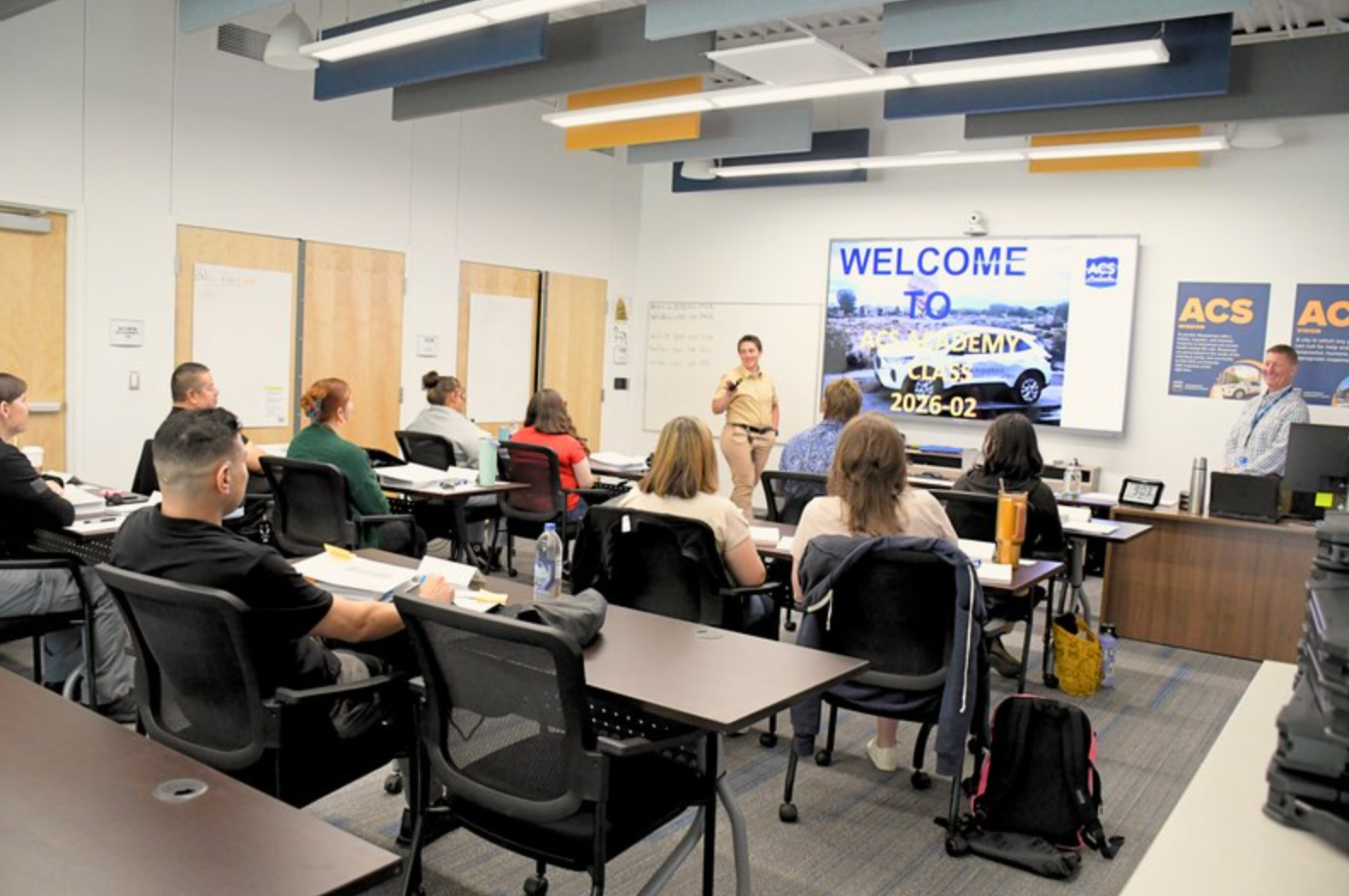
- Albuquerque Community Safety Department Expands Crisis Response Workforce Through Latest Responder Academy Cohort. Albuquerque Community Safety Department announced the launch of its second responder academy of 2026, bringing in new trainees for intensive instruction and field training. The city says recruits are being prepared to respond to “behavioral health crises, substance use concerns, homelessness, suicidal ideation and other non-violent emergencies” through training in “trauma-informed care, de-escalation strategies, crisis communication, and resource navigation.” After graduation, the new class will help meet “the growing demand for non-emergency calls routed through 911 and 311,” building on a department that has already handled more than 149,000 calls since launch.