San Francisco, California’s Street Crisis Response team recently marked its fifth anniversary and hit a major milestone—having responded to more than 70,000 calls for service as of January, the city’s team tracker reported. The mobile crisis team was included in a Harvard report highlighting some of the most robust crisis response programs in the country. Here’s a look at the city’s data below (you can visit their monthly reports and dive deeper here):
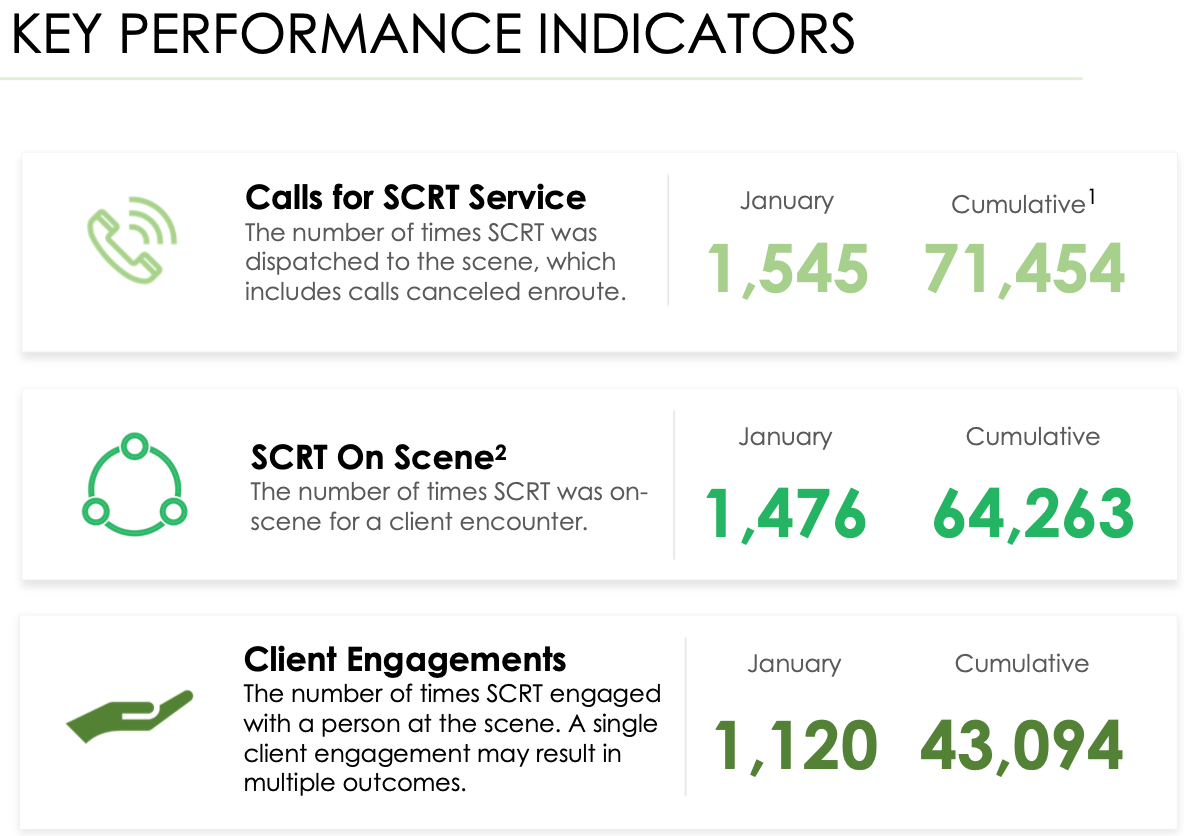
The Street Crisis Response Team, piloted in 2020 and expanded since, is now composed of “one community paramedic, an EMT or second paramedic, and either a Peer Counselor or a Homeless Outreach Team specialist” and is deployed “through calls from the public to San Francisco’s 911 call center… seven days a week, 24 hours a day.” The SCRT is part of an effort to provide appropriate medical and mental health care to residents “while reducing unnecessary law enforcement responses and unnecessary emergency room utilization.”
The team also provides “linkages to shelter, drug and alcohol sobering centers, mental health clinics and residential programs.” And in the days and weeks that follow a call for service, responders also provide “follow-up and connection to behavioral health care for clients.”
Researchers examining the program also found that the team “has accomplished some major [performance] milestones… a stable response time [] that compares favorably to police response… clients [who] are either connected to the appropriate medical and mental health services or [] through direct services and referrals for future interventions… [and] the portion of behavioral health crisis calls diverted through police dispatch has increased.” That’s why, researchers noted, “SCRT is already proving to be a leader in this collaborative and innovative work… consulting with other jurisdictions contemplating similar programs on both a national and international stage.”
Momentum For Mobile Crisis Response Teams Around The Country:
- The University of Washington Launches Campus Mobile Crisis Team, “Shifts Crisis Response Model Away From Law Enforcement.” For The Daily, Sophia Sostrin reports on the university’s “new approach to on-campus crisis response” called Husky Assist, “a mobile mental health crisis response team … [that now] sends trained clinicians—rather than law enforcement—to certain behavioral health emergencies.” The team, composed of trained mental health experts “all with master’s degrees in mental health fields,” was created after researchers at the university examined crisis response call logs from the university-run hotline as well as University of Washington Police Department and found that “many calls did not warrant an armed police presence.” When someone on campus calls 911 or the university hotline for help, trained dispatchers “who are not police officers, assess each situation and decide whether to send [the mobile crisis response team], [or] law enforcement… based on structured questioning,” similar to the protocols that cities that have embedded mental health clinicians into the 911 emergency call center follow. UW joins a growing number of universities that are launching their own mobile crisis response teams including University of California, Berkeley; California State University, Long Beach; and Oregon State University.
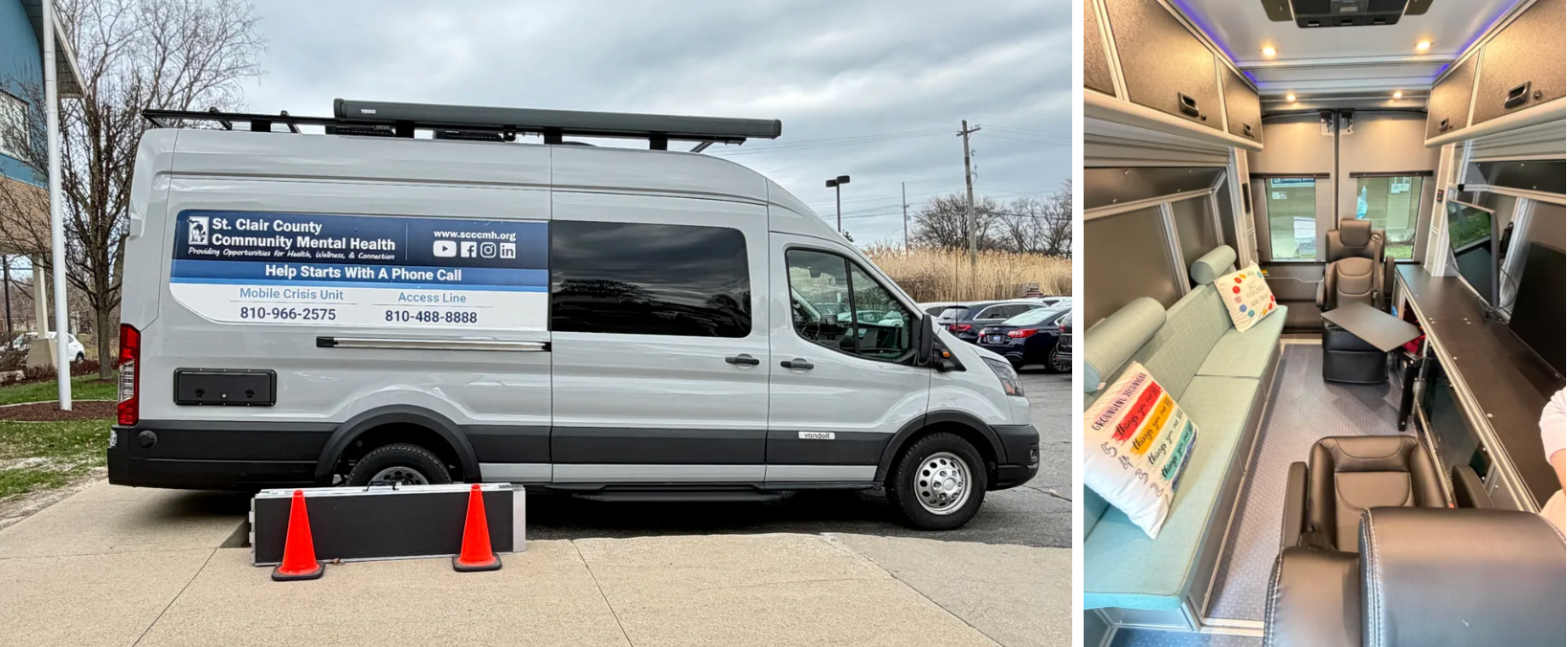
- In St. Clair County, Michigan, Mobile Crisis Team Expanding With New Vans For Enhanced Call Response. For The Port Huron Times Herald, Andy Jeffrey reports on the new vans that “provide a private, controlled space for assessments, conversations and de-escalation.” Inside, the vehicle is outfitted with comfortable seating for mental health responders as well as patients… “and internet connectivity that allows clinicians to connect virtually with a physician or prescriber for medication reviews.” The van is also equipped with supplies like food, water, medical supplies and “a refrigerator for temperature-sensitive medications.” Leslie Brown, program supervisor for the mobile crisis unit, explained that “before the van… staff often had to meet people in unpredictable environments… [often without] a safe place to speak with people [already in crisis]… now, someone can come into the van, warm up and talk” and receive treatment without having to be taken to a facility.
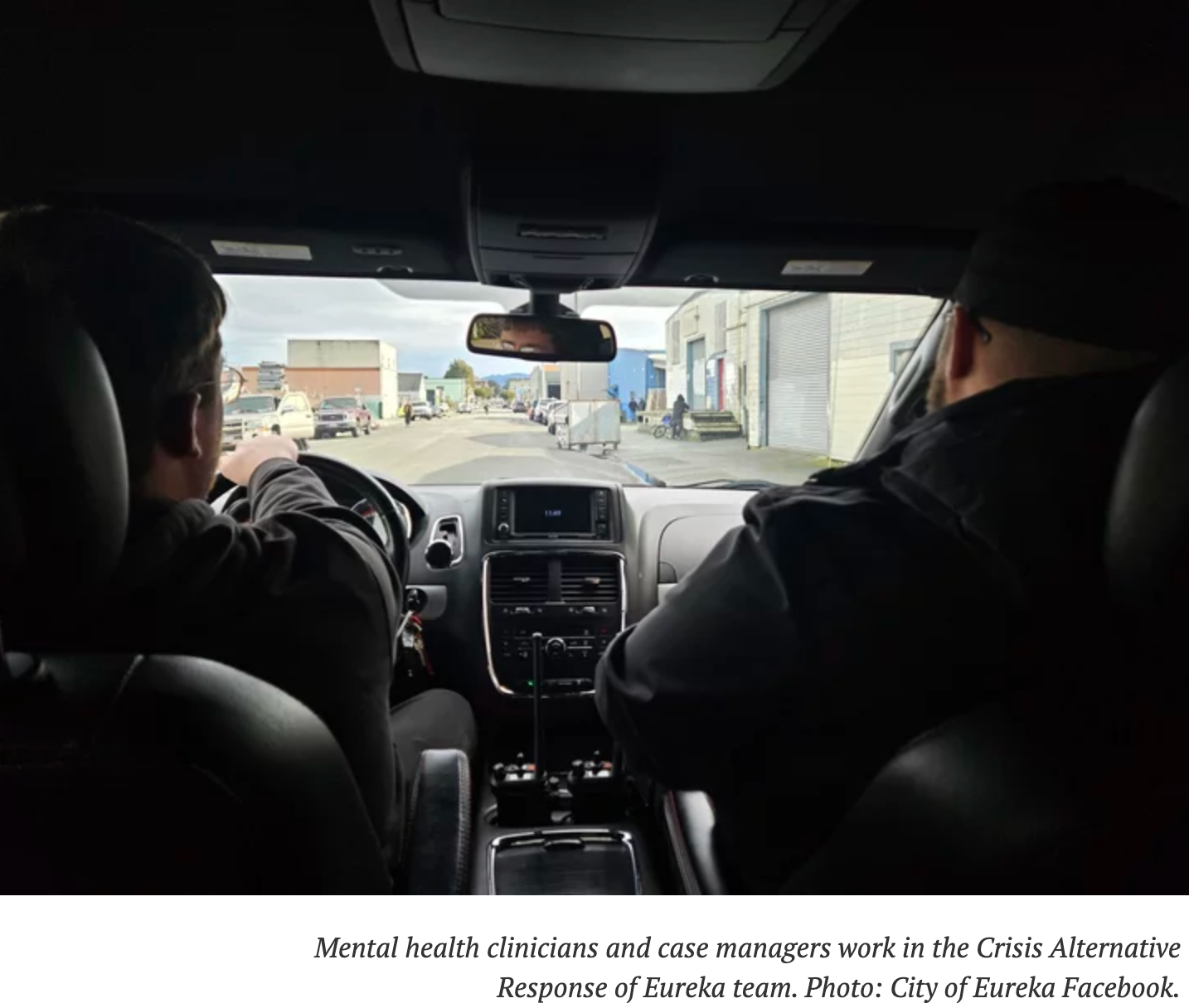
- In Eureka, California, CARE Team Expands Coverage Across Unincorporated Areas Of The City. For Left Coast Outpost, Sage Alexander reports on the CARE team, which “responds to calls for mental health or substance use” and is deployed through 911 dispatch, is now taking over response for unincorporated areas of Eureka—an expansion that increases the population served by the team from 40 percent to 60 percent. The team, composed of mental health clinicians and case managers, launched in 2023 as a pilot but has since become part of the fabric of the city’s public safety infrastructure, now responding to calls 7 days a week, 8AM to 7PM, relieving strain on law enforcement.