That’s the title of a presentation that Texas A&M economist Jennifer Doleac gave to lawmakers in New Mexico this week on evidence-based strategies for reducing violent crime. Three highlights:
- Access to Mental Health Care. “Increasing access to mental health care prevents violent crime: In several states, expanding Medicaid to include low-income, childless adults reduces violent crime … [For example, in South Carolina,] removing young adults from Medicaid at age 19 increases [the] likelihood of incarceration in the next two years by 15%.” Read the full study: How Better Access To Mental Health Care Can Reduce Crime; Elisa Jacome, Stanford Institute For Economic Policy Research.
- Summer Jobs Programs for Kids. “[There is] lots of evidence that Summer Youth Employment Programs reduce violent crime …. Why do summer jobs work? …. It’s not just giving teens something to do during the summer. [The] effects last long after summer jobs end … [The] mechanisms seem to be some combo of: Giving teens a glimpse of a different path, giving them something different to aspire to, [and the fact that workplace] supervisors serve as informal mentors who help teens learn how to interact with adults, handle workplace disagreements, etc…” Here are results from randomized controlled trials of the effects of summer jobs on violent crime in three cities:
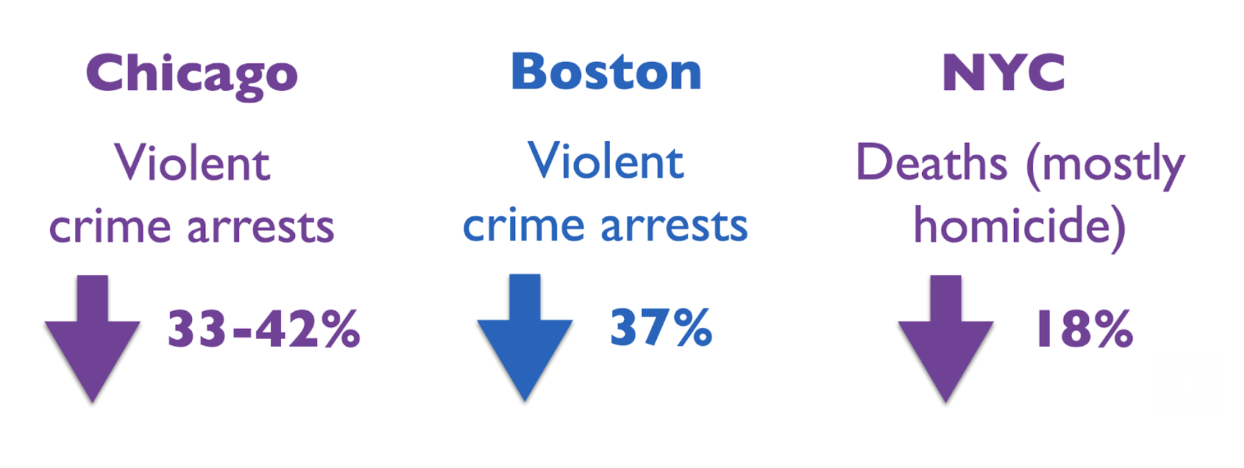
[Read the studies here: Chicago | Boston | NYC]
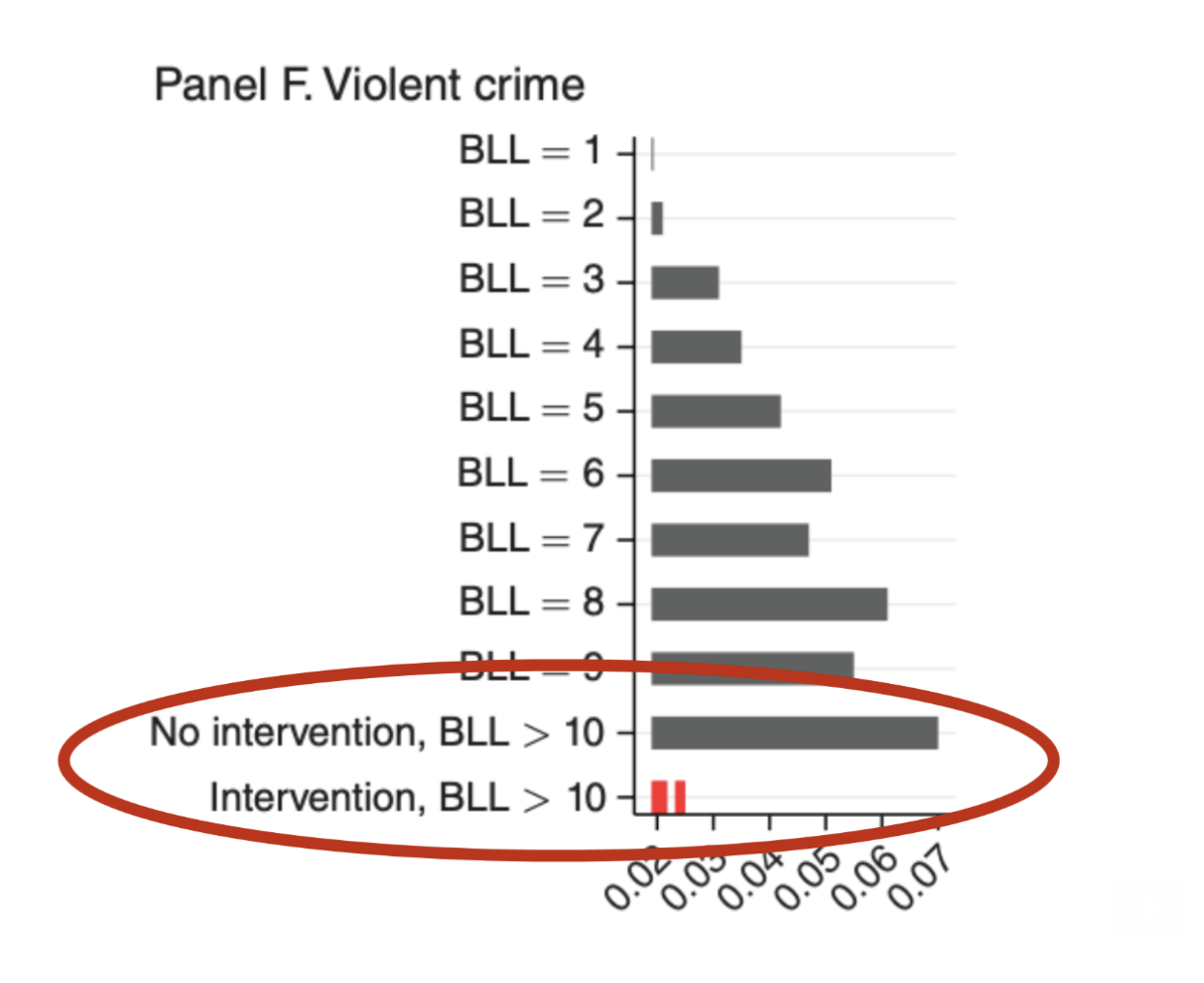
- Post-Lead Exposure Intervention Programs. “Exposure to lead in early childhood increases violence later (as teens / young adults) … [But,] for kids [who were] already exposed [to lead, the] CDC recommended intervention for young children with high blood-lead-levels reduces the likelihood of a future violent crime arrest by over 60% … [The] intervention includes a caseworker, nutrition advice (consuming calcium can help block lead absorption), and sometimes lead abatement (e.g. replacement of windows).” Read the full study: Life after Lead: Effects of Early Interventions for Children Exposed to Lead; Stephen B. Billings and Kevin T. Schnepel, American Economic Journal: Applied Economics. And here is a visualization of the (stunning) effects of these post-exposure intervention programs: