Here are progress reports from three cities with early-stage mobile crisis response programs:
- Albany, New York: A new joint report from the public health and social work schools at University of Albany evaluated the first year of the ACCORD—or, Albany County Crisis Officials Responding and Diverting—pilot program. The program “consists of two response teams made up of social workers from the County’s Mobile Crisis Team and paramedics from the Sheriff’s Office, who have been trained to handle situations involving mental health and nonviolent emergency cases where law enforcement is not essential.” Here’s a local news outlet describing the results:
“240 emergency calls were diverted to the ACCORD team resulting in 549 total encounters with 210 different individuals with the majority of calls related to general medical assistance and services [and] transportation for those experiencing immediate mental health emergencies. In most cases, the ACCORD team was able to de-escalate the situation, assess the individual’s needs, and offer coping strategies and referral services for care. The team also followed up with the individuals and their families to offer continued support and additional services when necessary.”
The county’s sheriff, Craig Apple, praised the results: “In the short time the ACCORD program has been in operation the results have shown the need for more mental health staff supporting the needs of Law Enforcement.”
- Aurora, Colorado: The Aurora Mobile Response Team—which “pairs a licensed mental health clinician from Aurora Mental Health with a paramedic”—began its second year in operation this month. The team has already responded to 1,118 calls for service providing “crisis intervention and de-escalation services on the scene to individuals experiencing a behavioral health crisis.” Former Aurora Police Chief Vanessa Wilson supports the program, telling CBS Evening News that “a lot of times it’s not appropriate for officers to have to go to these calls and possibly escalate the situation.” That’s because a trained clinician can better respond to these types of calls, as one of Wilson’s longtime officers, Sgt. Aaron Bunch, elaborated: “police officers are trained to do a lot of things—what they don’t have are Master’s degrees in social work.” Worth your time: CBS Evening News’ ride-along segment featuring Aurora’s Mobile Response Team.
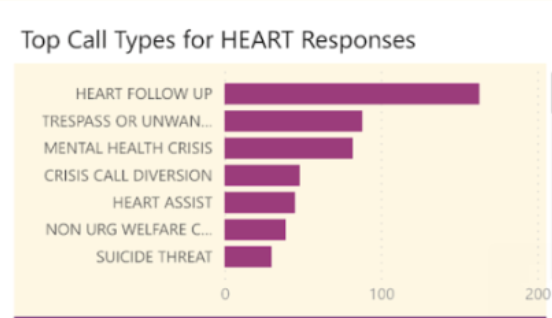
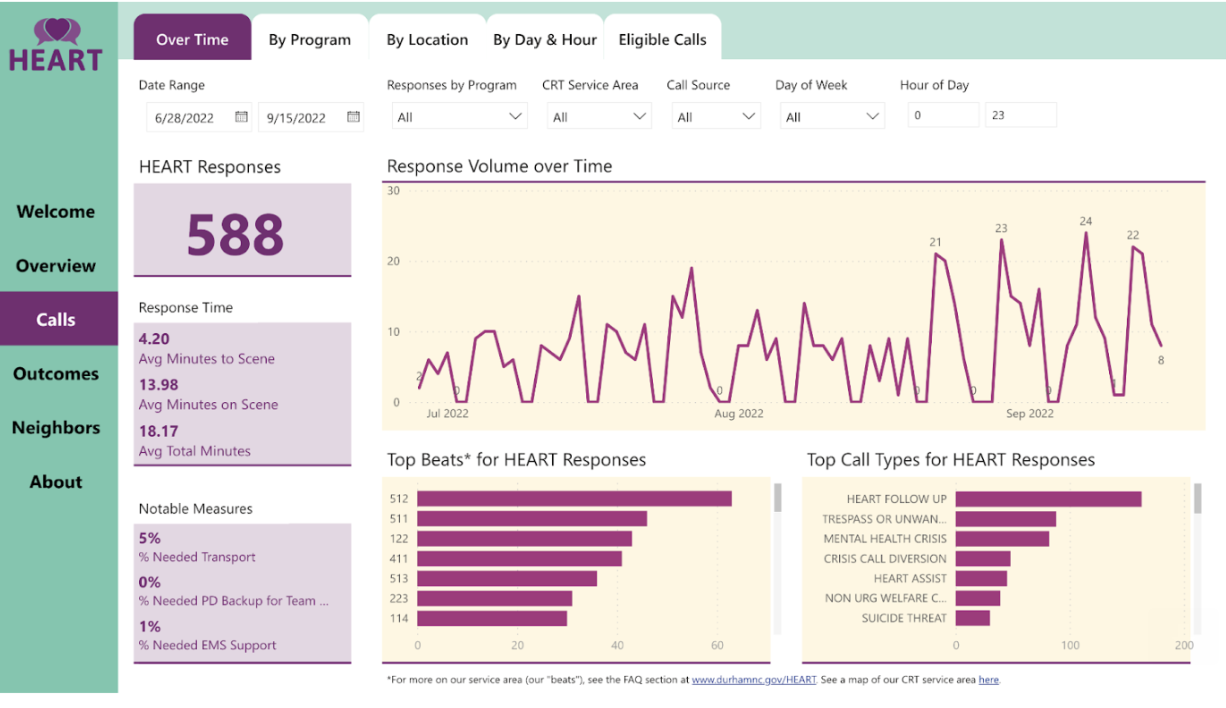
- Durham, North Carolina: Durham’s HEART—Holistic Empathetic Assistance Response Team—recently published new data showing that the team has responded to over 500 calls for service since it launched in late June of this year.
- Here’s IndyWeek’s Lena Geller describing how “Early Data Shows Durham’s Community Safety Pilot Programs Are Working” ….
“Since launching in June, Durham’s crisis response pilot programs have proven that unarmed first responders and mental health clinicians can successfully address nonviolent 911 calls without the help of law enforcement—and that with greater staffing, the programs could be helping a lot more people, according to new data from the Community Safety Department. The three programs, which operate under the name HEART have so far embedded a mental health expert in Durham’s 911 call center; dispatched a three-person team of skilled, unarmed first responders to address behavioral health calls within a 15-mile region of the city; and provided in-person or phone-based follow-up care for callers within 48 hours of their crises. As of August 30, HEART has responded to 428 calls, with most relating to trespassing, urgent and nonurgent welfare checks, and intoxication. In-person response teams have not run into any safety issues, according to Community Safety Department director Ryan Smith.”
- Here’s Sarah Krueger from WRAL in Durham describing the upshot of the city’s progress report: “The city of Durham’s new team of unarmed first responders is helping lighten the load on police by responding to hundreds of calls, new data released Monday shows …. The HEART team has never needed police backup for safety…. Abena Bediako is a social worker who responds to the non-violent situations. She explained her team is usually called to instances of trespassing and welfare checks. “We have really been welcomed even more than originally thought,” Bediako said …. [Community Safety Department Director] Ryan Smith said he’s [also] heard stories that have warmed his heart. ‘They showed up to a downtown business and the person said ‘I was really hoping it was going to be you who showed up,’ Smith said. ‘They were driving on the freeway and someone passed them and did the heart sign and said, Thank you. Thank you.’”