About a year ago, a fight between two teenagers at West Mesa High School in Albuquerque devolved into a fourteen year-old boy fatally shooting a sixteen year old boy. Reflecting on the tragedy, the high school principal told the Albuquerque Journal: “If we’ve learned anything in the past few months it’s that being reactive is not working. We cannot rely on a single solution to prevent this kind of violence. We need a multi-faceted strategy that draws on our existing systems and agencies to support meaningful preventative efforts that center around the well-being of the most at-risk students.”
Fast-forward a year and West Mesa High School is home to one of the first school-based violence intervention programs in the country. The school-based program is an extension of the city’s community violence intervention program that “interrupts cycles of violence by providing victims and their associates with credible messages of non-violence, pathways to various social services, peer support and an ‘honorable exit’ from committing future acts of violence.” As Mayor Tim Keller wrote at the time the program was announced the move to “expand to our public schools [allows the program to] work on upstream prevention with our youth.” The director of the city’s violence intervention program told the Albuquerque Journal that the school-based program works with “students and their families off campus” and “includes on campus peer-to-peer support through community based efforts and it includes intensive long-term case management support for those most at risk for becoming engaged in the cycles of violence and gun violence.”
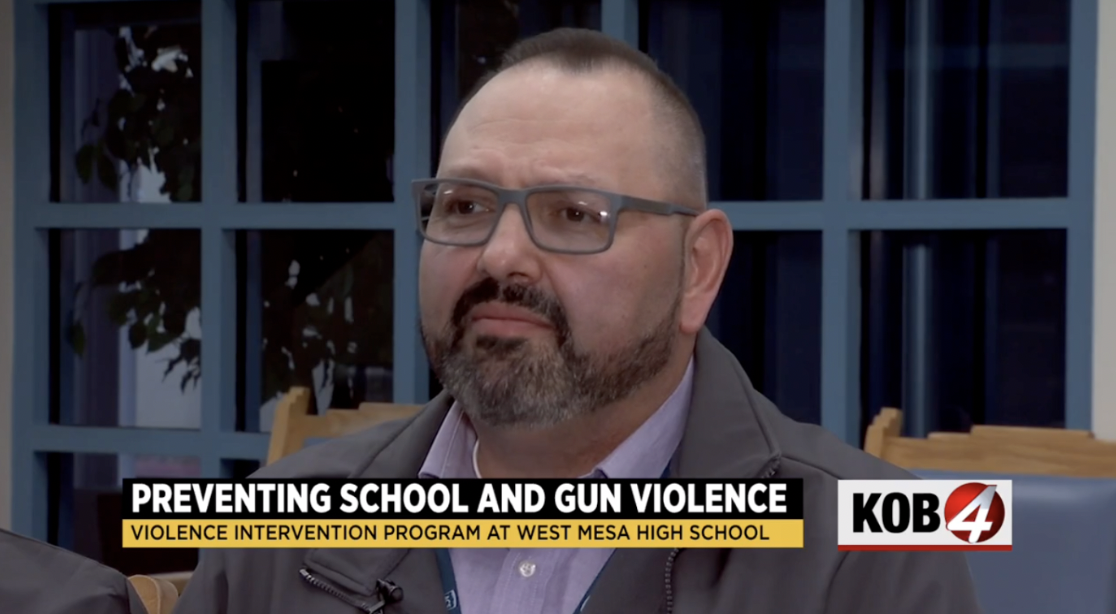
This week, KOB4 Eyewitness News, the local NBC affiliate, ran a tv segment describing the school-based intervention program and the early promise that its shown:
Related: In Baltimore, Mayor Brandon Scott announced the launch of a school based violence intervention pilot program where “intervention staff members will provide support to students identified as being at a high-risk of participating in violence and partner with faculty to provide restorative practices to combat violent behavior through five intervention strategies.”