Published by the Harvard Kennedy School Government Performance Lab, the new landscape analysis examines 911 and program data from nine crisis response teams in operation around the country. Using de-identified dispatch and operational data, the report examines how the teams are structured, dispatched, and integrated into local emergency systems. Across the report, researchers identify “findings on emerging trends in program model variation” and “on early insights into performance.”
The nine programs examined include some of the most lauded responder programs around the country that Safer Cities has been covering for years, including: Durham’s Holistic Empathetic Assistance Response Team (HEART), Harris County’s Holistic Assistance Response Team (HART), Los Angeles’s Unarmed Model of Crisis Response, Madison’s Community Alternative Response Emergency Services (CARES), Minneapolis’s Behavioral Crisis Response (BCR), New Orleans’s Mobile Crisis Intervention Unit, Portland’s Street Response (PSR), and San Francisco’s Homeless Engagement Assistance Response Team (HEART) and Street Crisis Response Team (SCRT). The full report is worth your time, but here are some of the emerging trends and learnings researchers highlighted:
- Embedding Into 911 Systems: “The majority of incidents [that these crisis teams] respond to come directly from 911 dispatch” … and crisis responder teams were the “primary and only responder team” in 79 percent of incidents.
- They Resolve Most Calls Without Assistance From Law Enforcement, EMS: “The majority of 911 incidents CRTs respond to are handled alone, without additional responder teams on scene.” When dispatched as primary response, CRTs are “responding to, and resolving, 95 percent of incidents on scene,” and they “rarely request back up while resolving 911 incidents as a primary response.”
- Interdisciplinary Teams Can Handle Wider Range Of Calls For Service: “CRTs in our sample are mostly interdisciplinary, unarmed teams (mental/behavioral health, crisis, medical, and people with lived experience)” and they are “taking a wide range of non-violent 911 calls, not just mental health — including welfare checks, trespassing, and social service needs” with “incidents related to mental health and welfare checks comprising the largest percentage of incidents.”
- Teams Provide Immediate Response As Well As Connection To Stabilizing Services After Acute Crises: “When dispatched to 911 incidents, CRTs provide immediate on-scene response,” and “provide connections to voluntary services including case management and care coordination, shelter/housing resources, and medical services.”
Spotlight On Some Of The Teams From The Harvard Report:
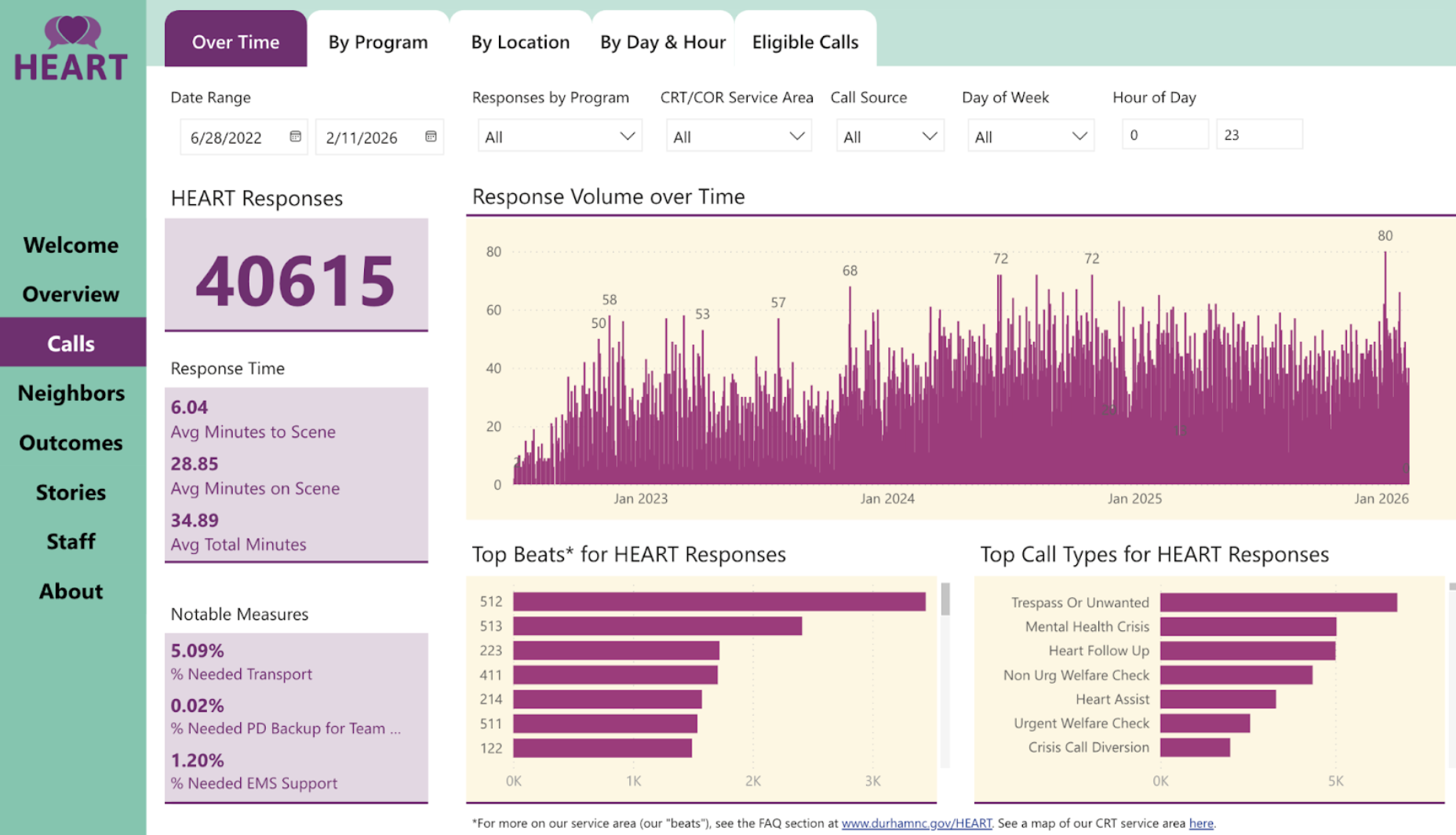
- Durham’s HEART Has Responded To More Than 40,000 Emergency Calls, Has “Alleviated Strain On The Police Department.” Since its launch, Durham’s Holistic Empathetic Assistance Response Team, or HEART, has handled more than 40,000 calls for service, according to the latest city data tracking the program. For WRAL, Lora Lavigne reported that HEART’s work “helped avert thousands of crises and alleviated a strain on the police department.” City leaders expanded the team last year, including “17 new full-time HEART staff members… [and] expanded coverage during the day as the city plans to eventually operate 24/7,” CBS17 reported. Durham Police Chief Patrice Andrews recently said that the Durham Police Department “continues to be fully supportive of the HEART Program… because it enables us to focus on more appropriate law enforcement needs throughout our community.”