- In Oklahoma City, A Sweeping New “Mobile Integrated Healthcare” Program Is Handling 911 Mental Health Calls For Service “Instead Of Police Officers,” Sierra Pfeifer reports for KOSU. The program, “housed in the Oklahoma City Fire Department” and composed of “trained social workers, peer support specialists and paramedics,” has “four different teams, each with a specific function,” here’s more from KOSU:
- “Crisis Call Diversion. When a 911 operator picks up an incoming call and the person on the line is experiencing a mental health crisis, the operator can transfer them to the Crisis Call Diversion Team. Embedded in the city’s 911 Communications Center, the navigators use the same software and communication systems as other operators. . . If a call can’t be stabilized remotely, navigators are also able to dispatch the Crisis Response Team, sending behavioral health professionals to respond in person.”
- “Crisis Response Team. made up of a paramedic and a navigator. The teams respond to mental health emergency calls where an individual is displaying symptoms that may be a risk to themselves or others. They work to de-escalate situations and stabilize the individual in place.”
- “Alternative Response Team responds to less severe behavioral and mental health needs in the community. The team also tackles overdose response, providing treatment, support and follow-ups to people struggling with substance use. . . along with a navigator and paramedic, the team also includes a certified peer support recovery specialist.”
- “Community Advocacy Program helps frequent 911 callers with non-emergency issues like housing, food or mobility needs.”
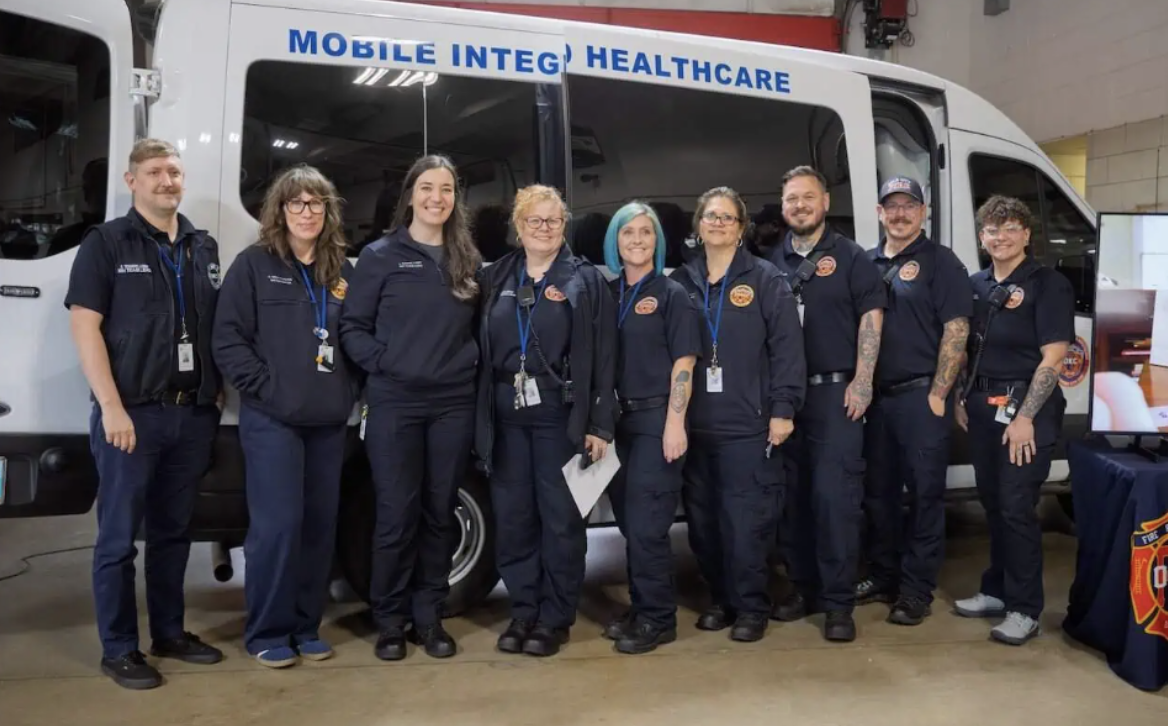
- In Indiana, Greenfield’s “Mobile Response Team Expands To Serve Youth In Crisis.” For The Daily Reporter, Shelley Swift reports that “in response to a youth mental health crisis… [the city] has expanded its Mobile Response Team services to local youth experiencing mental health or substance use distress.” The team has handled thousands of mental health calls for adults since its launch in 2023, and after that success, city leaders decided to expand the team’s function so that “the team’s clinicians are now able to assist youth ages 5 and up.” The team “meet with youth and complete an assessment, then determine goals and resources… [as well as] ensure the family has services, if needed.”
Hancock County Sheriff Brad Burkhart, a vocal supporter of the mobile crisis response unit, told the news station that “the team is a vital resource in the community,” explaining that: “This collaboration not only provides crucial support for those in need but also allows law enforcement to focus on their primary duties, knowing that those in need are receiving the specialized care they deserve.”
Related: Indianapolis’s mobile crisis response team, which launched in 2023 and recently expanded again now “operating 24 hours a day, seven days a week in Indy’s Downtown, East, and North districts,” is holding a series of town halls “to reach even more people through in-person events,” Jeremy Jenkins reports with WISHTV8. The town halls are “designed to equip attendees with a mental health toolkit” so that residents know what to do, and who to call, if they find themselves, a neighbor, or loved one in the throes of a mental health crisis.