- In Oregon, “Portland Street Response Expands Offerings, Hours,” And Launches Direct Hotline. For Axios, Kale Williams and Meira Gebel report that the city’s lauded mobile crisis response team—which amidst an expansion into a community safety department-style team, that “formally establishes [it] as an equal branch of the city’s public safety system… to take some of the burden off first responders like police and firefighters”—now has “a direct phone number and longer operating hours,” the first steps in bringing the team closer to its eventual goal of 24/7 service
For KGW8, Jake Holter reports that the city “recently allocated funds to allow the program [to] add an extra [4] hours to its available response window… add 14 more positions to be able to respond faster throughout the city… [and] launched a new phone number for people to call if they witness someone in emotional distress. Callers can still dial 911, calls to the new number or 911 are “ultimately routed to trained 911 call-takers either way.”

- In Washington State, King County Expands To “Seven Youth Mobile Crisis Teams.” For King5, Jake Johns reports that the expansion, which brings the total number of youth-responding teams to nine, will “ensure support is available at all times for… young people and their families” and “ensures faster response times and a better understanding” of the families and their specific needs. The youth-focused mobile crisis teams are similar to the adult teams in the county—which also recently expanded to 27 total teams—but are specially trained to handle the sensitivities of young people who are “struggling with behavioral health crises, including conflicts at home.” The trained health experts “intervene and de-escalate crises and connect young people with support and resources” across the county… [so that] ‘families [don’t] have to navigate a maze of systems to get the help they need.”
- In Maryland, Mobile Crisis Team Expands Coverage To The Southern Region Of The State. For Southern Maryland News, Ilana Williams reports that the state is funding an expansion of a promising statewide mobile crisis response program into Southern Maryland. The effort deploys “clinicians and peer support specialists [in a discreet, unmarked state vehicle] to help resolve immediate behavioral crises and offer resources” to mental health-related calls for service. When a mental health call comes in, “phone counselors determine if a person’s situation can be de-escalated on the phone and be connected with appropriate resources or if a team of a clinician and peer support specialist needs to visit them.” When the team is deployed, they “identify what triggered the call… [and] determine which resources to provide to keep someone from going to the hospital or criminal justice system.” The team will also “follow up the next day, whether it be in-person or over telehealth… [and then continue to] visit the client once every seven days for two weeks
- “In North Carolina, CARE Mobile Crisis Team, That Works To Calm Crisis Situations And Keep People From Being Sent To Jail Or The Hospital Unnecessarily Is Expanding.” For The News and Observer, Tammy Grubb reports on the expansion of the Crisis Assistance, Response and Engagement team, or CARE, which sends “crisis counselor, community emergency medical technician and peer support specialist” to “behavioral health and nonviolent calls, working with a crisis counselor at the 911 Call Center who provides remote help to callers or dispatches the team to help instead of police.” The expansion represents a “step toward CARE teams across [the] county.” Carrboro Police Chief Chris Atack, a champion of the mobile crisis team, explained to the newspaper that he is “‘so glad that this program is now available in his town… [because it] will allow people in crisis or challenging circumstances to quickly access real-time care and meaningful assistance… [and] could also [expand to] serve vulnerable populations downtown.”
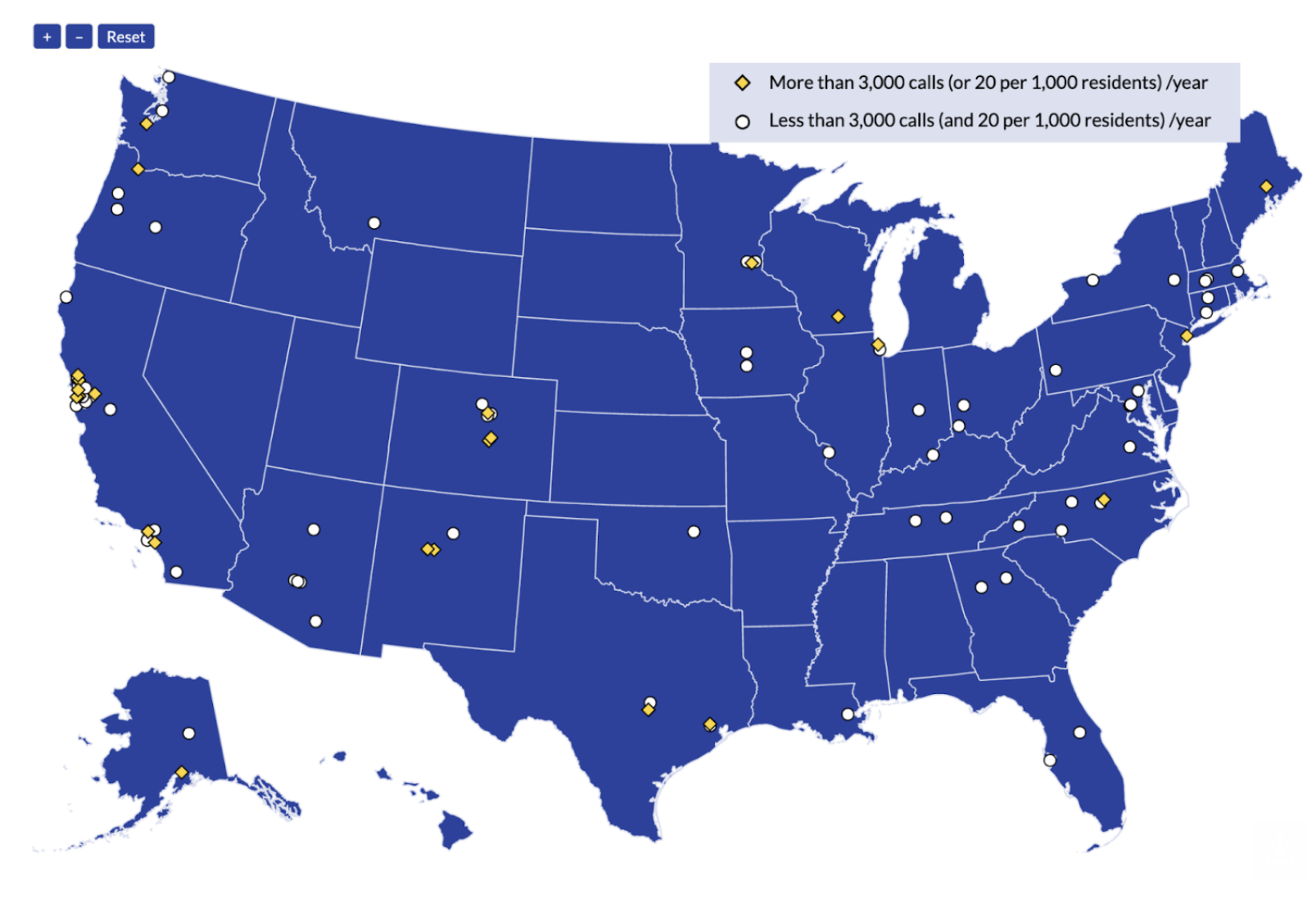
Related: “Since 2020, community responder programs have exploded across the United States.” To track this growth, the Law Enforcement Action Partnership has created a map of programs across the country with information about how each functions. Nationwide, “community responders are now responding to more than 200,000 calls per year—with zero fatalities or serious injuries,” LEAP researchers note. Check out the full map and research here.