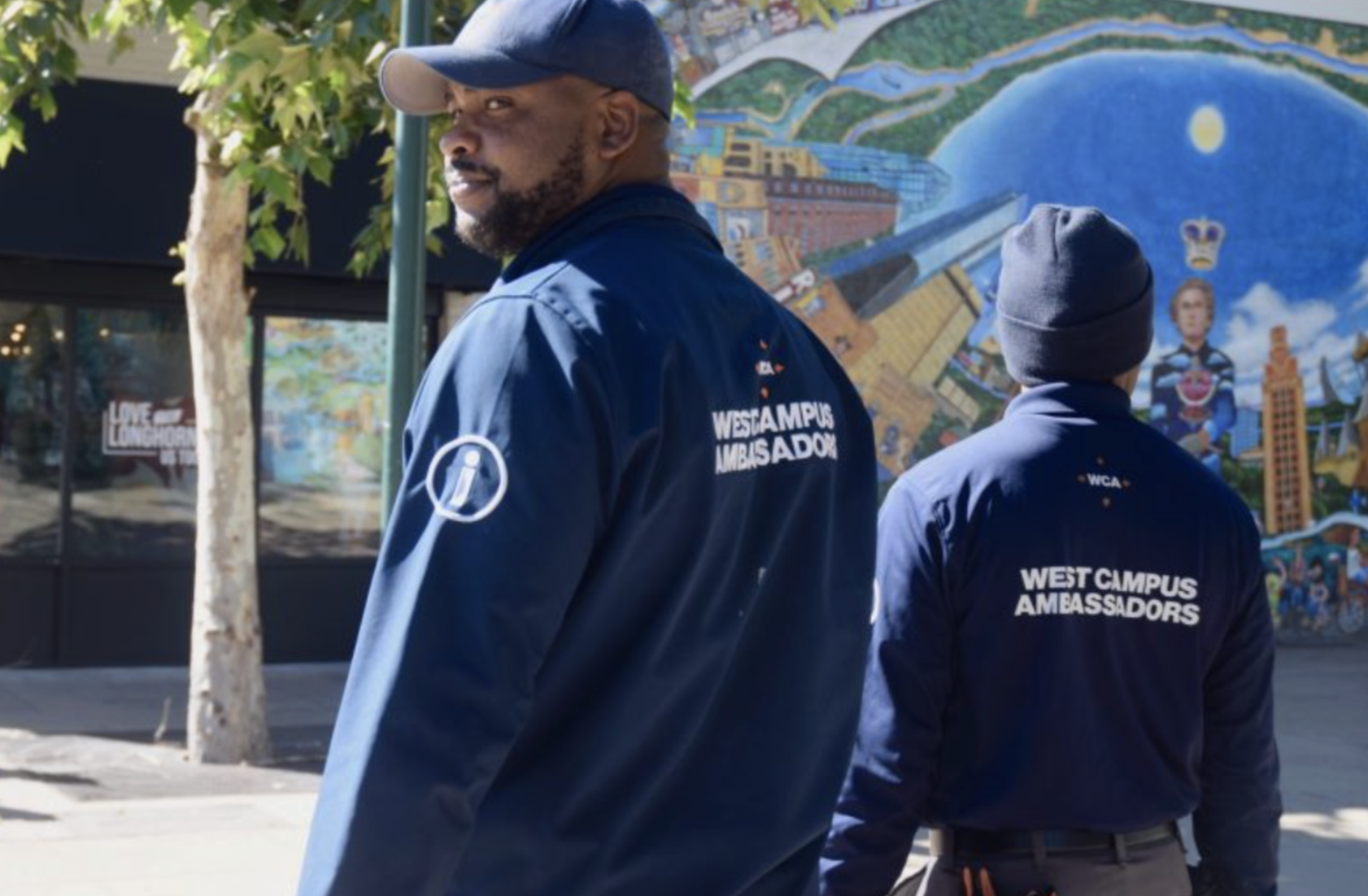
- At University of Texas, Austin, Safety Ambassador Team “Keeps West Campus Clean, Safe And Connected.” For Reporting Texas, Samantha Rubin reports on the visible “blue-shirted ambassadors” team, a new safety program funded by U-Texas, that focuses on keeping the West Campus neighborhood safe and clean for students and residents, preserving stretched police resources for serious crimes. The team, available 24 hours a day Thursday through Sunday, and 20 hours a day the rest of the week, is divided into two units: “safety and cleaning,” and “some ambassadors [have] military backgrounds … [but all] are required to go through extensive training.”
The safety ambassadors “walk residents to their destinations in the late evening, monitor the area for unwanted activity… conduct homeless outreach” and work with law enforcement when a situation requires escalation. The clean team works about 10 hours a day, seven days a week to “collect trash, remove graffiti and handle basic maintenance in the area.” Donaye Perkins and Kevin Morris Sr., ambassadors on the team, explained to the newspaper that “the tenor of the work changes over the course of the day… ‘nights tilt more toward safety…escorts and keeping an eye on busy areas… [then] during the day it’s hospitality” and cleaning, “we’re always talking and vibrant, it’s about visibility.”
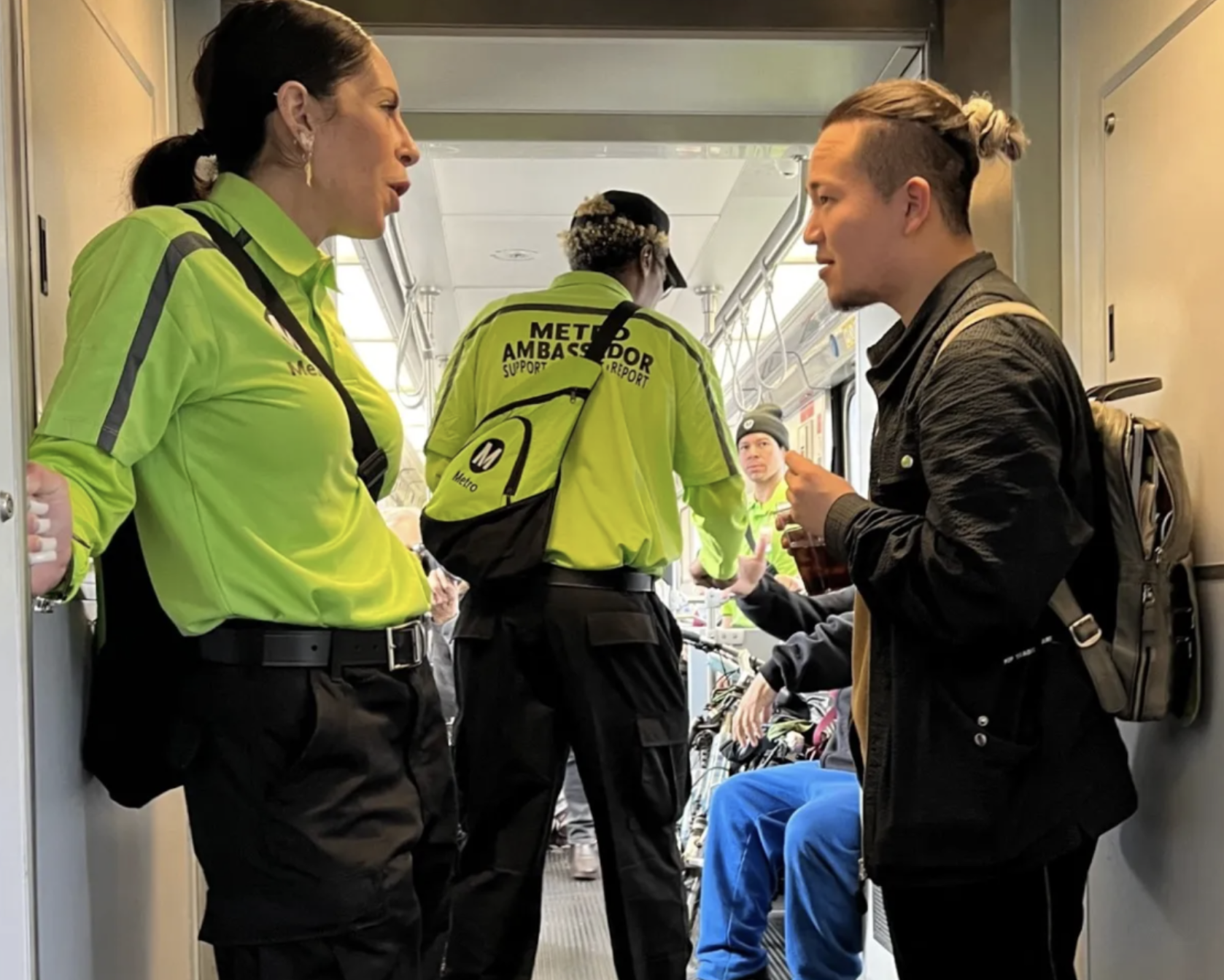
- UCLA Study: Los Angeles Transit Ambassador Program Advances “Safety” And Is “Making A Positive Contribution To The System.” For StreetsBlog LA, Joe Linton reports on UCLA’s Institute of Transportation Studies new study examining the city’s Metro Transit Ambassador program. The full 80-page report, and accompanying policy brief are worth your time, but researchers found that the ambassadors “advance a community safety approach towards meeting riders’ needs… make a positive contribution to the system… [and] support riders and operator safety and connecting vulnerable riders to resources.” Here are some of the topline findings from the report and policy brief:
- Active Safety, And Life-Saving Role: Through crisis response, de-escalation, homelessness outreach, and overdose prevention — the team “assists with the first level of homelessness response, with crisis de-escalation, and by administering Narcan to prevent overdoses,” and have “saved hundreds of lives on the system through Narcan use, CPR, and first aid.”
- Highly-Visible Eyes On Riders: Researchers noted that the team provides “more eyes on the system and offer a highly visible presence to riders.” Researchers also noted that riders reported that “safety perceptions increased over the period ambassadors were deployed…”
- Policy Recommendations: LA Metro’s decision to make the program permanent reflects “evidence that the pilot program was able to achieve many of its initial goals,” and recommends higher pay, better benefits, stronger career pathways, and improved data collection and evaluation to further enhance the effectiveness of the team.
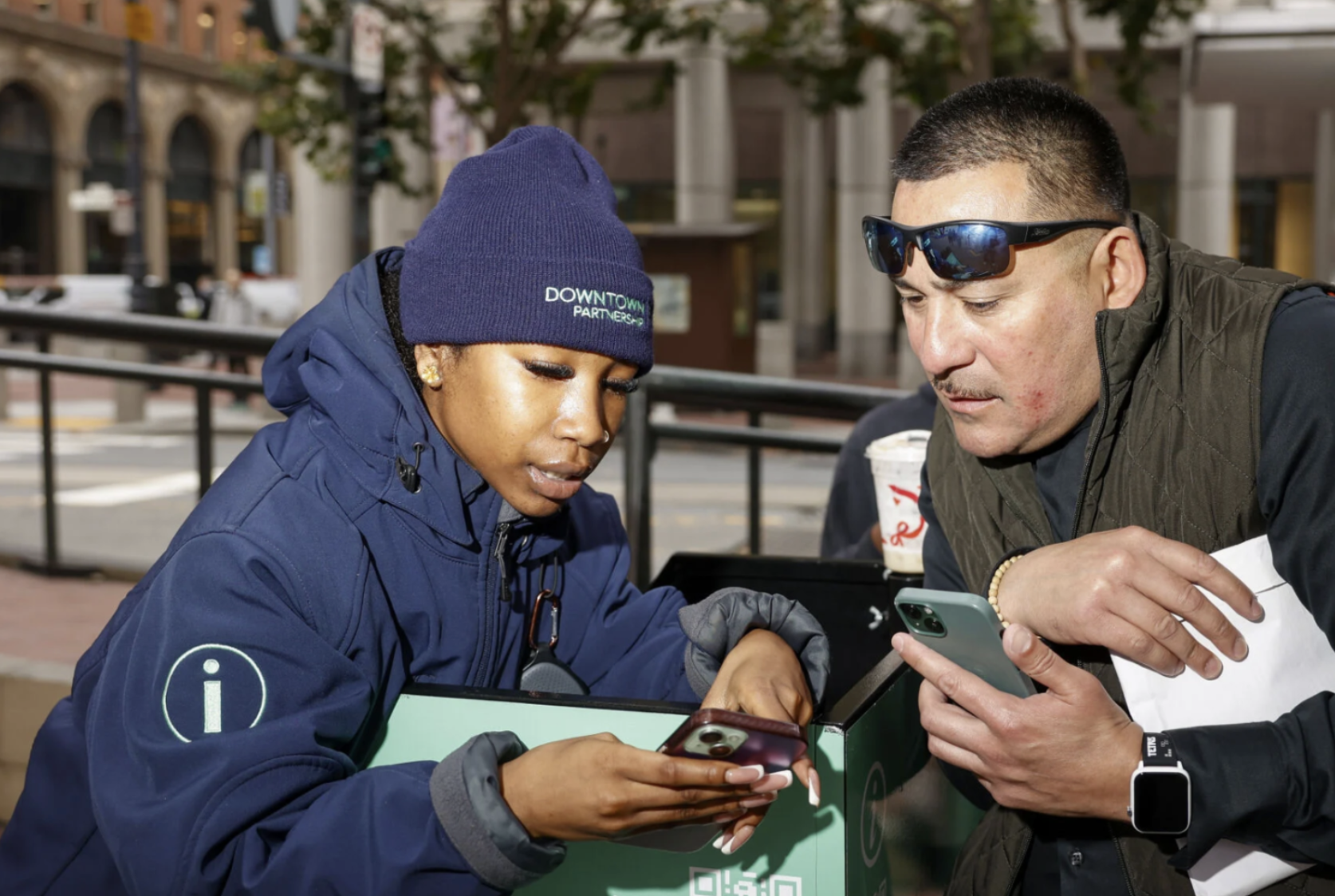
- In San Francisco, “Downtown Ambassadors Cut 911 Calls In Half.” Writing for The San Francisco Standard, Jillian D’Onfro reports that a recent three-month expansion of the ambassador program at BART’s Embarcadero and Montgomery stations was associated with a 53% drop in safety-related 911 calls, while calls tied to violent incidents — including fights, assaults, and robberies — fell by 67%. The pilot, she writes, is “helping downtown San Francisco get its groove back.” The ambassador team provides multiple safety functions, including: being highly visible eyes on the downtown area, aiding residents and riders around the system, “performing wellness checks” on the homeless population as well as connecting them to “available resources or calling in other agencies to help,” and “providing supplemental cleaning around [the stations].”