1. Paper: Rapid Expansion Of Community Violence Intervention May Help Explain Historic Decline In Homicides Across The Country. In a new paper published in the American Sociological Association’s journal, Contexts, Northwestern University sociologist Andrew Papachristos examines whether the rapid expansion of community violence intervention (CVI) programs helped drive the historic post-pandemic decline in U.S. homicides. Papachristos explains that by 2025, homicides in major American cities were roughly 25% below pre-pandemic 2019 levels and argues that unprecedented public investment helped expand a network of CVI organizations working to prevent shootings among the small groups of individuals most at risk of gun violence. While acknowledging that researchers cannot yet establish how much CVI contributed to the national decline, he points to promising evidence from existing research and the field’s rapid expansion. Here’s Papachristos’ key analysis:
“The biggest question I’m raising here—did CVI help drive the national decline?—we cannot yet truly answer, because we developed a strategy of violence prevention faster than we created the instruments to measure it. This shouldn’t trouble us. After all, no one ran a randomized trial before funding fire departments, nor will anyone ever randomly assign working smoke alarms to half a city and withhold them from the rest to see who lives or dies. Yet we confidently invest in fire trucks and require smoke alarms all the same….
The question is whether the weight of the evidence leans in a consistent direction. It does. Consider what lines up: a decline in violence among small networks of young men; a swiftly expanding field built to reach into exactly those networks during the years in which homicides fell; and a precedent from the last great crime decline telling us that thickening the community sector drives violence down. All this bolsters the claim that CVI likely played a key role. When this many arrows point in the same direction, the burden shifts to the people who call it mere coincidence.”
The full paper is worth your time, but here are three key takeaways on how CVI works, the investments that fueled its rapid expansion, and what emerging research tells us about its impact:
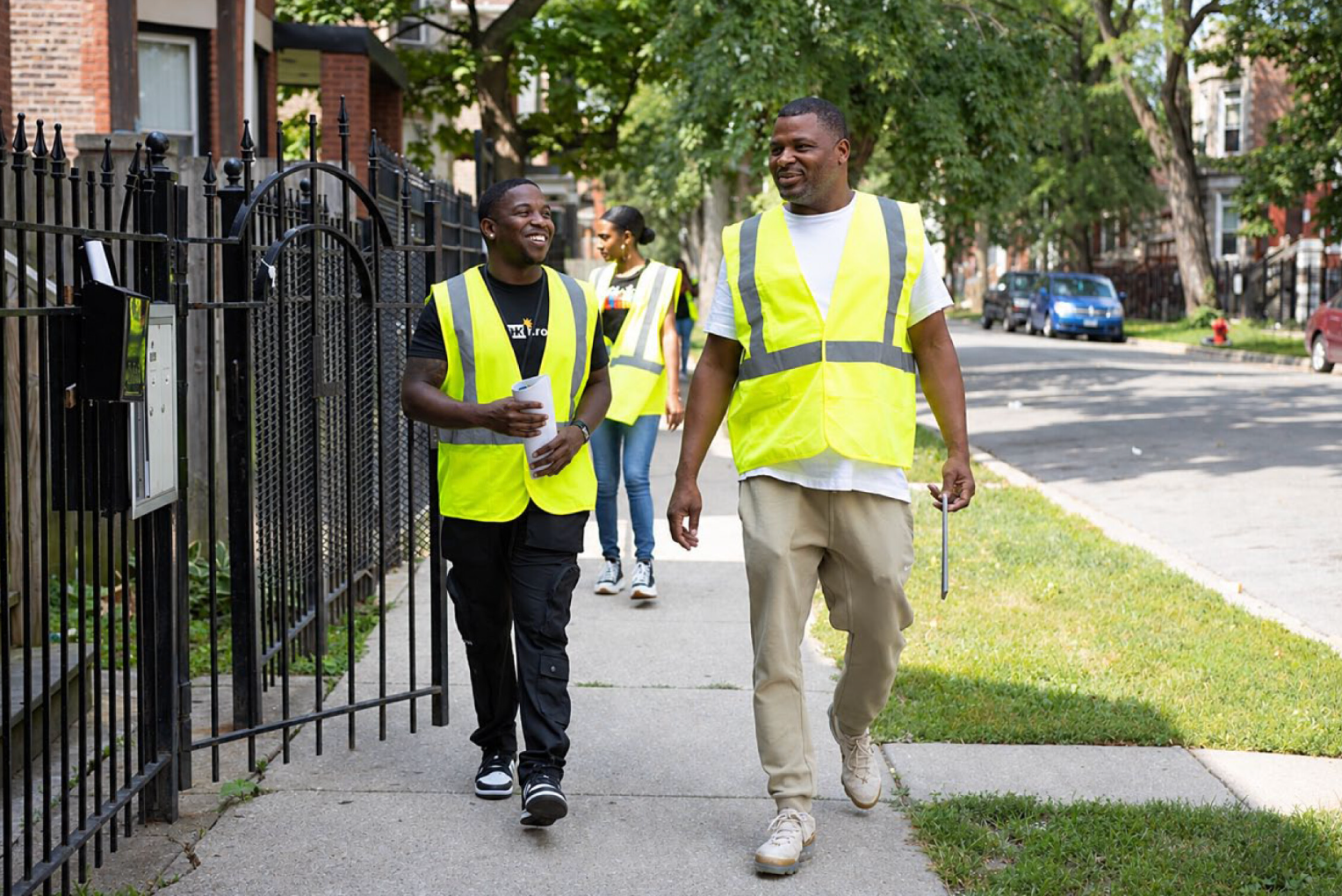
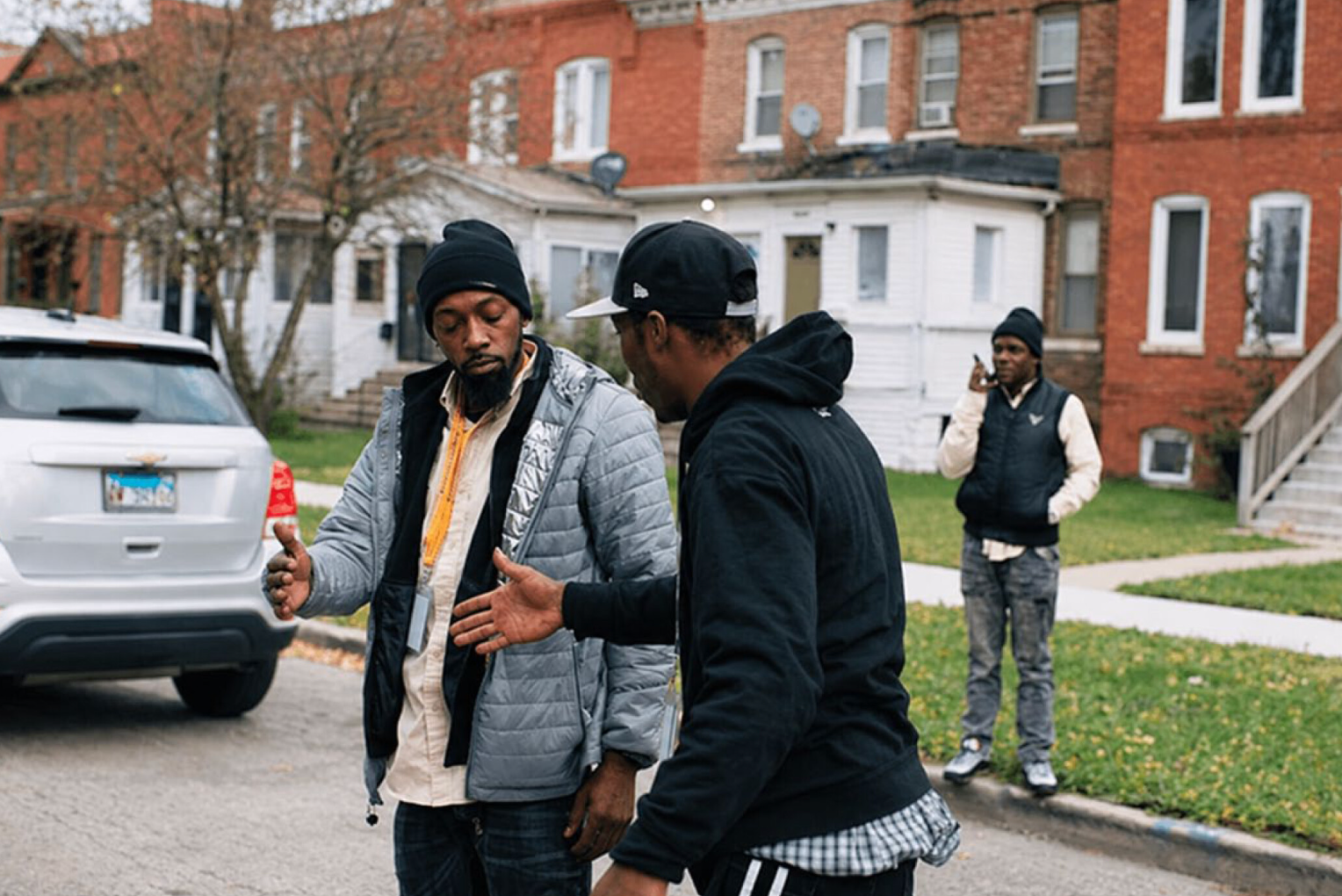
- Trusted Messengers Reach The Networks Where Gun Violence Concentrates. “CVI deploys credible messengers, often neighborhood residents with their own criminal pasts, to reach into high-risk networks and insert themselves between a conflict and a trigger before such situations become deadly. … [What] makes CVI truly distinctive is its ability to get inside those small, demographically concentrated networks where gun violence percolates.”
- Major Public Investments Helped Build A Nationwide CVI Workforce. “The Justice Department contributed $150 million; the Bipartisan Safer Communities Act added $250 million; California committed $75 million a year; and by 2024 at least 15 states had created Offices of Violence Prevention … The money did not just fund one-off programs, but thickened a growing web of organizations doing this vital work while building a recognized field with a professional workforce.”
- Study Of 264 Cities Links Growth In Community Organizations To Lower Murder Rates. Papachristos highlights earlier research by sociologist Patrick Sharkey and colleagues, who “studied 264 cities over two decades and found that every ten additional [community groups] per 100,000 residents produced, on average, a nine-percent drop in the murder rate.” He explains that “it was less about a single organization than it was about their density, the thickness of the civic web.” Connecting those findings to the recent expansion of CVI, Papachristos writes that “CVI built that density fast and in the most critical social nodes right before violence fell faster than it had in a generation.”
Momentum For CVI Programs Across The Country:
- In Chicago, CVI Teams Now Reach 51 Neighborhoods As Homicides Fall To Lowest Level Since 1965. For the Chicago Tribune, Arne Duncan, founder of CRED—one of Chicago’s most celebrated CVI teams—writes that “some two-dozen CVI organizations currently are active in 51 Chicago neighborhoods, employing trusted community members to engage directly with those at highest risk of shooting or being shot and help them put down their guns and live safely.” Duncan highlights the progress occurring alongside this expansion: In 2025, Chicago experienced “fewer homicides than any year since 1965,” and “over the past five years, gun violence has fallen the furthest in South and West Side neighborhoods where CVI is most active.” In a separate Tribune column, former Los Angeles Police Chief Charlie Beck and Melvyn Hayward Jr., a former Chicago CRED executive now with the Los Angeles Mayor’s Office of Community Safety, explain how Chicago has built its CVI infrastructure, arguing that “the strongest results emerge when cities invest in both public safety and professional CVI services as a combined strategy to build trust.”
They highlight “shared incident notifications among CVI partners, and regional meetings and asset coordination with public sector partners,” along with a training academy that “has helped matriculate more than 1,200 people through intensive training in street outreach, victim advocacy, case management, leadership development and other violence prevention practices.” Since 2023, a “professional understanding” with Chicago police “has helped define the complementary but independent roles of outreach professionals and law enforcement,” reinforced through “ongoing crosstrainings between CPD and CVI practitioners.” The authors also point to independent research finding that alumni of Chicago CRED’s CVI programming were “73% less likely to be arrested for a violent crime.”

- In New York City, $4.8 Million CVI Expansion Brings Violence Prevention Teams To Three More Neighborhoods. New York City announced a $4.8 million expansion of its violence intervention programs into Bushwick, Harlem and Washington Heights/Inwood, bringing the citywide network to 49 service areas. Each new area will receive $1.6 million in funding, with neighborhoods selected based on “crime data, unmet service needs and other indicators.” CVI teams “deploy trained outreach workers and violence interrupters” who “identify and de-escalate disputes before they turn violent, support residents after violent incidents and help prevent retaliation.” Brooklyn District Attorney Eric Gonzalez welcomed the expansion, explaining that “violence interrupters are an essential component of crime reduction and my office’s partnership with them is part of the reason gun violence in Brooklyn is decreasing faster than the record-breaking numbers citywide.” Manhattan District Attorney Alvin Bragg also praised the initiative, saying credible messengers “are a proven way to interrupt and prevent violence and have been a key pillar of my office’s strategy to drive down shootings.”
- In Detroit, Homicides Fall 33% And Nonfatal Shootings 38% In CVI Zones, Outpacing Rest Of City. For Michigan Public, Etai Smotrich-Barr reports on the findings of a new University of Michigan evaluation, which found that during the second year of Detroit’s CVI program, CVI zones saw “a 33% decrease in the number of homicide victims, compared to a 12% decrease in the rest of the city,” and “a 38% decrease in victims of non-fatal shootings, compared to a 26% decrease outside the zones.” Six community organizations operate in distinct three-to-five-square-mile zones, with performance bonuses tied to reductions in violence.
2. Safer Cities Interview With Prince William County, Virginia’s, Crisis Stabilization Center. Crisis stabilization centers give people experiencing mental health or substance use crises a place to receive immediate assessment, treatment and stabilization, helping reduce unnecessary reliance on emergency departments and jails. In Northern Virginia, Prince William County’s Crisis Receiving Center, which first opened its doors in 2025, provides 24/7 care for adults and youth ages 12 and older, including walk-in behavioral health services, 23-hour observation, extended crisis stabilization and connections to ongoing treatment through county services located in the same complex. In an April 2026 report, the county documented a 66% reduction in prolonged psychiatric emergency department boarding and a decline in out-of-area psychiatric placements from 43% to 8%.


Safer Cities recently spoke with Cassie Leavitt, President of Connections East, and Chris Santarsiero, Vice President of Government Affairs at Connections Health Solutions, which operates the crisis stabilization center, about how the center is strengthening crisis response, reducing demands on law enforcement and connecting people to appropriate care.
- On Giving Law Enforcement A Dedicated Crisis Destination And Saving More Than 6,400 Officer Hours: “Before Prince William County invested in a behavioral health crisis care model, there was not a dedicated option in the community for individuals experiencing a behavioral health crisis. This left individuals waiting for long periods in hospital emergency departments that were not designed to provide immediate behavioral health stabilization, or they risked being incarcerated when what they really needed was [health care]… Individuals can walk in or be brought in by law enforcement or other first responders and be welcomed into a setting specifically designed for crisis care… Since opening in late 2025, the program has saved local law enforcement more than 6,400 hours, allowing officers to return to service quickly while ensuring individuals get the right level of care.”
- On Matching Each Person To The Right Level Of Crisis Care And Connecting Them To Ongoing Support: “When someone arrives at the Prince William County Crisis Receiving Center, whether on their own or with a first responder, they’re welcomed right away with compassion, and our team quickly works to understand what support the individual needs. If law enforcement is involved, we use a designated entrance to ensure a warm handoff for quick and seamless care, so the individual can begin receiving care immediately… Some individuals only need brief support, resources, or a referral for follow-up care. Others need more time to stabilize. For them, the center offers short-term care for up to 23 hours with a dedicated clinical and medical team focused on de-escalation, stabilization, and planning next steps… If someone needs a higher level of care or more time to stabilize, they may be admitted to the Crisis Stabilization Unit, where the average stay is between three and five days… With the Community Services Board located on the other side of the building, individuals can be connected quickly to aftercare and ongoing services.”
- On Building A Crisis Care Team With Clinical Expertise And Strong Community Ties: “We look for team members who understand behavioral health, have experience supporting individuals in crisis, and have a connection to the local community whenever possible. Many of our team members live in the region, which gives them a real understanding of the community’s needs and the supports individuals can rely on… Our team includes psychiatric providers, licensed clinicians, nurses, peer support specialists, and other professionals with diverse backgrounds, specialized training, and experience in crisis care. We intentionally bring individuals in from different professional paths because crisis work benefits from a range of perspectives and strengths. We also invest in ongoing training, so everyone is aligned on how to support individuals safely and with compassion… Crisis care moves quickly, and the individuals who thrive here are the ones who can stay steady, communicate clearly, and work as part of a team. Every role contributes to helping someone feel safe enough to take that first step toward recovery.”
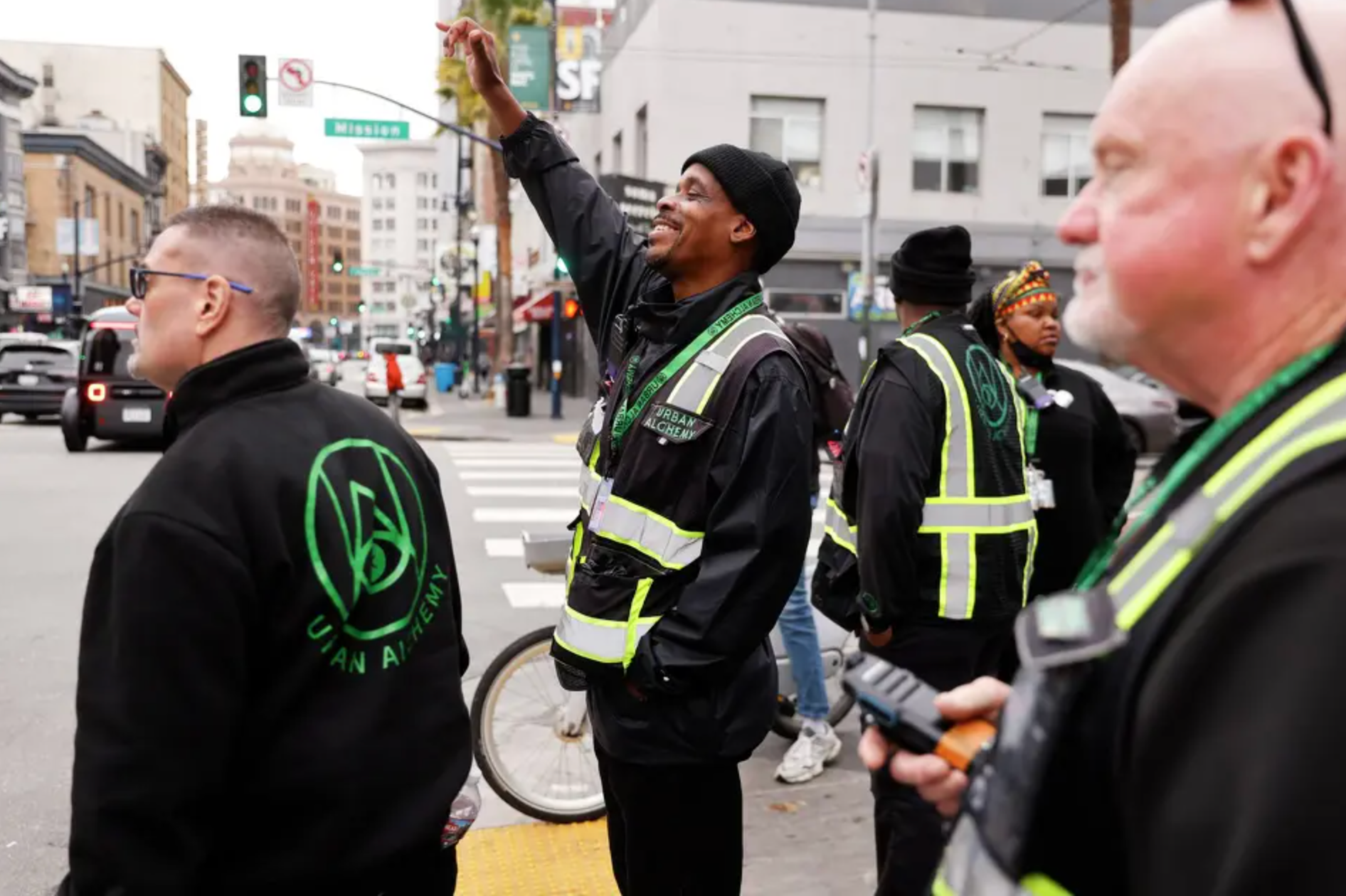
3. Study: Safety Ambassadors Linked To 20% Reduction In Crime At San Francisco Intersections. A new study published in PNAS Nexus by researchers at Stanford University, Pennsylvania State University, and Northwestern University finds promising evidence that unarmed safety ambassadors can help reduce crime and improve public safety. The researchers analyzed police crime data from 624 San Francisco intersections between 2018 and 2023, using a quasi-experimental approach to compare 41 intersections served by nonprofit Urban Alchemy’s safety ambassadors with 583 others. They found that ambassador deployment was associated with roughly 20% fewer reported crimes, including a 26.7% reduction in behavioral health-related incidents, smaller declines in drug and violent crime, and no measurable effect on property crime. As the San Francisco Chronicle reports, Urban Alchemy has recently expanded its Safety Ambassador team model to nine cities across six states. Researchers conclude the approach is “not a substitute for all forms of policing but a promising complement,” particularly for addressing behavioral health crises and public disorder.
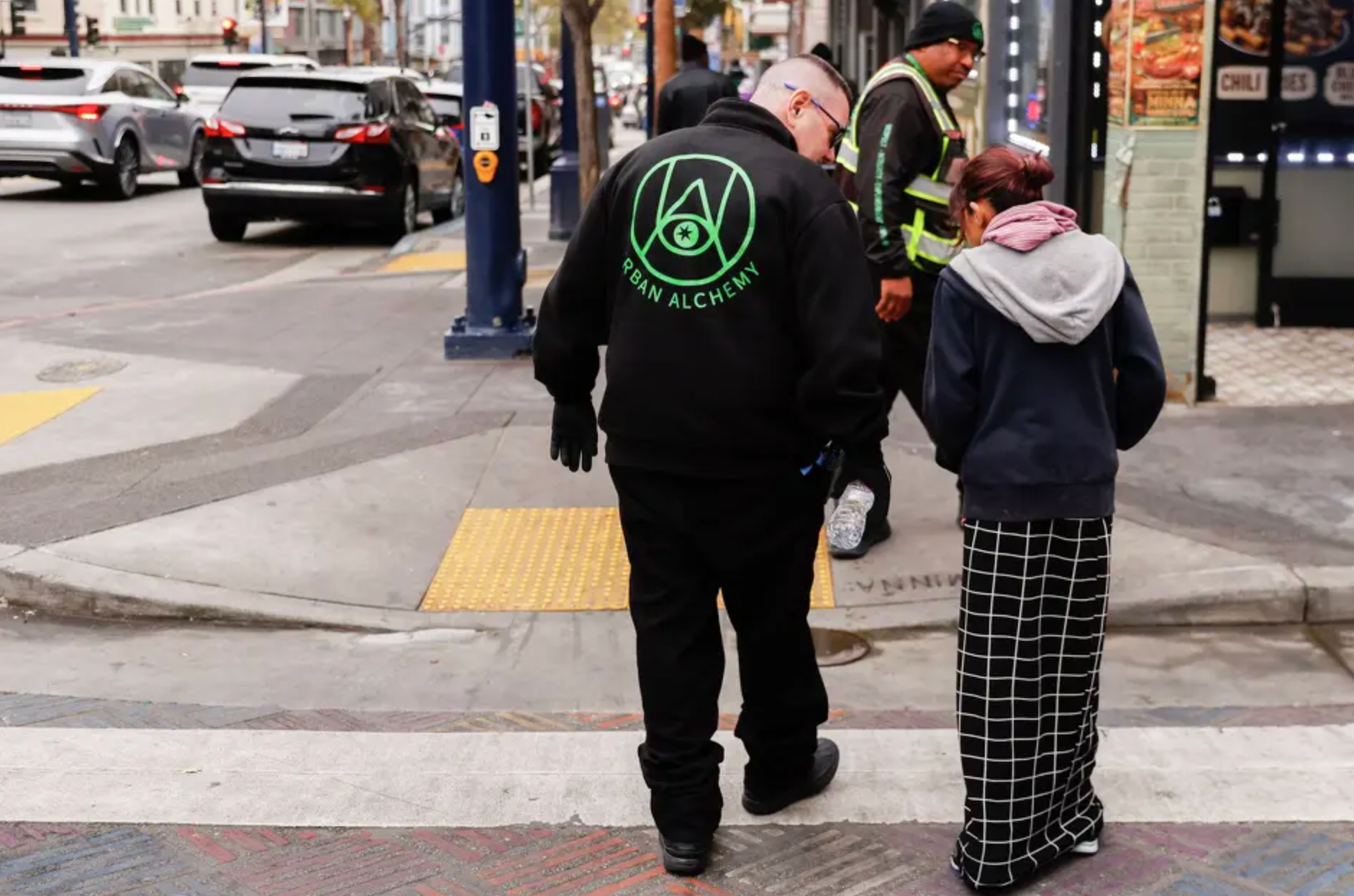
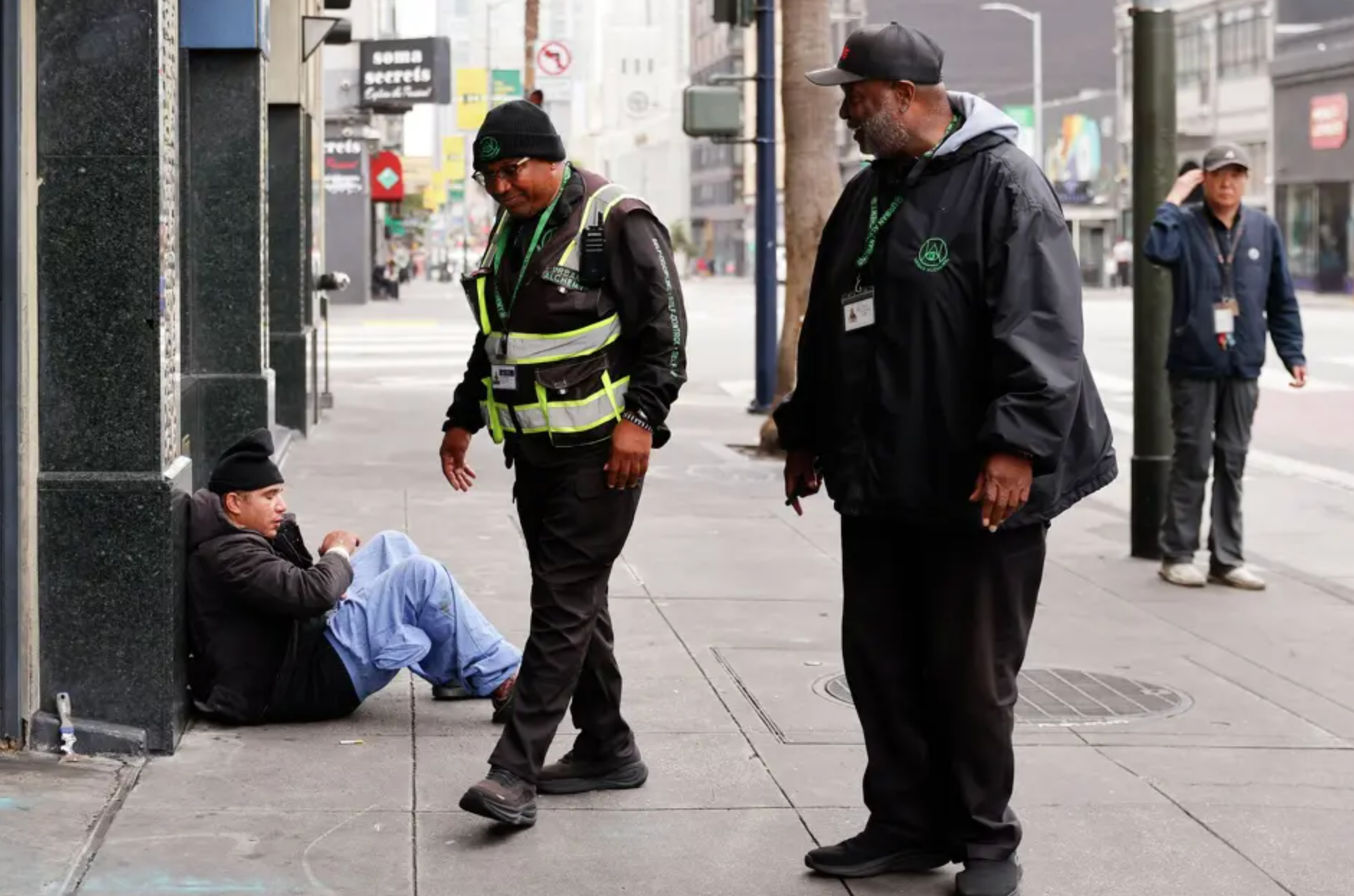
The full study is worth your time, but here are some of the key findings of what makes safety ambassadors effective:
- Unarmed Safety Ambassadors Provide A Consistent Presence To Prevent Problems Before They Escalate. “Unlike mobile crisis teams, practitioners are not dispatched to specific incidents. Instead, they serve as a standing presence in high-need spaces—defusing tensions and redirecting disorder before it triggers police involvement.” Teams are “deployed 12 h per day (7 AM to 7 PM), 7 days per week,” with “roughly 120–240 practitioners … on duty at any given time.” The Chronicle detailed that workers begin their shifts with “a flood of ‘good mornings’ and fist bumps,” engaging with residents and businesses throughout the day.
- Safety Ambassadors Report More Than 10,000 Conflict De-Escalations And 800 Overdose Reversals Annually. “Practitioners are trained and equipped with naloxone nasal spray, which they use to reverse roughly 800 overdoses per year. They reportedly conduct over 10,000 conflict de-escalations annually.” Their work also includes “providing basic resources (e.g. clothing, food, and sanitary items) and referrals to housing, treatment, and medical care; … escorting children, elderly, and disabled residents; assisting families in locating loved ones; and guiding visitors.”
- Teams Build Trust Through Lived Experience And Long-Term Relationships. “Practitioners are explicitly recruited for lived experience with poverty, homelessness, substance use, and the criminal legal system.” Researchers explain that “practitioners build influence through repeated interactions and relationship formation” and “must first become familiar with the social ecology of a block—its residents, businesses, unhoused populations, service providers, and recurring sources of conflict—before they can effectively intervene in disputes, connect individuals to services, or reshape expectations regarding behavior in public space.”