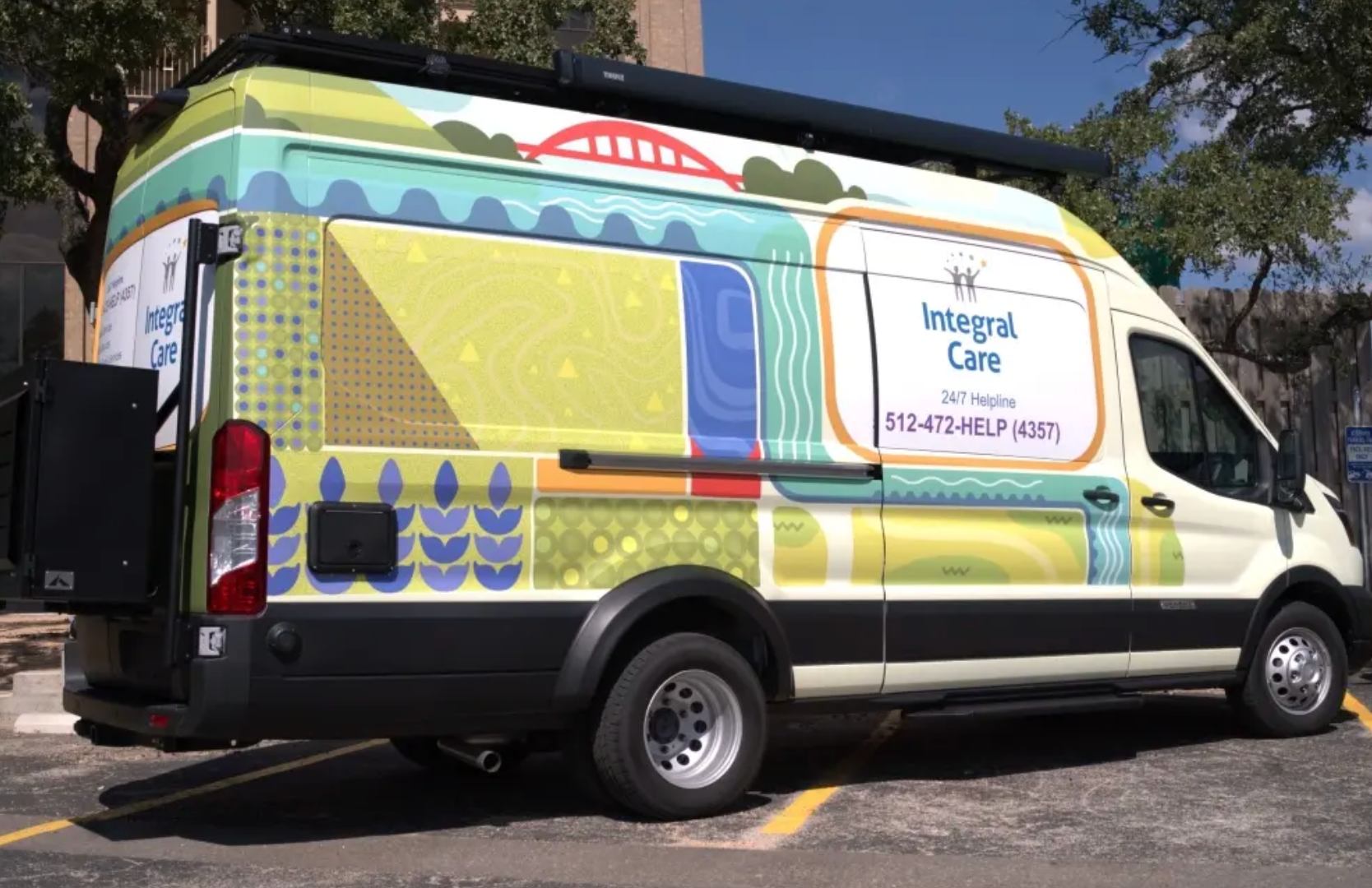
Mobile Crisis Response Teams are composed of behavioral health experts and crisis intervention specialists that 911 operators can dispatch, instead of armed law enforcement officers, to most mental health-related calls for service. One of the nation’s longest-running examples is Austin and Travis County’s Expanded Mobile Crisis Outreach Team (EMCOT), operated by Integral Care, which has responded to people experiencing psychiatric crises since 2013.
EMCOT clinicians can take behavioral health calls directly from Austin’s 911 center, resolve crises over the phone, dispatch mobile clinicians when an in-person response is needed, and provide community-based follow-up for up to 90 days, according to the Council of State Governments Justice Center’s review of the program. Since 2021, Austin’s 911 operators have also offered callers a fourth response option: “mental health services,” alongside police, fire and EMS, allowing eligible calls to be transferred directly to an embedded EMCOT clinician who can assess what kind of response is needed.
A recent study in Psychiatric Services found the program “significantly reduced the probability of a [peace officer emergency detention] … [by] 43.2%, and the probability of an arrest … [by] 37.5%,” with researchers attributing those results largely to clinicians’ success in resolving eligible crises themselves—either over the phone or by dispatching a mobile crisis team—before a police response was needed.
Safer Cities recently spoke with Marisa Malik, Director of Crisis Services and Justice Initiatives at Integral Care, about what makes EMCOT work:
- On Giving Mental Health Calls A Specialized 911 Response: “In December 2019, EMCOT clinicians began taking mental health calls directly on the 911 call center floor. In February 2021, APD’s 911 call script added a fourth option: ‘Do you need police, fire, EMS, or mental health services?’ Callers who select mental health services are routed directly from an APD 911 operator to an EMCOT clinician, who triages the call, provides de-escalation, and dispatches a field team when needed… Often, [] clinicians resolve the crisis on the phone. The program’s goal is to resolve a mental health crisis without police involvement, whether that happens over the phone with an Integral Care clinician or through a clinician responding directly to the person in crisis…
In FY25, [] clinicians handled 3,851 calls through the 911 call center, diverting 91% from a police response. That same year, the EMCOT Field Response Team responded to 3,331 dispatches from first responders and [911 clinicians]. Of those, 100% were diverted from arrest, 84% were diverted from a Peace Officer’s Emergency Detention (POED), and 98% were diverted from an emergency department admission.”
- On Supporting People Through The Full Arc Of A Crisis: “EMCOT provides community-based follow-up for up to 90 days after the initial crisis assessment, supporting the individual through the full arc of the crisis episode and helping secure a lasting connection to ongoing behavioral health services. Follow-up—including counseling, case management, medical provider assessments, medication management, and living-skills training—happens entirely in the community, never in a clinic setting. Services meet the client where they choose: at home, at school, at work, or somewhere as simple as a coffee shop or restaurant, depending on their preference… This continued support helps individuals avoid a repeat crisis, reducing the likelihood of future episodes by pairing treatment with ongoing support and ensuring each person has a treatment team already in place as they move out of crisis.”
- On Matching Each Crisis To The Right Responder: “Behind every crisis call is a layered decision tree that determines who responds… [911 clinicians] handle what can be safely resolved by phone: calls with no imminent safety risk, callers who respond to de-escalation, or routine follow-up contacts. When a call needs more than that, when the situation can’t be safely assessed over the phone, or when someone needs an in-person clinical determination [911 clinicians] escalate to an EMCOT field dispatch… Public safety and medical status shape what that field response looks like.
When a public safety concern or medical emergency is identified, EMCOT doesn’t respond alone: law enforcement and EMS co-respond alongside EMCOT clinicians, or arrive first and request EMCOT once the scene is safe or the person is medically stable. That sequencing keeps clinicians from walking into unassessed danger, and keeps police and paramedics from having to make a behavioral health determination on their own once their part of the response is complete.”