A new study published in the Journal of Surgical Research by researchers from the University of Missouri–Kansas City School of Medicine and University Health Truman Medical Center examines the long-term impact of Kansas City’s Aim4Peace hospital-based violence intervention program. Researchers compared 338 patients treated for intentional penetrating violent injuries at the hospital’s Level I trauma center in 2006-2007, before the hospital-based CVI program launched, with two groups treated after: 632 patients from 2016–2017 and 376 from 2021-2023. They found that “trauma recidivism rates were significantly lower following the implementation of the A4P program.” The full study is worth reading, but here are some of the topline findings:
- Repeat Violent Injury Fell At Both Three And Eight Year Follow Ups: Researchers found that “the 3-y recurrent [penetrating injuries from intentional violence] rate decreased from 6.8% in the preintervention cohort to 2.4% in the postintervention cohort,” while “the 8-y recurrent [penetrating injuries from intentional violence] rate significantly decreased from 10.4%… to 4.0%.” After adjusting for age, sex and race, “postintervention cohort patients demonstrated 66% lower odds of 3-y recurrent [penetrating injuries from intentional violence] trauma… and 65% lower odds of 8-y recurrent [penetrating injuries from intentional violence] trauma… compared to the preintervention cohort.”
- Program Uses Trusted Community Responders To Intervene During Critical Postinjury Period: “Hospital responders are often longstanding community members who have been negatively impacted by the cycle of violence as victims and/or have a history of violence.” Their “established relationships, proximity to the community, and lived experiences provide substantial credibility and leverage with victims, their families, and potential perpetrators.” Responders use “early, structured engagement strategies to reduce the risk of retaliation,” while providing “mediation, mentoring, case management, systems navigation, and community reunification.”
- Preventing Just Two Hospitalized Firearm Injuries A Year Could Offset The Responder Team’s Cost, Researchers Estimate: The study found that “A4P engagement and intervention were required for only 16 [penetrating injuries from intentional violence] patients to prevent one instance of recidivism in the 8 y following initial injury.” With the Hospital Responder team costing about $319,000 annually, researchers calculated that “preventing approximately 2 hospitalized firearm injuries per year would offset” that cost and concluded that HVIPs “may offer substantial economic value to health care systems and communities affected by recurrent interpersonal violence.”
Momentum For Hospital-Based Violence Intervention Programs Around The Country:
- Bergen County, New Jersey, Is Expanding A Hospital-Based Violence Intervention Program That Aims To Reduce Repeat Violent Injuries. For WRNJ, Jay Edwards reports that more than $1 million in federal funding will expand Hackensack University Medical Center’s Community Health Worker Violence Intervention Program, supporting “trained professionals, technology, supplies and transportation for victims and families across North Jersey.” The program connects patients at risk of another violent injury with services “while they are still in a hospital or emergency department,” followed by “community-based case management and other assistance after they leave.” Rep. Josh Gottheimer’s office released data on the funding announcement that demonstrated the importance of the investment in expanding HVIPs: just 5% of participating victims “were hospitalized again for another violent injury,” compared with 36% of victims who did not participate.
- Richmond, Virginia’s Hospital-Based Violence Intervention Program Participants Were Nearly 70% Less Likely To Return With Another Violent Injury. For VCU Health, Amanda Kowaleski reports that Bridging the Gap—a hospital-based violence intervention program launched in 2003—offers patients intensive case management early in their hospital stay, including “housing assistance, enrollment in educational and vocational programs, connection to positive social outlets and access to mental health services,” and has produced promising results. Between 200 and 300 people participate each year, and researchers found participants were “nearly 70% less likely to return with another injury from violence than patients who declined to participate.” Some former patients have even returned to serve as case managers, helping the program “gain their trust” and connect victims with resources that “can and will help” them rebuild their lives.
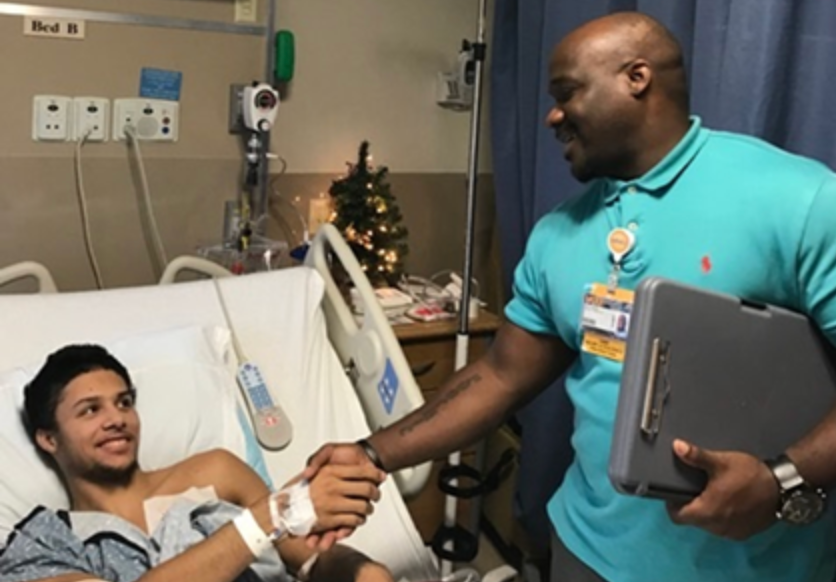
- Birmingham, Alabama, Invests $1.15 Million Into Hospital-Based Violence Intervention Program That Leaders Say Has Seen “Essentially Zero Recidivism” Among Participants Who Complete It. For BirminghamWatch, Daniel Gaddy reports that the program connects gunshot survivors with violence intervention specialists while they are still in the hospital, then provides longer-term support including mental health care, housing assistance and job training. LaTonya Tate, city council president pro tem, explained to the news site that there has been “essentially zero recidivism with individuals who have completed this program.” The new funding will support case management, education, employment, housing, food, utilities and transportation for participants.