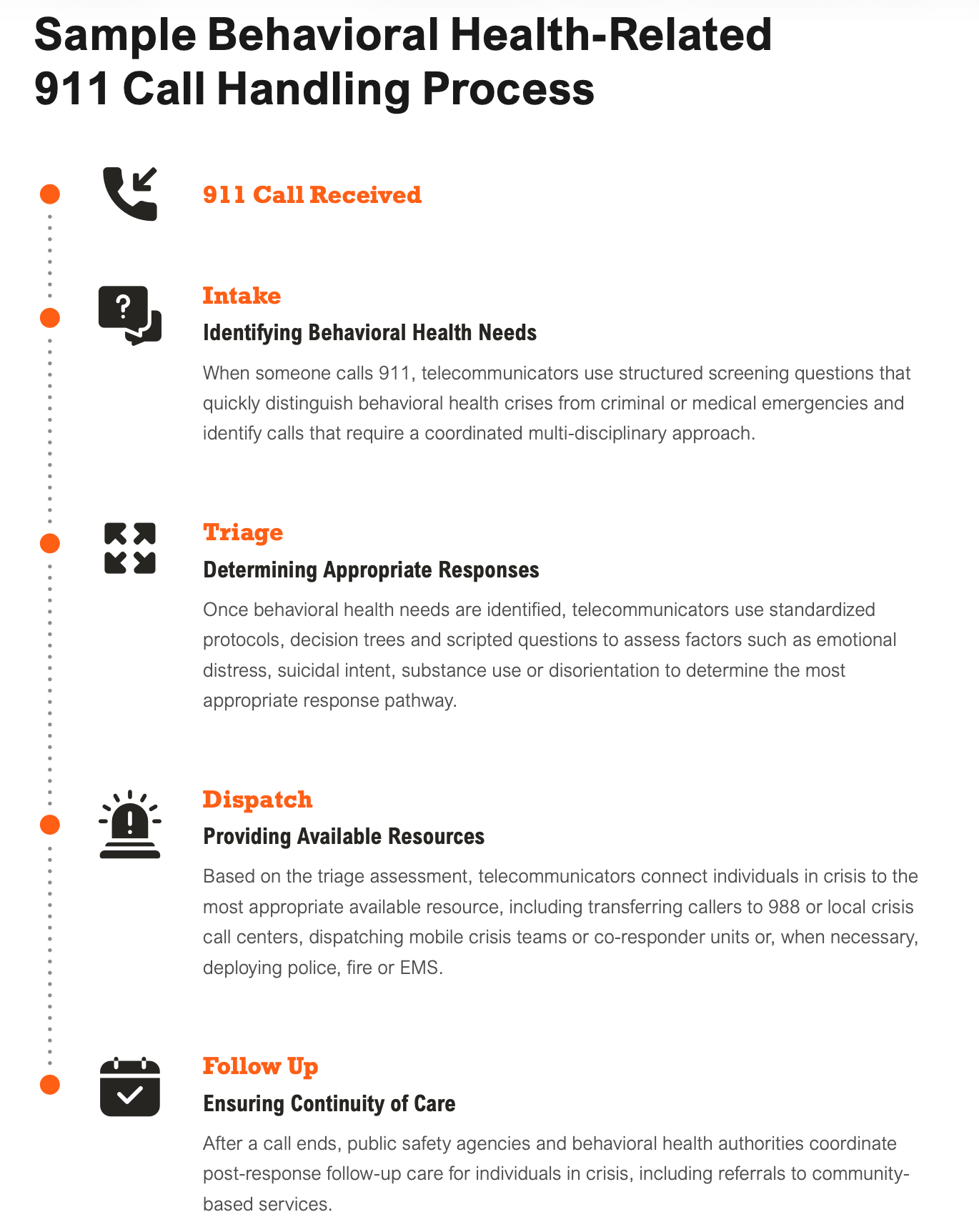
The National Association of Counties published a new brief examining how counties are coordinating 911, 988 and behavioral health systems to improve responses to people in crisis. Using a case-study approach, the brief combines national data trends from 911 call centers and behavioral health-related calls with three operational examples from counties experimenting with some form of 911-988 integration that is helping to “connect individuals in crisis to the right care while directing emergency resources where they are needed most”: Boone County, Missouri; Ramsey County, Minnesota; and Henrico County, Virginia. The full brief is worth your time, but here are some toplines from the approaches that these three counties are taking to modernizing their public safety infrastructure and response:
- Boone County, Missouri’s 911-To-988 Warm Transfers Connect Lower-Acuity Callers To Specialized Crisis Support Instead Of Dispatching Emergency Services. In 2024, Boone County Joint Communications and Centerstone “established a formal partnership to improve responses to behavioral health-related 911 calls and reduce strain on 911 telecommunicators.” The partners “identified a list of call types eligible for transfer to 988” and developed a protocol for “redirecting lower-acuity behavioral health calls to specialized crisis support instead of dispatching emergency services.” When a caller is eligible, a telecommunicator “bridges the call to a regional 988 center, introduces the caller, provides relevant context to the crisis specialist and then releases the call to their care.” The partnership can provide “cost-effective early intervention… [resulting in] fewer hospital stays and reducing unnecessary law enforcement and EMS responses.”
- Ramsey County, Minnesota’s Embedded Mental Health Professionals Resolved 78% Of Behavioral Health Calls By Phone, Reducing Strain On Law Enforcement. Ramsey County’s Emergency Communications Center partnered with its Social Services Department “to embed social workers directly into the 911 call center,” allowing “most behavioral health-related calls to be resolved internally without transfer to 988 or other crisis lines.” Since May 2023, telecommunicators have transferred more than 10,200 calls to embedded social workers, who made first-attempt contact with 8,249 callers—“resolving 78% of calls over the phone, referring 12% to mobile crisis services and routing only 10% to a traditional law enforcement response.” According to Emergency Communications Director Nancie Pass, bringing the professionals “under one roof has transformed our work… strengthened trust, deepened coordination and increased confidence in alternative response options across the entire ECC.”
- Henrico County, Virginia’s Four-Level Triage System Uses Call Acuity To Match Each Behavioral Health Crisis With The Most Appropriate Response. Henrico County integrated “a four-level behavioral health triage framework into its Emergency Medical Dispatch platform,” allowing calls “to be classified by acuity and matched with the most appropriate response.” As telecommunicators enter information, the system “automatically assigns an acuity code using standardized criteria and generates a recommended response pathway,” improving consistency in call handling. From July 2024 through June 2025, the county processed 1,588 calls through the framework, with responses including “coordination with 988, dispatch of a Mobile Response Team, deployment of the Prevention Services Unit… or response by Crisis Intervention Team-trained patrol officers.” A bi-monthly working group bringing together “911, 988, behavioral health, law enforcement and county leadership” drives “ongoing review and refinement of the system.”
More Cities Integrating Mental Health Experts Into 911 Crisis Response:
- Skokie, Illinois, Is Integrating 911 And 988 To Route Mental Health Calls To Crisis Counselors While Preserving Police, Fire And EMS For Immediate Safety Threats. For Patch, Rachel Barnes reports that starting this month, Skokie telecommunicators are transferring mental and behavioral health calls without an “immediate life-safety or scene-safety concern” directly to a live 988 mental health expert. Dispatchers will “remain on the line long enough to provide information and make sure the transfer is completed,” while 988 counselors can “listen, de-escalate, assess crisis needs” and coordinate an in-person Mobile Crisis Response Team. Calls involving “a weapon, crime or serious medical emergency” will continue to receive police, fire or EMS response, and 988 can transfer calls back to 911 whenever emergency assistance is needed.
- Orange County, California, Routes 911 Mental Health Calls To Clinicians So Deputies Can Focus On Public-Safety Emergencies. PublicCEO reports that Orange County has launched a new program that will route 911 calls involving “no violation of law or threat to public safety” to licensed clinicians instead of sheriff’s deputies. Sheriff Don Barnes, a champion of the new program, explained that people in a mental health crisis who “pose no threat to the community do not need law enforcement coming to their door” and deputies should remain “focused on public safety and available for emergency calls.” Sheriff Barnes told MyNewsLA that the new policy grew from an internal review of data from sheriff’s department responses to calls for service that led to use of force, which showed that “in some cases a deputy shouldn’t have been dispatched at all and that a social worker would have been a better-trained professional to address the crisis.”
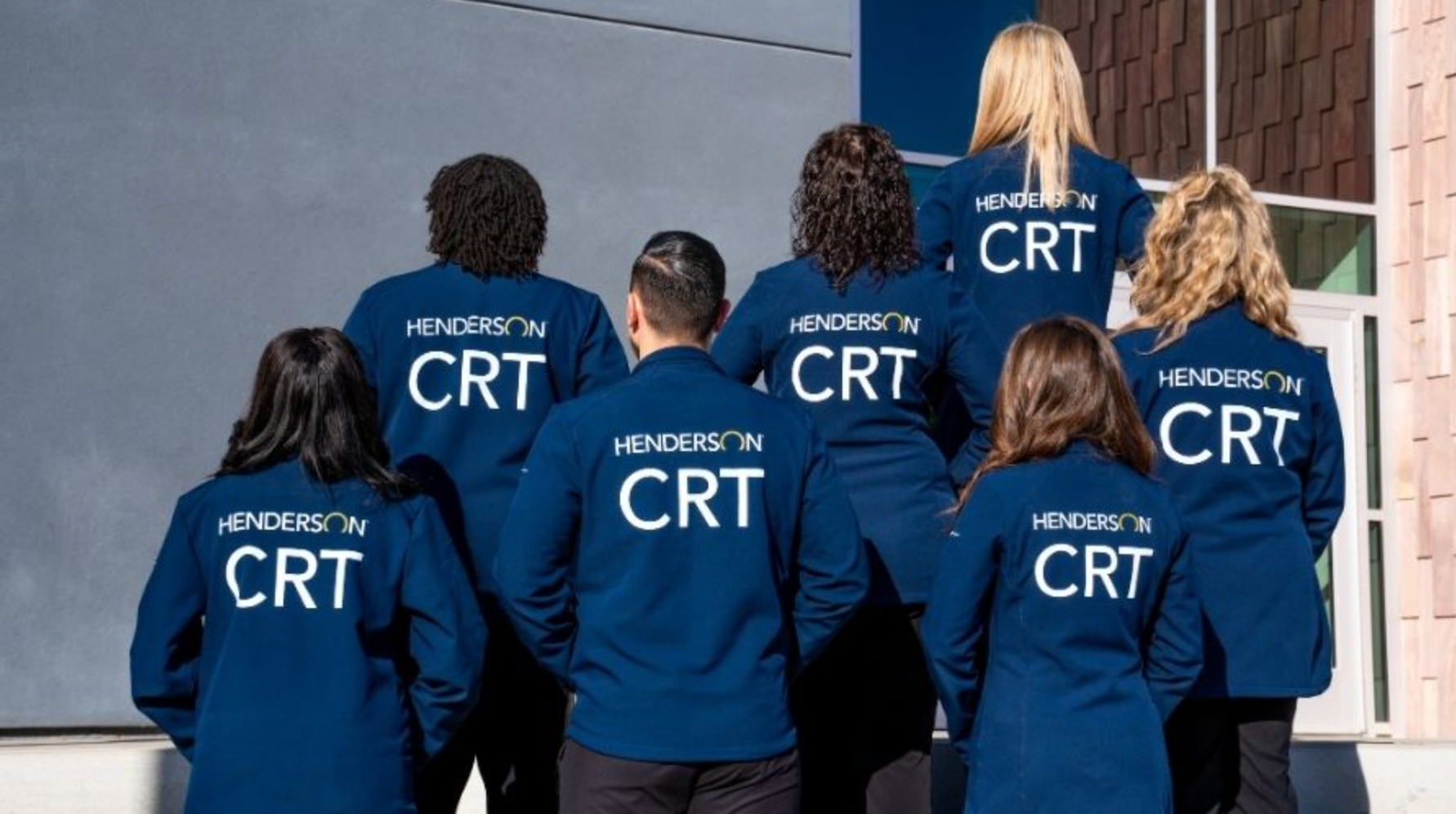
- Henderson, Nevada, Becomes First City In The State To Dispatch Its Crisis Response Team Through 988. The Las Vegas Review-Journal reports that the clinician-led team—Nevada’s “first and only program” designated to provide in-person support for both 911 and 988 calls. 988 call-takers can assess a person’s needs and deploy clinicians to the scene when necessary, much as 911 dispatchers determine whether to send police, fire or EMS. Hayley Jarolimek, director of Henderson’s Department of Community and Neighborhood Programs, said the model allows officers and firefighters to handle calls “that align more with their missions” while helping “prevent the criminalization of mental illness.” FOX5 reports that after the immediate crisis, the team can make a “warm handoff” to services and continue following up for as long as 90 days.