Trauma Recovery Centers provide a place for crime survivors and their families to connect to the mental health care, relocation assistance, job resources and other practical support they need to regain stability after life-altering violence. By addressing the emotional and material consequences of victimization together, these programs help survivors navigate recovery while connecting them to services that can prevent trauma from becoming an enduring crisis.
Thriving Mind in South Florida has expanded that model into a coordinated Trauma Recovery Network serving adults, children and families across Miami-Dade and Monroe counties through partner treatment providers. Funded in part through a Victims of Crime Act grant from the Florida Attorney General’s Office, the network provides free services to survivors of physical and sexual assault, domestic violence, gun violence, human trafficking, child abuse and other violent crimes—as well as family members who may experience lasting trauma themselves. Through the network, more than 1,700 survivors and family members have received support, with family members accounting for about 40% of those served.
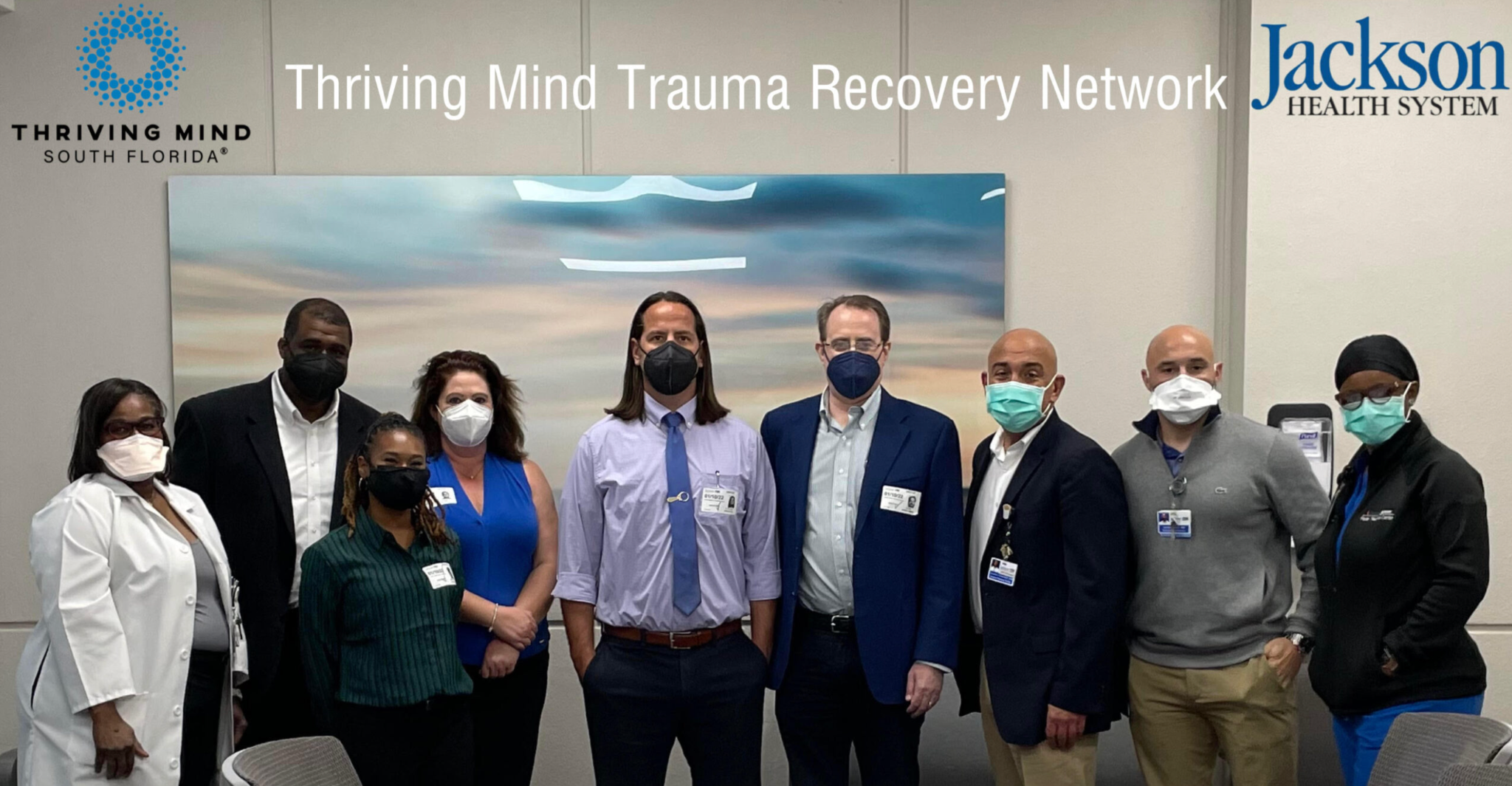
Safer Cities recently spoke with Steven Proctor, PhD, Program Director of the Thriving Mind South Florida Trauma Recovery Network, about why trauma recovery must include entire families, how addressing urgent practical needs can create a path toward therapy and how the center reaches survivors who may never seek services on their own.
- On Recognizing That Violence Affects Entire Families: “Through our Trauma Recovery Network—funded by the Florida Attorney General’s Office—we serve child and adult victims of violent crime and, just as importantly, their families. In fact, about 40% of the more than 1,700 people we’ve served have been family members because violence doesn’t just affect the person who was victimized. The impact of violence extends to parents, spouses, children, siblings, and entire support systems… Our program serves individuals of all ages, ranging from the family of a 2-month-old sexual abuse victim to the family of an 85-year-old grandmother who was killed by gun violence while sitting on her front porch. While every story is unique, they’re all trying to rebuild their lives after unimaginable loss or trauma.”
- On Trauma Recovery: “Many people assume trauma recovery begins with therapy, but that’s often not where recovery starts. Only about one-third of the people we serve are ready to engage in mental health treatment initially. We’ve found that before someone can focus on therapy, they may need a safe place to live, help paying for a loved one’s funeral, transportation to medical appointments, assistance applying for Victim Compensation, or simply someone they trust to answer the phone when everything feels overwhelming… That’s why our model pairs Care Coordinators with Peer Victim Advocate Specialists—individuals who have personally survived gun violence or domestic violence—to help victims and families overcome barriers and connect them to the services they need most… Our team does so much more than just make referrals; they build relationships and that trust is often what opens the door to everything else.”
- On Creating A No-Wrong-Door Approach To Services: “Our ‘no-wrong-door’ approach allows people impacted by violence to enter our program through multiple pathways. Referrals come from the Level I Ryder Trauma Center at Jackson Memorial Hospital, a number of hospital emergency departments, victim advocates at more than a dozen South Florida law enforcement agencies, community organizations, and self-referrals.
One example is our partnership with Ryder Trauma Center, where we have a social worker who reviews the daily trauma census to identify patients who may benefit from our services and begins connecting with them while they’re still in the hospital… We provide trainings for law enforcement, participate in domestic violence awareness walks, attend candlelight vigils and community resource fairs, and work alongside a Community Advisory Board we created that brings together survivors of domestic violence and sexual assault; mothers who have lost children to gun violence; mental health clinicians; victim advocates from local police departments; and other community leaders.”