For The New York Times, Shayla Colon reports on how community violence intervention has grown into an increasingly important part of the public safety infrastructure in cities across the country. Colon interviewed dozens of CVI workers, elected officials and police officers involved in violence prevention to better understand how credible messengers mediate disputes, prevent retaliation and reach people at the highest risk of becoming involved in violence. Colon writes that cities once relied primarily on police but “found there were limits on what even intensive policing could do to prevent violence” and so city leaders have given trained CVI experts “a greater role in staving off conflict” and have helped to develop “new ecosystems of public safety.” The full article is worth your time, but here are some toplines:
- Stopping Shootings Before They Happen. Colon writes that violence intervention responders, called “credible messengers” are de-escalation experts whose life experiences allow them “to connect with individuals whom the police [often] struggle to reach.” Cobe Williams, national director of Cure Violence, explained that their “main focus is stopping shooting and killing on the front end before it happens… if you have the relationships with people out there, you can stop the shooting and killing.” In Orlando, Florida, Raysean Brown, strategy director for Peace Orlando, recalled a tense moment that could have turned deadly with two groups of young people who had firearms, but thanks to his team intervening, “everybody made it home that night.” Brown explained that CVI teams help “buy time, a lot of these situations de-escalate themselves [with time and trusted messengers responding].”
- Preventing Retaliation. Colon reports that after a shooting, intervention workers step in “to prevent retaliation, minimize lethal violence and provide specialized care.” Karla Glasgow, a frontline hospital worker with Kansas City’s Aim4Peace hospital-based program, explained to the newspaper that, often “if [CVI responders] can get to the person within the hour of the incident occurring, that can go a long way to stopping retaliation.” Zinnia Alejandro, a CVI responder, shared with the newspaper a time when a wounded young man was also being targeted by the people who killed his brother. Alejandro found him, moved him out of the area and helped get him out of the country that same day: “[W]e managed to save the boy’s life.”
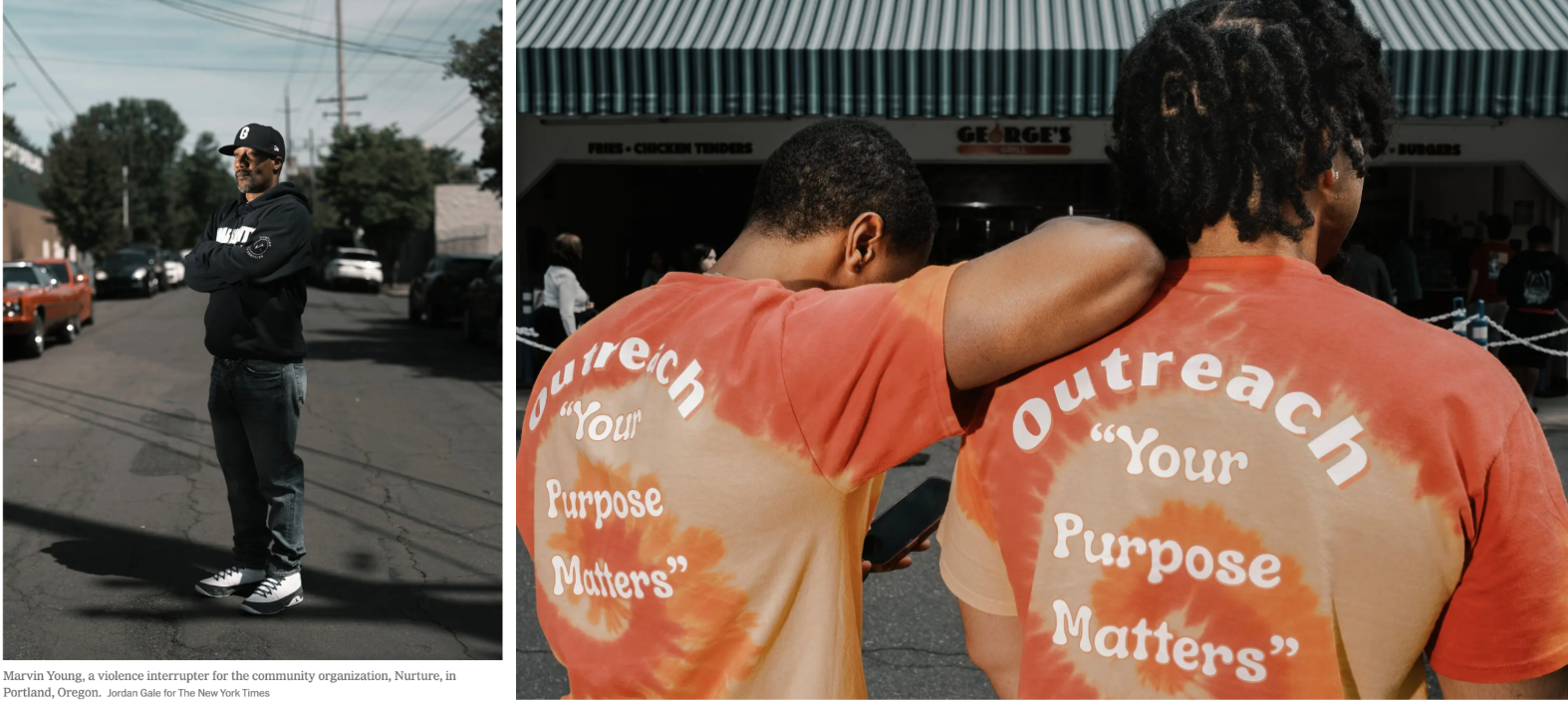
- Partnering With Law Enforcement. Colon writes that Portland created an Office of Violence Prevention “to enable coordination between the police department and community-based organizations.” Violence interrupter Marvin Young explained that community organizations meet each week to receive referrals and “every other week, the police bureau is online with us.” Portland police officer Jason Hubert described how police and community partners work together after violence occurs: “Me and the CBOs and Ceasefire, we’ll help pay for bills.… We’ll get counseling for the family. We’ll pay for rent if the family needs to move.” As Raysean Brown explained, “We don’t get in the police’s way.… [We are] here to try to achieve the same goal, which is to bring peace to the community.”
More Cities Turning To CVI Teams To Increase Public Safety:
- Baltimore, Maryland’s “Extraordinary Decline In Violence” Provides A Map For How Cities Can Reduce Gun Violence “At Scale” With CVI. For The Trace, Chip Brownlee reports that Baltimore’s “coordinated system combining focused deterrence, community violence intervention, victim services, improved investigations, and sustained leadership from City Hall” may be “one of the clearest examples yet of a city reducing gun violence at scale.” As Brownlee notes, “a growing body of research suggests that the city’s approach to reducing shootings at scale may be one of the most effective yet.” In just the first six months of 2026, Baltimore recorded 50 homicides—“the fewest…since at least the 1960s”—while an evaluation found the city’s Group Violence Reduction Strategy was associated with “a roughly one-third decline in shootings and homicides” and a roughly 40% decline in carjackings in its initial district.
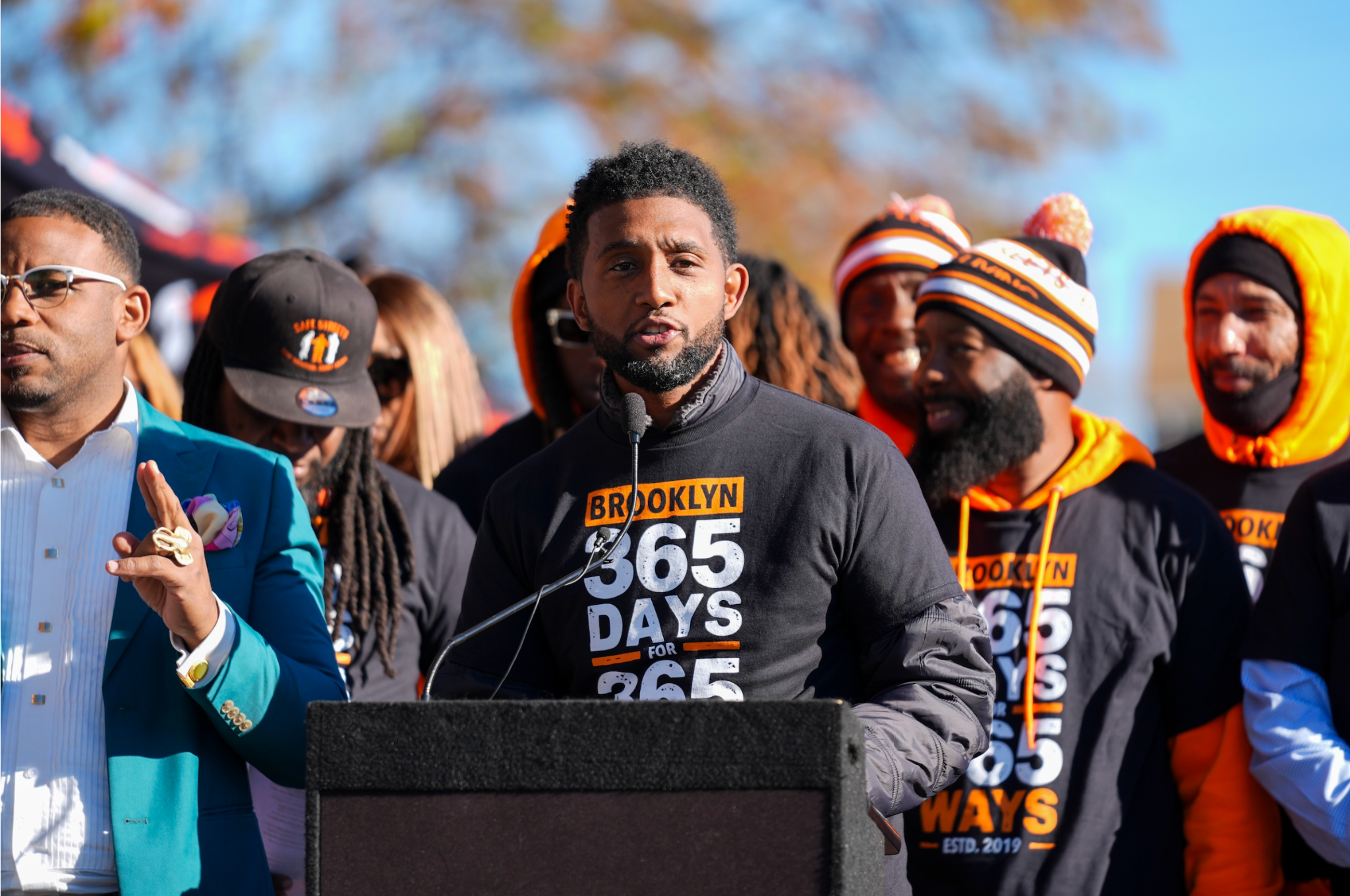
- Chicago And Cook County, Illinois, Are Building A More Permanent Public Infrastructure For CVI As County Gun Homicides Fall By More Than Half. For WTTW, Eunice Alpasan reports that Mayor Brandon Johnson signed an executive order creating an Office of Gun Violence Reduction—a “historic step in Chicago’s fight against gun violence”—to coordinate “violence prevention efforts, victim services and community safety investments,” develop a comprehensive five-year strategy and lay the groundwork for a permanent city department. Separately, FOX 32’s Terrence Lee reports that Cook County is investing another $20 million in community violence intervention after gun homicides fell from 1,007 in 2021 to 448 last year. “Community violence intervention works,” Toni Preckwinkle, County Board president and champion of the county’s CVI efforts, explained: “This work is difficult, relationship-based and often happens out of public view, but it saves lives.” The funding, which organizations can apply for here, will support “street outreach and intervention, case management, and victim services,” with organizations “meeting people where they are and connecting them to services and support, from getting IDs to trauma-informed counseling and job training.”
- Akron, Ohio, Launches CVI Program So “Victims Of Gun Violence And Their Families Will No Longer Have To Navigate Their Trauma Alone.” For the Akron Beacon Journal, Derek Kreider reports that the city’s new PIVOT program will connect gun violence victims and their families with “immediate support, trauma-informed care and long-term community resources.” And, as Akron.com details, the program will partner with local hospitals so that it can include interventions that begin during “the critical period immediately following a gun violence injury” to reduce retaliation, prevent reinjury, address trauma and create “pathways toward long-term stability and healing.” Dr. Rathna Shenoy, chief of trauma surgery at one of the partner hospitals, explained that early intervention “represents an opportunity not just to save a life, but to help change its trajectory.”
Related: “State Budgets Are Where The Largest CVI Investments Happen” And Cities Need Strong State-Level Coalitions To Shape Them. That’s the takeaway from a new first-of-its-kind report from Giffords Center For Violence Intervention. For city leaders and local CVI organizations, this valuable guide offers a practical framework for deciding whether to “join, revive, or build” a coalition, developing “collective leverage” and creating “a feedback loop between program experience and program administration” that no individual organization can build alone. As the authors conclude, stronger coalitions can help CVI “secure its rightful place as a central pillar of America’s public safety strategy”—and “will mean actual lives saved.”
