Published in the Community Mental Health Journal, a new study from researchers affiliated with Florida International University, Washington University in St. Louis, Thriving Mind South Florida and The Village South/WestCare evaluated four Mobile Response Teams serving Miami-Dade County. The clinician-led teams respond to behavioral health emergencies in homes, schools and other community settings, providing on-site de-escalation, safety planning and connections to care.
As researchers explained, “The goals of [mobile crisis response teams] are to lessen trauma; divert individuals from emergency departments, juvenile justice or criminal justice settings; and prevent unnecessary [] hospitalizations.” Researchers examined administrative records from eligible crisis calls between May 2024 and April 2025, looking at how teams responded, how quickly they arrived, whether each crisis resulted in hospitalization or diversion and which factors predicted hospitalization. They concluded: “As communities continue to seek effective alternatives to law enforcement and hospital-based responses, [mobile crisis response teams] offer a practical and scalable approach to improving safety, access, and continuity of care during behavioral health crises.” The full study is worth your time, but here are three topline findings:
- Mobile Crisis Teams Diverted Nearly Two-Thirds Of Calls From Hospitalization. Across the 2,300 eligible calls in the study, 64.8% resulted in diversion: 35.3% were referred to services, 25.6% were “resolved by MRT [Mobile Response Team] intervention” and 4% were connected to other emergency services. Researchers said the teams helped “shift the trajectory of many behavioral health crises away from involuntary examination, psychiatric hospitalization” and hospital emergency departments.
- Response Times Are Comparable To Speed Of Law Enforcement, Capable Of “Rapid Crisis Intervention.” Under the program’s “in-person first model,” 95% of calls were handled face-to-face, with teams arriving in an average of 54 minutes and 55 seconds — within Florida’s 60-minute standard. Researchers said the results show that mobile crisis teams can provide “rapid crisis intervention” even in “one of the nation’s largest and most diverse counties.”
- Teams Diverted Lower-Risk Crises While Getting Higher-Risk People To Hospital Care. People assessed as high suicide risk or reporting a specific suicide plan were much more likely to be hospitalized, while nearly three-quarters of people assessed as low risk were diverted. Researchers said standardized risk assessments can help teams make “more consistent and evidence-informed” decisions, reducing “unnecessary hospitalizations” while “ensuring appropriate care for those at highest risk.”
More Momentum For Mobile Crisis Response Around The Country:
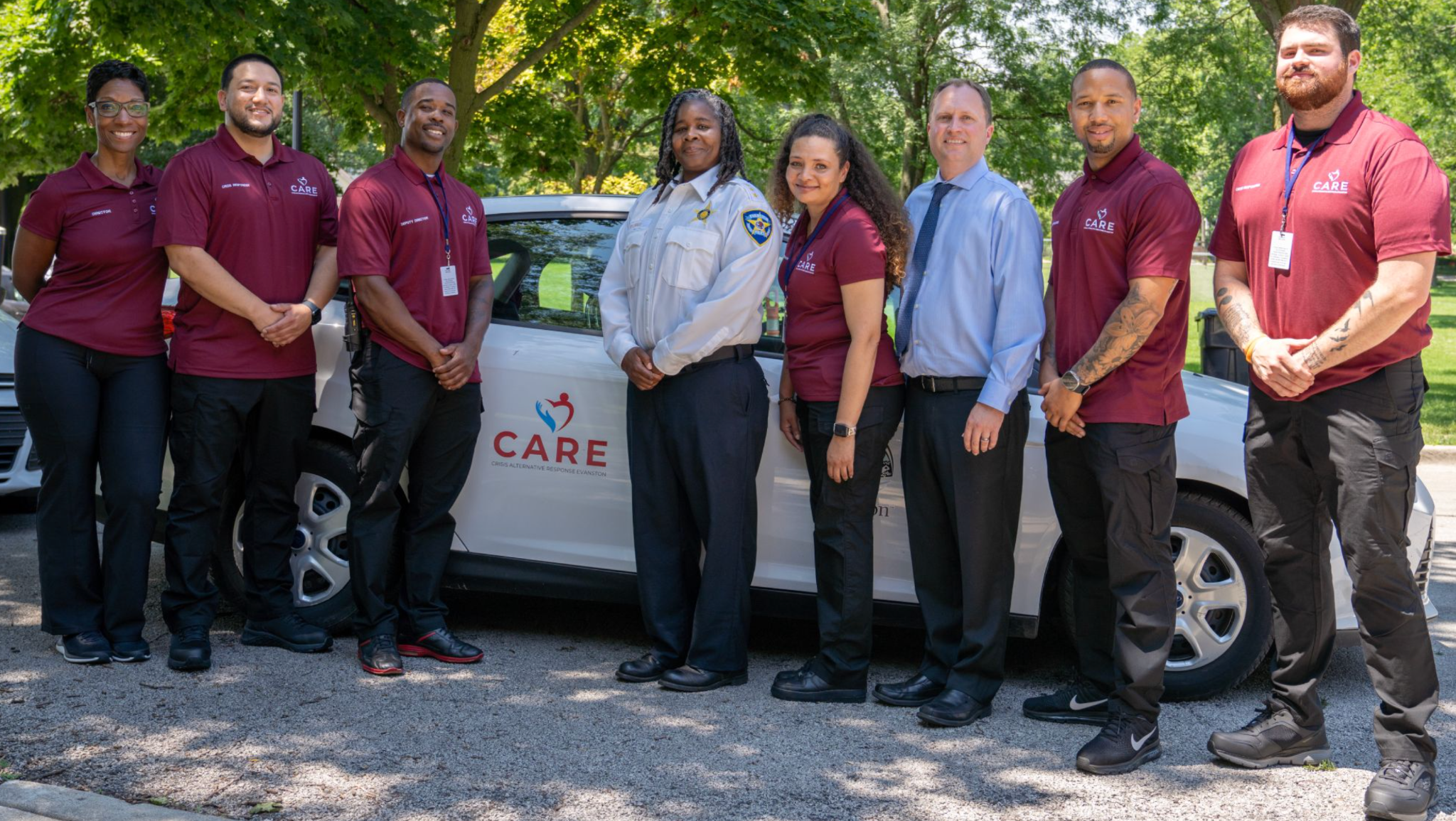
- Evanston, Illinois, Expands CARE Team After Responding To More Than 3,000 Calls, So Law Enforcement Can “Focus On High Emergency, High-Crime Calls.” For The Daily Northwestern, Sasha Baumgartner reports that the City of Evanston is expanding its mobile crisis response team and its hours of operation after a successful first two years in operation that saw the team respond to more than 3,000 calls for service. Deputy Parks, Recreation and Community Services Director Jeron Dorsey explained to the newspaper that the team reduces the burden on police officers who have long been the default responder to mental health-related calls for service: “Police officers have to focus on high emergency, high-crime calls and low-level quality of life calls that sometimes consume their day and time, and it presents [them] with a lot of challenges… we are happy to be there to fill that gap so that our police officers are well-rested and able to truly be ready to go on emergency calls.”
Laura Sterling, who oversees the nursing unit in Saint Francis Hospital’s Level I Trauma and Emergency Department, added that the CARE team members “are experts in de-escalating mental health situations before they become emergencies… [and that] the team also helps the hospital manage its emergency room… ‘sometimes we call them to come to our ER waiting room to help support us and patients after they have been discharged and don’t have a place to go, and at times refuse to leave.”
- Spokane, Washington, Expands Mobile Crisis Team To Connect People In Crisis Directly To Care, Instead Of Emergency Rooms. For KHQ, Rachel Turcotte reports that the Spokane Fire Department and Frontier Behavioral Health are expanding a joint Behavioral Response Unit that pairs a fire department paramedic with a behavioral health clinician for 911 calls involving mental health and substance use crises. The expanded program also includes two distinct teams—the Behavioral Response Unit which responds to calls for service and is expanding its capacity to six days a week from 9 a.m. to 9 p.m., as well as a follow-up team that checks in with patients after a call and connects them to treatment and other services, if needed.
Spokane Fire Battalion Chief Anne Raven explained that the team can assess patients on scene and determine whether “they could go directly to a facility rather than the ER” to reduce strain on emergency rooms: “If these individuals don’t need the ER, if that’s not the best place for them, we don’t want them to go there and make those wait times even longer… [or make] the lack of staffed beds at the hospital even worse.”
- Culver City, California, Expands Mobile Crisis Team “To Get Extended Hours, More Staff” After Promising Pilot. Culver City Crossroads reports that the city is expanding its Mobile Crisis Team from weekday coverage to seven days a week, from 9 a.m. to 9 p.m, and increasing team size to handle more calls, “taking the onus of response off of the police and using a mental health focused approach” instead. The city announced the expansion after the mobile crisis team, which launched in the final months of 2025, responded “to 385 calls to the crisis line and homeless outreach requests” in just the first three months of operation.
