For nearly five years, Safer Cities has tracked the programs, research, and public opinion shaping the future of public safety. Along the way, we’ve built a growing library of reporting on the approaches communities are implementing—from mobile crisis response teams and crisis stabilization centers to violence intervention programs, safety ambassadors, clean teams, and other emerging public safety strategies.
That work has grown into something larger than a newsletter: a curated knowledge base of programs, independent evaluations, academic research, public opinion data, and practical examples from communities across the country.
That’s why we built: Safer Cities IQ.
Safer Cities IQ is an AI-powered intelligence tool that allows users to explore the full Safer Cities archive and quickly find relevant examples, evidence, and insights. Whether you’re looking for research on mobile crisis response teams, examples of crisis stabilization centers, promising violence intervention strategies, safety ambassador programs, or public opinion on public safety issues, it helps surface the information you need in seconds.
The platform combines our reporting with insights drawn from academic studies, program evaluations, government reports, and local news coverage. It is designed to function as an expert knowledge base—helping city and county leaders, public safety professionals, policymakers, researchers, media, and other decision-makers understand what communities are doing, what the evidence says, and where promising approaches are producing results.
Here’s How To Use Safer Cities IQ:
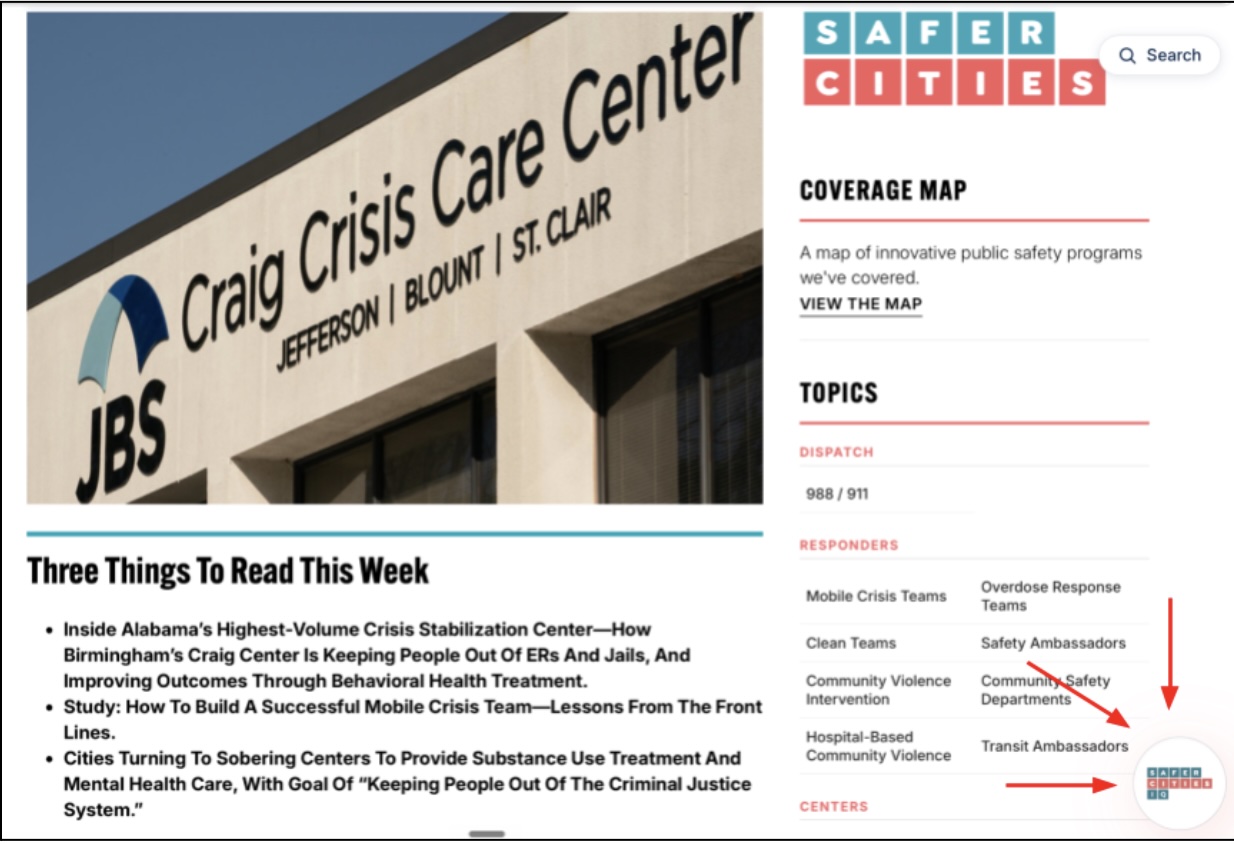
1. Go to the Safer Cities website and navigate to the “Safer Cities IQ” logo in the bottom right corner (where the red arrows are pointing):
2. Ask the platform anything you’d like to know about any of the topics we cover, including mobile crisis teams, mental health dispatch, overdose response, clean teams, safety ambassadors, transit ambassadors, community violence intervention, hospital-based violence intervention, community safety departments, crisis stabilization, sobering centers, and trauma recovery centers. Here are some sample searches to try yourself:
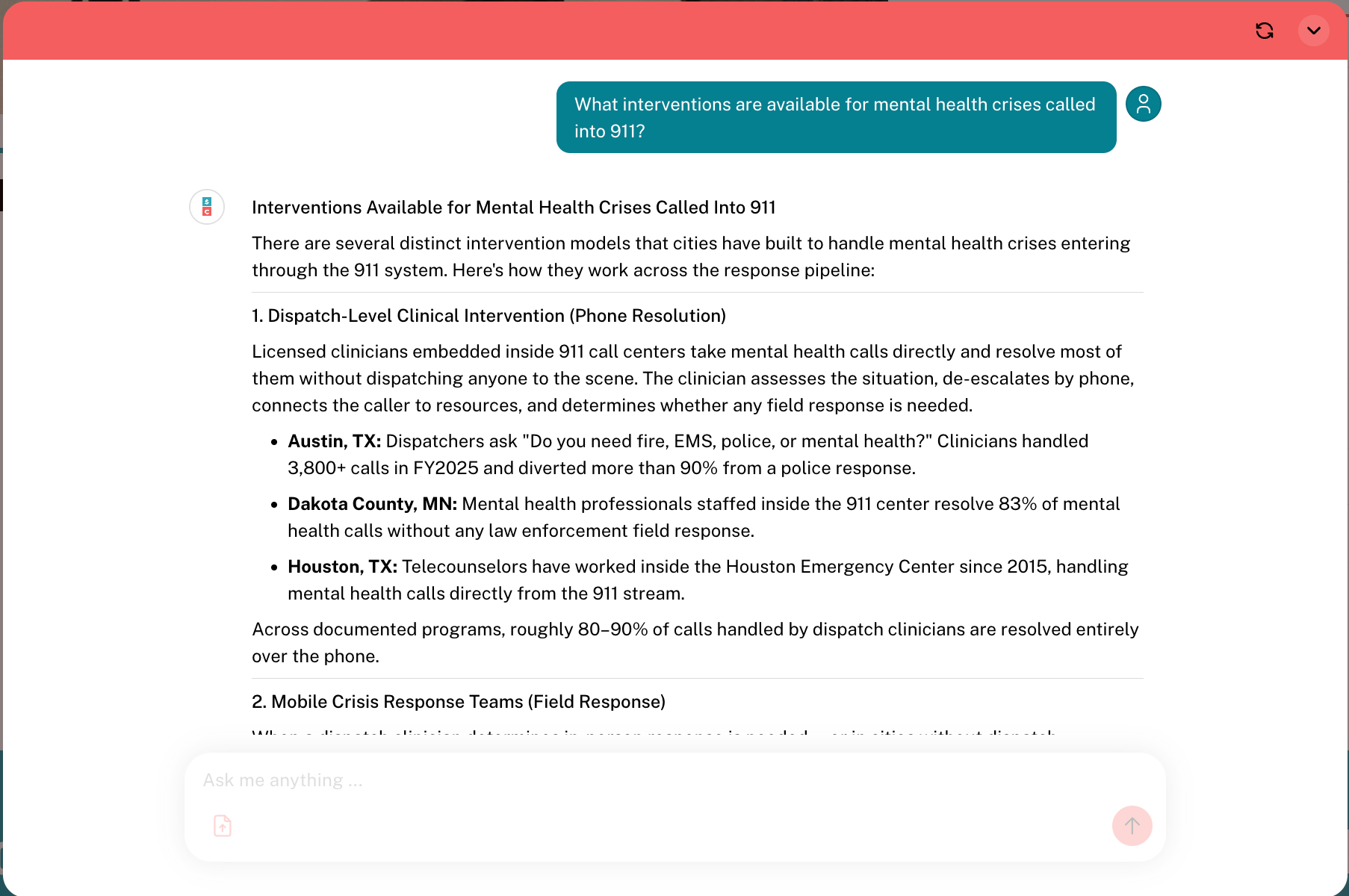
- What interventions are available for mental health crises called into 911?
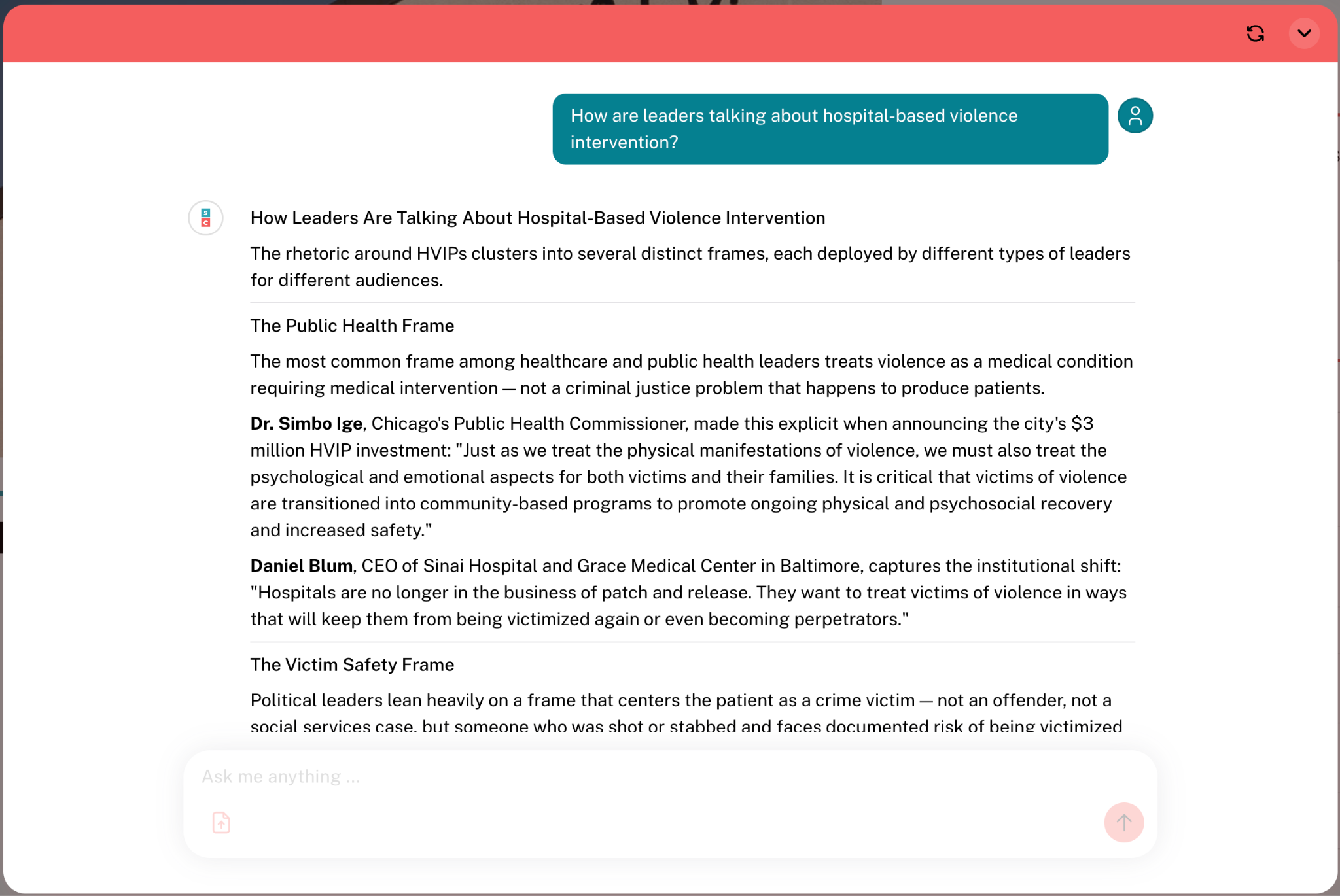
- How are leaders talking about hospital-based violence intervention?
- Why might a city open a sobering center?
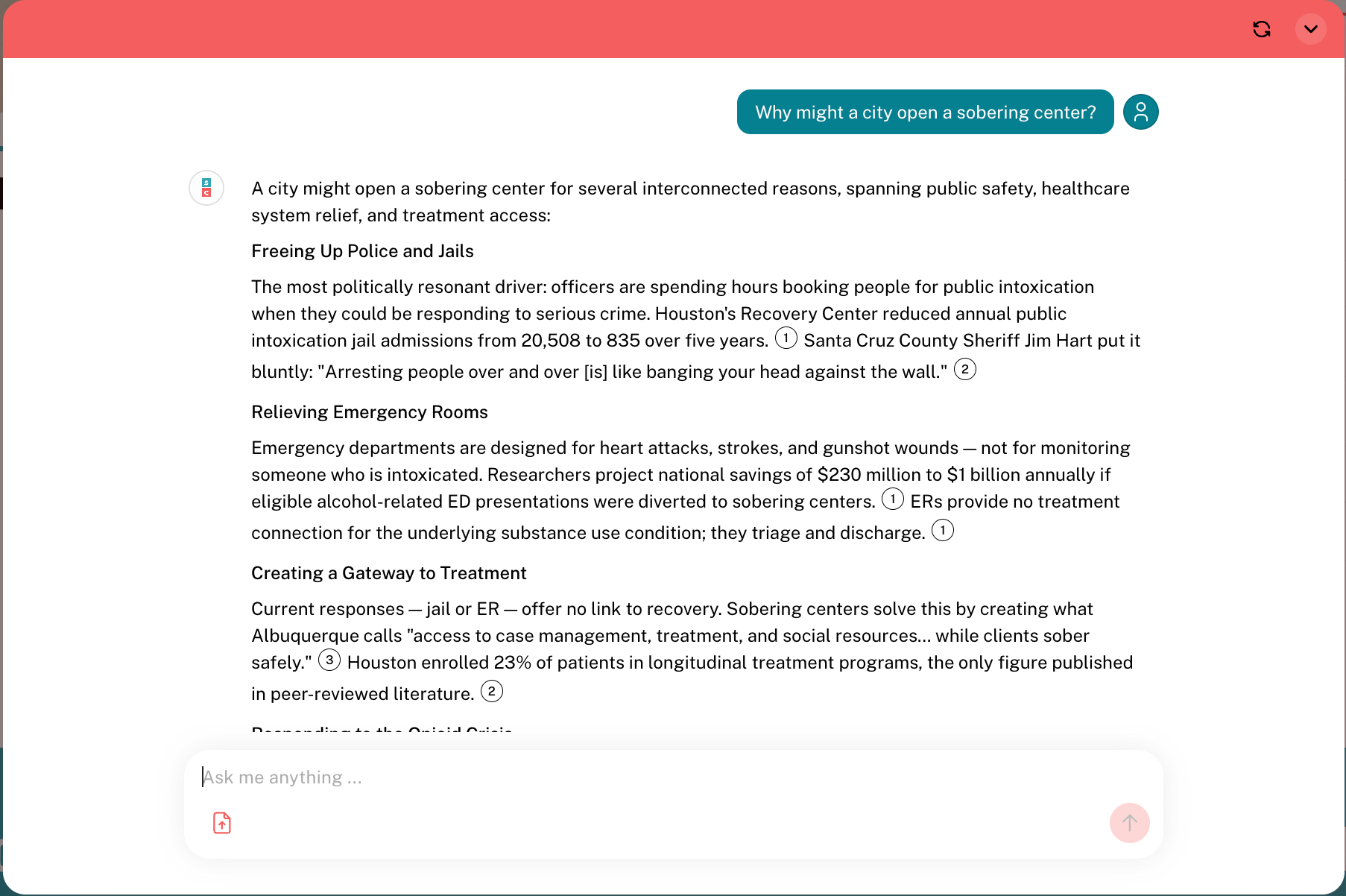
3. To dive deeper, readers can click into topic-specific wikis: These are sourced, organized, and regularly updated knowledge bases that bring together our reporting, relevant research, program examples, and other materials in one place.
Each wiki provides in-depth answers to 12 commonly-asked questions, complete with footnotes, program profiles, and related Safer Cities coverage.
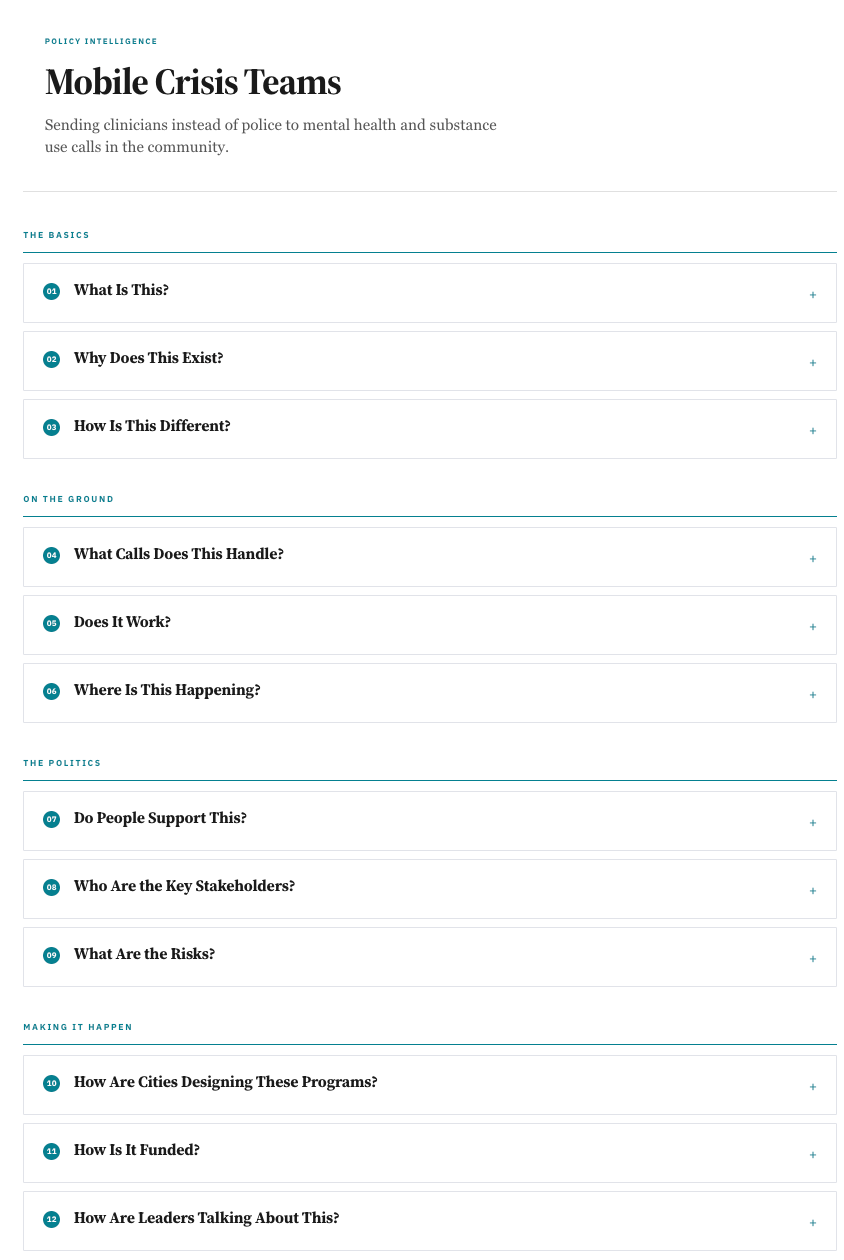
Please try out the Safer Cities IQ platform and let us know what you think! Please also let us know any suggestions you have for how to improve it and make it more useful—email us at: matt@safercitiesresearch.com.