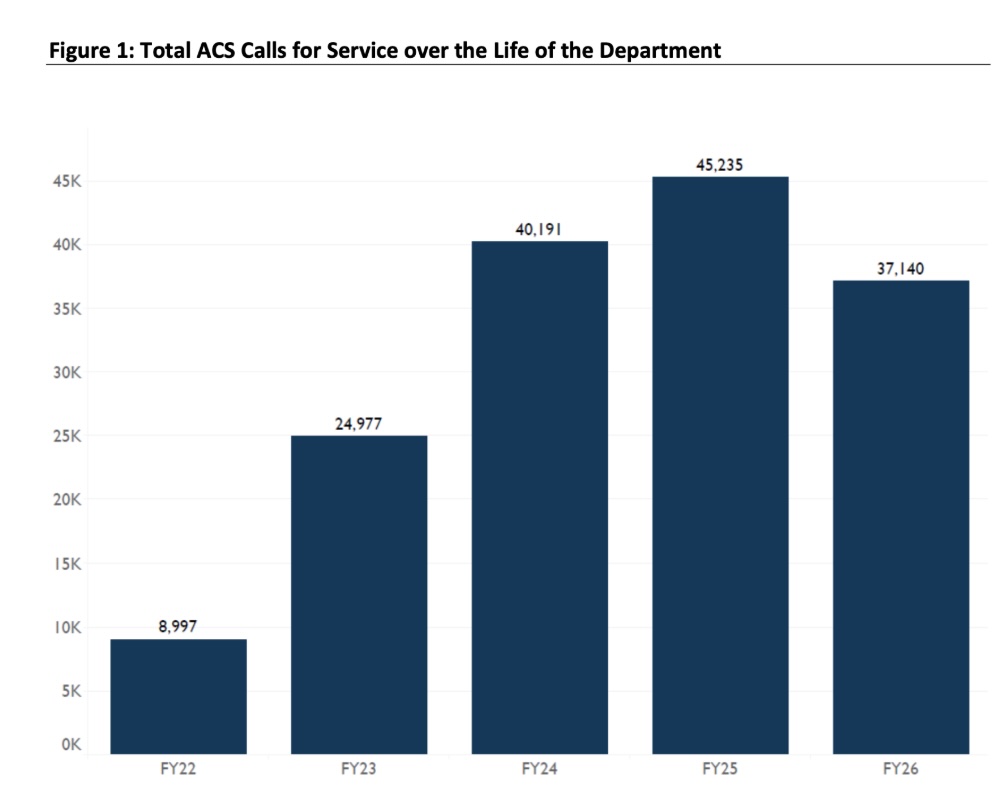
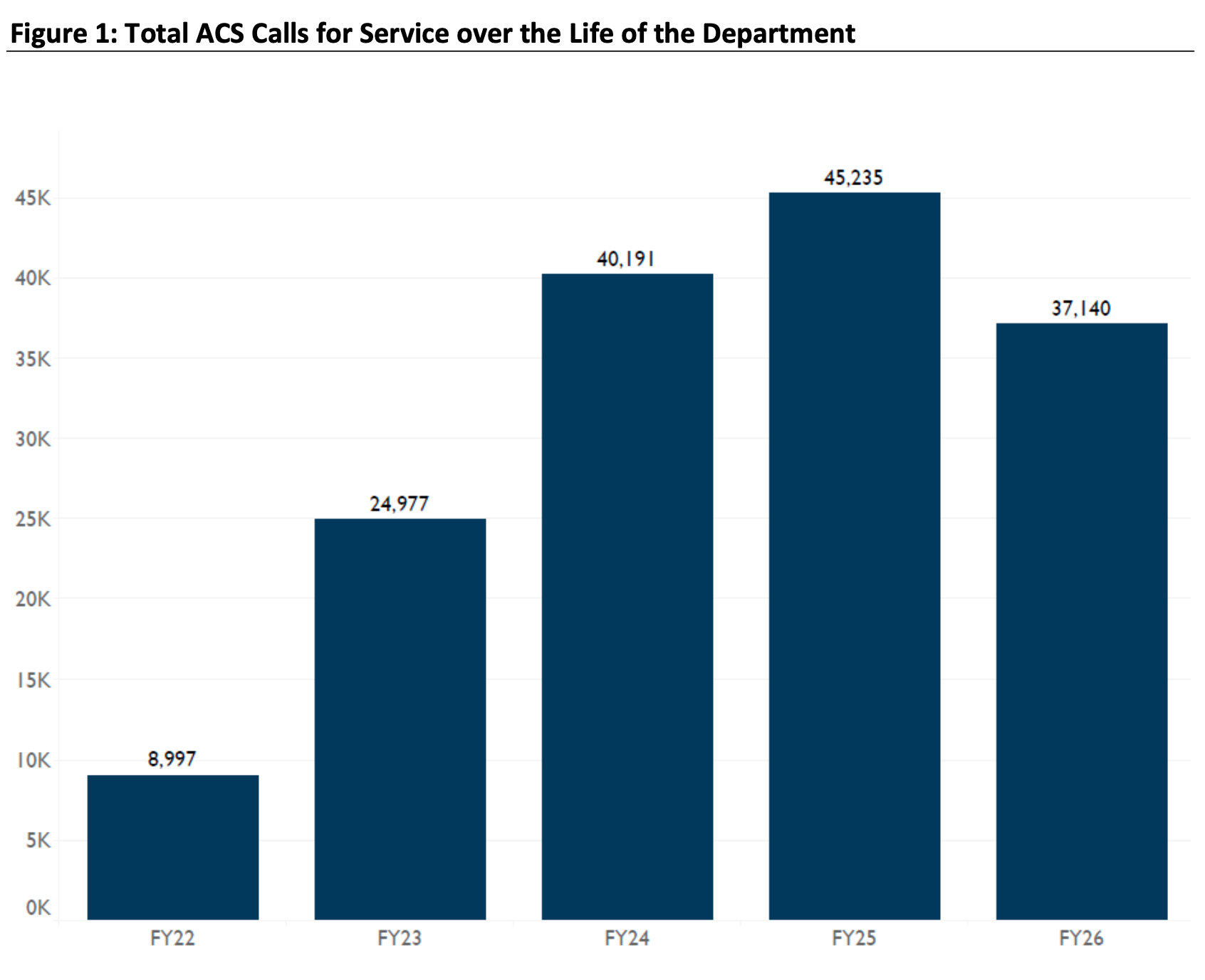
The City of Albuquerque’s much-lauded Community Safety Department has released its latest data, marking a significant milestone: the nation’s first community safety department has now responded to 156,540 calls for service.
The city reported that the Community Safety Department “has continued demonstrating growth and increasing capacity… [responding to] calls primarily focusing on mental health, homelessness, and addiction that do not require a police response,” and that through April of the city’s current fiscal year, the unit has “responded to 37,140 calls for service… a 12.3% increase” compared to the same time last year and is “projected to respond to almost 49,520 calls for service” by the end of the fiscal year—the largest number of calls the unit has ever fielded in a single fiscal year. Here’s a look at the city’s data, to date:
Almost five years ago, Albuquerque—under Mayor Tim Keller’s leadership—launched the country’s first community safety department. The program houses the city’s civilian responder teams and is what local leaders call “the third branch of public safety,” co-equal with the police department and fire department. Now, Albuquerque’s Community Safety Department has become a national model for other cities and counties looking to community safety departments to help modernize their public safety infrastructure, with its own headquarters, sub-stations similar to a police department to decrease response time, and its own responder training academy—which “expand [its] capacity to respond to [] 911 and 311 calls,” just graduated its second responder cohort to staff its teams, last month.
The city’s full report is worth your time, but here are some of the other topline trends from ACS:
- ACS responders freed up more than “31,000 public safety hours… for police and fire to focus on high-priority emergencies [in 2025]… by handling non-violent, behavioral health and community service calls, ACS continues to strengthen coordinated public safety efforts…”
- ACS responders are “self-initiating [calls for service] less often due to the high volume of both 911 and 311 calls for which the ACS has a dedicated team of responders assigned to in order to respond to as quickly as possible…. the team is continuing to field thousands of 911 calls.”
- ACS responders “transported 4,311 individuals in crisis to essential services in 2025 a 30% increase from the previous year… transports connected residents to medical care, behavioral health support, substance use treatment, and shelter…”
Albuquerque Deputy Chief of Police Luke Languit, a champion of the Community Safety Department, spoke at a press conference last year and explained why the Albuquerque Police Department officers so deeply value the Community Safety Department:
“Before we had this third branch of public safety these calls for service would have gone to police and fire… the majority of the calls would have gone to [Albuquerque Police Department]. These are situations where yourselves or your neighbors or our friends and family—they’re having an emergency and they need help, so it’s great to have this department that is staffed with the right individuals—the right responders—that have the training to deal with individuals that may be going through a behavioral crisis where there is no crime present. So to have responders that are equipped to properly come to these situations and provide those resources makes it so successful.
I can tell you… the Albuquerque police officers that are out here in our community, they’re now able to focus more time on those felony crimes … and we’re able to bring down our crime rates because we have this third branch of Public Safety taking those calls for service for us. For all the ACS responders out there, on behalf of the Albuquerque Police Department—your work is so much appreciated and it does not go unnoticed, thank you.”