1. Study: Embedding Mental Health Clinicians In 911 Centers Reduces Police Response To Some Calls, Frees Up Hundreds Of Police Officer Hours. A new preprint study by researchers at the University of Chicago examines whether embedding a crisis line clinician inside a 911 call center can safely divert mental health and suicide-related calls away from police. Using a quasi-experimental synthetic control analysis, the researchers analyzed 911 call data from Mesa, Arizona and compared it to 27 similar cities to isolate the impact of embedding a counselor in the emergency communications center. The model enabled 911 calls to be transferred directly to a mental health counselor. The researchers find that embedding a clinician “was associated with [] fewer police responses to suicide calls” and conclude that “emergency communication centers should consider embedding crisis line staff to divert calls from police.” The full study is worth your time, but here are some toplines:
- Embedding Clinicians Reduced Police Responses To Suicide Calls. The study finds that “Mesa’s suicide call rate was lower than synthetic Mesa’s by 22.27–47.96 calls per quarter per 100,000 people”… with results showing the differences were “greater than all placebo estimates” and “greater than all but one… or two placebo sites” across multiple quarters, suggesting the reduction is linked to embedding clinicians in the 911 system.
- Fewer Dispatches Translate Into Hundreds Of Police Hours Saved. The reduction in calls produced measurable operational benefits, as “the lower suicide call rate translated to an estimated 228.1–490.6 police hours [saved] per quarter in Mesa,” with officers otherwise spending significant time on these calls. The study notes this reduction “shows a potential benefit… for law enforcement agencies (through reduced labor associated with mental health crises).”
- Embedded Clinicians Improve Real-Time Call Routing And Build Trust. Researchers found the embedded role directly improved dispatch decision-making, noting “the crisis line specialist assisted with translating [emergency call center] call routing policies into actual calls” and “learning the [emergency call center]’s culture, policies, procedures, practices, and norms likely built… trust.” Further, researchers wrote that embedding clinicians “may facilitate interdisciplinary trust that enables call routing to crisis lines.”
Spotlight On Cities Embedding Mental Health Experts Into 911 Call Centers:
- Allegany County, Maryland “Launches Integrated Mental Health Crisis Response System.” The Cumberland Times-News reports on the launch of “an integrated mental health crisis response system, providing a direct link between 911 emergency services and the 988 Suicide & Crisis Lifeline”—a first for the county which now joins “a growing number of Maryland jurisdictions that have already integrated 911 and 988 services.” The integration in Allegany already started this month and “allows 911 dispatchers to route specific behavioral health calls straight to trained [mental health] crisis responders… ensuring that residents in mental or behavioral health distress receive immediate specialized clinical support,” while “helping reduce emergency room waiting times and minimizing unnecessary police involvement.” The mental health professionals can then provide support over the phone and also dispatch the county’s mobile crisis response team, composed of “clinicians and individuals with lived experience,” who operate as “first responders for residents experiencing a behavioral health crisis.”
- In Raleigh, North Carolina, “Mental Health Clinicians Are Now Embedded In Raleigh’s 911 Center.” For Axios, Mary Helen Moore reports that Raleigh has launched its pilot where “mental health clinicians are now embedded in Raleigh’s 911 center.” Here’s how the new pilot works: “A 911 call-taker who determines a mental health crisis is underway (and there’s no weapon present) will transfer the call to one of those embedded clinicians,” who will then handle the call, resolve the crisis over the phone if possible, or, when needed, dispatch a mobile crisis responder team. Dominick Nutter, the city’s emergency communications director, explained to Axios that “diverting crisis calls frees up [police and fire] to handle other emergencies,” and also provides people in mental health crises with a more appropriate response.
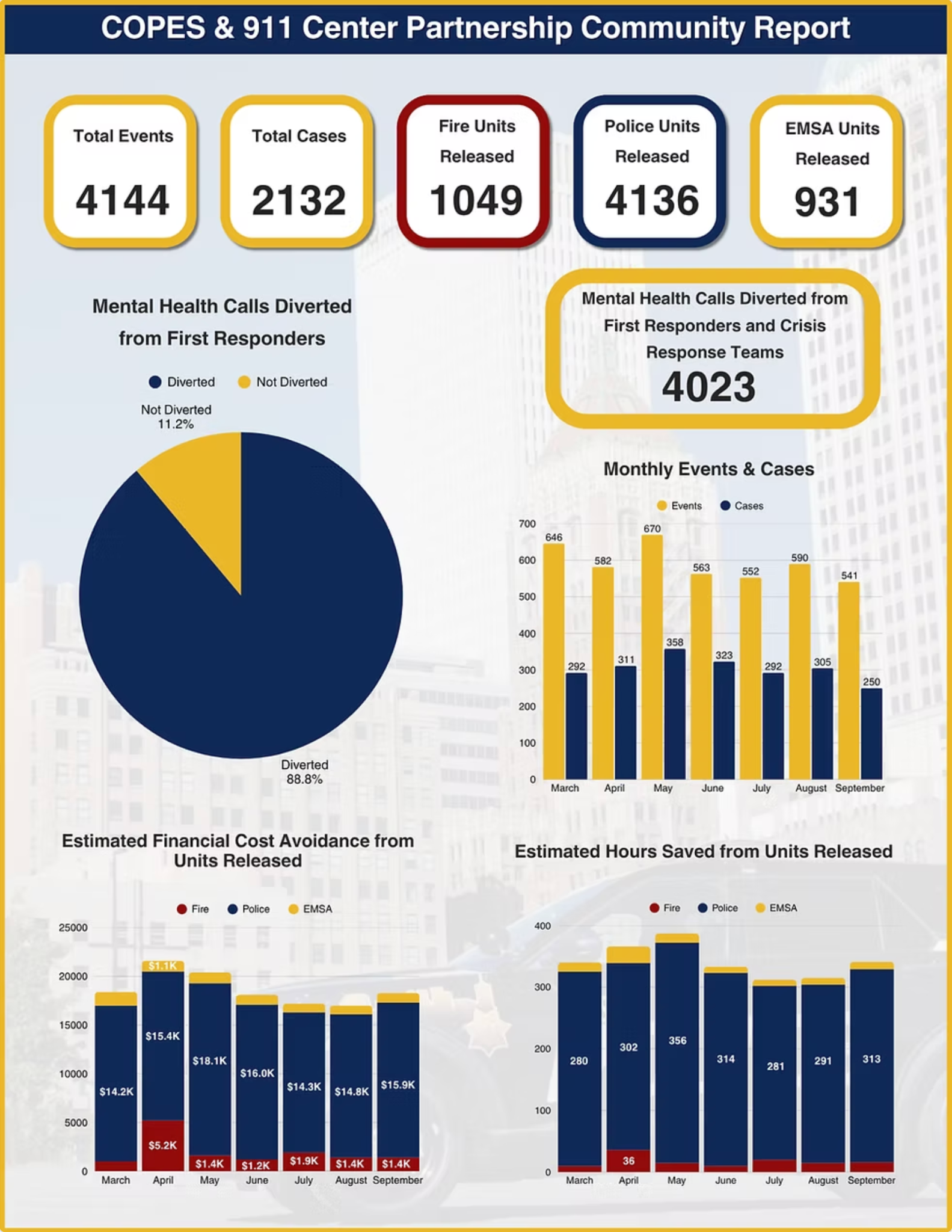
- In Tulsa, Oklahoma, “Mental Health Experts Started Taking Calls At [The] 911 Center. It’s Saving Taxpayers Money.” For The Tulsa Flyer, Joe Tomlinson reports on the most recent data from the city on Tulsa’s year-long effort to embed “mental health experts [] placed at the 911 center around the clock, freeing up police to prioritize public safety calls and saving taxpayers money in the process.” Since launching last March, the clinician-embedded team handling the mental health-related calls “has saved almost $109,000 for the police department, about $13,000 for the fire department and more than $3,000 for EMSA… [and] saved more than 2,000 dispatch hours for police, fire and EMSA units.” Andre Baul, an officer with the Tulsa Police Department, explained to the paper that the clinician “team has provided relief for officers… It helps the public in a way that is different than just seeing two cops show up at their door.” Here’s an infographic that illustrates some of the cost and time savings for the city, via the Tulsa Flyer:
2. “Should Gun Violence Intervention Efforts Start Earlier? These Researchers Think So.” For the Milwaukee Neighborhood News Service, Devin Blake reports on new research reinforcing what violence interrupters have long seen firsthand: shootings are often preceded by clear warning signs and escalation—and intervening sooner could save more lives. The article highlights a critical insight—there is a far larger population than previously understood who report seriously thinking about harming others, but who, for a range of reasons, never act on those thoughts. That gap between ideation and action is exactly where community violence intervention efforts can make a difference.
That reporting draws on a startling new study from researchers at the University of Michigan Medical School, published in JAMA Network Open, which uses a national survey of 7,034 U.S. adults to examine the prevalence of thoughts about shooting others. The researchers identified a sizable population experiencing these thoughts—often without acting—highlighting a clear opportunity for intervention. As they conclude, this group “constitute[s] a poorly understood risk group who should be a focus for gun violence prevention efforts.” Here’s what researchers found:
- Millions Experience Violent Thoughts: The study finds that “3.3% of respondents seriously thought about shooting another person in the past 12 months… [that is] more than 8.5 million US residents” while “the lifetime prevalence was 7.3%… [that equates to] more than 19 million people.”
- Clear Points Of Intervention Exist Before Violence Occurs: Researchers identify multiple off-ramps before violence, noting that “1.5% of respondents… told another person they were thinking about shooting someone” and “0.5%… gave their gun to someone else for safekeeping during a crisis” while “1.5%… reported they would consider doing so in the future.”
- CVI Targets The Exact Moment Where Intervention Is Most Likely To Work: The study identifies a clear pre-violence intervention window which creates a real-time opportunity to step in before escalation, “a point of intervention” that aligns with CVI models that rely on trusted community members to de-escalate conflicts before they turn violent.
Momentum For CVI Teams Around The Country:
- In Detroit, Michigan “Record-Low Homicide Rates Show… CVI Works.” For The Michigan Chronicle, Ebony JJ Curry reports that Detroit closed 2025 with… [homicides] down 19 percent from [] 2024 and down 35 percent from [] 2023, continuing a multi-year decline,” and “one of the most consequential parts of the city’s briefing was… the city placing community violence intervention in the center of its public safety story.” City officials named seven CVI teams in operation around the city that have “produced reductions in homicides and non-fatal shootings that outpaced the reductions in areas without CVI coverage.”
- In San Bernardino, California, Hospital-Based CVI Program Expanding. Loma Linda University Hospital, which houses the region’s hospital-based violence intervention program, announced that the program is receiving a $4.7 million expansion to “provide new services to address unemployment and mental health, which are significant individual and societal risk factors for violent injury… including workforce readiness seminars with job interview coaching and job referral pathways, as well as counseling services and transportation or meal vouchers… [as well as] tattoo removal… a key part of workforce readiness and the only service of its kind in the Inland Empire.” The university said that the hospital-based program has “served over 1,500 patients over the last three years… helping patients and families of those who sustain a violent injury, such as injury from gunshots or stabbings, modify circumstances and address social needs that can help break the cycle of violence… [using] a multidisciplinary approach with [health professionals] specialized in violence intervention and prevention and trusted community-based partners to provide safety planning, services, and trauma-informed care to violently injured people.”
- In Chicago, Baltimore, And Fresno, CVI Programs Linked To Significant Reductions In Shootings And Homicides. A new report from the Center for American Progress highlights how city leaders are increasingly pointing to community violence intervention programs as a central driver of recent public safety gains. In Chicago, CVI programs have “been evaluated to show significant reductions in either shootings, homicides, or arrests for violent crime among participants,” while “areas that received the highest average quarterly investment in CVI and street outreach programs… experienced the largest public safety gains.” In Baltimore, researchers found that “the five longest operating sites of Baltimore’s Safe Streets program reduced homicides by an average of 32 percent during their first four years,” with city leadership emphasizing that these outcomes are “a testament to what is possible when we invest in… frontline violence interrupters.” And in Fresno, the CVI program “decrease[d] the rate of all gun-related crimes by 46 percent two years post-intervention,” with the mayor adding: “I know for a fact they’ve stopped shootings. I know that for a fact.”
3. Cities Expand Downtown Ambassador Programs To De-Escalate Issues, Support Outreach, And Free Up Police Resources
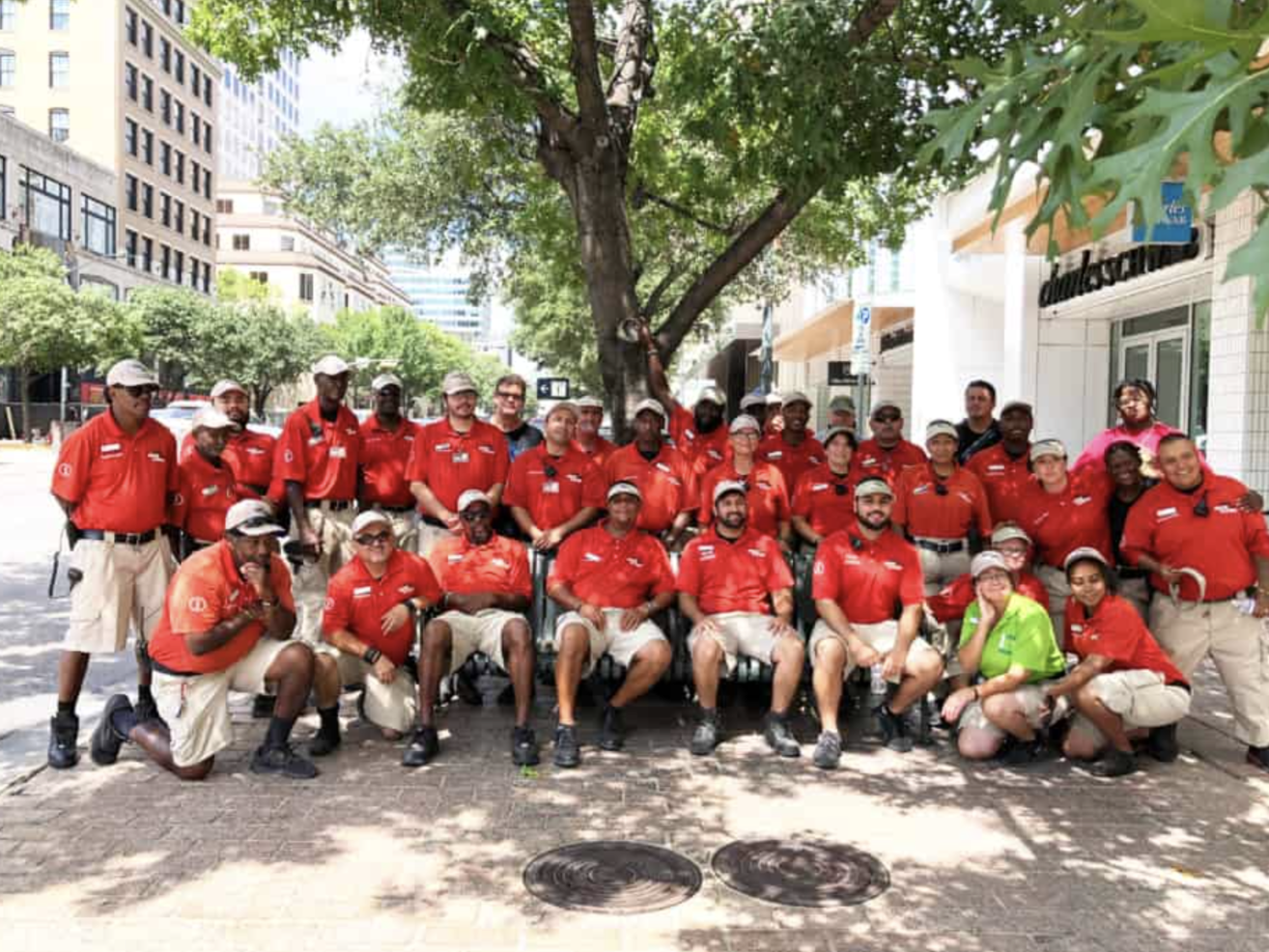
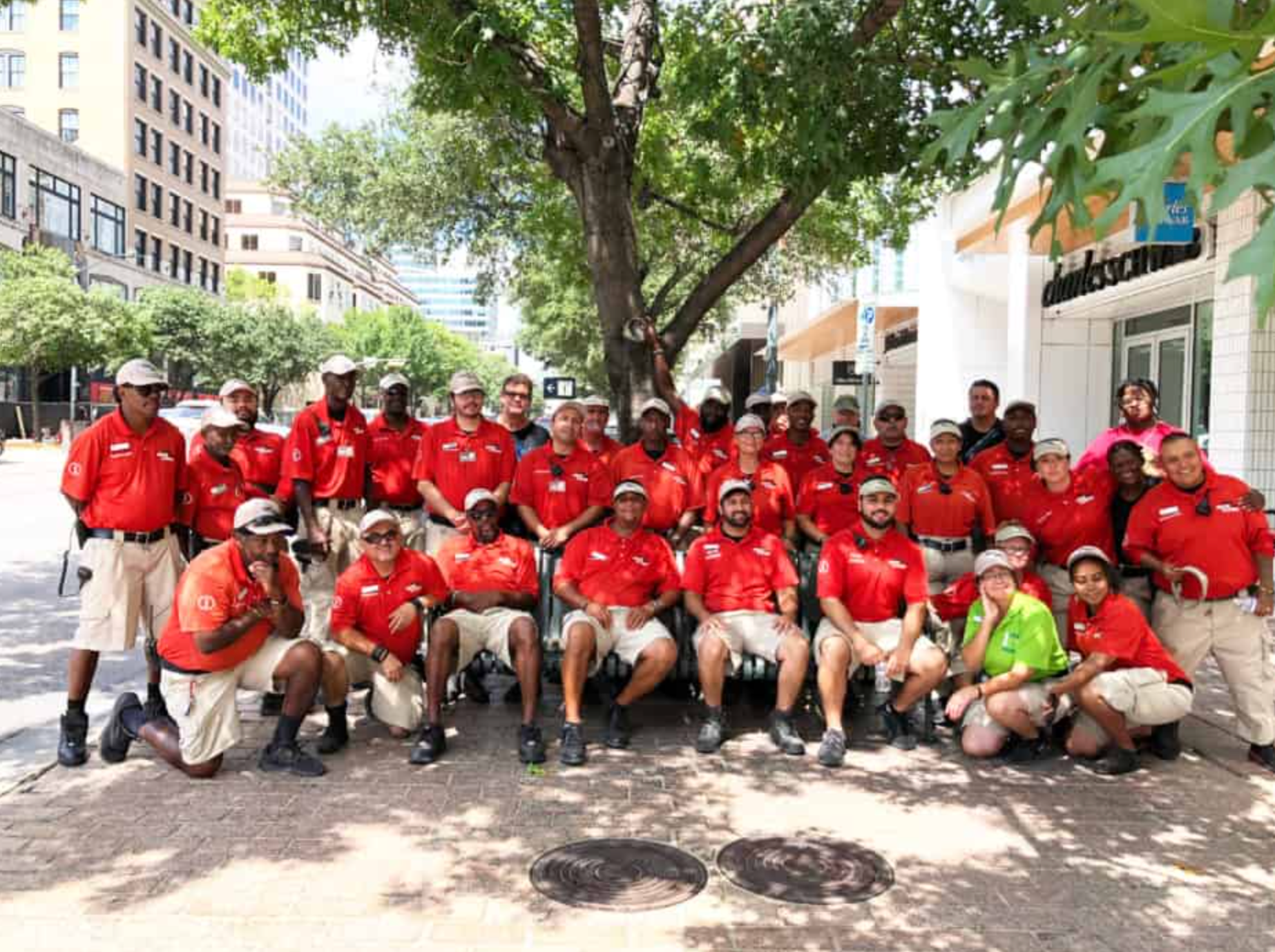
- In Austin, Texas, Downtown Ambassador Program “Keeps Austin Moving And Safe.” For the Austin Current, Andrea Ball reports on the Downtown Austin Alliance’s ambassador program, where roughly 80 staff serve as a highly visible presence, clad in bright red shirts, focused on “cleaning, hospitality and safety” across the city’s busiest corridors. The ambassador team is trained in de-escalation and relationship-building, and resolves most conflicts so that “most of the time they don’t need to call 911.” The program’s approach centers on proactive engagement, with ambassadors providing “that friendly smile, that safe presence” while helping connect people to services and maintaining order on the street.
- In Columbia, Missouri, City Leaders Approve Downtown Ambassador Program To “Help [Reduce Strain On] Law Enforcement” And Improve Safety. For ABC17 News, Olivia Hayes reports that the Columbia City Council unanimously approved a new Downtown Ambassador Program, where “uniformed and unarmed ambassadors… will help [reduce reliance on] law enforcement to patrol the downtown area and serve as additional eyes and ears for public safety concerns.” The ambassadors will focus on outreach and prevention, helping “connect [homeless] with appropriate service providers,” provide safety escorts, and document quality-of-life issues—while allowing police to “remain focused on higher-priority enforcement needs.”
- In Lafayette, Louisiana, Downtown Ambassadors Increasing Safety, Helping Maintain Clean, Welcoming Public Spaces. For The Advocate, Joanna Brown reports that the city’s ambassador team has become a steady presence downtown, focused on keeping streets clean while also serving as approachable helpers for residents and visitors. While ambassadors “pick[] up trash, bag [] leaves and clean [] graffiti,” their role extends beyond maintenance and into public safety service, providing an extra set of eyes and ears on the busy downtown streets, connecting people to vital services, coordinating with downtown business to keep their storefronts clean and orderly. City leaders say the program is filling critical gaps, delivering services “government possibly could not get to in a timely manner,” while also supporting outreach and improving overall quality of life in high-traffic areas.