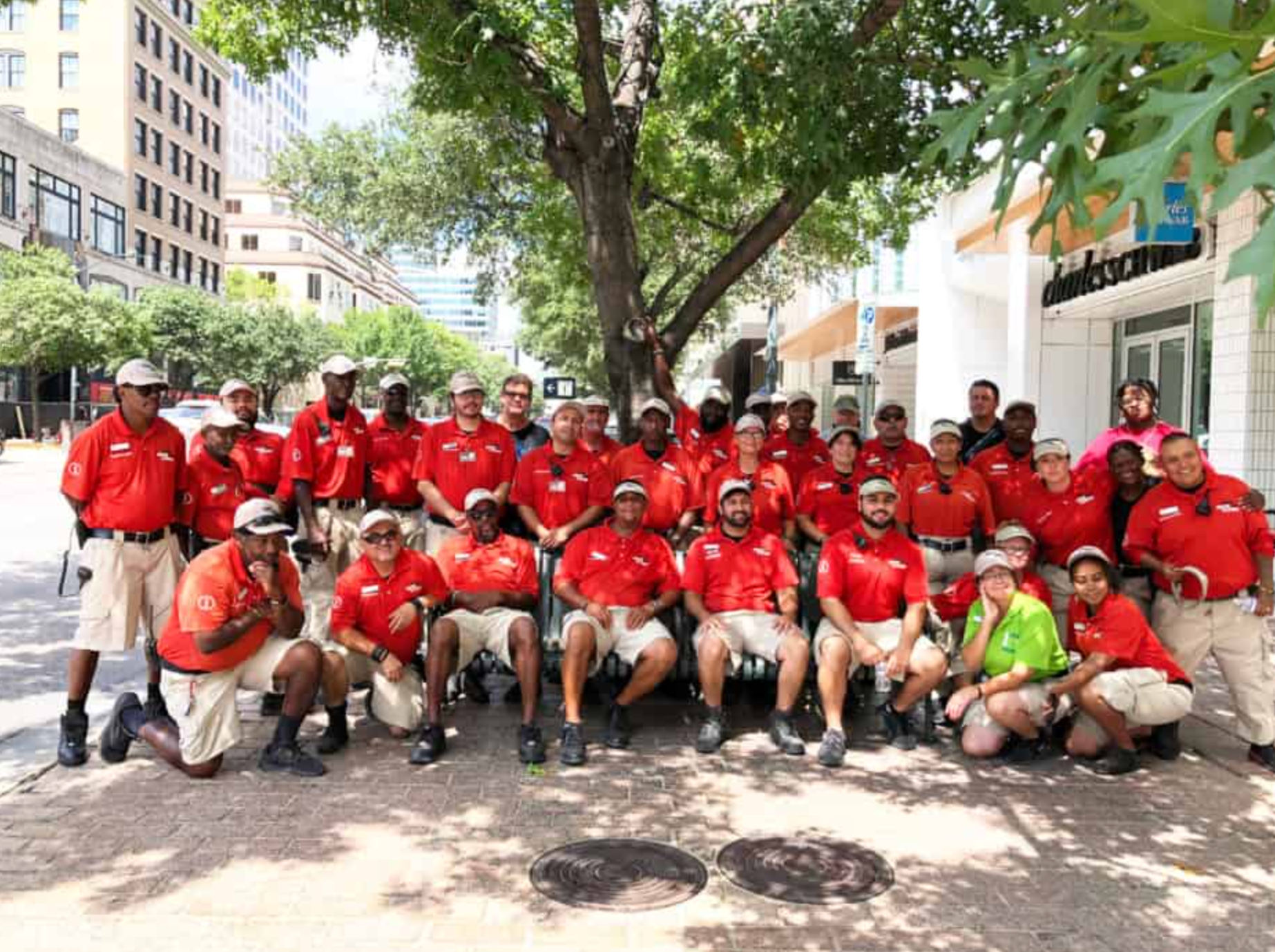
- In Austin, Texas, Downtown Ambassador Program “Keeps Austin Moving And Safe.” For the Austin Current, Andrea Ball reports on the Downtown Austin Alliance’s ambassador program, where roughly 80 staff serve as a highly visible presence, clad in bright red shirts, focused on “cleaning, hospitality and safety” across the city’s busiest corridors. The ambassador team is trained in de-escalation and relationship-building, and resolves most conflicts so that “most of the time they don’t need to call 911.” The program’s approach centers on proactive engagement, with ambassadors providing “that friendly smile, that safe presence” while helping connect people to services and maintaining order on the street.
- In Columbia, Missouri, City Leaders Approve Downtown Ambassador Program To “Help [Reduce Strain On] Law Enforcement” And Improve Safety. For ABC17 News, Olivia Hayes reports that the Columbia City Council unanimously approved a new Downtown Ambassador Program, where “uniformed and unarmed ambassadors… will help [reduce reliance on] law enforcement to patrol the downtown area and serve as additional eyes and ears for public safety concerns.” The ambassadors will focus on outreach and prevention, helping “connect [homeless] with appropriate service providers,” provide safety escorts, and document quality-of-life issues—while allowing police to “remain focused on higher-priority enforcement needs.”
- In Lafayette, Louisiana, Downtown Ambassadors Increasing Safety, Helping Maintain Clean, Welcoming Public Spaces. For The Advocate, Joanna Brown reports that the city’s ambassador team has become a steady presence downtown, focused on keeping streets clean while also serving as approachable helpers for residents and visitors. While ambassadors “pick[] up trash, bag [] leaves and clean [] graffiti,” their role extends beyond maintenance and into public safety service, providing an extra set of eyes and ears on the busy downtown streets, connecting people to vital services, coordinating with downtown business to keep their storefronts clean and orderly. City leaders say the program is filling critical gaps, delivering services “government possibly could not get to in a timely manner,” while also supporting outreach and improving overall quality of life in high-traffic areas.