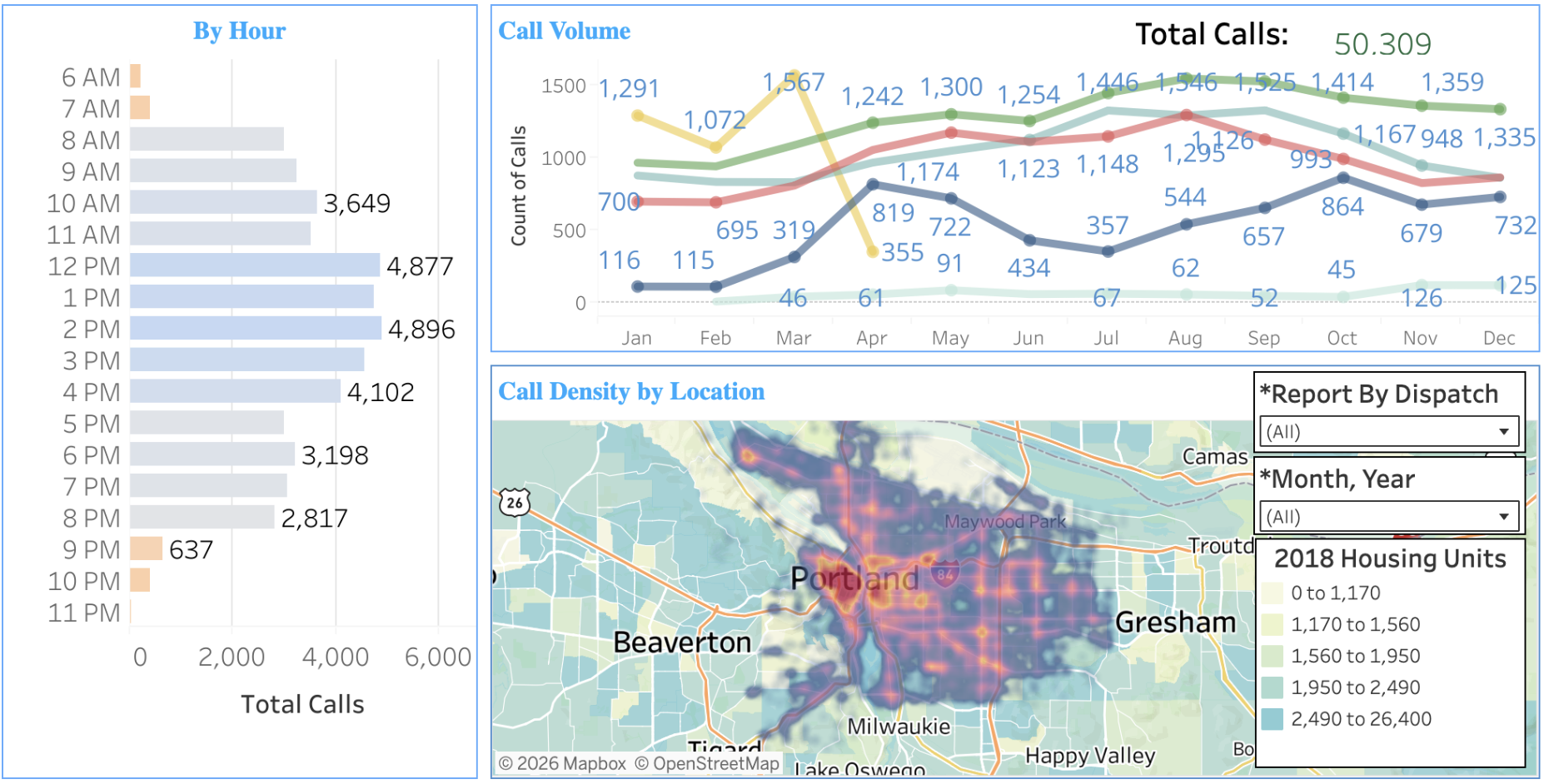
Portland’s lauded mobile crisis response team, which has recently expanded into a community safety-style department that is an “equal part of the city’s public safety system, alongside police and fire” has responded to more than 50,000 calls for service, the city’s team tracker reported. Here’s a look at the city’s data below (you can visit their dashboard and dive deeper here):
For KATU, Victor Park reports that the team is part of a “national shift” in how cities are responding to mental health and behavioral health emergencies, responding to “thousands of low-risk 911 calls [instead of] police.” And the demand for the team is growing—in 2022, the team “responded to just over 6,000 calls,” KATU noted, but that has grown each year. “Last year, that number skyrocketed” to more than 15,000. Since the team launched in 2021, it has responded to more than 50,000 calls and “only 82 required a police response and around 750 patients required a visit to the emergency room, meaning most crises are resolved on scene,” KATU reported.
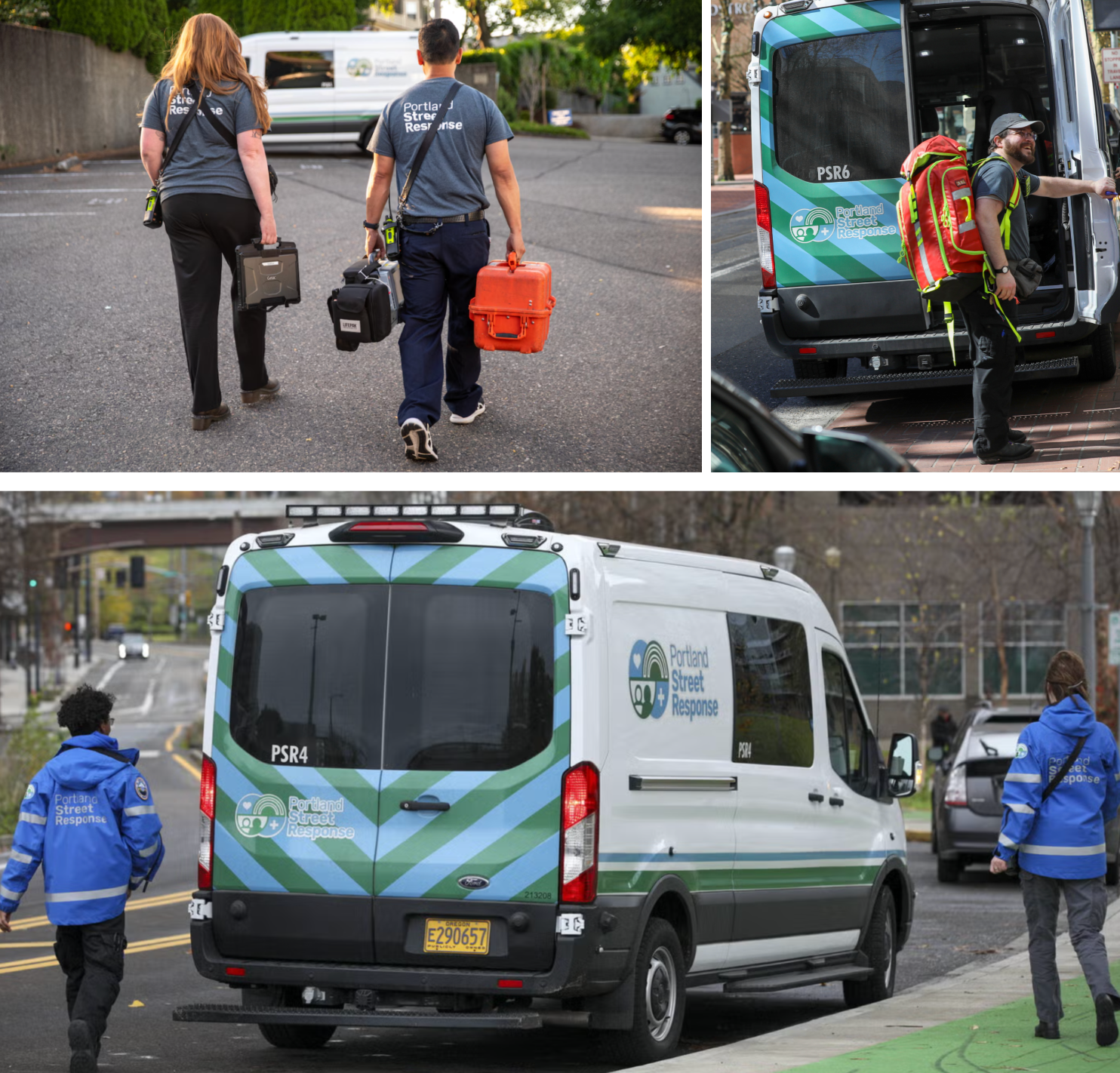
Portland Street Response just celebrated its fifth anniversary last month, with city leaders saying that the program “has grown into an essential pillar of Portland’s public safety system.” The team, composed of highly trained mental health professionals, “brings an emphasis on de-escalation, support, and follow-up… to resolve emergencies that don’t fit neatly into categories that were designed 100 years ago.”
Portland Mayor Keith Wilson, a champion of the team, said that PSR is “a vital part of our public safety system… PSR can help folks in a way that no other service provides…. they’re effective, reliable, and humane… and they free up our police officers and firefighters to respond to other calls.”
Last year, Wilson expanded the team with more “operating hours and added money for more PSR responders… and last summer, City Council adopted a resolution recognizing PSR as an equal branch of Portland’s first response system, authorized to respond to 911 calls independently, or alongside other first responders when appropriate.” Now with a budget of $10 million, the team responds to calls for service seven days a week and can “shuttle folks to resources like shelters, day centers, and drug treatment.” Its staff receives the full “designation as first responders, with all the associated [employment] benefits,” and the team “get direct dispatch through 911.”
The Portland Police Bureau explained to KATU the vital role that PSR plays in the public safety infrastructure of the city:
“PSR is a great public safety partner and we’re sincerely grateful for the work they do. Officers frequently encounter situations that a law enforcement solution, such as a criminal charge, is not the best. They recognize that. Every day I hear on the radio officers requesting PSR response to help with people who need it. In the course of our work, we frequently encounter those who have challenges related to their mental and physical health, addiction, housing, and so on… We know that uniformed police officers are incredibly important, but we are not the best responder for every situation. We’re glad when there is a more effective solution available so we can concentrate on what we do best.”
More Momentum For Mobile Crisis Teams Around The Country:
- In Nashville, Tennessee, Fire Department And Clinicians “Team Up For 24/7 Mental Health Calls. . . In Its First 100 Days, It’s Changed Lives… Freed Up Emergency Resources.” For News Channel 5, Aaron Cantrell reports that in its first 100 days, the REACH team—a 24/7 mobile crisis response team that “pairs mental health counselors with fire and EMS crews to assist people in crisis”—has already “changed lives, diverted ER visits and freed up emergency resources.” In the first 100 days in operation, “two-thirds of calls were diverted… into mental health treatment” allowing for emergency responder resources to be freed up for use in other emergencies instead. Prior to the REACH team launch, “there was no immediate resource for mental health calls,” but now, mental health experts respond and “can design crisis plans that connect people with outpatient care, help them stay at home or link them with a [crisis] stabilization unit.”
- Ann Arbor, Michigan, Advances SPROUT Crisis Response Team That Sends Mental Health Experts, Instead Of Police, To Some 911 Calls. The Michigan Daily reports on the City Council moving forward with the launch of a new mobile crisis response team that sends mental health experts “to respond to emergency calls relating to non-violent mental health crises… instead of sending police officers.” To get a jump on development of the program, the city is considering a partnership with Washtenaw County Community Mental Health program, an existing mental health care service that provides “behavioral health services for [] residents with intellectual or developmental disabilities, mental health concerns and substance use issues… [and] operates a 24/7 crisis hotline, and in 2024, they responded to 6,306 mental health crisis calls.”
- In Whatcom County, Washington, Youth-Focused Mobile Crisis Response Team Expands. For The Bellingham Herald, Hannah Edelman reports that the YGo mobile crisis team will expand its operations in the county and to nearby Skagit and Snohomish counties “seven days a week rather than just weekdays.” The team, “helps individuals under 20 and their families, providing services outside of school hours… [and] also work with kids who are struggling in school, being discharged from the hospital following a crisis, involved in the justice system or dealing with child protective services,” with the goal of “keeping them in their current environment rather than having them go to the emergency room or law enforcement, which don’t often address long-term needs or deal with the family unit as a whole.” What makes the team unique compared to other emergency responders in the region is they can “work with families for up to eight weeks … [and] often involve youth peers for support and, uniquely to the program, parent peers [who] bring their own lived experience of raising kids with behavioral health issues and navigating the system.”