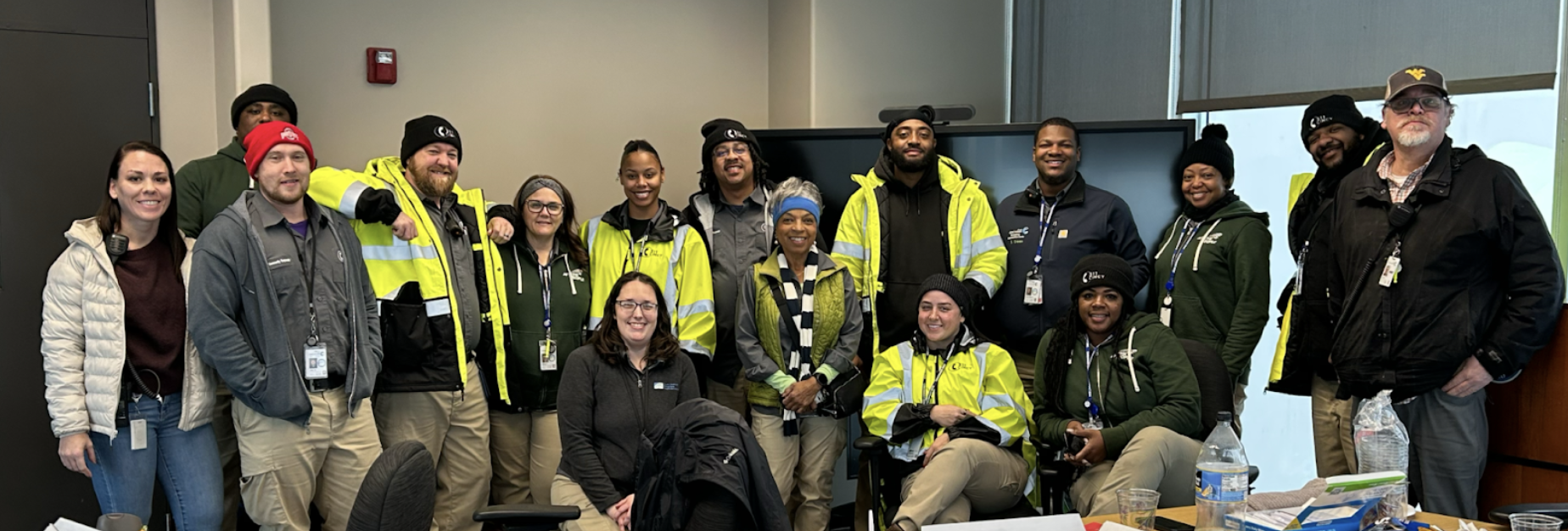
For Hoodline, Avery Bennett reports on the transit ambassador team’s first year anniversary and city leaders are crediting their “steady, friendly presence [for] cutting down on youth-related run-ins around buses and bus stops.” The team—trained in “de-escalation, first aid and mediation”—operates out of the city’s Emergency Communications Center and is deployed to “311 requests, neighborhood beautification work, and connects people experiencing homelessness with services.” The ambassador team also spends highly visible “scheduled blocks of time in public spaces, including transit centers, to build relationships and spot service needs before problems flare up.” The work is already paying off, as Hoodline reports, “violent, youth-related incidents have dropped sharply compared with the previous year, and juvenile arrests are down as more community programs have rolled out… [and] violent crime in and around the downtown transit hub was down roughly 50 percent over the same period.”

St. Paul, Minnesota Expanding Downtown Ambassadors Unit With Transit Ambassador Division.
For the Pioneer Press, Frederick Melo reports on the expansion of the successful downtown ambassador team, in operation since 2021, with a new partnership with Metro Transit “which [now] contracts the ambassadors to provide a second set of eyes at light rail stations.” The new team will launch with “roving ambassadors” on the transit system, as well as extra ambassadors, “providing services at high-traffic bus shelters and Bus Rapid Transit stations downtown, including stops along the Gold Line and B Line.” John Bandemar, a former chief of staff to the St. Paul Police Chief who now oversees the ambassador team, explained that the ambassador team, whether on the streets or on the transit system, are highly trained to play a vital role in a city’s public safety infrastructure, “when street ambassadors ask loiterers to stop smoking, lower their music or simply move along, internal studies show they gain compliance 87% of the time across downtown in general, and 67% at light rail platforms.”
