After Team Launched “Safety-Related 911 Calls Dropped 53%… [And] More Than 82% Of Commuters Reported Feeling Safer.” For The San Francisco Standard, George Kelly reports that city leaders are expanding the “street ambassador program credited with cutting the number of 911 calls in half” and will launch the expansion “at Powell Street, one of the city’s busiest transit hubs,” the city announced last week. The ambassador team, launched just last July at two busy BART stations resulted in “safety-related 911 calls having dropped by 53%, San Francisco Police Department response times have fallen 58%, and San Francisco Fire Department response times have decreased by 23%… [and] more than 82% of commuters reported feeling safer.” Mayor Daniel Lurie, a champion of the ambassador team, said “the expansion builds on measurable results [and is] central to the downtown recovery… crime is down 40% in Union Square and the Financial District, and San Francisco is leading major U.S. cities in return-to-office rates.”

Indianapolis, Indiana, Boosts Safety Ambassador Team In Preparation For Final Four Tournament.
WRTV News reports on the expanded public safety role that the city’s downtown safety ambassadors will play during the upcoming college basketball tournament, “working extended hours across the Mile Square, with a focus on areas like Gainbridge Fieldhouse and Monument Circle” during the tournament this month. The Washington Post’s Danielle Paquette profiled the successful downtown safety ambassador team, which launched in 2020, and whose members “act as the eyes and ears” of the city, “patrolling [downtown Indianapolis] … every weekday in red jackets emblazoned with the words ‘Safety Ambassador.’” The team members “carry no guns [and operate as] agents of deterrence, [with the city] betting that most people won’t break the law around someone dressed like a security guard.” Over the course of a shift, ambassador teams help residents, shoppers and visitors by “giving directions, answering questions and listening to concerns,” connecting people in the homeless community to housing resources, as well as working closely with downtown businesses to keep storefronts safe and orderly.
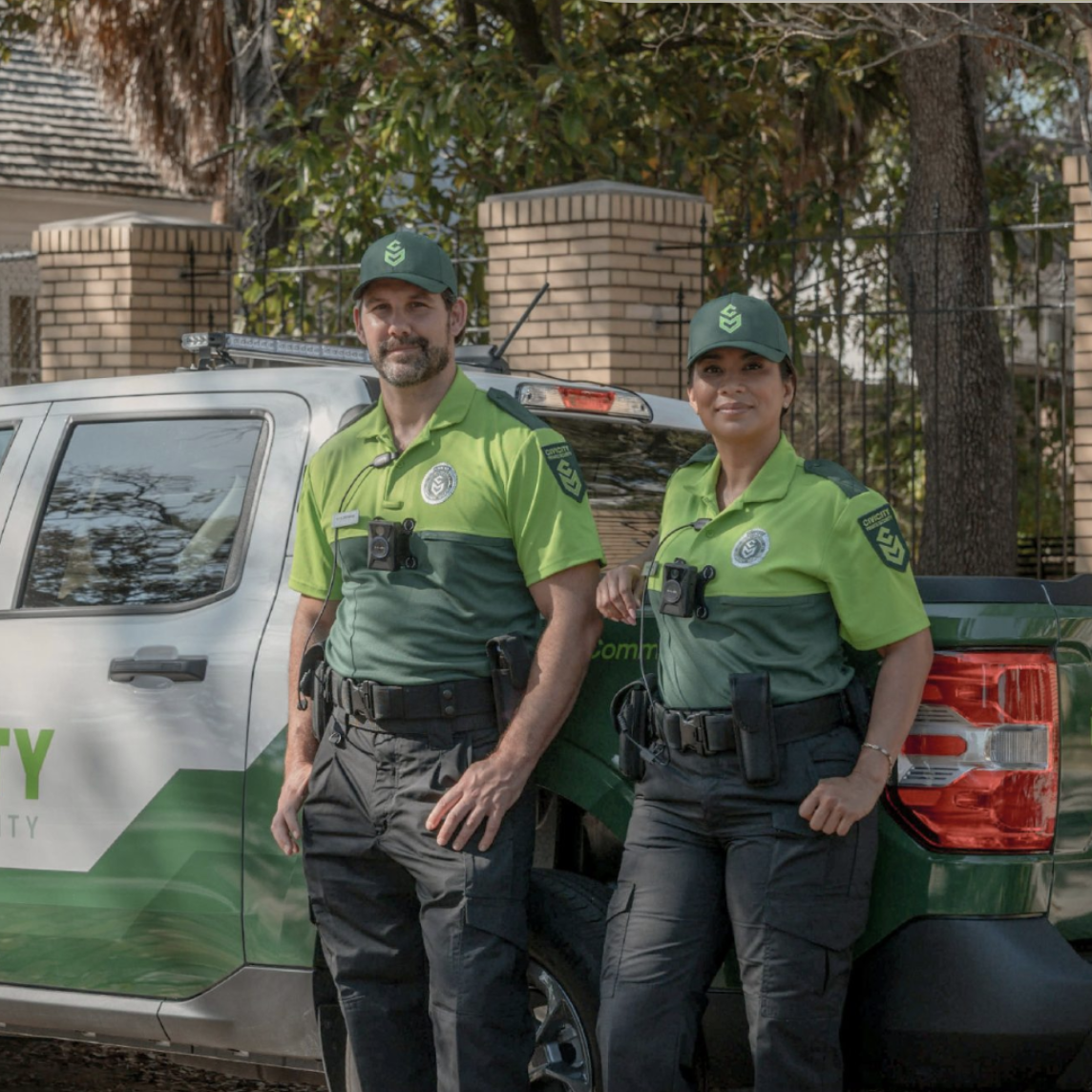
Related: In Louisville, Kentucky, Block-By-Block—the company that staffs safety ambassador teams for more than 150 cities around the country—has launched “a new public safety company designed to enhance safety and security in public areas” called Civicity, Louisville’s Lane Report detailed last week. The new company is built to provide advanced training to safety ambassador officers “specifically for public spaces such as downtowns, entertainment and improvement districts, commercial and retail environments, college and off campus areas and transit systems where perceptions of safety directly influence foot traffic, economic activity and quality of life… blending highly trained personnel, advanced technology and real-time data to create public spaces that feel well cared for and more welcoming.”
At the center of the company are the Community Response Officers, who can be deployed as “visible, uniformed professionals trained extensively in deescalation, trauma-informed engagement, situational awareness and customer service… supported by body-worn cameras, integrated camera systems and data driven reporting tools that promote transparency, accountability and informed decision making,” in cities across the country. They are trained specifically “to respond to the broader range of situations that can erode public confidence, such as disorderly conduct, behavioral health concerns and quality-of-life issues.”
To help develop the new model and team training, Civicity hired Steve Saunders, a retired captain of the Cincinnati Police Department with more than three decades of public safety experience, who explained to the news outlet: “In my years in law enforcement, I saw how quickly perceptions of safety can shape the trajectory of a neighborhood or downtown. Civicity focuses on the moments that matter most: being visible, engaging early and responding consistently so communities feel supported.”