In a new report published in the journal Psychiatric Services, researchers examine the rapid expansion of mobile crisis response systems across the country. Various investments have accelerated the expansion of the “third branch of public safety,” co-equal to police and fire, but the authors argue these efforts have been “hampered by limitations of the behavioral health workforce.” As crisis systems scale, workforce shortages persist, and new training academies are needed. The researchers propose that cities begin to build a new professional role—the “community behavioral health crisis responder”—grounded in “distinct values, competencies, and skills” to meet the growing demand. The full paper is worth reading, but here are some toplines:
- Expansion Is Outpacing Workforce Capacity: “Behavioral health workforce shortages continue to present a challenge” to meet demand. Thirty-four states report shortages in mobile crisis staffing, “particularly social workers and other licensed providers, peers, and bilingual staff.”
- Distinct Professional Role And Credentials: The authors argue that “a new professional role is needed that is rooted in unique competencies rather than attached to existing advanced academic credentials.” They urge states to “establish a [new] credential,” noting that “state behavioral health agencies as well as independent state and national credentialing agencies should establish and manage a credential” and that “some states are already developing their own certifications.”
- Developing Training Infrastructure: The report recommends strengthening “the role of community colleges in crisis response workforce development,” arguing they are “well positioned to prepare trainees for credentialing” and can serve “as a pipeline for the local crisis response workforce.” The authors also call for regional “centers of excellence” to provide “standards, training, and technical assistance focused on crisis response workforce development.”
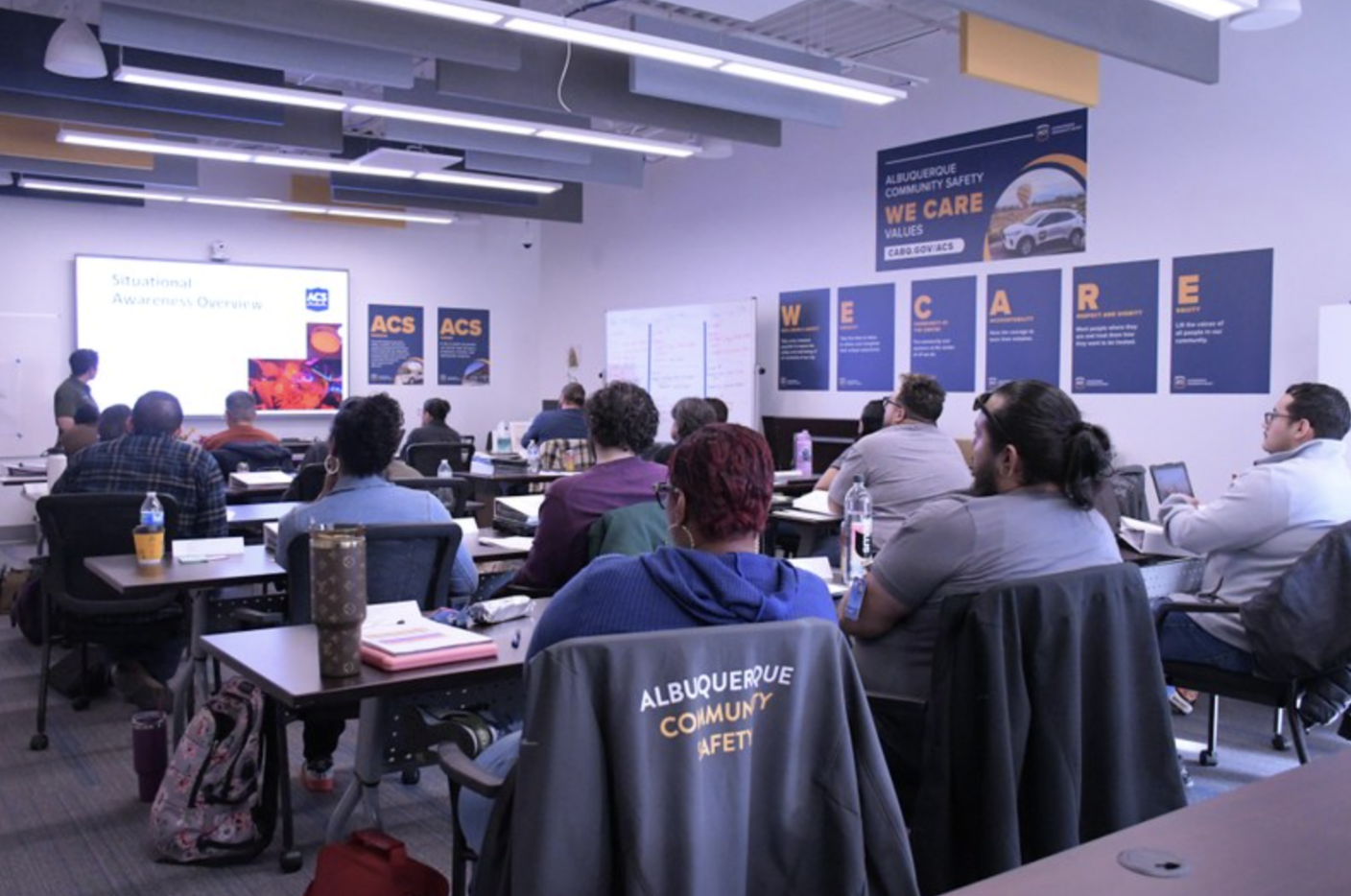
Related: Albuquerque Community Safety Department Has Its Own Academy Training The Next Gen Responder Workforce. The city announced its latest cohort of responder trainees at its academy last month, the department’s “12th academy class since ACS was established.” At the academy, trainees learn how to properly “address complex needs… including mental and behavioral health crises, homelessness, and substance use…. through comprehensive classroom instruction and hands-on training.” And new recruits are needed—the Community Safety Department has responded to a staggering 137,000 calls for service since its launch. ACS responders receive enhanced training through a partnership with Central New Mexico Community College, KRQE’s Scott Brown reports with a mixture of classroom learning, “hands-on” experience, and intensive “scenario–based” training.