- In Suffolk County, New York “Social Workers Will Be Embedded At [The] 911 Call Center To Help Operators With Mental Health-Related Calls For The First Time.” For Newsday, Lisa Colangelo reports that the new plan means that when someone calls 911 “in a mental health crisis, a social worker will take over the call and evaluate the situation” County Executive Edward P. Romaine explained to the newspaper that this effort “aims to get people services [and] free up officers if the situation does not warrant police intervention.” Ultimately, Romaine said, the new program “will make policing more effective, protect our police men and women that serve and … help people who have some kind of [mental health] difficulty.”
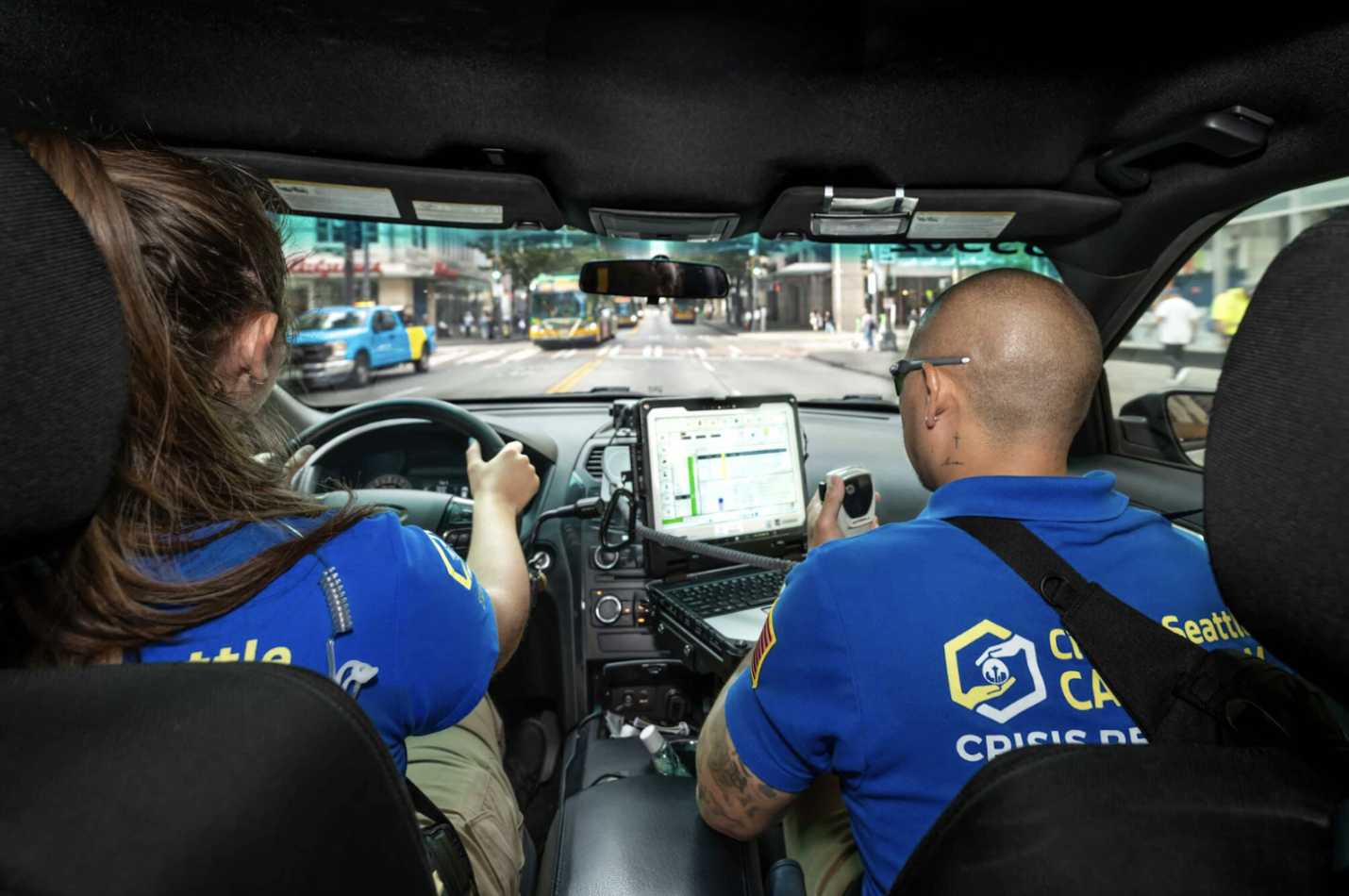
- In Seattle, 911 Call Center Is Merged With Mental Health Response Team. Last week, Mayor Bruce Harrell announced the city’s permanent shift to “combine Seattle’s 911 Center with the new Community Crisis Responder team” an “integrated model [that] pairs call-taking and dispatch with unarmed behavioral health responders, giving Seattle a new way to respond to non-violent crisis calls while preserving police and fire resources for where they are needed most.” The move means that the city is “closer to achieving the vision of three co-equal departments of first responders, and a Seattle 911 equipped to send the best first response to a call—the police and fire departments [for] physical safety and health provision; and the CARE department [for] mental and emotional health provision.”
- In Vermont, 911 “Now Connects Callers To 988 For Mental Health Support.” The Waterbury Roundabout reports on the state’s move, which began last month, to connect “Vermonters directly to trained mental health counselors under a new 911-to-988 protocol” rather than how it was previously handled, through dispatching “EMS and/or police.” The new protocol—developed under a partnership between state’s Department of Mental Health, Department of Public Safety, and Enhanced 911 Board—makes “it easy for 911 call-takers to transfer calls to the 988” mental health experts, who “can provide support, develop safety plans, and link callers to local resources or emergency services if needed” and allows for dispatchers to “match the right response to the person who needs it.”