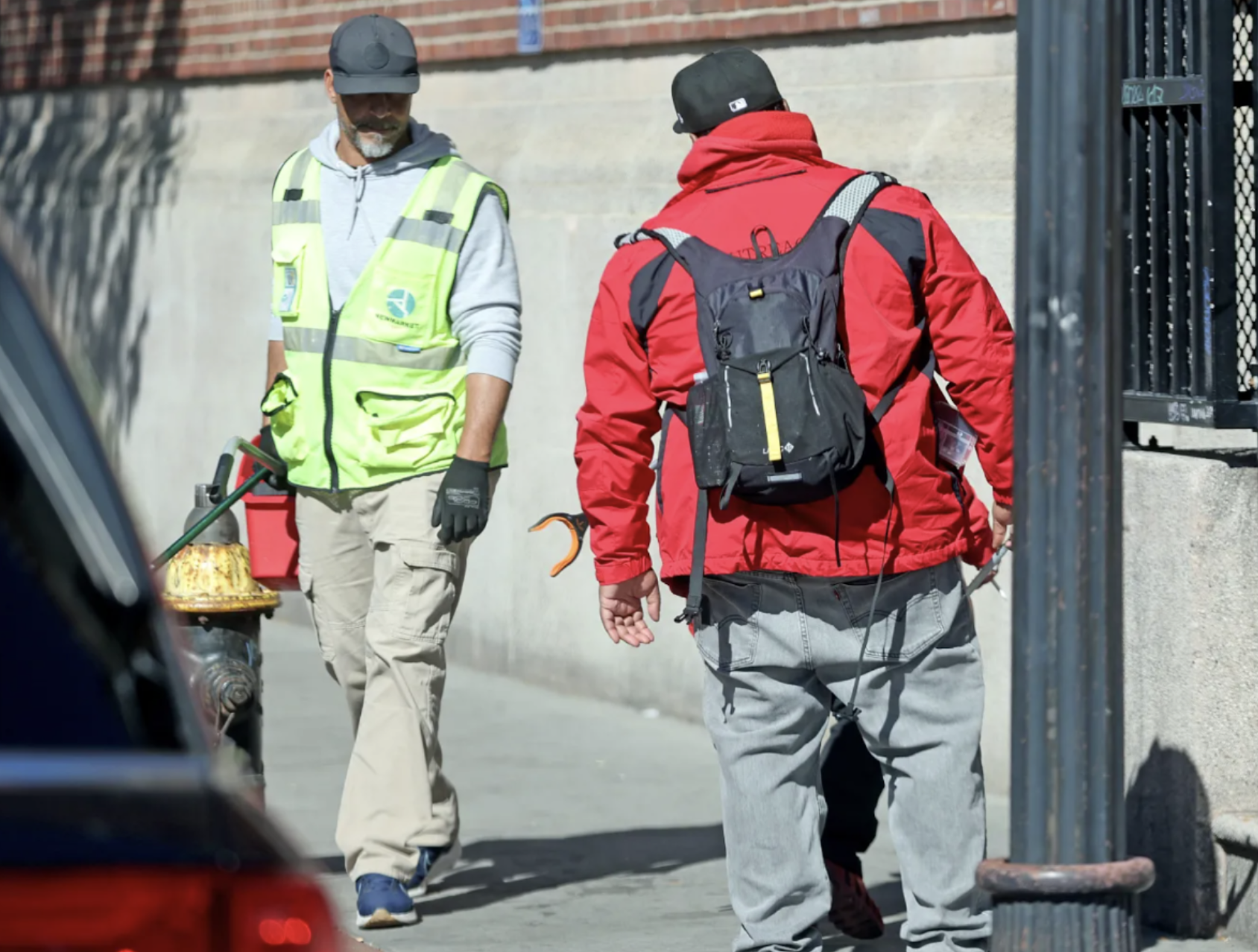
- Boston’s Red Jacket Team Walks The Beat And Sweeps Up Needles And Connects People To Addiction Treatment. For the Boston Herald, Joe Dwinell reports on Boston’s “Red Jackets,” a team of more than a dozen health experts who “work from 5 a.m. to midnight seven days a week to clean up and address all that comes with” the opioid overdose crisis, from reducing “risk of needle pricks … for businesses and homeowners” who live in the area and connecting people with substance use disorder to treatment.
For CBS News, Paul Burton reports that the city’s clean team who “stop at nothing to make sure neighborhoods are clear of needles,” pick up “1,000 used needles a day from Boston streets.” Boston City Councilor John FitzGerald, a champion of the clean team program, explained to the news station that “the city needs to take a more forceful approach when it comes to making all of Boston’s communities safer… ‘What we’re asking for is a baseline … where someone shouldn’t have to worry about going to the park and stepping on a needle.’”
- In Burlington, Vermont, The “Clean Up Crew [Collects] Trash And Littered Syringes.” For the Burlington Free Press, Sydney P. Hakes reports on the city’s new clean team, called “BTV Clean Up Crew,” which “has been collecting trash and littered syringes in Burlington” since earlier this summer and the effort is already showing results, with local leaders reporting “a decrease in the number of syringes found during clean-ups.” The team, “donning rubber gloves and lugging garbage bags … [and plastic jugs for needles],” patrol the streets—from “alleys and sidewalks…[to] parking lots, driveways, backyards of empty houses”—collecting “food wrappers, unidentifiable bits of plastic, torn rags and an abundance of cigarette butts… [as well as] syringes and other sharps.” Patrols often fill their garbage bags “so quickly that they have to be emptied into trash bins” downtown. The team will also leave “Narcan, bandages and sanitary wipes” in various parts of the city to help fight overdoses and the spread of disease, until people with substance use disorder can get into treatment.
- Springfield, Massachusetts “Expands Its Park Clean-Up Efforts To Address The Growing Issue Of Drug Paraphernalia Found In Local Parks.” For WWLP, Areta Odiah reports on a new team that “aims to remove dangerous items such as needles” in parks and playgrounds around the city to make sure that “children and families have a safe place to come play.” The city is also expanding the team through the creation of a new clean team coordinator to direct the team, MassLive reported. The new leader will “oversee policies and procedures to address discarded drug paraphernalia and coordinate the effort to ensure trained people collect needles… [as well as direct the] outreach team which works to help those who are homeless and addicted.” Thomas Ashe, director of parks, buildings and recreation management, explained to the newspaper that the clean-up crews are part of a jobs program for people incarcerated for low-level offenses to help them give back to the community, “along with making parks cleaner, the program helps the inmates develop better work skills… [and] the city has even hired some after they are released.”
- In Lacey City, Washington, The Rapid Response Team Tackles Needles, Graffiti—And Overdoses. For The Olympian, Rolf Boone reports on the Rapid Response Team, which just celebrated its first anniversary and is already improving safety and order around the city. The team collected “341 hypodermic needles and removed more than 12 tons of debris from public spaces… recovered 333 shopping carts and returned that many to area stores… 46 sites tagged with graffiti that were cleaned up.” Two members of the team were honored with special recognition for “reviving a man suspected of overdosing on drugs” in August.
Jamie Oakland, who oversees parks in the city, explained to the newspaper how important this team is to the city: “This community would look so different if this team did not exist, just the amount of graffiti that they mitigate on a monthly basis makes a tremendous difference in how our citizens perceive this community.”