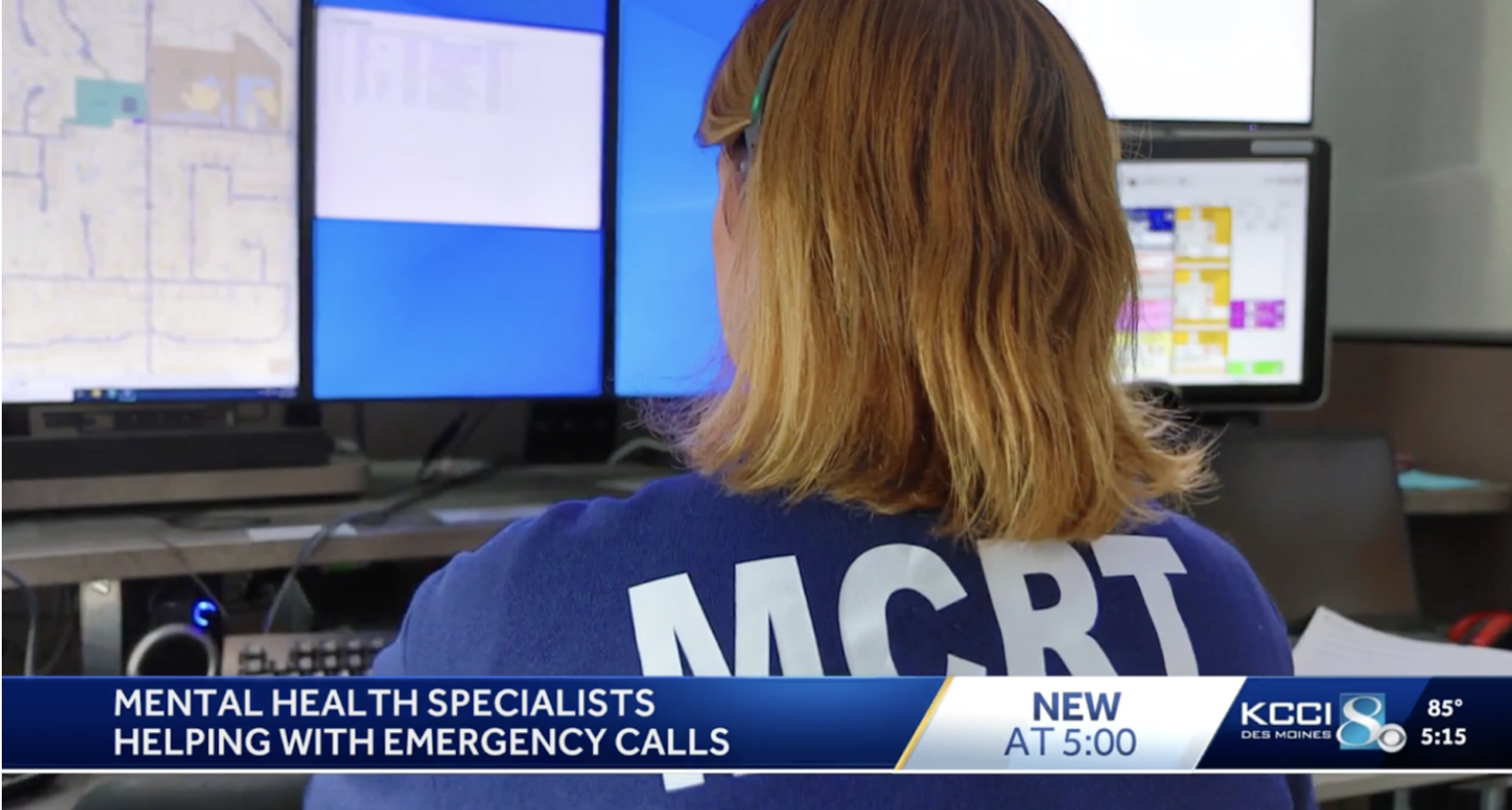
- Des Moines, Iowa “Embeds Mental Health Clinicians In 911 Dispatch Center To Aid Callers.” For KCCI Des Moines, Marcus McIntosh reports on the City of Des Moines now “embedding licensed mental health clinicians inside the 911 dispatch center — a rare approach used by only a handful of departments nationwide.” At the Des Moines 911 emergency call center, “when callers indicate they need mental health services, they are routed to a clinician in the dispatch center who begins the conversation immediately… they [can] determine what the risk is, as well as deciphering who is going to respond to that call.”
The city’s approach follows the model pioneered in Austin, Texas that Safer Cities has spotlighted—when you call 911 in Austin, a dispatcher will ask you: “Do you need fire, EMS, police”—or, the fourth option—“mental health.” Then, they determine the appropriate responder team, based on the needs of the caller. Des Moines police Sgt. Paul Parizek, a champion of the embedded clinicians in the city’s emergency call center, explained to the news station that “having clinicians in dispatch expands options for timely care while reducing unnecessary police presence… the clinicians can go to a house, they can talk to somebody, or they can talk to them on the phone — which is a huge piece — without having a police officer there.”
- Waco, Texas, “Integrates Behavioral Health Specialists Into The 911 Dispatch Center To Screen And Respond To Mental Health Calls.” For KWTX, Abbey Ferguson reports on the new program in Waco 911 emergency call centers that allows “dispatchers [to] transfer [mental health] calls to trained clinicians, shortening the amount of time it takes to serve those individuals and saving police resources and time for other emergencies.” Ashleigh Foreman, the program’s manager, explained to the news station that “911 is often a first go-to for those struggling with mental health, but dispatching police isn’t always the right answer…. ‘now that we are here in dispatch, it’s immediate. They call in, dispatchers assess the call, and if we are here and available, they are immediately able to talk to someone who can help calm them down or come out in person with them.” And as the Waco Tribune-Herald reported, the effort is not only providing a rapid and appropriate response to mental health crises, the effort is also already “saving Waco Police time and money… Waco Police officers spent an average of 11.5 hours on each mental health call, with the longest lasting 72 hours… last year, the average went down to 3.5 hours, and the longest was 20 hours.”
- Integrating Crisis Responders Into 911—A Roadmap for States: A new report published by The Council of State Governments Justice Center examines how states can integrate mobile crisis responder programs into local dispatch operations and found that mental health responder programs “are growing across the country as an effective mechanism for reducing client distress, providing timely support, and reducing the burden on police and hospitals…. but their ability to assist a person in crisis often begins with how integrated they are within local 911 and emergency dispatch operations.” The full report is worth reading but here are key takeaways for policymakers interested in this integration and how to make it successful:
- Include Dispatchers In The Development Process: “Call taker involvement in this process can help ensure calls are properly screened, identified, and relayed, and that dispatchers, who play a vital role in first response, have input on the protocols and procedures they will be using… dispatchers are often exposed to much of the same chaos and trauma that responders face in the field and have to make decisions just as quickly. Therefore, their buy-in is critical to making sure that community responders are directed to the right calls.”
- Build Statewide Workgroups: “including representatives from fire departments, emergency medical services, law enforcement, dispatch, 988, and labor unions—to discuss 911, 988, and how community responder teams can fit into call triage protocols so the community can reach them no matter what number they call…. The workgroup can also facilitate statewide resource mapping and discuss challenging topics such as call routing, liability questions, how to better centralize operations, and knowing what resources are available.”
- Elevate Dispatchers As First Responders: “Pass legislation that classifies dispatchers as first responders and expands their opportunities for career benefits and job protection… [state and local leaders] should also be aware of liability concerns that dispatchers may have about sending a non-law enforcement team to address time-sensitive calls.”