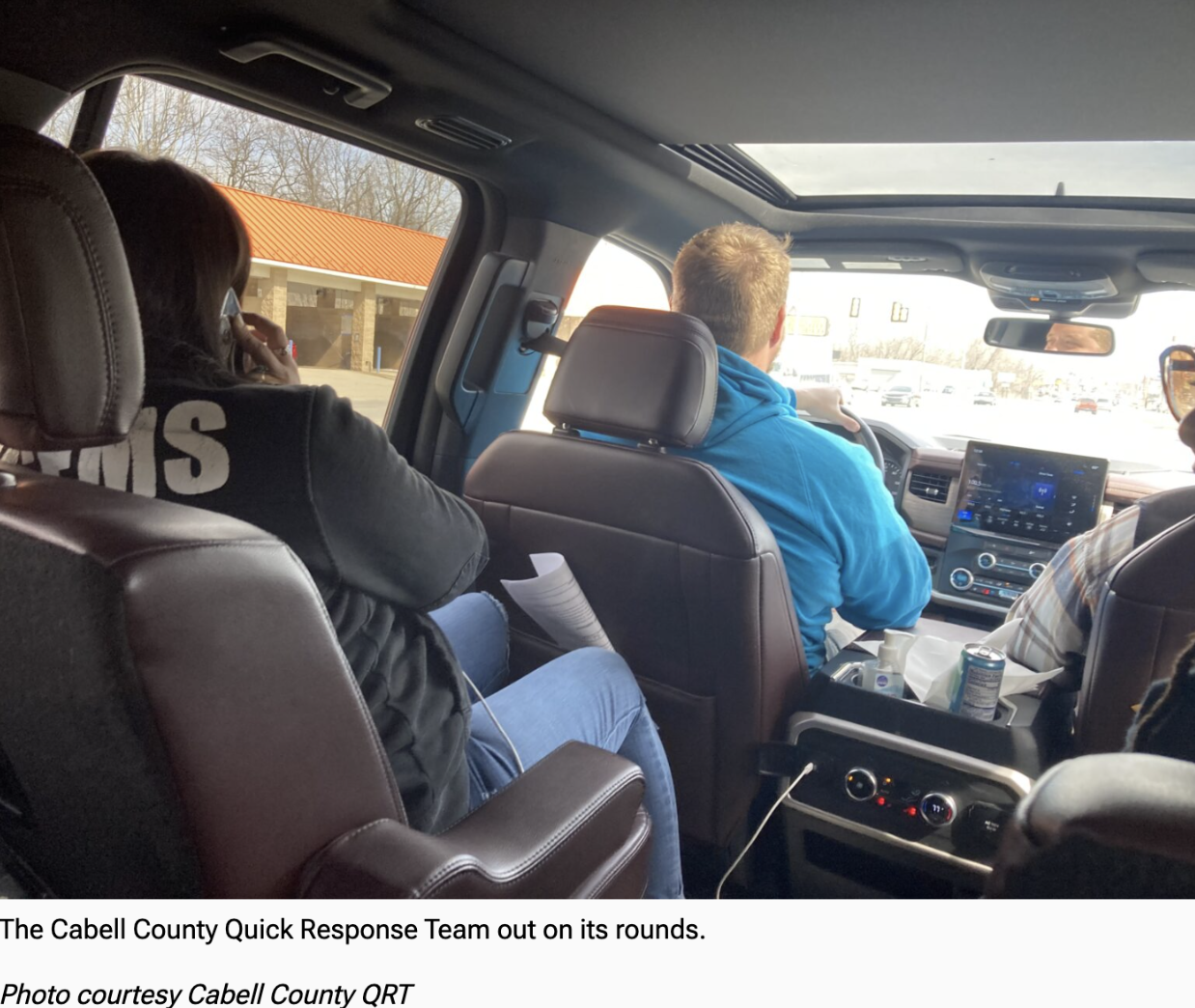
- In West Virginia, Cabell County’s Quick Response Team Is Helping To Reduce Overdoses. For WV Public Broadcasting, Mason Adams and Kelley Libby report on the county’s lauded QRT that is fighting the opioid overdose crisis in more rural edges of West Virginia “that’s known nationally for its struggles with opioids.”
The team, composed of “first responders, health officials and a peer specialist,” who respond to “emergency calls involving people with substance use disorder or experiencing mental health challenges… [and] check-in on folks who’ve recently had an overdose, or who are at high risk for one… and lift them up to get them into services.”
Before the team was established, the news station reported, “the people responding [to crisis calls were] law enforcement officers, firefighters and emergency medical technicians, who aren’t always trained to deal with these kinds of problems… so people tended to end up in jail, or they cycle in and out of crisis.” But as Connie Priddy, a registered nurse and program coordinator for the quick response team, explained to the news station, county leaders “finally realized we had a really huge gap, and we weren’t going to arrest our way out of the problem.”
- In Virginia, Multiple Counties Launch Regional-First Overdose Response Unit “To Bring Addiction Support To Rural Communities.” For ABC8 News, Sahara Sriraman reports on four central Virginia counties—Prince George, Hopewell, Dinwiddie and Surry counties—rolling out “a Mobile Overdose Response Unit—a first-of-its-kind regional collaboration aimed at saving lives and breaking the cycle of addiction.”
The team is “designed to step in after the initial overdose incident—typically within 48 to 72 hours—and offer personalized, sustained support… visiting individuals and families affected by overdose [with Narcan and other immediate care]… while also providing pathways to treatment and long-term support. The peer specialists on the team then “stay in contact with individuals and families, helping them create recovery plans, attend meetings or access services such as detox, outpatient therapy and social support.”