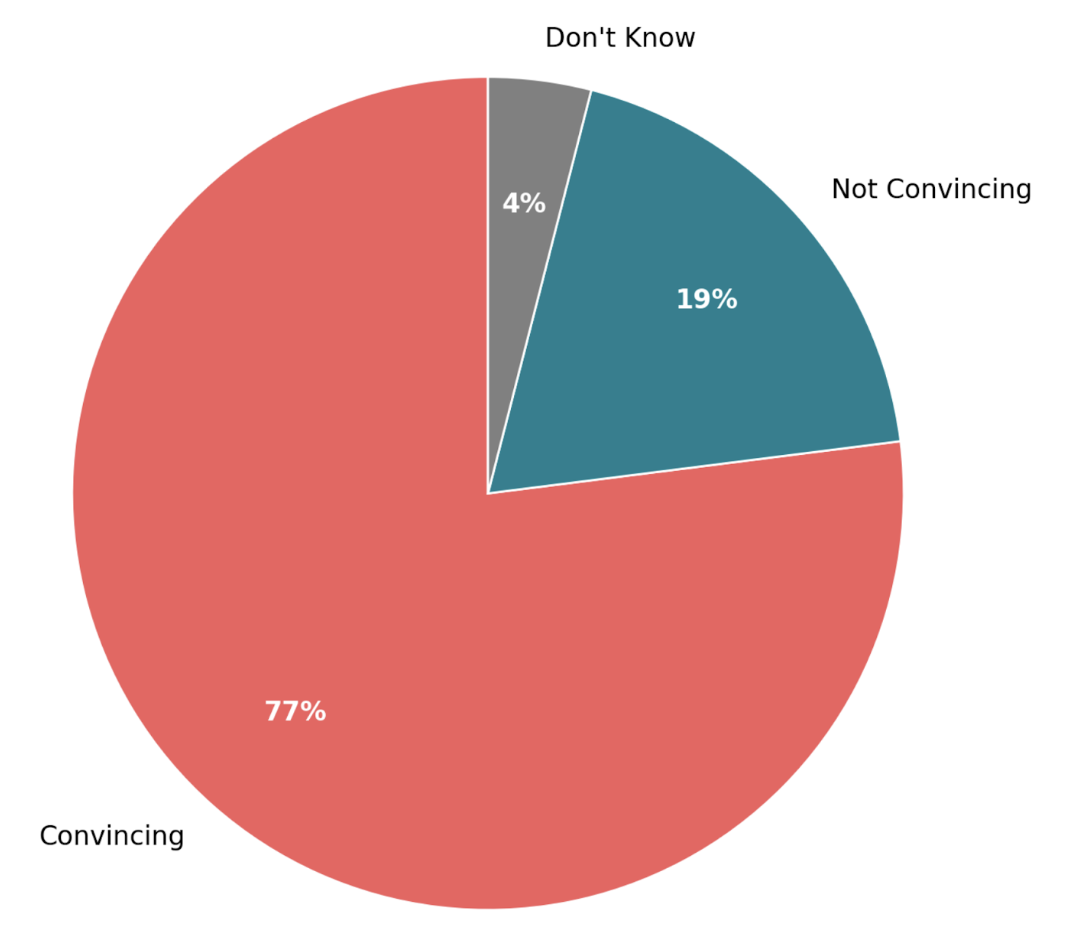
To gauge public support for Crisis Stabilization Centers as part of a city’s public safety infrastructure, Safer Cities recently conducted a national survey of 2,503 registered voters.
First, we defined crisis stabilization centers as “specialized facilities designed to provide immediate support to individuals experiencing acute mental health or substance use crises.” Each center, we explained, “is staffed with trained mental health professionals, provides a short-term place to stay while the person stabilizes, and connects the person with longer-term care options.”
We then provided participants with “reasons for implementing crisis stabilization centers as a public safety policy” that a city might consider, and then asked them to tell us “how convincing, if at all” each of those reasons are. Here are the three most persuasive arguments:
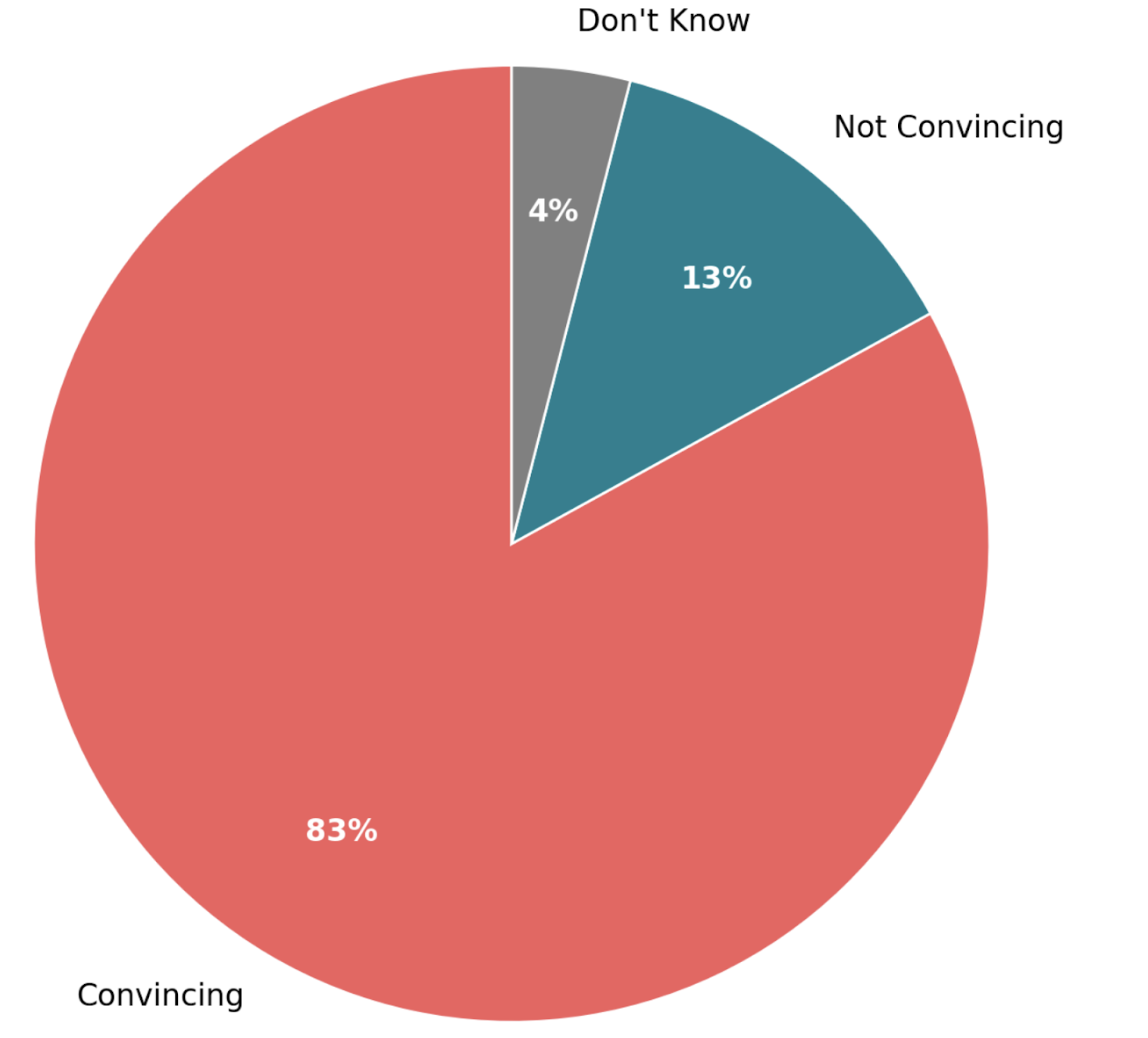
- +70 Net Effective (83% to 13%): “Jails are not ideal locations to provide mental health care. Thus, people with mental illness frequently cycle through jail over and over again because their underlying mental illness persists. Crisis stabilization centers break this cycle by addressing acute mental health needs and connecting the person to longer-term care.”
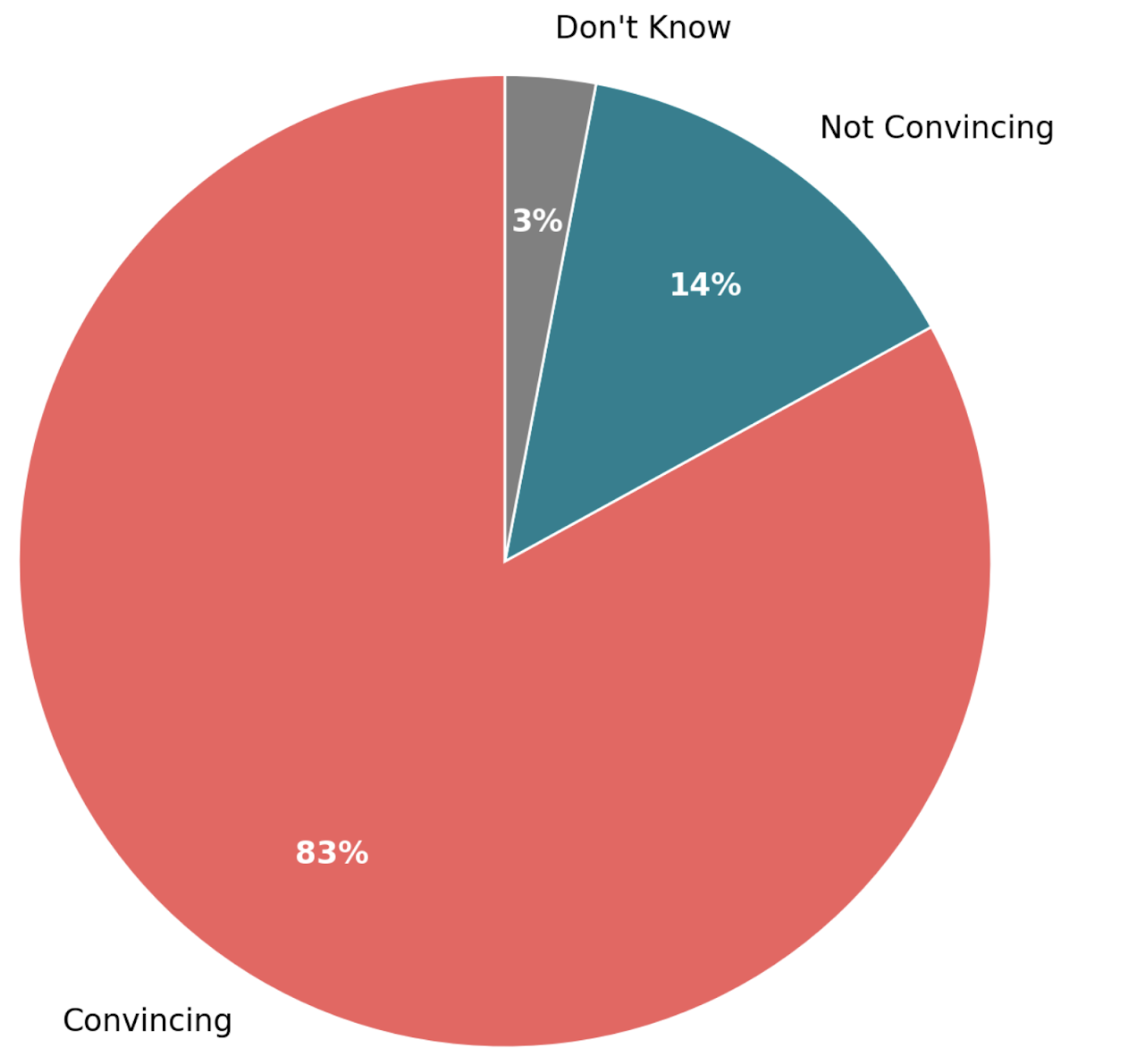
- +69 Net Effective (83% to 14%): “Emergency rooms cannot serve as a backstop for a broken mental health system. Crisis stabilization centers ease the burden on overcrowded emergency rooms that need the space to treat heart attacks, gunshot wounds, and burst appendixes.”
- +58 Net Effective (77% to 19%): “Crisis stabilization centers ease the burden on overcrowded jails, which is important because overcrowding creates a dangerous environment for both the guards who work in jails and the people who are confined in them.”