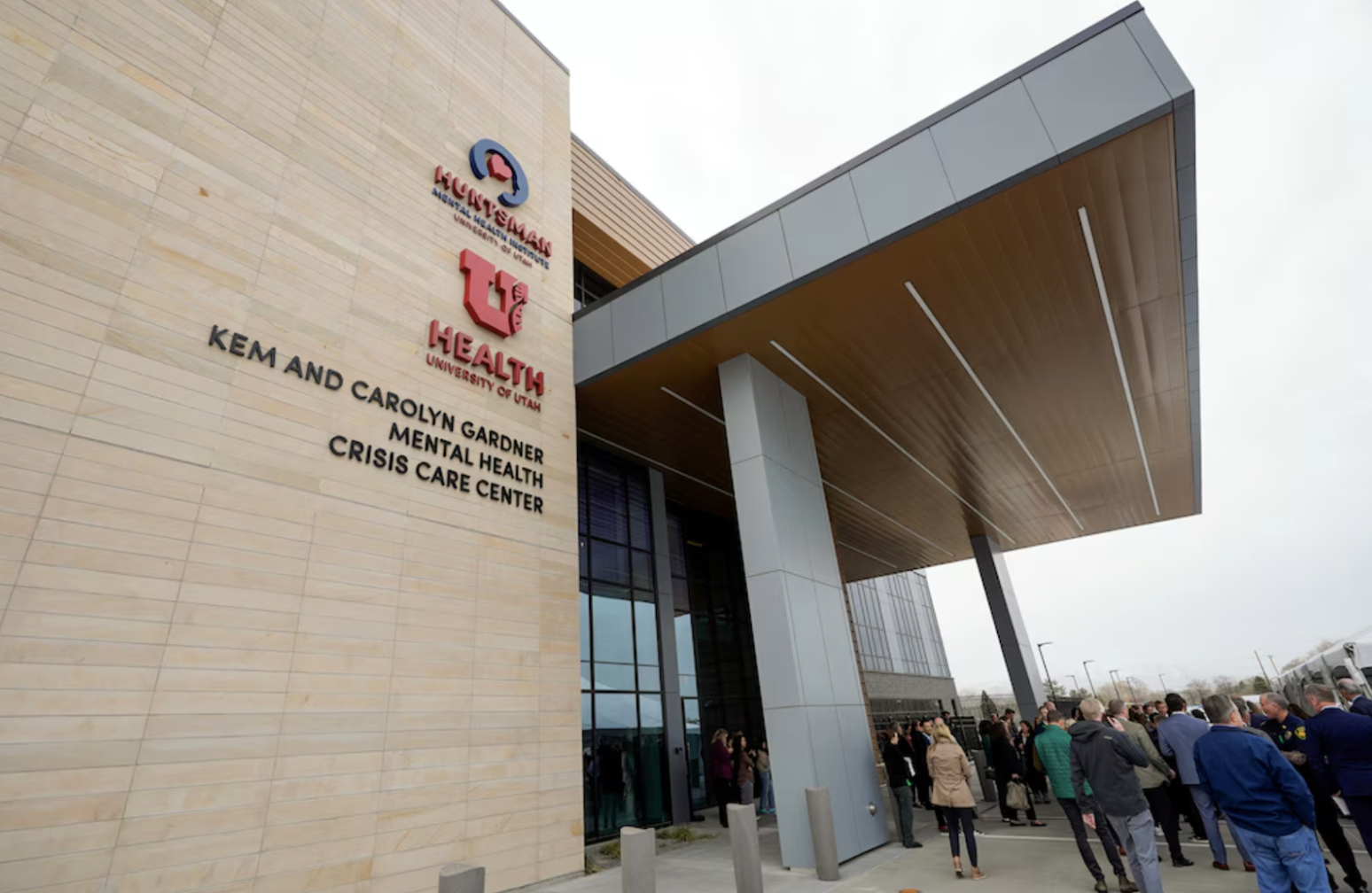
- In Salt Lake City, “First Of Its Kind Not Just In Utah, But Also In The U.S.” Mental Health Crisis Center Is Already Helping “An Average Of 22 To 25 Per Day,” Since Opening Two Months Ago. For KSLTV, Emma Benson reports on the new Huntsman Mental Health Institute’s hospital at the University of Utah’s Research Park, where “since [opening on March 31], around 1,300 people have come through the doors to get help — an average of 22 to 25 per day,” quickly “meeting a critical need” for mental health care in the city. As the Salt Lake Tribune details, local leaders expect the $64 million center to “offer better crisis care to more people and take pressure off hospital emergency rooms” and jails “that are not equipped to handle mental health crises.” Here’s more on the center’s functions and staffing from the Tribune:
- “The comprehensive center will offer around-the-clock care to anyone who walks through its doors, is referred there or arrives with emergency responders.”
- The facility will “host 200 mental health professionals providing care and expects to serve almost 10,000 patients annually.”
- For inpatient care, the center “will be able to handle about 45 people for crisis stabilization care that lasts less than 23 hours and two dozen people for stays that average seven days in length.”
- “The combination of daylong care, short-term stays, continuing outpatient services and on-site clinics that deal with physical ailments and legal challenges make [the center] the first of its kind not just in Utah, but also in the United States.”
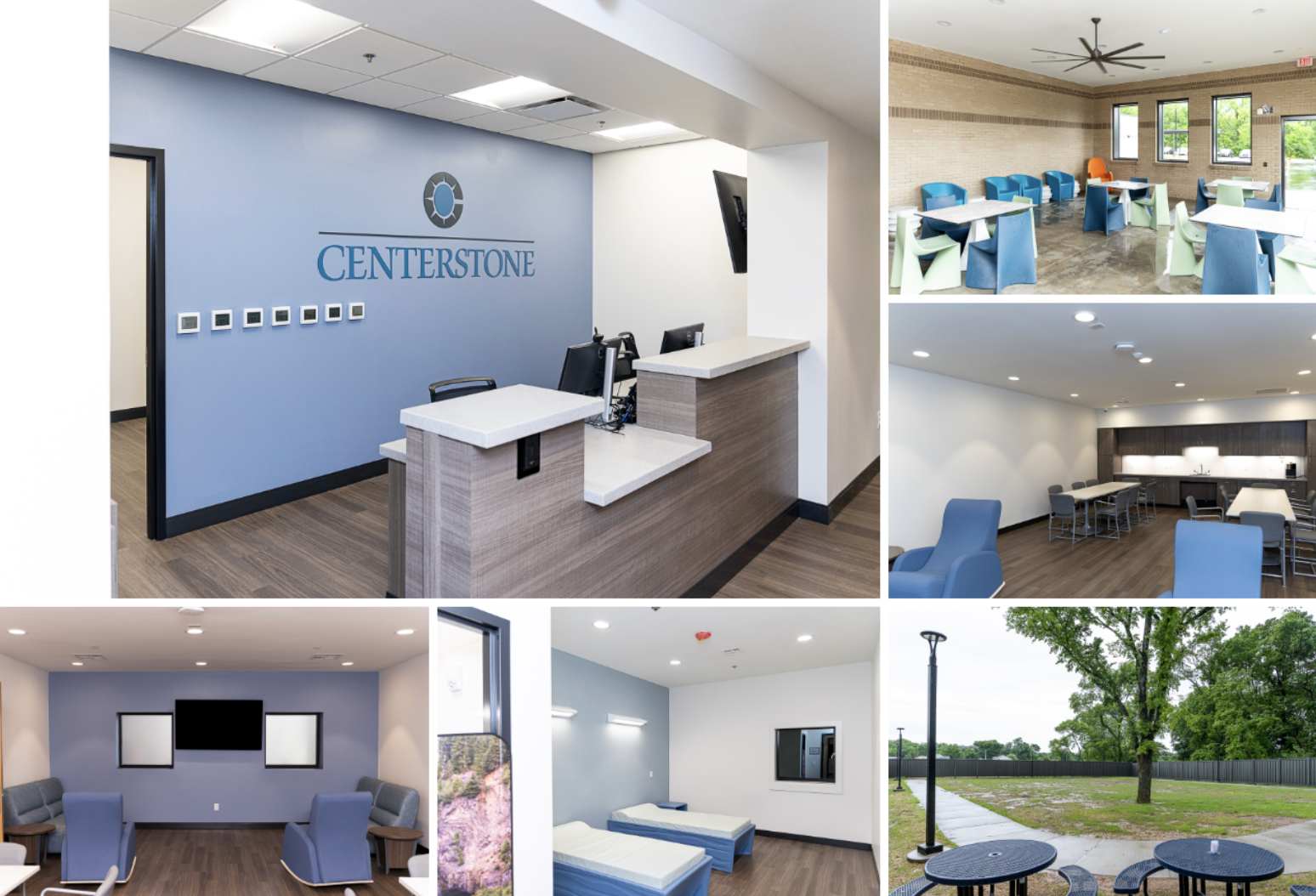
- New West Texas Mental Health Center’s “Goal Is To Prevent Individuals Needing [Mental Health] Help From Ending Up In Jail Or An Emergency Room, Where The Appropriate Treatment May Not Be Available,” Paul Harris reports for SanAngeloLive. The new center, located in San Angelo, is equipped with a mobile crisis response unit, and various crisis stabilization services—here’s more from the county on the center’s full set of functions:
- “Mobile Crisis Outreach Team is made up of an array of qualified and highly trained mental health professionals who are available for immediate response 24 hours a day throughout our 7 counties… [and] provides services where the crisis is taking place; this can include your home setting, school, the local emergency room, places of business, or anywhere within the community.”
- “Crisis Respite Unit … assists individuals in crisis, through assessments and evaluations to determine the most suitable care plan for recovery. The average length of stay for individuals is 7 days, which includes linking to resources, providing skills training, group therapy, and psychiatric stabilization for individuals to return back to their community successfully.”
- “Community Based Inpatient Crisis Stabilization … assists a person through a crisis, when they are presenting as an imminent danger to self or others, or at risk of continued decline of mental health.”
- Steven Garlock, the director of the center, explained to Fox News in West Texas that before the facility opened and provided mental health treatment “about 50 people a month were taken to either jail or the emergency room when they experienced a mental health crisis…. [but now] law enforcement has really started to buy into this, that there’s another route to change. It’s not just incarceration and back on the street. We’re able to intervene and address those [mental health] needs that they have.”
- “Hawaii’s First Psychiatric Crisis Center Helps Take Burden Off ERs, Police.” For Hawaii News Now, Allyson Blair reports on the new Iwilei Behavioral Health Crisis Center in Honolulu, which functions as “an urgent care for psychiatric treatment catered to people who’ve been determined to be a danger to themselves and/or those around them” with a trained medical staff providing “recovery care with trauma-informed specialists… psychiatric providers and caseworkers.”
Dr. Chad Koyanagi, medical director for state’s Department of Health’s Mental Health Division who oversees the new facility, explained that part of the goal here is to get the right care to patients, while “getting police back to the streets to fight crime.” Dr. Koyanagi explained to the news station that before the center opened, “a police officer could end up waiting hours with a patient … pulling them away from their primary duties… [but, now patients] can get services quite quickly [and officers] can be back to the beat in like five or 10 minutes.” - In Tennessee, Clarksville Opens “First Walk-In Center And Crisis Stabilization Unit.” For Clarksville Now, Chris Smith reports on the new facility, a first of its kind in Clarksville, which “provides immediate, around-the-clock support for adults 18 and older experiencing mental health crises… [where] individuals can stay for three to five days for medication management, therapy and connections to ongoing resources.” Clarksville Police Chief Ty Burdine, a champion of the new center, explained to News5 that the facility doesn’t just provide appropriate mental health care to people in the community, it’s “also benefit local law enforcement… ‘[because] often times the police are the first ones to respond to someone in crisis and we want to get them the best care that they can’… the facility will help streamline the process of connecting individuals to appropriate care while allowing officers to return to other duties more quickly.”