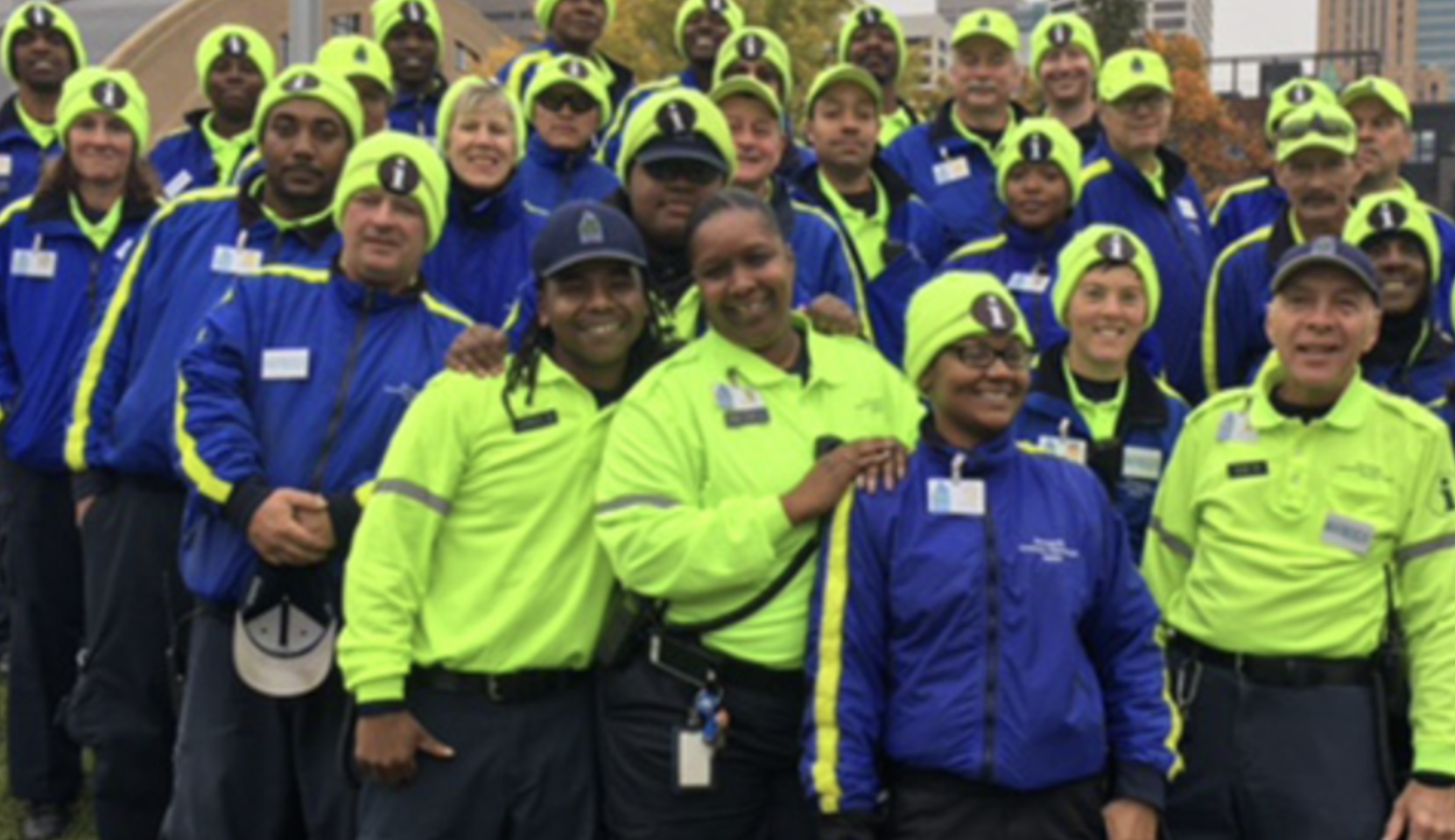
To gauge public support for Safety Ambassador teams as part of a city’s public safety infrastructure, Safer Cities recently conducted a national survey of 2,503 registered voters.
First, we defined safety ambassadors as “a highly visible uniformed presence at the street level, deployed along major streets, downtown areas, or residential neighborhoods. By serving as eyes on the street, safety ambassadors deter crime while also making residents safer.” Next, we explained the function that safety ambassadors can play in a city’s public safety infrastructure:
- “Help people get home safely by providing a walking escort or a jumpstart;”
- “Help people in crisis get the shelter, food and health care services that they need;”
- “Receive training in first aid and overdose prevention and can save lives by administering Narcan;”
- “Receive training in de-escalation and help calm minor disagreements before they require police assistance.”
We then provided participants with “reasons for implementing safety ambassadors as a public safety policy” that a city might consider, and then asked them to tell us “how convincing, if at all” each of those reasons are. Here are the three most persuasive arguments:
- +61 Net Effective (78% to 17%): “The jobs that safety ambassadors do are important for communities. Having trained safety ambassadors help people get home safely at night, de-escalate minor disagreements, or connect people in crisis to shelter and services lets police officers focus on more serious public safety threats like solving robbery, rape and murder cases.
- +50 Net Effective (72% to 22%): “It is far more expensive for a city to employ an armed police officer to serve as the needed ‘eyes on the street’ deterring offenses like shoplifting. Trained safety ambassadors consistently and competently perform the same role for less cost which allows the city to have more safety ambassadors—and therefore more eyes on the street—for the same budget.”
- +41 Net Effective (68% to 27%): “Small businesses dealing with the threat of shoplifting need help but stationing armed officers in front of their stores creates an unwelcoming and intimidating environment for some customers. By contrast, uniformed safety ambassadors provide the same kind of highly visible deterrent needed to prevent theft without inadvertently creating a sense that the store is a dangerous place.”