First responders need somewhere to take a person in crisis. Consider, for example, a person suffering from an acute mental illness or a person who is intoxicated and needs to sober up. That “place” tends to be an emergency room or a jail cell, depending on the situation. Neither option is optimal in most situations because neither place is designed to either address the root cause of why the person is in crisis or help ensure that the person does not cycle back through with the same problem over and over again.
But a growing number of cities provide first responders with a more suitable option for dropping off a person in crisis. Crisis stabilization centers provide rapid “substance use disorder and behavioral health support” and also connect people to long-term services. New crisis stabilization centers opened in recent weeks in six cities including Juneau, Alaska; Fort Collins, Colorado; Syracuse, New York; and Scranton, Pennsylvania. In central Pennsylvania three counties—Cumberland, Dauphin and Perry—banded together to open a center. And Linn County, Iowa opened one, too.
Here is a quick glimpse at three of the new crisis stabilization centers launching around the country:
- Colorado’s “New Crisis Center [Is] A Local Alternative To Jail Or The Hospital.” For KUNC, Fort Collins’ local NPR affiliate, Leigh Paterson reports on a recently opened Fort Collins “crisis center [providing] short-term care for residents who are struggling with serious mental health or addiction issues.” With a goal of stopping the use of “emergency rooms and our jails and law enforcement as the first door for mental health,” the center provides: “withdrawal management,” “[a unit that] allows people to safely stop using drugs or alcohol [and] the crisis stabilization,” and “a unit [that] provides short-term inpatient care for individuals in acute psychiatric crisis.”
The center is open to all “Larimer County residents of all ages regardless of their ability to pay.” And, Fort Collins Police Sergeant Andrew Leslie told the news station he’s “hopeful” the center will provide “not just the immediate crisis care” but also “fill the gap” between short and long-term care for a wide-range of county residents across demographic differences:
“[M]ental health issues touch way more people and way more demographics than people realize. It’s not just a certain group. I’ve seen it from someone who just comes into town and is experiencing homelessness all the way to somebody who is a well-established business owner with multiple houses. Mental health issues are so impactful for all of them.”
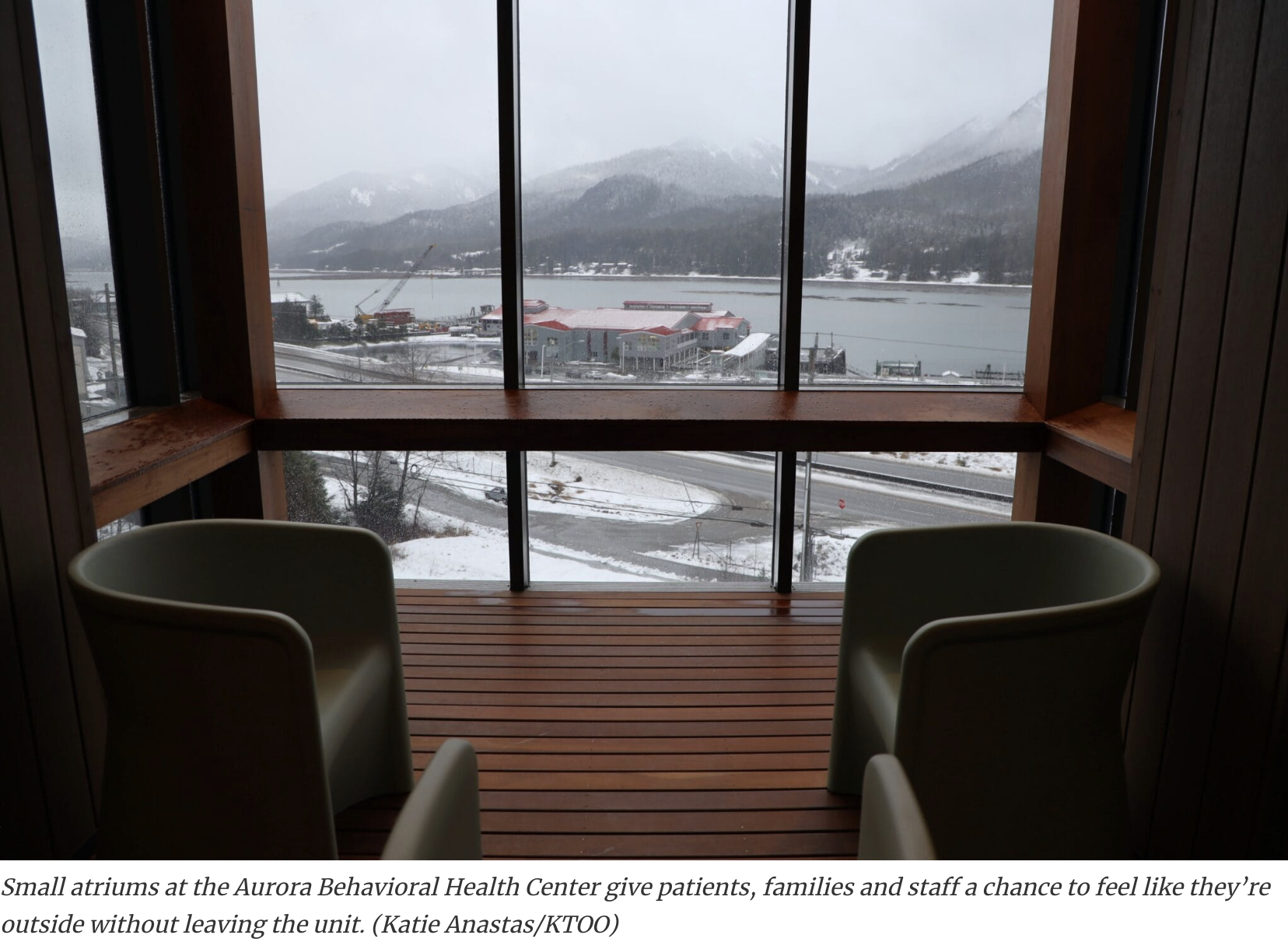
- Alaska’s New Youth Stabilization Center “Reduces Reliance On Law Enforcement And Emergency Rooms.” For KTOO, Juneau’s local PBS affiliate, Katie Anastas reports on the city’s new mental health stabilization center for local teens in crisis at the Bartlett Regional Hospital.
Dr. Marie Roy Babbitt, a child and adolescent psychiatrist who leads the center’s crisis services, explained to the news station that the center is “staffed with psychiatrists, nurses, counselors and community navigators to help teens get the treatment they need” with “the goal to provide well-rounded services all in one place…‘offering medications, a medical check-up, one-on-one counseling, family counseling and link[s] to services outside of the crisis unit.’”
Here’s more from KTOO on the facility, which “aims to reduce reliance on law enforcement and emergency rooms when people are in crisis”:
“Patients’ rooms have built-in nightstands and desks, and the windows overlook the Gastineau Channel. Most teens will be there for less than a week. Before they leave, staff will work with families to explain the treatment plan, which may involve medication or working with the teen’s school on an Individualized Educational Plan. The unit’s navigators will keep working with teens and their families to make sure they’re getting the outpatient services they need…”
- New Crisis Stabilization Center In Scranton, Pennsylvania Adds Long-Term Focus To Acute Care. WBRE News in Scranton has a segment on a new 24/7 crisis stabilization center that aims to help patients “beyond the immediate crisis intervention,” including helping patients “connect to ongoing support which can include follow-ups with their mobile team [that] supports that individual with transitioning back to living at home, or wherever they’re living… [as well as] do phone check-ins [and] in-person check-ins… we do a lot of planning around discharge and successful discharge in ways to divert crises in the future and connect them with resources in the community.”