Across the country, there now are 48 Offices of Violence Prevention, over half of which “were established after 2020, and at least 10 more are in the works,” according to a new report from the Vera Institute For Justice and The National Office of Violence Prevention Network that draws on “20 focus groups and interviews with 44 OVP/ONS stakeholders.”
Offices of Violence Prevention, which alternatively are named the “Office of Neighborhood Safety” in some cities, take a “public health approach to violence prevention and intervention” and deploy “evidence-informed strategies through community-specific initiatives—[such as ] violence interruption.”
While “most offices focus specifically on gun violence, with a smaller number also focusing on other forms of interpersonal violence,” several“ offices are broadly scoped to oversee public safety functions outside of violence intervention, including civilian-staffed crisis response programs and victim services.”
There are three major benefits to housing these programs within an umbrella office of violence prevention. These offices:
- Promote the “sustainability and continuity of interventions and investments in communities that strengthen public safety”;
- “Build and lead a local ecosystem of violence reduction” composed of “civilian government and community-based services.”
- “Coordinate across multiple government agencies and sectors to create a ‘whole-of-government’ approach to safety.”
Why These Offices Matter. In an introduction to the report, the director of Vera’s redefining public safety initiative, Daniela Gilbert, underscores the promise of these offices: “If adequately resourced and empowered, OVP/ONS can transform our public safety systems, serving as the hub for an ecosystem of civilian government and community-based strategies.” Indeed:
- “Richmond, California, has made a sustained investment in its Office of Neighborhood Safety and seen a 62 percent decline in homicides and 79 percent decrease in firearm assaults over the last 15 years.”
- “And after just two years of service, Albuquerque Community Safety has dispatched trained professionals with backgrounds in mental health and social services to more than 45,000 911 and 311 calls for service—60 percent of those having been diverted from the police.”
The Role These Offices Play: An Office of Violence Prevention serve two functions: violence intervention and violence prevention.
- Violence Intervention. The report defines violence intervention as focusing resources “on the people who are most likely to be involved in violence” in an effort to “intervene and prevent the imminent act of violence” or “immediately disrupt and reduce recurring interpersonal violence.” For example:
- The “Minneapolis Neighborhood Safety Department has a team of violence interrupters who leverage their knowledge and credibility within their local communities to anticipate and de-escalate conflicts that could result in serious violence.”
- Violence Prevention. The report uses violence prevention to mean “the elimination or reduction of the underlying causes and risk factors that lead to violence,” which includes efforts to “invest in public services, community development, and youth-specific programming and resources.” For example:
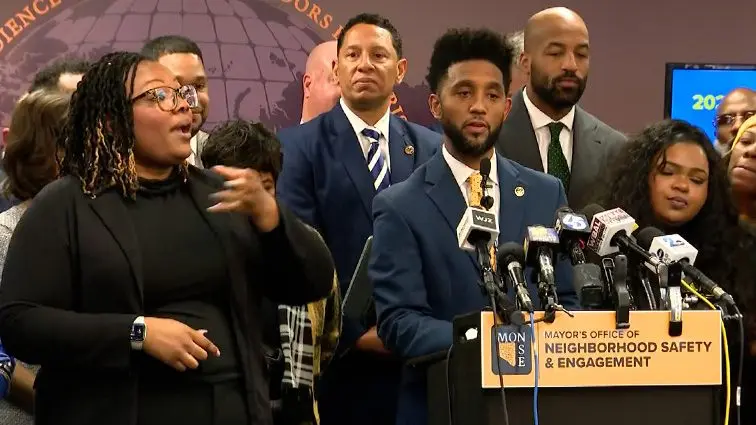
- The “Baltimore Mayor’s Office of Neighborhood Safety and Engagement … connect[s] survivors of violence to therapy and services—such as emergency relocation assistance, housing, mental health treatment, and employment services—that promote well-being and address trauma that can lead to re-victimization.”
Recommendations for Successful Implementation. This report also provides tips for making OVP / ONS offices successful, including on how offices are funded, how budgets are structured, and how to successfully integrate community stakeholders. Here are two examples that focus on the importance of structuring the office within a city’s larger public safety ecosystem:
- The power to coordinate and convene. “It is important for offices to have adequate authority within government to effectively coordinate and convene other government agencies, implement strategies and programs, and hold other city agencies and programs accountable for meeting their commitments.”
- A Seat At The Table. Leadership from OVP / ONS offices must “sit at planning tables at [the] same level as police chiefs, directors of public health, school systems, whoever is responsible for contact with young people.” For example, St. Louis Office of Violence Prevention Director Wilford Pinkney Jr. told the report’s authors: “I am in every important seminal meeting about public safety in the city. . . . [M]y opinion is sought often and what recommendations I make are most often implemented.”
Related: The National Offices of Violence Prevention Network, which co-authored the report with Vera, “serves as a learning community with the goal of significantly increasing the expertise and effectiveness of city agencies [engaged in violence intervention and prevention].” Here’s what cities gain from participating:
“The Network hosts convenings, provides trainings and presentations on effective violence reduction practices, coordinates cross OVP learning exchanges and site visits, offers leadership and management development, and supports OVPs in growing capacity in data collection and reporting, fund development, and communications/media relations. The network also supports the creation of new OVPs in cities interested in developing such agencies.”