For the News and Observer, Mary Helen Moore reports on the expansion of the city’s much-lauded Holistic Empathetic Assistance Response Teams, or HEART, “the first program of its kind in North Carolina” that will now “respond citywide for at least 12 hours every day, including holidays” to “mental health crises, trespassing calls, welfare checks and more.”
The team, which is dispatched through the city’s 911 call center, has responded to over 9,000 calls since their launch last summer. The nearly $5 million infusion will allow HEART first responders—composed of crisis counselors and social workers—to expand their ranks by about 150% and triple their 911 call response volume across the city.
What City Leaders Are Saying:
- Durham Police Chief Patrice Andrews told the local CBS affiliate that HEART’s “expansion is a way to offer more support to our residents experiencing a mental health crisis [while] enabling us to focus on more appropriate law enforcement needs throughout our community.”
- Durham Mayor Pro Tempore Mark-Anthony Middleton explained to Durham’s local ABC affiliate why the city needed HEART in an expanded role: “Sometimes people don’t need handcuffs, they need a doctor, they need a counselor, they need a meal…”
- Tracy Jackson is a social worker on the HEART team. A week into what he calls his “dream job,” Jackson “saw what a difference he could make” in the city. As he told WRAL, the local NBC affiliate:
“911 received a call from a gentleman who was in distress… we responded and he expressed that he was overwhelmed, he had just lost his job that he had for 20 years. He was unsure of how he was going to pay his rent, his children were also in crisis, [and] he was a single father…. But we were able to connect him to resources to get his rent paid, and also provide some therapeutic support through our clinicians and peer support specialist.”
Durham’s HEART expansion is part of Durham’s broader public safety plan, which could also include, for example, “a survivor care office to serve victims of gun violence[,] making opioid reversal kits available to all city and county staff[,] creating an Office of Survivor Care to support victims of violent crime and their families[,] and replacing vacant police positions with unarmed teams that respond to 911 calls.”
Related: Two additional exciting mobile crisis team related developments, both from California:
- Watch the mobile crisis team in action: San Diego County produced an excellent video of a ride-along with the county’s mobile crisis response team. In under five minutes, the video provides a real sense of the vital work these first responders are doing.
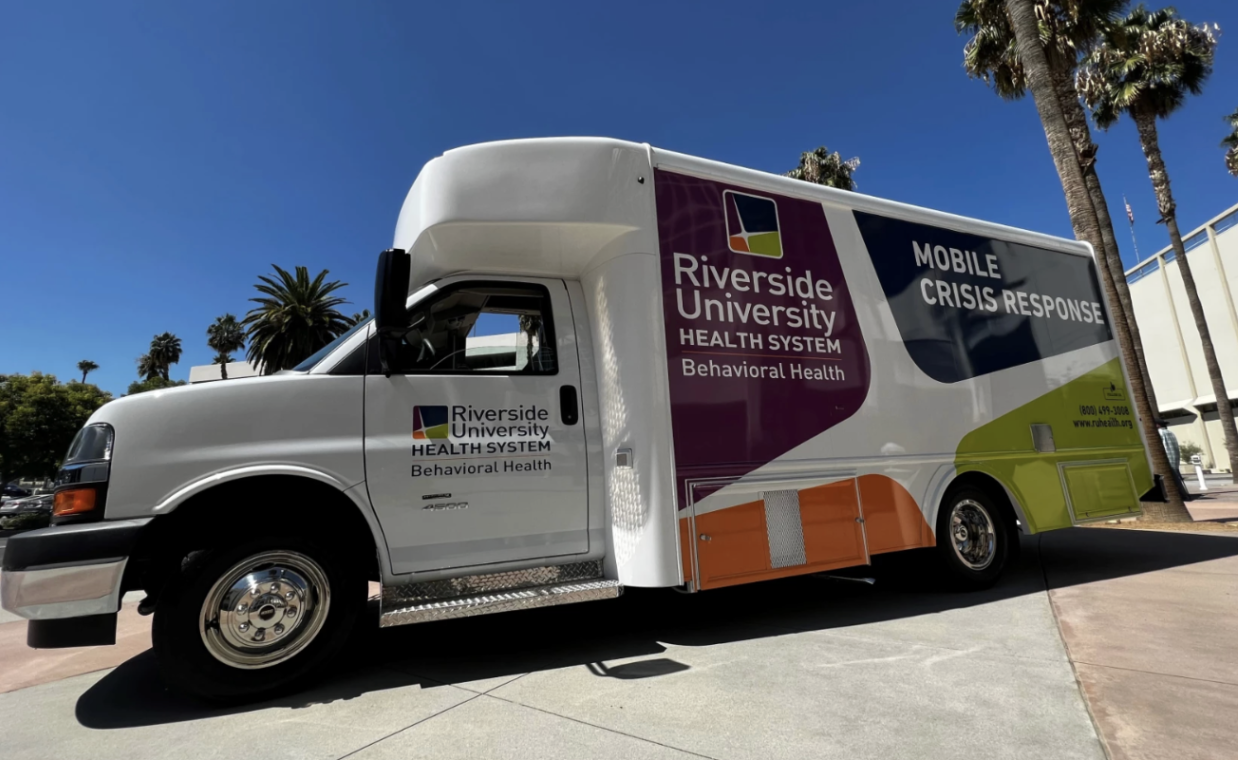
- Riverside County deploys respite vehicles, which are “specially-equipped vans” that mobile crisis teams use to provide enhanced emergency healthcare during calls for service. People in crisis “can come in and have a safe place where they can wash up and be in a comfortable environment where they can really sit down and talk to somebody.”