Last week, Safer Cities featured the first of three editions highlighting an important aspect of New York University Law School’s Policing Project’s newly published report on Denver’s mobile crisis response program, STAR, or “Support Team Assisted Response”. The report includes insights from interviews with 911 dispatchers, police officials, STAR’s own clinicians, and “residents of Denver’s communities most affected by policing and other first response practices.”
This week’s edition dives into a thorny question: If Denver STAR is so effective, then why are 911 dispatchers not dispatching STAR to most STAR eligible calls?
The NYU researchers found that the degree to which 911 dispatchers utilize STAR depends on the call type. For example, “welfare checks received a STAR response nearly half of the time … [while calls related to] encampments and suicides received a STAR response much less frequently.”
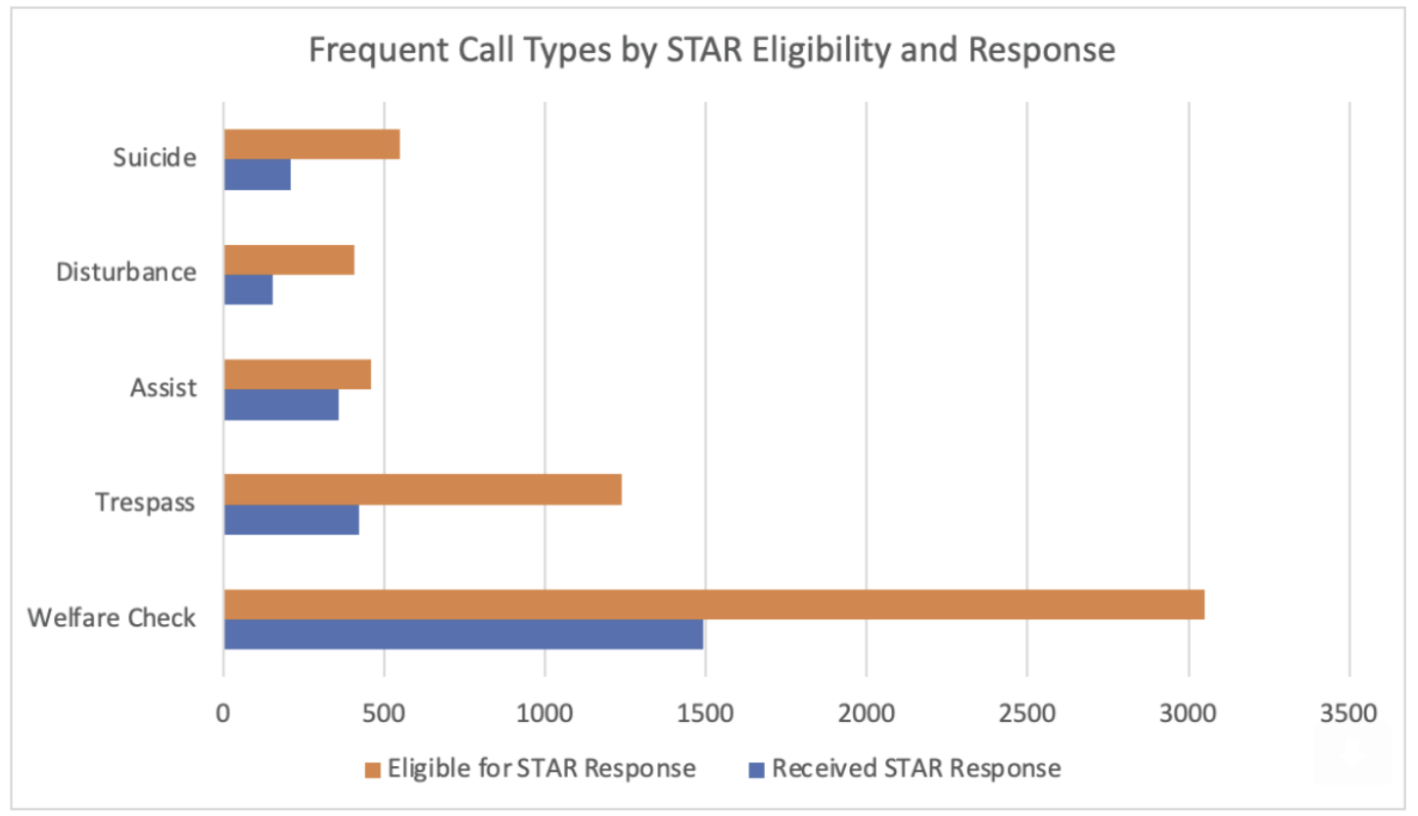
Here’s what 911 call dispatchers told the researchers about when and why they do (or do not) dispatch STAR:
- STAR Is So New That Sometimes Dispatchers Simply Forget To Dispatch Them. Researchers found that “911 operators and front-line workers [have] overwhelming appreciation for STAR [but also, at times] … forget to utilize this new ‘fourth option.’” One 911 dispatcher explained the challenge to the researchers:
“I don’t think there’s a lot of hesitancy in terms of, ‘Oh gosh, I don’t want to add STAR to this,’ it’s more of a, ‘Oops, I forgot,’ [because] it’s just newer, so it takes time to adjust to everything. But I think as the STAR program expands in Denver, that’ll kind of resolve itself in time.”
To combat this “lack of awareness and understanding of what precisely the clinicians and medics in the STAR van can do,” researchers report that STAR “program managers are working to educate dispatchers and call takers on the skills STAR responders have in order to make them more comfortable with utilizing the program.”
- Dispatchers Remain Hesitant To Send STAR Team Members Into Harm’s Way. Researchers found, for some calls, there was “significant hesitation from dispatchers to send unarmed responders out in the field.” Here’s one of the 911 dispatchers making the point that dispatchers both don’t want to be held liable if a STAR team member is hurt and don’t want to be morally responsible for inadvertently getting someone hurt:
“For me, in the chair, if STAR can’t protect themselves, I’m not sending them by themselves… It’s a liability that… then falls on us, as the dispatcher. ‘Why did you send them there? Now they’ve gotten hurt. Now it’s your fault’ … You really need to go with your gut for what’s risky, that you never want someone to get hurt.”
- Due to this fear, the researchers detail that during their interview with this dispatcher, she “shared that on intoxication calls—that, according to protocol, STAR technically can handle alone—she always wants to add police as a cover as extra precaution. She also adds police cover to all suicidal calls, which, like intoxication calls, are one of the seven call types that are deemed STAR-eligible. She explained that, in her mind, preserving the safety of first responders is the primary concern of 911 operators.”
This fear over sending STAR is not shared by STAR team members. Here’s a quote from a Denver STAR responder making the point:
“I had a dispatcher the other day who was like ‘God, I just hate sending STAR to an apartment or house because it’s … like you’re going in and all this stuff could happen.’ I’m like, ‘We’ve delivered groceries and medications and picked people up. We’re used to going into people’s homes. We’re used to meeting people in alleys. We’re used to meeting people in parks.’ Send them. We got this. You have our back. You know where we are. We’ll call for help if we need it.”
The NYU researchers explain that this is a widespread sentiment among STAR responders: “STAR clinicians told us that they feel very comfortable going inside apartments and houses with individuals in crisis largely because they have done so many times in previous job positions.”