That’s a quote from a newly released report from New York University Law School’s Policing Project that contains insights from interviews with clinicians from Denver’s mobile crisis response program—known as STAR, or “Support Team Assisted Response”—as well as with 911 dispatchers, police officials, and “residents of Denver’s communities most affected by policing and other first response practices.”
The report provides a unique look into the successes and obstacles to implementation of the city’s nationally-lauded program; and, more importantly, offers valuable insights for other localities that are building unarmed mobile crisis response teams to address calls for service related to mental health, substance use, and homelessness.
The quote in the headline above, from one of the Denver residents that the NYU team interviewed, captures the overall sentiment towards the STAR program that community members and municipal officials expressed to the researchers. Indeed, here is a chart from the report showing that 78% of the study’s participants believe that “transforming first response” in Denver is a “high priority.” The participants also estimate that 59% of their “friends and family” and 52% of Denver residents perceive transforming first response as a “high priority.”
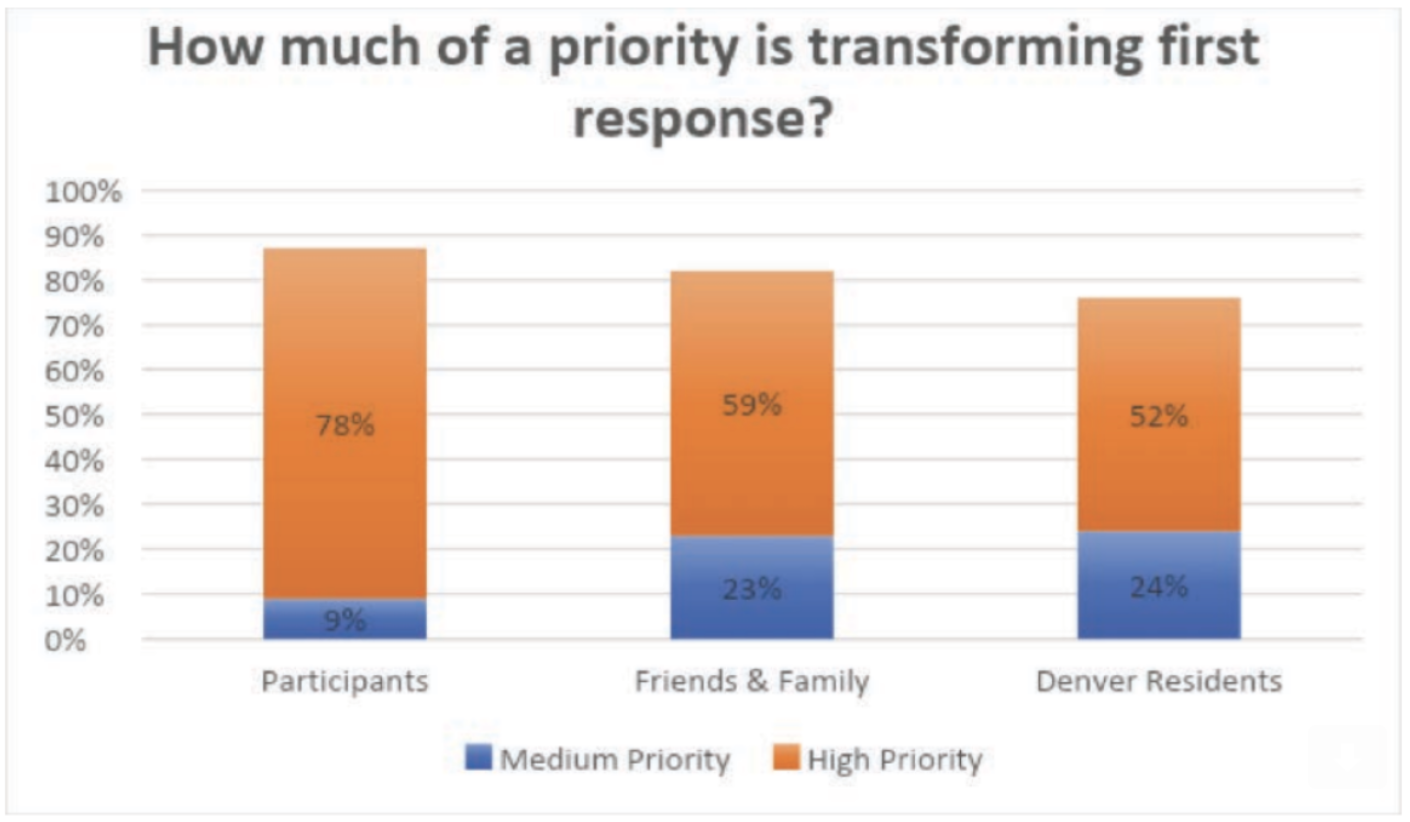
This week, and again in each of the next two editions of Safer Cities, we will highlight an important key insight from the report.
Insight #1: “Sending police to deal with every social problem simply isn’t working,”
The report’s authors conclude from interviews with stakeholders that “public safety is best achieved through having a diverse set of first responders.” Here’s why:
- Dispatching and responding to 911 calls is complicated. As one 911 operator told the researchers:
“I kinda see [public safety] as a puzzle … it has many different interlocking pieces that all come together to form one picture. You have dispatch and call takers. You have police. You have fire. You have medical. You have your fourth responders—your clinicians, your STAR vans, and things like that. And then you have your community in need. It’s just having the availability of resources to make a functioning and healthy community.”
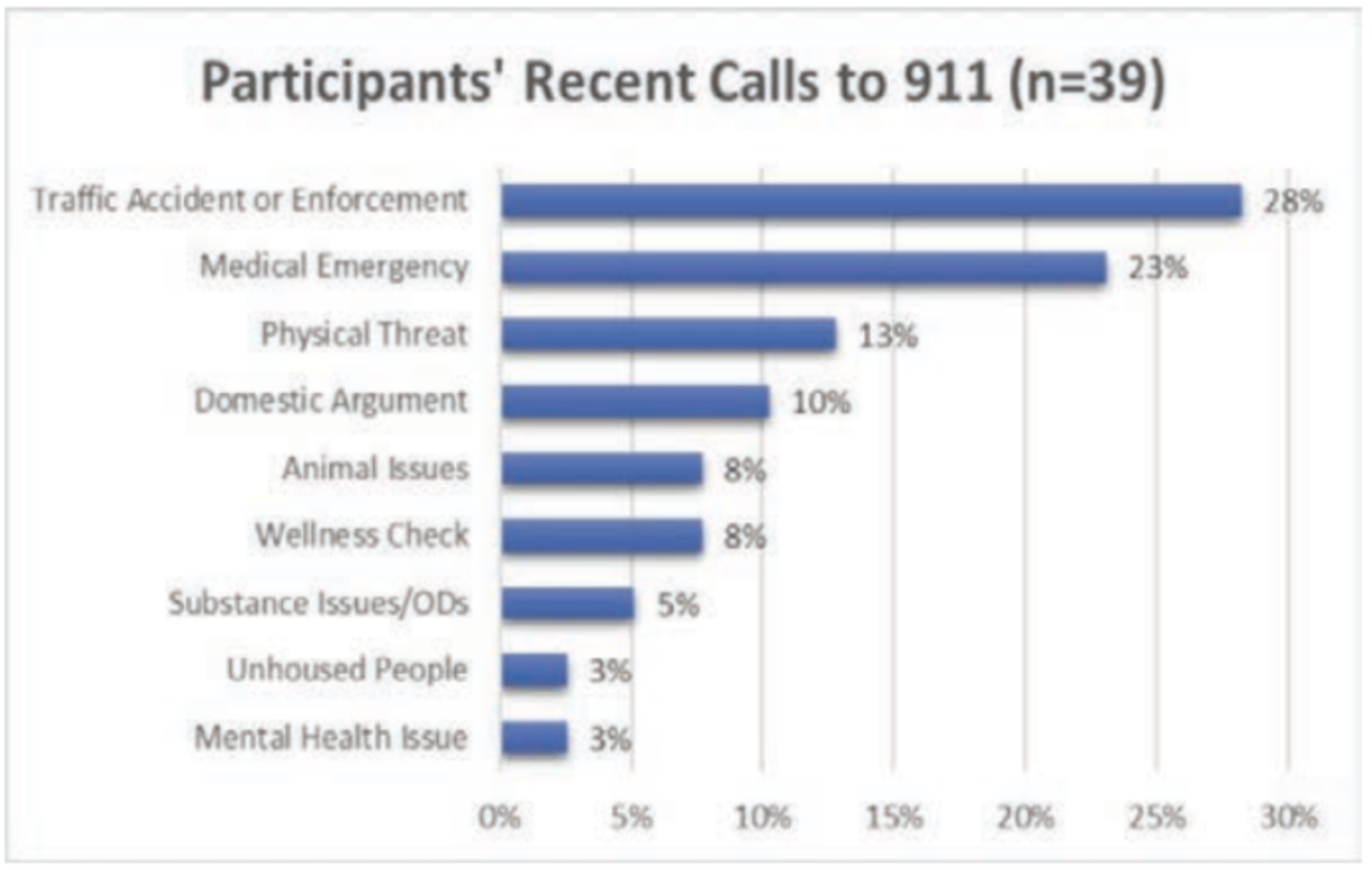
- Making the puzzle more complicated still are the diverse types of situations to lead to 911 calls, many of which require different types of professional expertise. Here’s a chart from the report that illustrates the point:
- That’s why Denver’s STAR program—and other unarmed first responder programs that provide specialized expertise (e.g. an overdose prevention team)—are so important:
- 911 Dispatcher Perspective: “Having the ability to send out police, fire, medical, and now ‘the fourth responders’ to address issues of mental health, homelessness, and addiction contributes to public safety” by ensuring that we send the right expert to the right problem.
- Police Officer Perspective: “I don’t know that I would call somebody having a health crisis a policing issue. Although, by default, in this country, it tends to be a policing issue, unfortunately.”
- Broader Municipal Worker Perspective: “Other respondents agreed with the importance of having alternative responders without ‘lights and sirens,’ ‘uniforms,’ and ‘guns’ as essential to protecting people from harm and creating public safety. This emphasis on having additional responders to achieve public safety reflects a broader mentality that we heard amongst municipal respondents.”