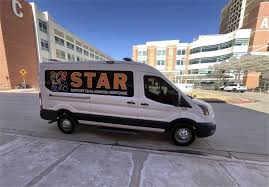
Over the past three decades, Police Beat Magazine has established itself as “the trusted voice of our nation’s law enforcement community” and remains “the only [law enforcement] publication that is delivered to virtually every town, city, county and state law enforcement agency in the country.” When a policy idea makes it into Police Beat Magazine it signifies real recognition and progress—and, importantly, a growing embrace among law enforcement. The latest edition of the magazine covers civilian mobile crisis teams. Here are the three key excerpts:
“A rising number of cities across the country are turning to civilian response teams instead of armed police officers to address nonviolent mental health crises, a new report shows. The shift comes in response to numerous instances where police encounters with individuals undergoing a mental health crisis escalated and resulted in tragic outcomes.
…
According to data from the AP, 14 of the 20 most populous cities in the United States are in the process of implementing or exploring programs that deploy behavioral health clinicians and medical professionals such as paramedics to handle nonviolent, mental health-related 9-1-1 calls. These initiatives, sometimes referred to as civilian, alternative or non-police response teams, are gaining momentum, with combined annual budgets exceeding $123 million as of June 2023.…
Denver’s STAR program, a leading example of this approach, deploys teams equipped with medical supplies, blankets and essentials to respond to crises. Notably, a Stanford University study found that in areas where STAR operated, reports of petty crimes dropped by a third while violent crime rates remained steady. Importantly, police have never been called for backup during STAR interventions. STAR responded to around 44% of eligible calls last year. “It’s really about meeting the needs of the community and making sure we are sending the right experts, so we can actually solve the problem,” said Carleigh Sailon, a former STAR manager.”
This positive coverage from Police Beat Magazine echoes endorsements of mobile crisis teams from individual police chiefs across the country. Here are three examples of police chiefs praising mobile crisis response programs from jurisdictions of different sizes and political realities across the country:
- St. Petersburg, Florida Police Chief Anthony Holloway:
“This is going to be very positive for law enforcement because it does two things: One it frees up the police officers so they can do police work, so they can go out there and look for the burglars, robbers, things that we are trained and know how to do. And the other part of it is, we are getting healthcare professionals who can help law enforcement help people through their crisis … when people are calling 911 and they are going through a mental crisis then we can send a professional there to help them through their mental crisis instead of just sending an officer there with a badge and a gun.”
- Baton Rouge Police Chief Murphy Paul:
“We realized our community was experiencing increased mental health and substance use crises … and we didn’t believe people were getting the care they needed … The correct response to a crisis is the one where people get the help they need … “Mobile crisis teams can contact law enforcement if needed, but they’re trained to de-escalate behavioral health crisis situations.”
- Parsons, Kansas Police Chief Robert Spinks:
“Looking beyond a traditional police response is critical for the future. Most response calls involving people with mental illness are not the result of criminal behavior, but of emotional crisis … Mental health issues account for at least 1 in 4 and up to half of all fatal police shootings” and “80% [of police officers in a national survey] cited repeat contact with the same individuals suffering a mental health crisis as a top officer safety concern … Many officers are not ready nor interested, or do not have the disposition to fully engage in this advanced specialist training. Just as many officers are not cut out to be a K-9 handler, bomb tech, SWAT or dive team officer, not all officers are cut out to be or are interested in taking on [Crisis Intervention Training] … Mobile crisis teams [, which] utilize community-based mental health professionals to respond to individuals experiencing mental health crises. These teams typically do not involve the police initially, though police can be called upon when appropriate … Mental illness and people in crisis exist in all communities, and it is not a crime. It is incumbent that police agencies and communities collaborate to address, respond to and seek new funding for sustainable mental health responses and services for those in need.”