“Every day, the nonprofit Homeless Health Care Los Angeles sends out trained teams on carts to intervene and stop overdoses in and around Skid Row,” Emily Alpert Reyes reports for the Los Angeles Times. “They are armed not only with naloxone — a medicine commonly known as Narcan that can reverse the effects of an opioid overdose — but also cylinders of lifesaving oxygen.”
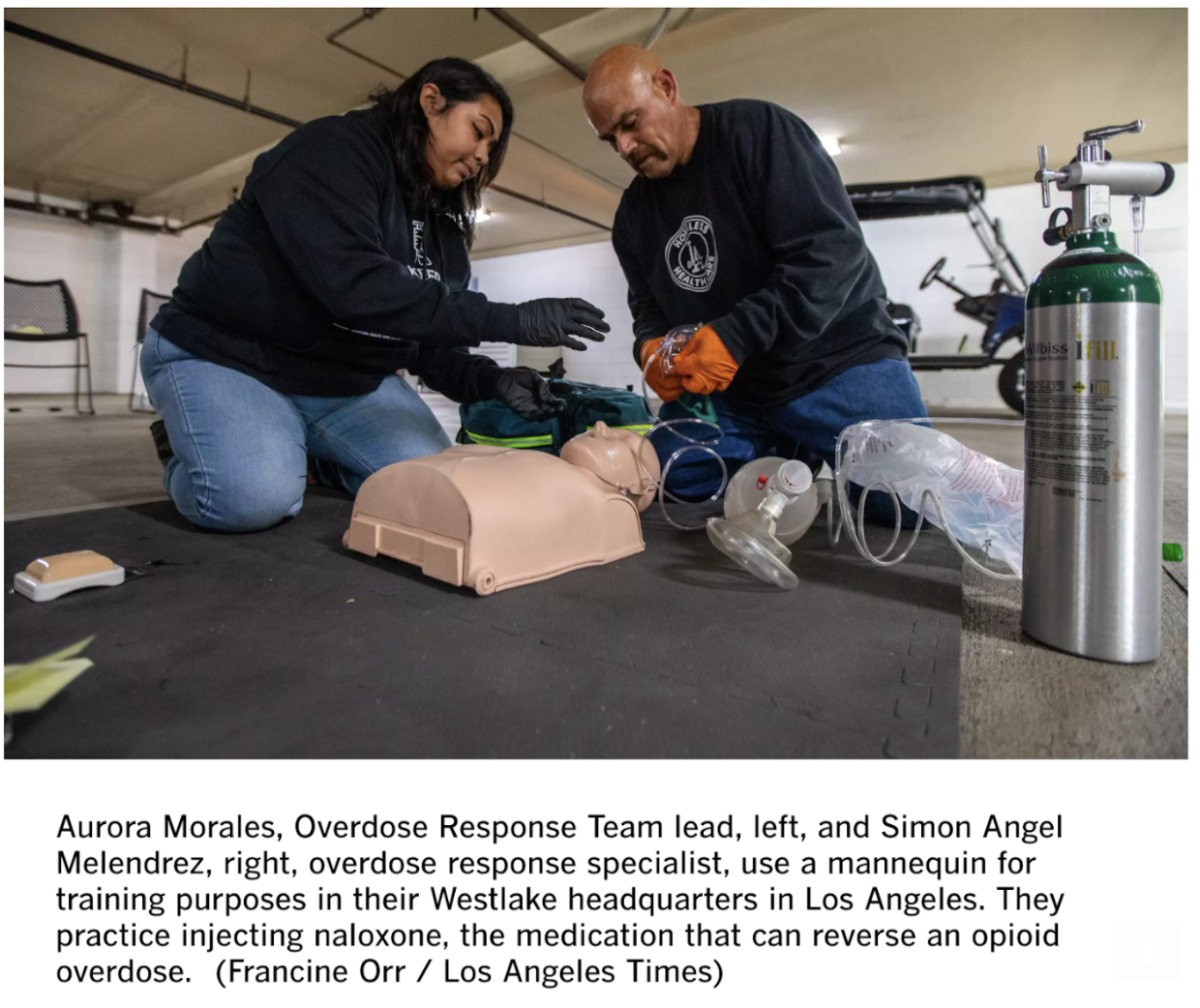
Shoshanna Scholar, a division director within the L.A. County Department of Health Services, told Alpert Reyes that the added use of oxygen, which “helps [to] stabilize people faster, address a range of drug threats and spare the brain from worse damage,” puts Los Angeles on “‘the cutting edge of overdose response.’”
Alpert Reyes’ reporting also beautifully captures what this overdose response looks like in practice:
“Behind the steering wheel of the black [oxygen] cart, Simon Angel Melendrez scanned the streets of Skid Row, searching for anyone struggling to breathe. When he saw a man slumped forward in his wheelchair on a downtown sidewalk, Melendrez pulled the cart over and jumped out.
The man barely reacted when Melendrez shook his shoulder. Blood dripped from a wound on his brow … He had overdosed earlier in the day, according to another man on the street … ‘I’m going to check his oxygen right now,’ [Melendrez] called to his co-worker Aurora Morales, grabbing a pulse oximeter to slip onto his finger. Morales squeezed the man’s shoulder and urged him to take deep breaths. His oxygen levels were bobbing up and down, the device attached to his finger showed.
Melendrez hustled back to the cart and hoisted an oxygen cylinder onto the sidewalk. ‘Just take a deep breath,’ Melendrez told him, squeezing his shoulder… Minutes later, the pulse oximeter was showing more reassuring numbers. [The team] left the man with a plastic bag with gauze, alcohol wipes and other supplies for his wound and phoned the other Homeless Health Care team circling Skid Row, asking them to keep the man in the wheelchair on their radar.”